

Eye of the season: The most notable Atlantic hurricanes during El Niño years
Here are some of the most notable Atlantic hurricanes that formed during the Super El Niño years.
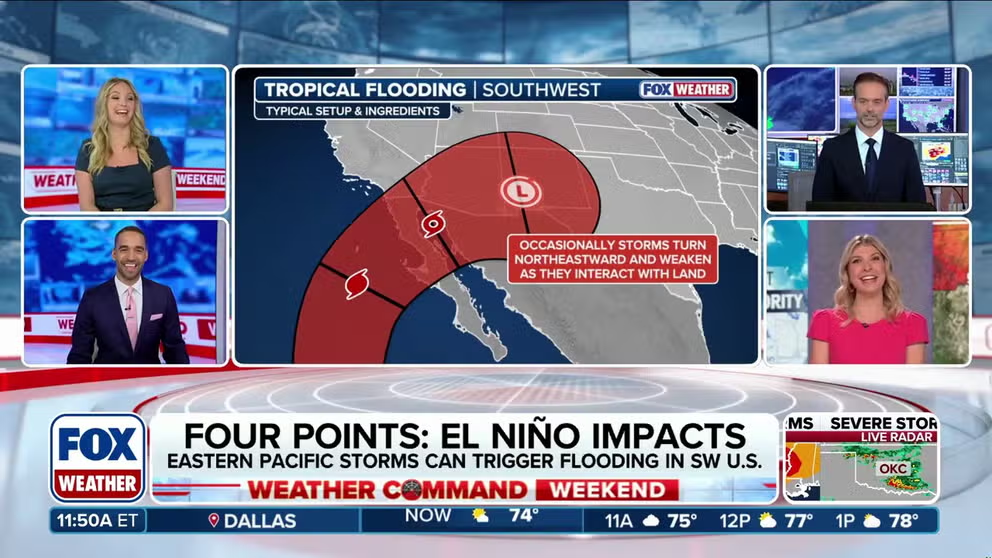
FILE: Tracking potential Super El Niño: How could it shape weather patterns across the US?
Experts are suggesting that a super El Niño is likely this year, which could bring major impacts to weather patterns across the U.S. FOX Weather Meteorologists Nick Kosir, Haley Meier, Michael Estime and FOX 26 Meteorologist Allison Gargaro are breaking down what people might see if the super El Niño develops.
The 2026 Atlantic hurricane season is here, and forecasters are patiently waiting to see how this year’s season will unfold.
ATLANTIC HURRICANE SEASON IS OFFICIALLY UNDERWAY: WHAT TO KNOW ABOUT THE 2026 FORECAST
With a looming El Niño in the Pacific Ocean, it is expected to play a major role during hurricane season, as it is forecast to strengthen by the peak of the season.
Currently, FOX Forecast Center suggests that the Atlantic will experience a below-average number of storms.
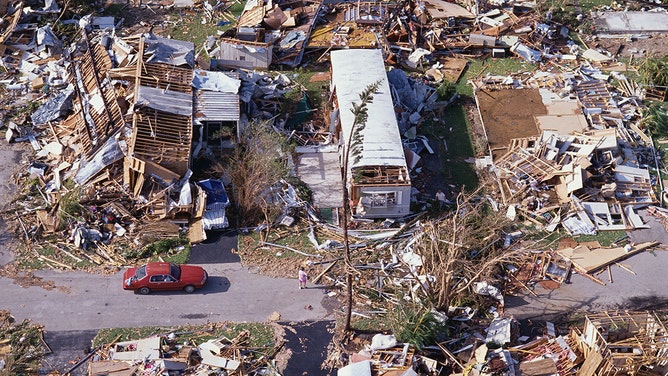
Remnants of a trailer park following Hurricane Andrew.
(Steve Starr/Corbis / Getty Images)
When El Niño develops, it typically increases wind shear across the Atlantic Basin, disrupting developing tropical systems before they can organize and strengthen.
However, in recent years, during a Super El Niño, powerful destructive hurricanes still developed in the Atlantic Ocean.
ATLANTIC OCEAN TURNS TROPICAL, TURQUOISE BLUE AHEAD OF PEAK TOURISM SEASON ON THE EAST COAST
Here are some of the most notable Atlantic hurricanes that formed during the Super El Niño years:
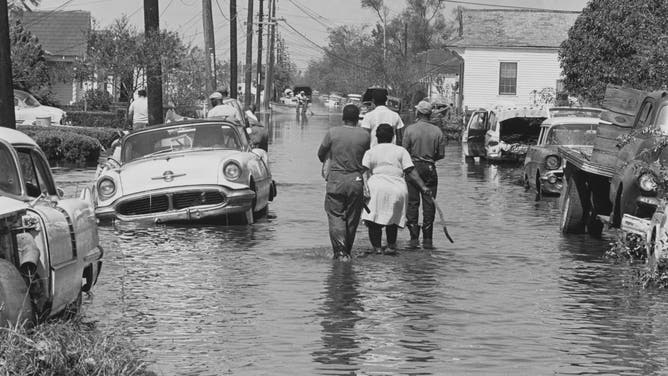
Hundreds of people returning to their flood-wrecked homes in New Orleans after Hurricane Betsy.
(Bettmann Archive/Getty Images / Getty Images)
Hurricane Betsy
Hurricane Betsy began on Aug. 23, 1965, when a tropical wave was first detected by a TIROS weather satellite. The storm quickly intensified, becoming a strong Category 4 hurricane with maximum sustained winds exceeding 130 mph.
According to the National Weather Service (NWS), Hurricane Betsy made landfall on Sept. 9 near Grand Isle, Louisiana, and moved inland toward Baton Rouge the following day.
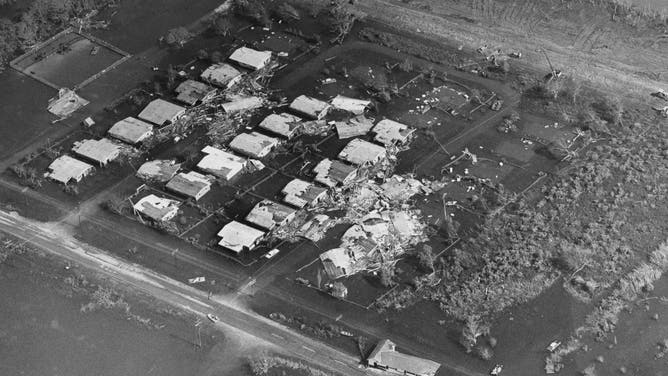
This aerial view shows the destructive force of Hurricane Betsy's 150 mph winds.
(Bettmann Archive/Getty Images / Getty Images)
The hurricane produced intense wind gusts across south-central and central Louisiana. It also generated a significant storm surge, with some areas experiencing water levels of 10 to 15 feet above normal.
Rainfall totals averaged 3 to 5 inches across central and south-central Louisiana, while higher amounts ranging from 5 to 12 inches were recorded in southeastern Louisiana.
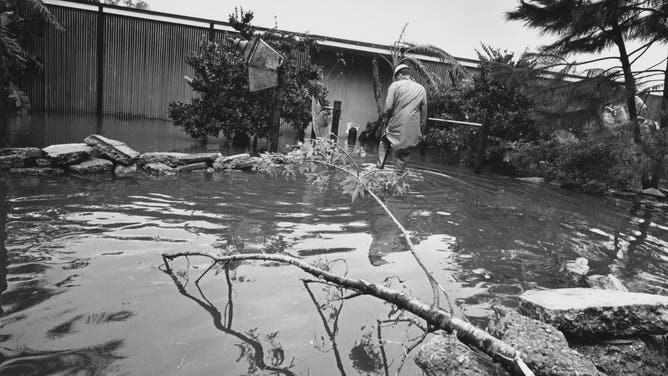
Rippling water reflects the damage surrounding a home in Baton Rouge after the fury of Hurricane Betsy.
(Bettmann Archive/Getty Images / Getty Images)
Hurricane Betsy caused widespread flooding and destruction, killing at least 81 people and injuring thousands.
This storm became known as one of the most significant hurricanes to affect Louisiana during the 1960s.
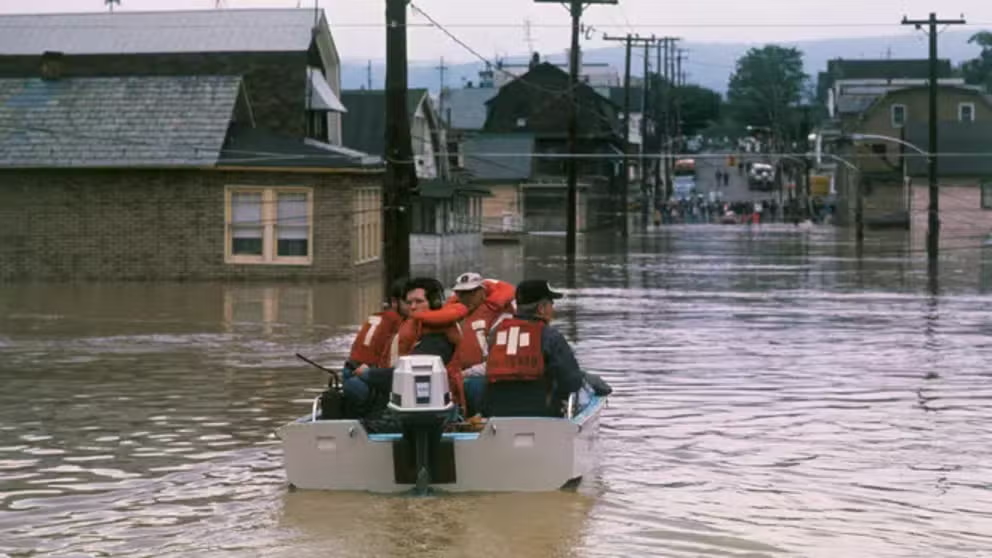
50 years ago, 1972's Hurricane Agnes struck the eastern US
This week marks the 50th anniversary of the historic, deadly flooding spawned by Hurricane Agnes and its remnants in June 1972 across the eastern U.S., including the hardest-hit states of Pennsylvania and New York.
Hurricane Agnes
According to the NWS, Hurricane Agnes was one of the largest June hurricanes on record.
As a polar front moved into the Yucatán Peninsula region of Mexico from the northwest, the system strengthened into a tropical storm on June 15, 1972, and became a hurricane on June 18.
Although it only reached Category 1 strength, Agnes became one of the most destructive weather disasters in U.S. history.

Floodwaters were seen rushing down a street in Elmira, New York, as the remnants of Hurricane Agnes dumped torrential rainfall across the region in June 1972.
(NWS Binghamton)
The storm moved through the Caribbean and Gulf before making landfall in Florida's panhandle on June 19.
As it traveled north through the Mid-Atlantic and Northeast, it interacted with other weather systems, bringing extreme rainfall and flooding.
HOW ARE HURRICANES RATED? THE SAFFIR-SIMPSON HURRICANE WIND SCALE EXPLAINED
Some areas received up to 18 inches of rain, causing rivers and streams to quickly overflow.
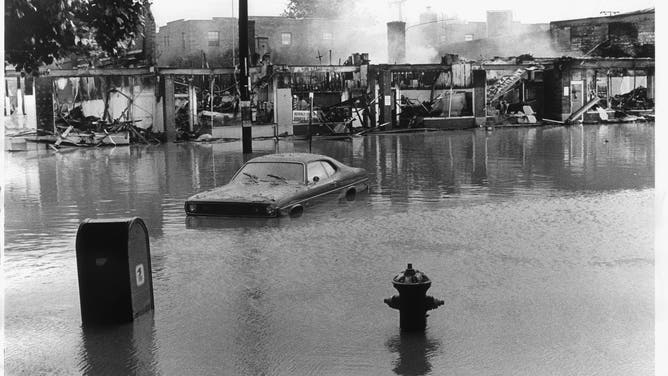
Several states experienced widespread flooding after Hurricane Agnes.
(Charles Del Vecchio/The The Washington Post via Getty Images)
Several states, including New York, Pennsylvania, Maryland and Virginia, experienced widespread damage to homes, businesses, roads and bridges.
In Pennsylvania especially, entire communities were submerged by floodwaters.
HOW FLOODWATER CAN MAKE YOU VERY SICK
Hurricane Agnes caused approximately 128 deaths and more than $2 billion in damage.
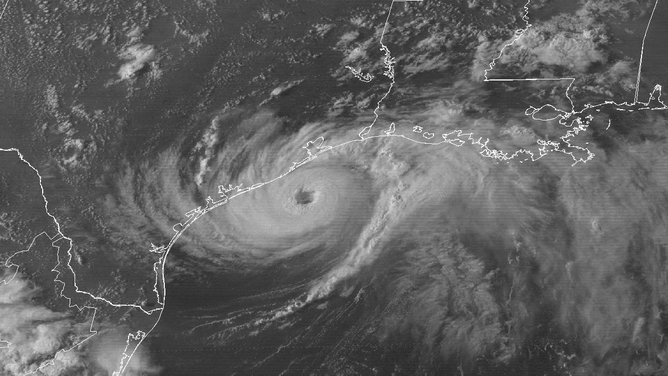
GOES-5 visible satellite image of Hurricane Alicia off the Southeast Texas Coast.
(National Weather Service / NOAA)
Hurricane Alicia
Hurricane Alicia originated as a low pressure system off the coast of Louisiana.
Shortly after, it turned into a powerful Category 3 hurricane that struck the Texas Gulf Coast on Aug. 18, 1983.
EL NIÑO COULD MEAN MORE TROPICAL ACTIVITY FOR THE WESTERN PACIFIC
It made landfall near San Luis Pass, Texas, with sustained winds of about 115 mph.
Although it was considered small, the storm caused extensive destruction as it passed through Houston and Galveston region.

Windy day at the beach.
(BlueFolio / Getty Images)
The storm produced strong winds, storm surge of up to 12 feet, heavy rainfall, and numerous tornadoes, resulting in widespread flooding, damaged structures and massive power outages.
Hurricane Alicia caused approximately $3 billion in damage, making it the costliest hurricane in Texas history, and it claimed 21 lives.