

El Niño could mean more tropical activity for the Western Pacific
The presence of El Niño is already cooking, and FOX Forecast Center's Tropical Threat shows a moderate chance of a tropical system developing east of the Philippines and off the coast of China.
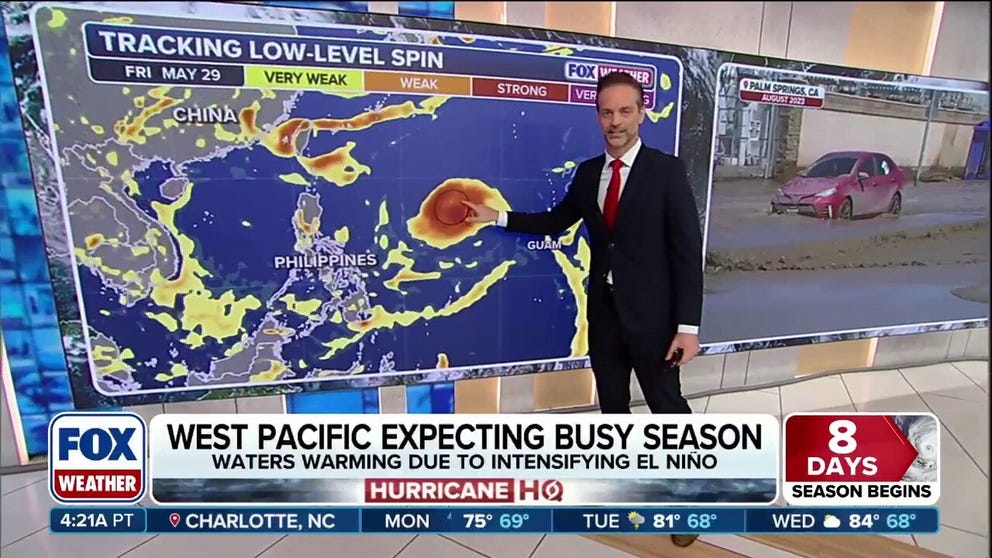
El Niño Could Intensify an Already Busy Western Pacific Typhoon Season
As El Niño strengthens and reshapes hurricane activity across the Atlantic and Eastern Pacific, its impact is also being felt thousands of miles away in the Western Pacific, where forecasters are watching for a potentially active typhoon season. FOX Weather Meteorologist Nick Kosir breaks down what the climate pattern could mean for storms across the globe.
With a looming El Niño making headlines for its powerful influence on hurricane season in the Eastern Pacific and Atlantic, let’s take a closer look at how the climate pattern shapes weather on the other side of the globe in the Western Pacific.
BEYOND SUPER EL NIÑO: THE SECRET OCEAN PATTERN THAT COULD FUEL HURRICANES IMPACTING HAWAII THIS YEAR
The Western Pacific typhoon season is off to a fierce start, with a destructive super typhoon already striking the region — and El Niño could fuel even more activity ahead.
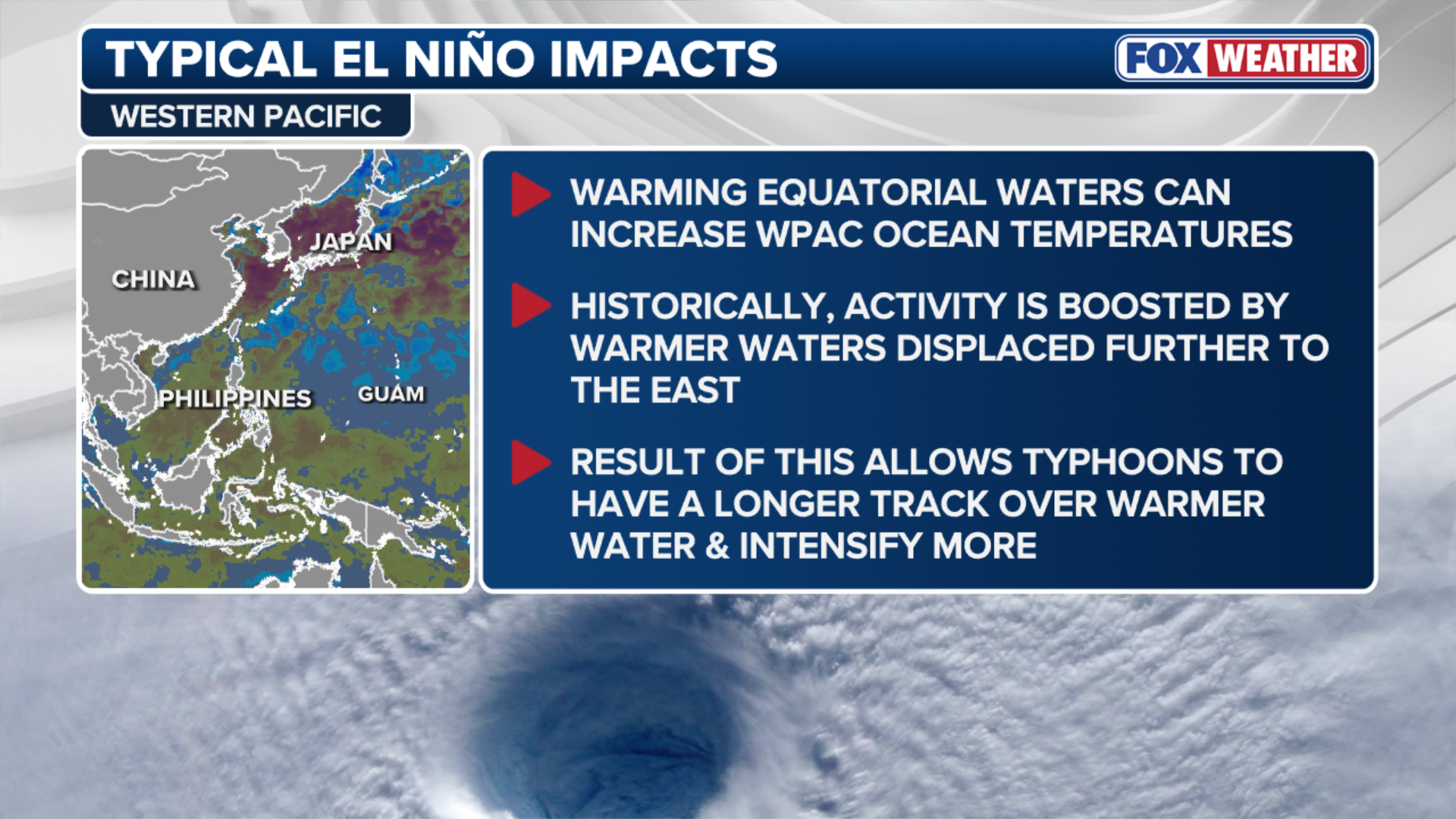 El Niño impact.
(FOX Weather)
The presence of El Niño is already cooking – FOX Forecast Center's Tropical Threat shows a moderate chance of a tropical system developing east of the Philippines and off the coast of China.
TRACKING THE TROPICS: HINTS OF TROPICAL TROUBLE POSSIBLE FOR FIRST WEEKS OF HURRICANE SEASON
In the event this storm develops, the steering pattern could move it toward Japan.
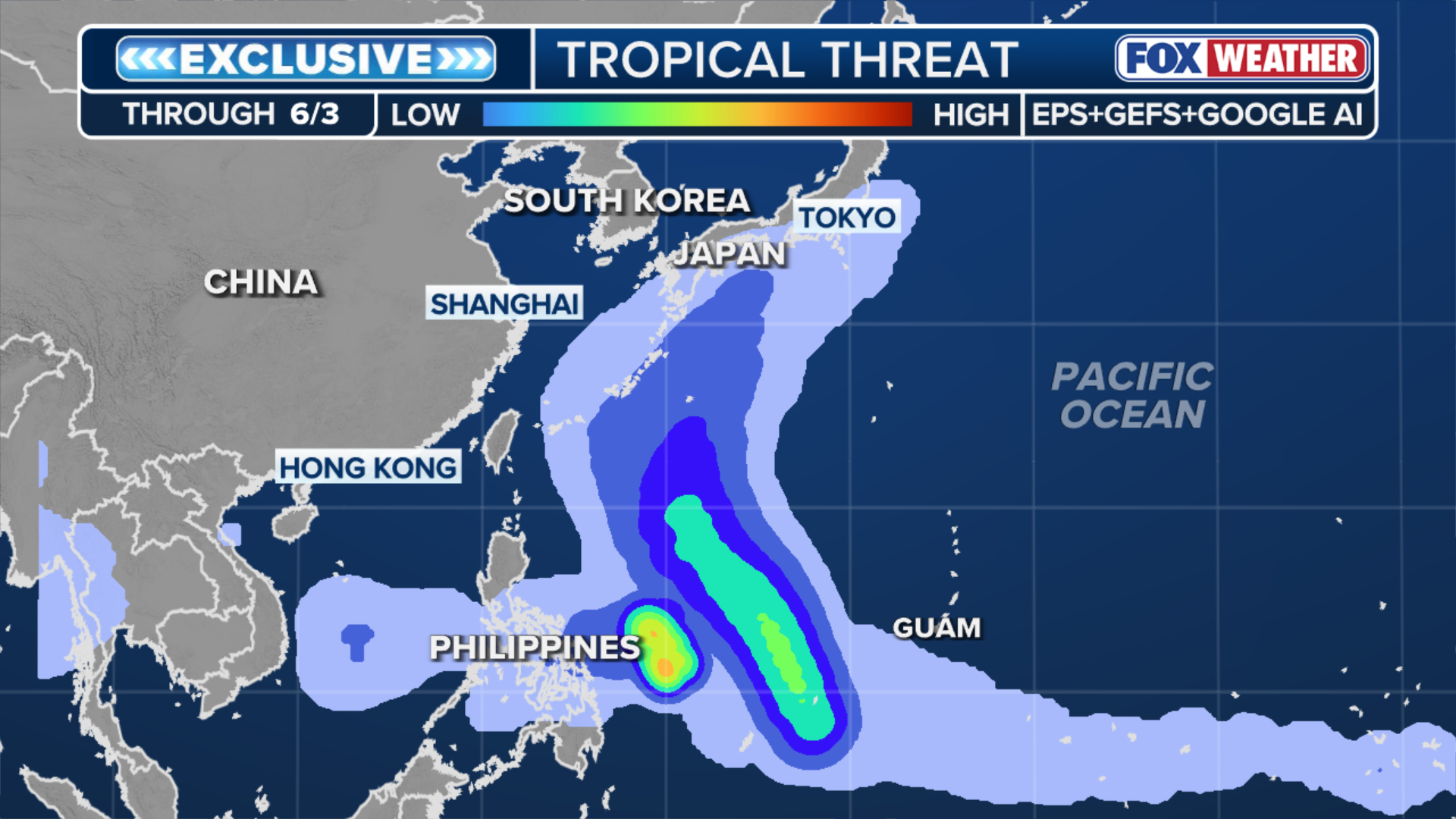 FOX Weather Tropical Threat.
(FOX Weather)
As waters warm across the equatorial Pacific due to El Niño, waters also begin to warm not only across the Eastern Pacific, but the Northwest Pacific as well – heating up just in time for typhoon season.
NOAA REVEALS 2026 ATLANTIC HURRICANE SEASON ACTIVITY FORECAST AS SUPER EL NIÑO LOOMS
Typically, as El Niño intensifies, warmer waters develop across the more eastern portions of the Western Pacific Basin.
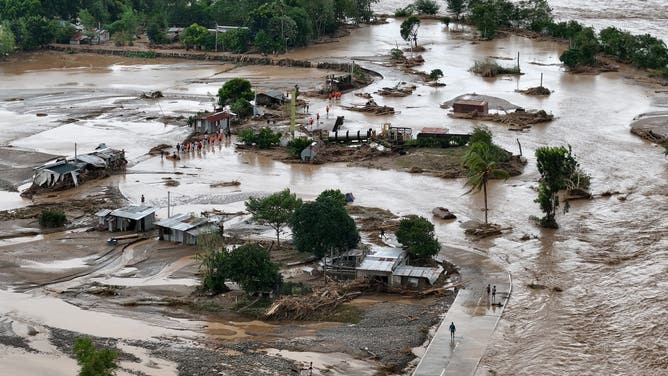
FILE PHOTO: This aerial photo shows flood-hit houses at a village in Tuao town, Cagayan province, on November 10, 2025, after a river overflowed due to heavy rains brought by Super Typhoon Fung-wong.
(JOHN DIMAIN/AFP via Getty Images / Getty Images)
As ocean waters warm farther east, storms forming in that region can spend more time tracking westward over warm water — the fuel that powers tropical systems. The longer a storm remains over those waters, the greater its potential to intensify.
TYPHOON SINLAKU MAKES DIRECT HIT ON US TERRITORIES IN PACIFIC, BLASTING SAIPAN WITH 130 MPH WINDS
In the Western Pacific, typhoon season is already off to an active start, with four named storms, one typhoon and one major typhoon so far — Super Typhoon Sinlaku, which unleashed 175 mph winds on April 12, caused extensive damage across the Northern Mariana Islands and Guam, and became the second-strongest typhoon ever observed.
From 1991 to 2020, the Western Pacific averaged 26 named storms, 16 typhoons and nine major typhoons per season.
The active trend in the Western Pacific could continue as El Niño intensifies.