

Arctic blast that blanketed more than 180M across Eastern US begins to depart days ahead of spring
Temperatures will finally begin to rise Thursday and approach more seasonally appropriate conditions, one day before the start of astronomical spring.
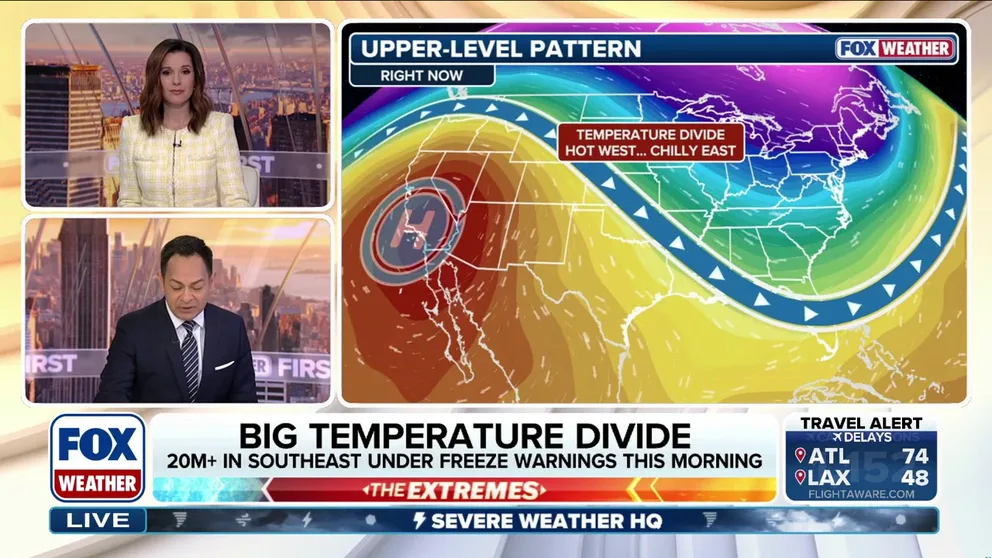
Final blast of winter chill for 180M+ in Eastern US as temperatures return closer to average
Freeze Warnings cover more than 20 million people across the Southeast Wednesday, with more than 180 million over the broader eastern U.S. experiencing below-average temperatures. Residual Arctic air associated with the blizzard that slammed the Upper Midwest earlier this week kept morning low temperatures 10-20 degrees below average throughout much of the eastern half of the country. Temperatures will finally begin to rise closer to seasonal averages on Thursday.
Residual Arctic air associated with the blizzard that slammed the Upper Midwest earlier this week kept Wednesday morning low temperatures 10–20 degrees below average throughout much of the eastern half of the country.
Freeze Warnings covered more than 20 million people across the Southeast early Wednesday, with more than 180 million over the broader eastern U.S. experiencing below-average temperatures.
Temperatures will finally begin to rise Thursday and approach more seasonally appropriate conditions, one day before the start of astronomical spring.
ATLANTIC 2026 HURRICANE SEASON COULD SEE MAJOR IMPACTS FROM POTENTIALLY STRONG EL NIÑO
![]() Image 1 of 8
Image 1 of 8Snow falling in Frederic, Michigan, on Sunday, March 15, 2026. (Morgan Stahl)
![FILE - People walk in freezing cold temperatures on February 4, 2023 in New York City, where temperatures were expected to reach a high of 27F (-3C). - The northeastern US and Canada are experiencing an Arctic blast that could see some areas record their lowest ever wind chill temperatures. The US National Weather Service (NWS) warned that parts of Maine might see wind chills of minus 60 degrees Fahrenheit (minus 51 degrees Celsius). "This is an epic, generational arctic outbreak," the NWS office in Caribou, near Maine's border with Canada, wrote in an advisory. (Photo by ANGELA WEISS / AFP) (Photo by ANGELA WEISS/AFP via Getty Images)]() Image 2 of 8
Image 2 of 8The northeastern US and Canada are experiencing an Arctic blast that could see some areas record their lowest ever wind chill temperatures. (ANGELA WEISS/AFP via Getty Images)
![]() Image 3 of 8
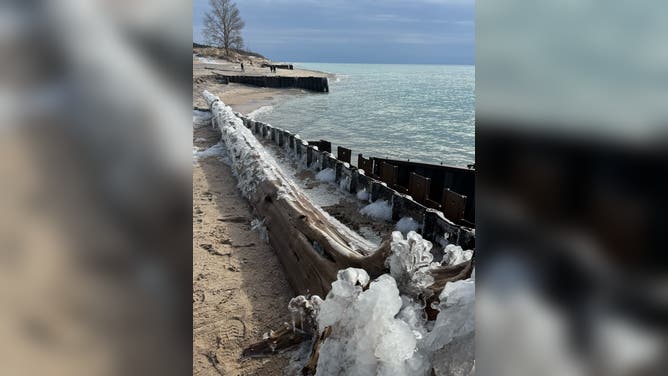
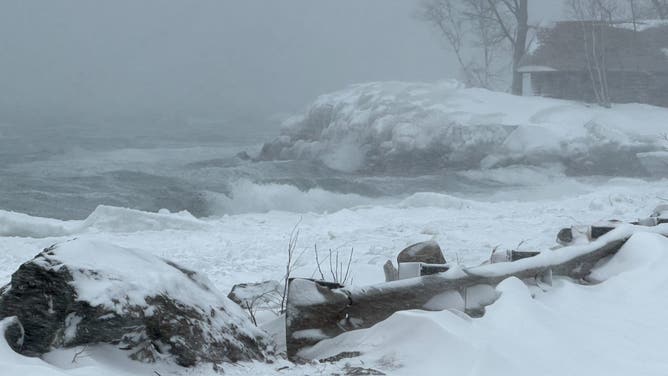
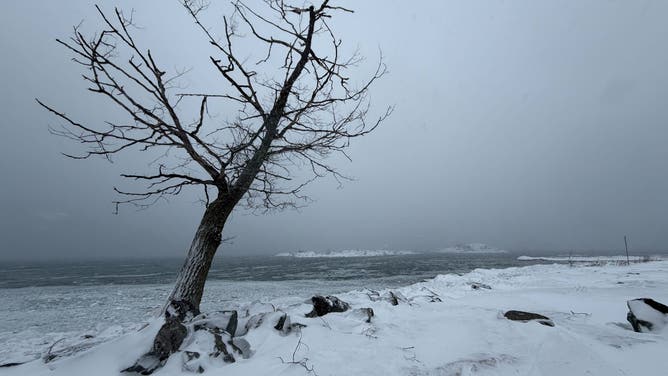
Image 3 of 8Tree covered in ice at Point Betsie Lighthouse in Lake Michigan on Sunday, March 15, 2026. (Jane Minar)
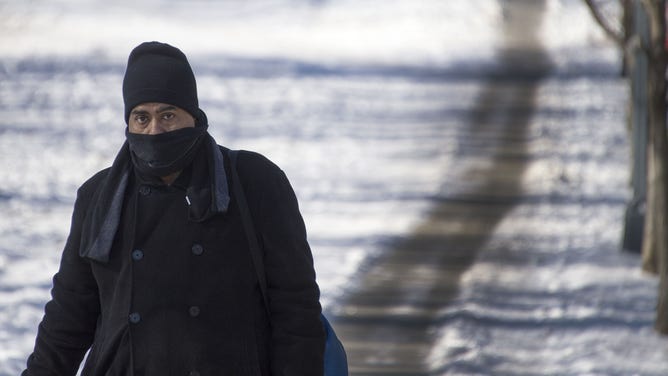
![FILE - A man walks through the snow with a scarf over his face in Washington, DC, on January 8, 2014, as dry and unseasonably cold weather hits the area. An Arctic blast sweeping Canada and parts of the United States this week closed schools, grounded jets, killed at least four people, and even shook the ground. AFP PHOTO/JIM WATSON (Photo credit should read JIM WATSON/AFP via Getty Images)]() Image 4 of 8
Image 4 of 8FILE - A man walks through the snow with a scarf over his face in Washington, DC, on January 8, 2014, as dry and unseasonably cold weather hits the area. An Arctic blast sweeping Canada and parts of the United States this week closed schools, grounded jets, killed at least four people, and even shook the ground. AFP PHOTO/JIM WATSON (Photo credit should read JIM WATSON/AFP via Getty Images) ( )
![]() Image 5 of 8
Image 5 of 8Snow falling in Marquette, Michigan, on Sunday, March 15, 2026. (Robert Ray)
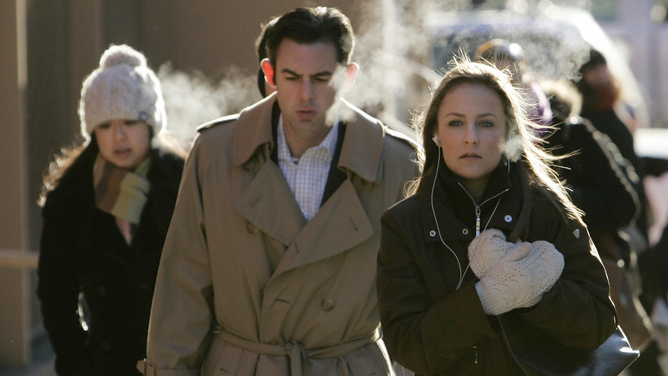
![The breath of commuters is visible as they walk to a subway stop bundled up against the frigid cold on the east side of Manhattan.]() Image 6 of 8
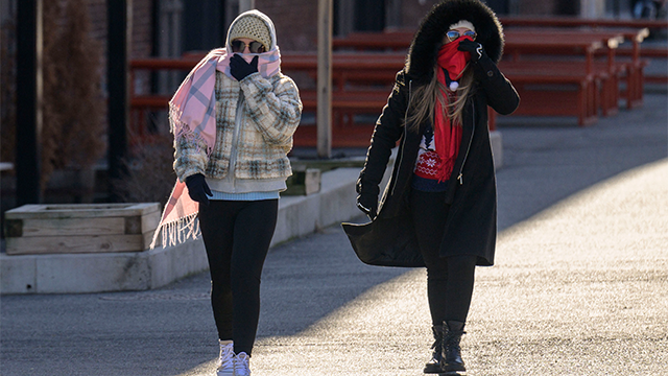
Image 6 of 8The breath of commuters is visible as they walk to a subway stop bundled up against the frigid cold on the east side of Manhattan. (STAN HONDA/AFP)
![]() Image 7 of 8
Image 7 of 8Snow falling in Marquette, Michigan, on Sunday, March 15, 2026. (Robert Ray)
![]() Image 8 of 8
Image 8 of 8A woman is bundled up as winter weather conditions sweep across the U.S. (STEPHEN MATUREN/AFP via Getty Images)
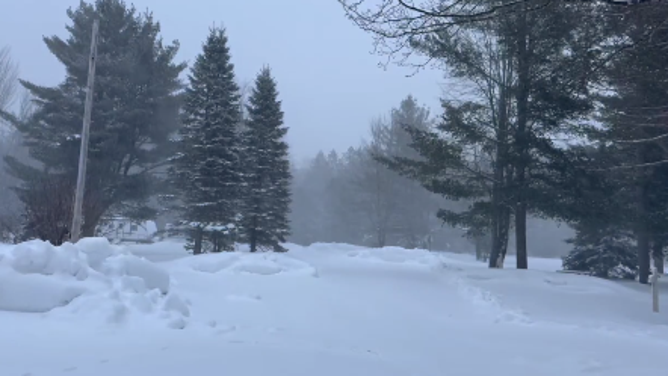
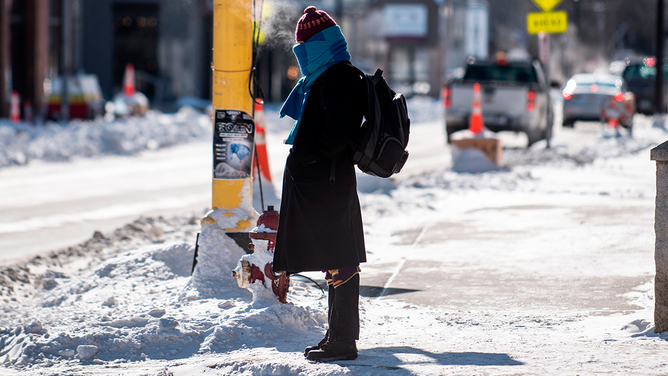
The cold air immediately charged in behind the blizzard that unleashed feet of snow and vicious wind gusts Monday, and kept much of the East firmly within winter's grip.
Over 230 million Americans experienced below-average temperatures through Monday and Tuesday.
The deep freeze has prevented any snow from melting. The large accumulations across the Great Lakes will likely remain on the ground for days.

(FOX Weather)
Temperatures only rebounded slightly by Tuesday afternoon, where highs ran nearly 20 to 30 degrees below average for major cities such as St. Louis, Atlanta and Washington, D.C.
SPLIT IN THE POLAR VORTEX COULD MEAN ONE LAST HURRAH FOR WINTER ACROSS THE NORTHERN TIER
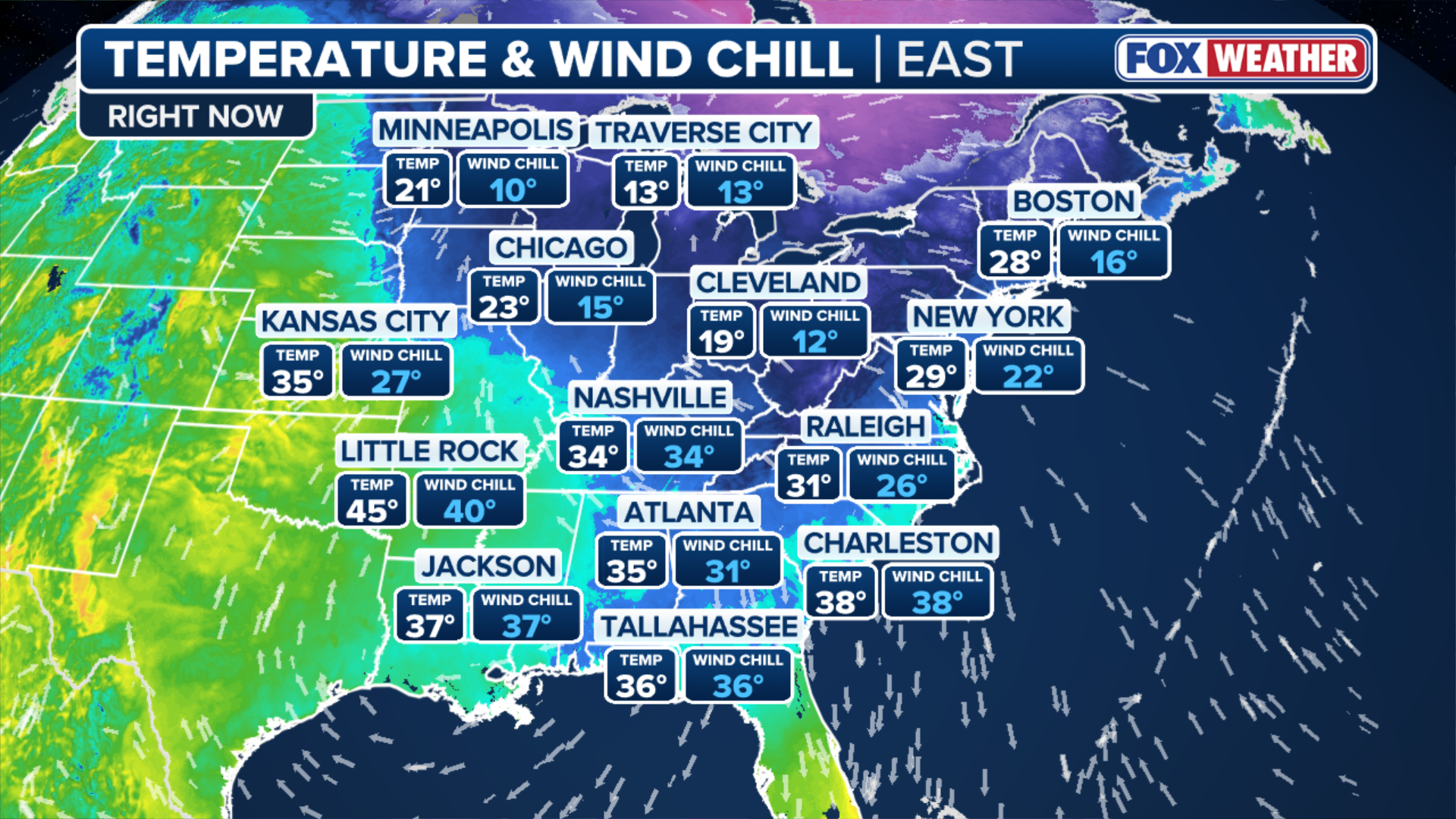
New York City, Boston and parts of the interior Northeast woke up to wind chill temperatures in the upper teens and 20s Wednesday morning.
(FOX Weather)
While temperatures are expected to rise Thursday, long-range forecasts for late March suggest parts of the Northeast may continue to see below-average temperatures — and even a final parting Arctic blast before spring gets fully underway.