

How to stay safe from dangerous winter ice
Ice forms in several different ways during freezing temperatures in the winter, including frost, black ice and ice jams.
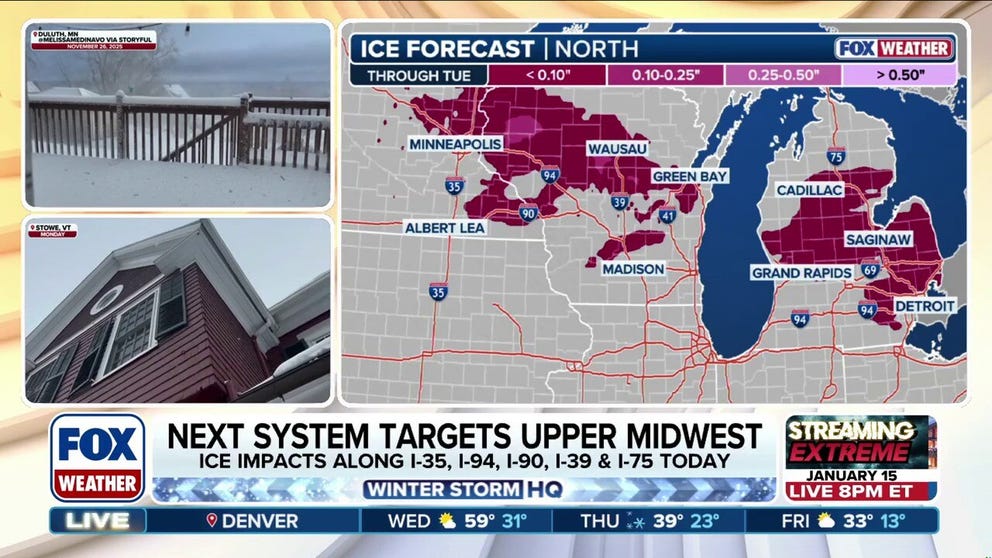
Winter Weather Alerts issued as new winter storm system targets Midwest with snow, rain and ice
A new winter storm system is set to bring snow, freezing rain, and dangerous ice to the Upper Midwest, creating major travel concerns on interstates. Winter Weather Alerts stretch from Minnesota to Michigan as the system expands east by Wednesday.
When you think of winter weather, most people imagine a blizzard or heavy snowfall. However, another winter weather phenomenon can be just as dangerous: ice.
Ice forms in several different ways during freezing temperatures in the winter, including frost, black ice and ice jams.
When these forms of ice develop, they can potentially lead to significant risks.
EERIE SIGHT: BITTER COLD TRANSFORMS MICHIGAN LIGHTHOUSE INTO 'ICE MONSTER'
Here are the different types of ice that emerge during the winter and some tips on how to stay safe:
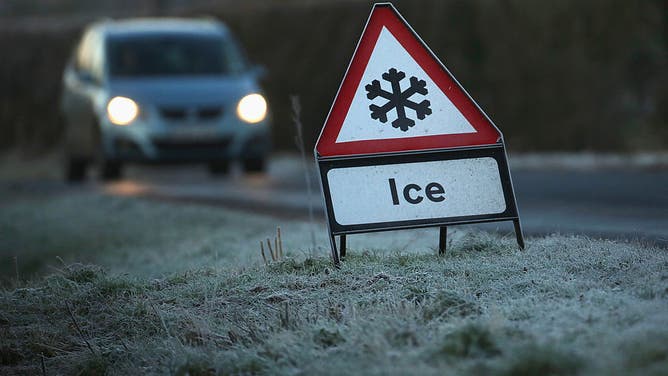
KNUTSFORD, ENGLAND - DECEMBER 11: A warning triangle alerts drivers to an icy road on December 11, 2012 in Knutsford, England. Forecasters are warning that the UK could experience the coldest day of the year so far tomorrow, as temperatures could drop as low as -14C, bringing widespread ice, harsh frosts and freezing fog. Travel disruption is expected with warnings for heavy snow. (Photo by Christopher Furlong/Getty Images)
(Getty Images)
What is frost?
Frost is water vapor or gas that becomes solid during freezing temperatures. Frost typically forms at night on cars, windows and plants.
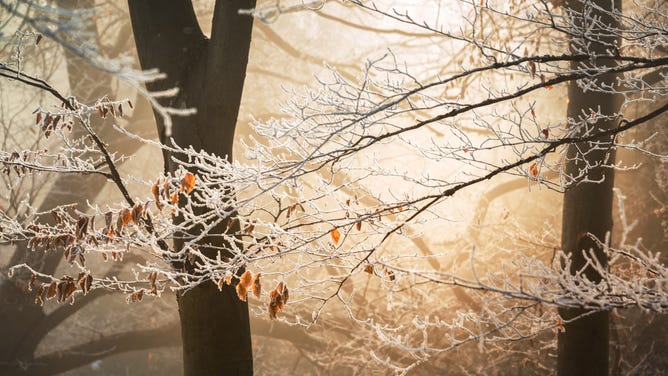
Frost on trees.
(Alex Krivec / Unsplash / FOX Weather)
This type of ice forms when the outside surface cools past the dew point and is most commonly found in low-lying areas where warm air rises and cool air sinks.
Frost can be dangerous in cold climates during extreme temperature drops. It can cause plants to die and wildlife to suffer from frostbite or starvation.
In some cases, frost can lead to people getting frostbite, hypothermia or slipping and falling on icy roads, sidewalks and stairs.
Frost is especially dangerous when it is thin and hard to see, which is known as black ice.
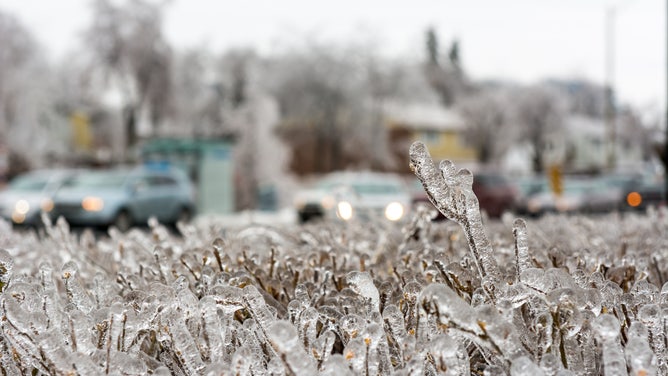
Freezing rain accumulation during the North American Ice Storm of December 2013: House Garden Fence Close to an Avenue.
(Getty Images)
What is black ice?
This is a thick, transparent layer of ice that forms on road surfaces, sidewalks or bridges.
It's called black ice because the dark pavements are visible through the clear ice, making is basically invisible.
Black ice forms during frigid temperatures, causing moisture on surfaces to freeze into a smooth glaze.
It is extremely dangerous because it provides little to no traction, and it is nearly impossible for drivers or pedestrians to see until they are already on it.

A woman falls down on the icy road.
(Jason Welliver via Storyful / FOX Weather)
What are ice jams?
This type of ice is a frozen blockage in a river or stream caused by piles of floating ice, leading to restricted water flow.
Ice jams form during late winter or early spring when melting snow and warmer temperatures start to break up ice in a body of water. When this happens, ice chunks get caught at bends, bridges or shallow spots.
WHAT’S THE DIFFERENCE BETWEEN FROST, A FREEZE AND A HARD FREEZE?
This icy blockade can be extremely dangerous, often leading to upstream flooding, sudden downstream surges and infrastructure damage.
It is recommended to stay away from ice jams and immediately report them to local authorities.
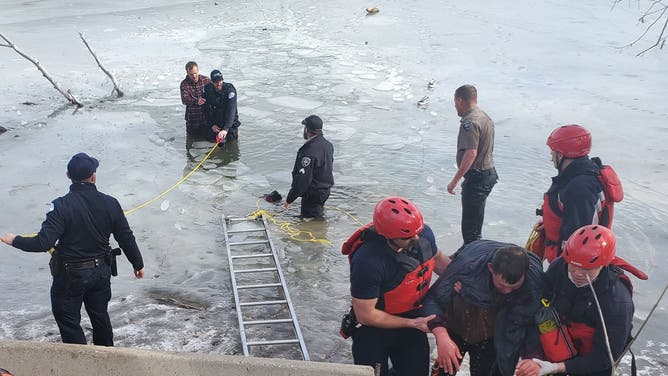
While attempting to rescue two teens from a pond in Ogden, Utah, first responders also fell through the ice
(Ogden Police Department)
Ice safety on frozen lakes
On top of the various types of ice that people have to worry about, frozen lakes can also pose another risk.
Ice thickness on a lake can vary due to temperature changes, snow coverage, underwater currents and moving water.
Warmer weather, especially later in winter, can weaken ice even if it looks safe. Falling through thin ice can cause shock, hypothermia, or drowning.
METEOROLOGISTS SURF RARE ‘ICE WAVE’ ATOP MOUNT WASHINGTON
Experts recommend avoiding walking, skating or driving on frozen lakes unless the ice has been confirmed safe.
It is also important to never go onto the ice alone in case you fall in.