

These everyday commodities may cost you more as severe drought trickles down to consumers
Here are some of the crops in the U.S. impacted by drought, and how those impacts can affect consumers.
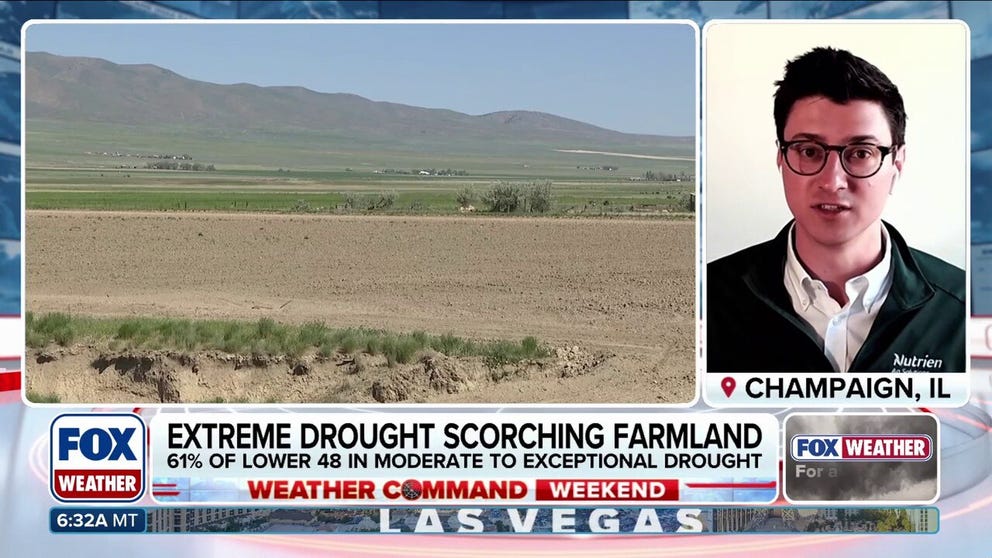
FILE: Extreme drought in the Southeast: Lasting impacts on the economy
Senior Atmospheric Scientist for Nutrien Ag Solutions Matt Reardon joins FOX Weather to discuss the drought in the Southeast, how it is affecting farmers and if there is any relief in sight.
Across the southern U.S., many regions have been experiencing prolonged drought conditions that are straining agricultural economies.
NEW FLORIDA WATER RESTRICTIONS ISSUED AS HISTORIC DROUGHT INTENSIFIES, WITH LITTLE RELIEF EXPECTED
When a drought occurs, the depletion of water availability in soil leads to significant declines in crop yields and livestock productivity, along with diminished pastureland and reduced supplies, including food processors, fertilizer producers and farm labor markets.
This drives up the cost of irrigation and livestock care, while also increasing prices for consumers.
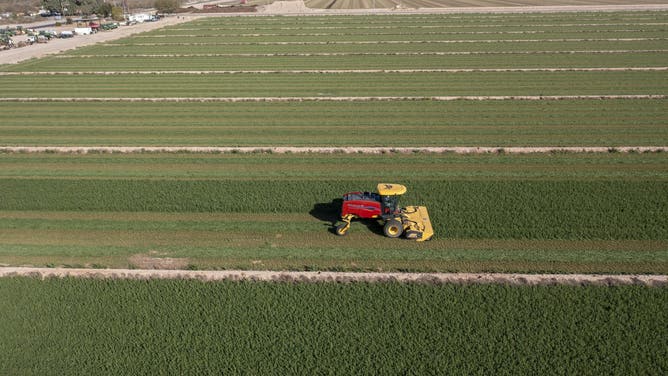
Buckeye, Arizona, A tractor cuts alfalfa on a farm in the Arizona desert.
(Jim West/UCG/Universal Images Group via Getty Images / Getty Images)
Economists say that drought ranks one of the most costly weather-related disasters in the U.S., averaging more than $9 billion annually since 1980, with an estimated annual cost of over $6 billion in recent years.
This makes it a serious hazard with significant socioeconomic consequences.
HISTORIC HEAT WAVE EXPANDS INTO CENTRAL US AFTER WEEKS OF RECORD HEAT IN THE SOUTHWEST
Sustained drought has wide-ranging negative effects on agriculture, including reduced production, property losses and livestock sell-offs as farmers try to cope with limited resources.
Here are some of the crops in the U.S. impacted by drought, and how those impacts can affect consumers:
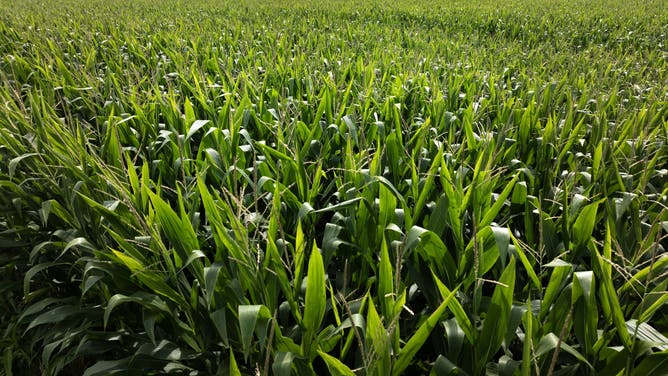
An aerial view shows corn growing in a farm field on July 24, 2025.
(Getty Images / Getty Images)
CORN
Corn farms have faced significant financial losses due to drought conditions which have impacted the crop's growth stages.
DRY WEATHER HURTING PUMPKIN FARMERS' PROFITS THIS FALL
According to Purdue University, drought affects corn by reducing leaf size, inhabiting photosynthesis and causing severe yield losses.
In parts of Florida and Texas, NOAA has identified corn-growing regions as experiencing some of the most intense drought conditions.
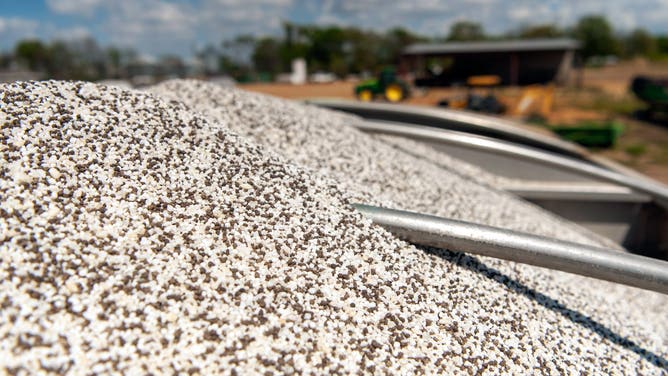
A mixture of urea and potash fertilizer is loaded onto a hopper before being spread on a corn field at a farm in Ruleville, Mississippi, US.
(Rory Doyle/Bloomberg via Getty Images / Getty Images)
In addition to weather-related stress, corn prices have fallen to five-year lows, contributing to an estimated loss of about $0.85 per bushel and roughly $14.2 billion in total production losses, per the Kentucky Corn Growers Association.
These combined pressures have placed significant financial strain on corn producers across the country.
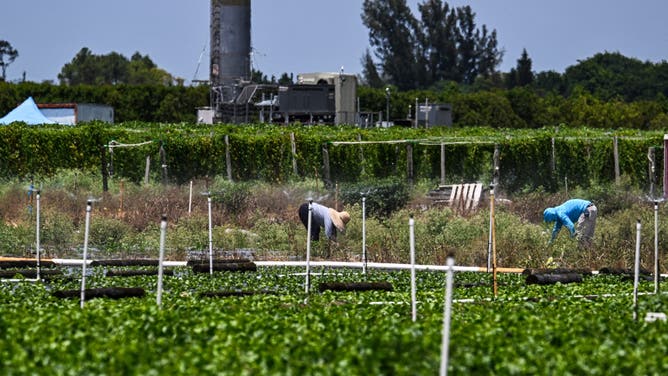
Farmers work on a farm in Homestead, Florida, on April 25, 2025.
(CHANDAN KHANNA/AFP via Getty Images)
CITRUS
Currently, Florida is facing one of its worst droughts in 25 years. According to the U.S. Drought Monitor, 100% of the state is experiencing some level of drought, with more than 75% in extreme drought conditions.
With such severe dryness, the citrus crop has been extremely impacted.
Florida accounts for about 17% of the nation’s citrus production, but the drought has placed significant strain on farmers due to higher irrigation costs and shrinking acreage.
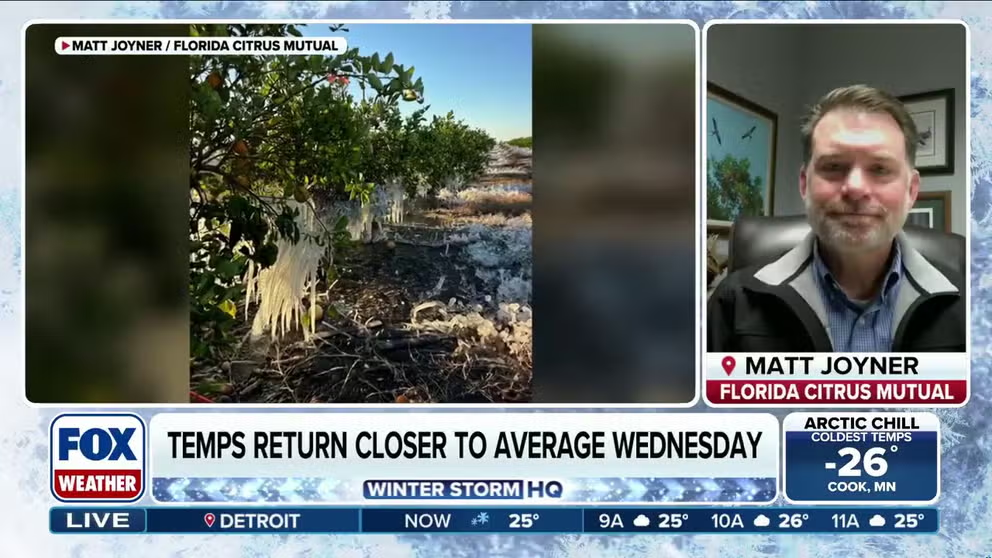
FILE: Executive Vice President and CEO of Florida Citrus Mutual Matt Joyner discusses record cold threatening citrus yields
Executive Vice President and CEO of Florida Citrus Mutual Matt Joyner joined FOX Weather on Tuesday to discuss the impact of Florida’s recent below-freezing temperatures on citrus yields.
On top of the drought, Florida has also experienced freezes that have damaged crops early in the season.
According to the U.S. Department of Agriculture (USDA), in 2000, the state’s citrus industry covered over 800,000 acres. Today, that number has declined to about 200,000 acres, showing the impacts on long-term environmental factors.
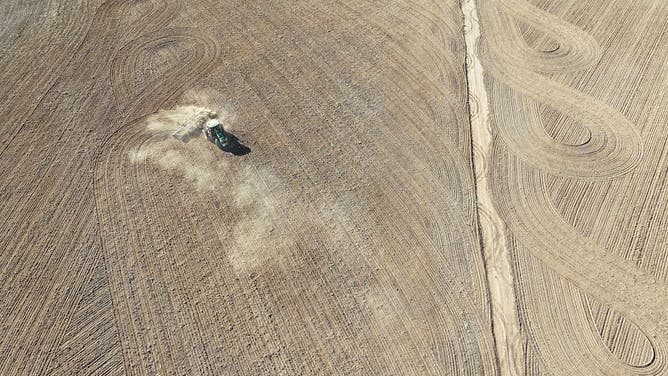
A farmer uses a tractor to plow a field before planting winter wheat.
(RJ Sangosti/MediaNews Group/The Denver Post via Getty Images / Getty Images)
WINTER WHEAT
Across the country, winter wheat has been significantly affected by severe drought and low soil moisture, with Kansas, Texas and Oklahoma hit the hardest.
High winds in these regions have made growing the crop extremely challenging by drying out soil even further and damaging young plants.
GRAND RIVER IN GRAND RAPIDS SHOWS EXTREMELY LOW LEVELS AS WESTERN MICHIGAN FACES BAD DROUGHT
According to the USDA, only 11% of winter wheat in the U.S. has headed, and national crop conditions are rated mostly fair to poor.
In addition to drought, tornadoes and hail have also impacted winter wheat production, causing further damage to the crop.
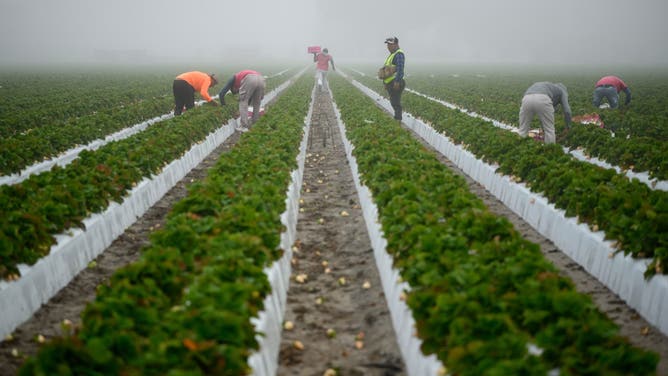
Farmer during a strawberry harvest at Fancy Farms in Lakeland, Florida.
(Thomas Simonetti/Bloomberg via Getty Images / Getty Images)
STRAWBERRIES
Strawberry crops have been significantly impacted by drought conditions, particularly in regions such as Florida and North Carolina.
Since strawberries have shallow roots, they rely heavily on soil moisture, making them vulnerable to dry conditions.
STRONG WINDS FUEL SPRINGS FIRE IN SOUTHERN CALIFORNIA WITH 4,000+ ACRES SCORCHED
Drought can lead to smaller berries, lower yields and reduced fruit quality.
Also, warm temperatures during drought can cause plants to bloom earlier than normal, leaving them more exposed to damage.
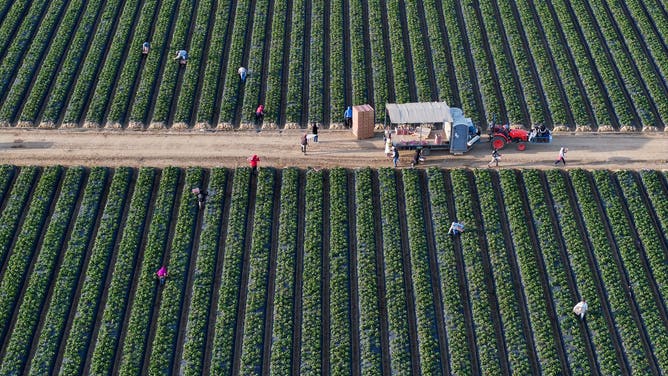
An aerial view of farm workers harvesting strawberries.
(Tayfun Coskun/Anadolu via Getty Images / Getty Images)
In North Carolina, drought conditions have become severe enough that the USDA has designated 82 counties as natural disaster areas, making farmers eligible for emergency loans and other relief programs.
Farmers have also reported needing to give more attention to their crops, which has increased both labor and water usage.
As a result, they are facing higher irrigation costs as they attempt to compensate for the lack of rainfall, further increasing production expenses and potentially driving up prices for consumers.