

Sargassum surge returns with seaweed blob moving towards popular beaches just in time for spring break
The spring break 2026 outlook is not looking promising as estimated 9.5 million tons of sargassum is moving toward the Caribbean and Florida beaches.
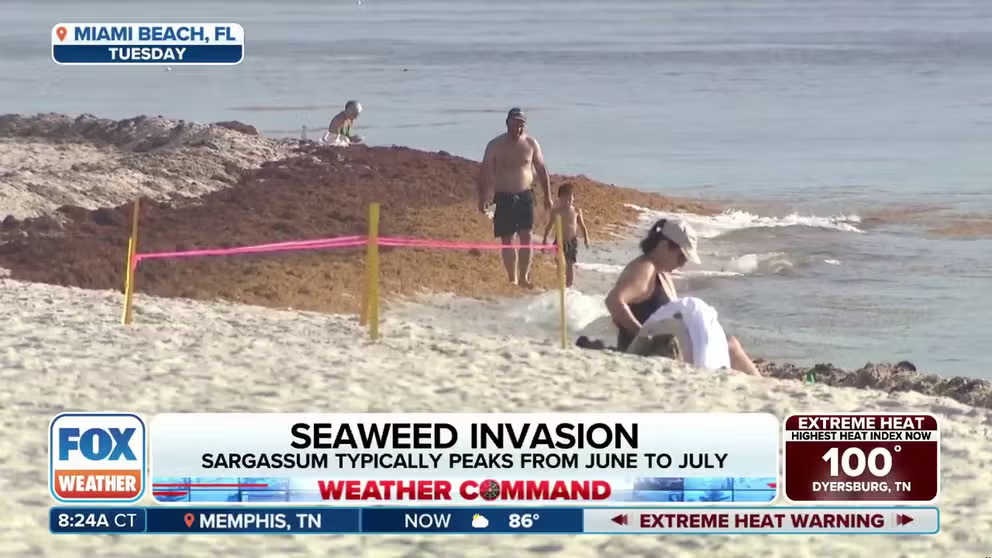
FILE: Smelly sargassum seaweed invades Florida beaches
Record-breaking blooms of smelly sargassum seaweed are invading Florida beaches. FOX Weather Correspondent Brandy Campbell was in Dania Beach on July 23 and explains that even though the brown microalgae can be beneficial for marine life, it can become a mess after decomposing on the beach.
Sargassum seaweed is on the rise— and yes, you guessed it, yet again — just in time for spring break. The sea blob is making its way to popular beach destinations, continuing a decades-long pattern.
An estimated 9.5 million tons of sargassum is moving toward the Caribbean and Florida beaches, with heavy amounts already reported in parts of the Caribbean, Mexico, and the Florida Keys.
FLESH-EATING BACTERIA, PLASTICS IN SARGASSUM MAY POSE ‘TRIPLE THREAT’ TO PUBLIC HEALTH
Over the past several years, the blooms have grown more rapidly.
Many of us are familiar with this seaweed, as its unpleasant stench is hard to miss.
The Florida Department of Health in St. Johns County compares it to the smell of rotten eggs.
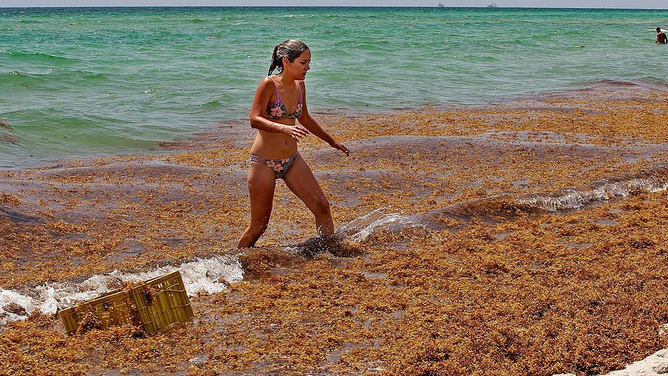
FILE - Monica Madrigal find her way out of the ocean through a thick raft of Sargassum seaweed that washed up on the seashore by the 71st Street area in Miami Beach Tuesday July 28, 2020. (Pedro Portal/Miami Herald/Tribune News Service via Getty Images)
(Getty Images)
And it's really nothing to look at either, as it’s thick, brown mats of floating algae with long, tangled hairs blanket the water and wash ashore, creating a common challenge for tourists and local communities alike.
TOXIC ALGAE BLOOM BECOMING DEADLY FOR SEA LIONS, DOLPHINS IN PACIFIC OCEAN
![Sargassum algae piles up along the shore at a beach in Puerto Rico on May 19, 2025]() Image 1 of 5
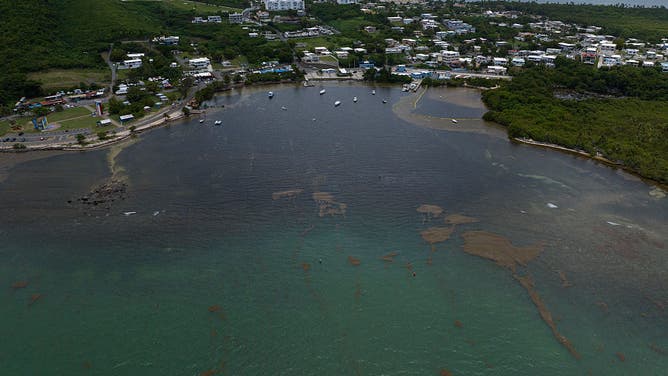
Image 1 of 5This aerial picture taken on May 19, 2025 shows sargassum algae drifting to a bay in Fajardo, Puerto Rico. (Photo by Ricardo ARDUENGO / AFP) / "The erroneous mention[s] appearing in the metadata of this photo by Ricardo ARDUENGO has been modified in AFP systems in the following manner: [May 19, 2025] instead of [November 19, 2025]. Please immediately remove the erroneous mention[s] from all your online services and delete it (them) from your servers. If you have been authorized by AFP to distribute it (them) to third parties, please ensure that the same actions are carried out by them. Failure to promptly comply with these instructions will entail liability on your part for any continued or post notification usage. Therefore we thank you very much for all your attention and prompt action. We are sorry for the inconvenience this notification may cause and remain at your disposal for any further information you may require." (Photo by RICARDO ARDUENGO/AFP via Getty Images) (Photo by Ricardo ARDUENGO / AFP)
![Sargassum algae piles up along the shore at a beach in Puerto Rico on May 19, 2025]() Image 2 of 5
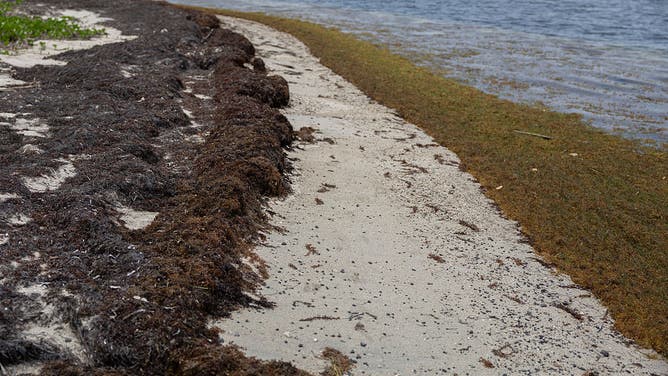
Image 2 of 5Sargassum algae piles up along the shore at a beach in Puerto Rico on May 19, 2025 (Photo by Ricardo ARDUENGO / AFP)
![Sargassum algae piles up along the shore at a beach in Ceiba, Puerto Rico on May 19, 2025]() Image 3 of 5
Image 3 of 5Sargassum algae piles up along the shore at a beach in Ceiba, Puerto Rico on May 19, 2025 (Photo by Ricardo ARDUENGO / AFP)
![FILE - A beachgoer walks through sargassum that washed ashore on May 18, 2023 in Key West, Florida. (Photo by Joe Raedle/Getty Images)]() Image 4 of 5
Image 4 of 5FILE - A beachgoer walks through sargassum that washed ashore on May 18, 2023 in Key West, Florida. (Photo by Joe Raedle/Getty Images) ( )
![Globs of seaweed wash ashore Miami Beach ahead of sargassum season]() Image 5 of 5
Image 5 of 5Globs of seaweed wash ashore Miami Beach ahead of sargassum season. (@tonedrone via Storyful)
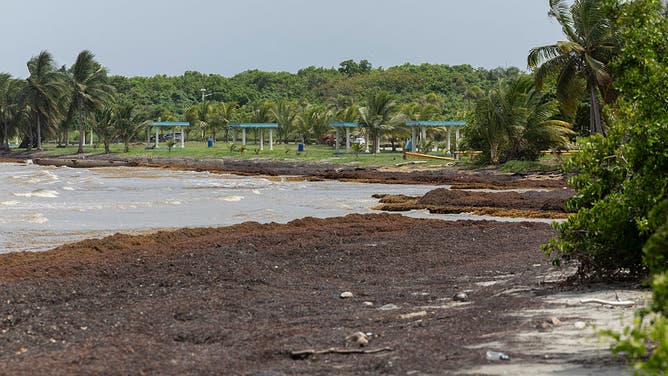
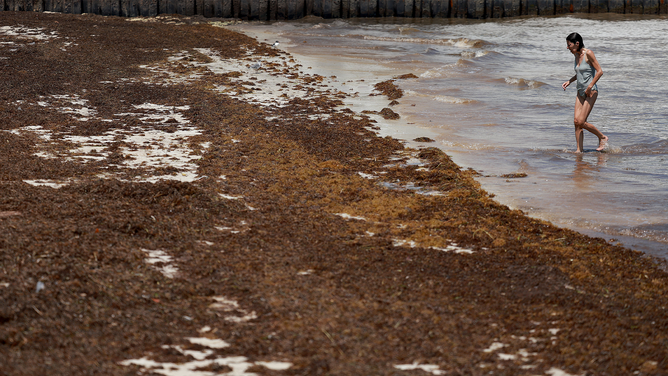
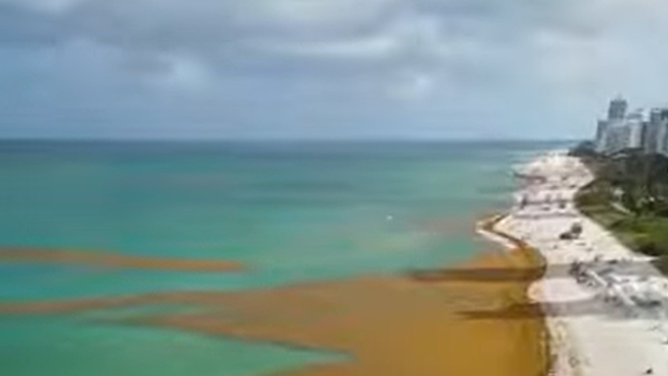
According to tracking reports from the University of South Florida (USF), the total amount of sargassum across the Atlantic, Caribbean, and Gulf of Mexico reached 9.5 million tons in January 2026.
Excluding the east Atlantic region, every other region has seen a record-high amount of sargassum within the first month of the year.
HOW FLORIDA'S SARGASSUM SEAWEED BLOB MAY IMPACT SEA TURTLES DURING NESTING SEASON
According to an article posted on Caribbean News Digital in February, "The Mexican Caribbean is facing an ‘environmental and economic emergency’ today as record-breaking quantities of sargassum seaweed arrived on the shores of Cancun and Tulum weeks ahead of schedule."
Areas of the western Caribbean—such as Belize, Honduras, and Mexico’s Caribbean coastline—were expected to have already experienced some beaching events, USF said, and recent reports do confirm that.
VIDEO: PARAGLIDER FALLS FROM THE SKY IN UNEXPECTED TURN OF EVENTS IN FLORIDA
USF added that "Because of the continuous growth from November to January and because of the record-high Sargassum amount in most regions, 2026 is very likely another major Sargassum year."
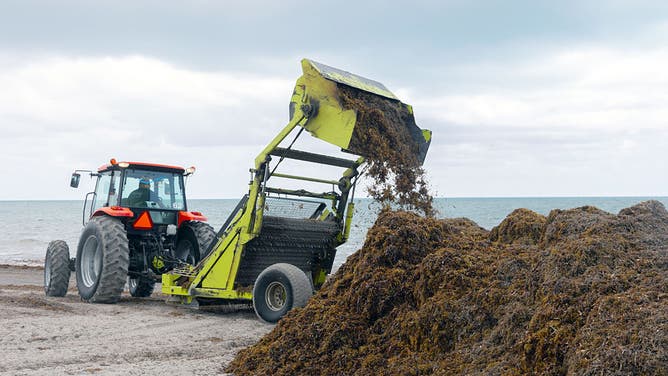
Swaths of sargassum, or seaweed, washed up in Key Biscayne on Thursday, April 24 and was raked into piles to be taken to the landfill. (Ashley Miznazi/The Miami Herald/Tribune News Service via Getty Images
(Getty Images)
The Mexican Navy is actively deploying sargassum-collection ships and containment barriers on a daily basis to keep up with the early arrivals, according to multiple news outlets.
The Florida Department of Health in St. Johns County recommends avoiding touching or swimming near the sargassum and using gloves if handling it.
Although the algae ironically helps build beaches and acts as vital offshore habitat for marine life, it causes significant environmental and economic issues when massive blooms inundate coastlines.