

NASA Artemis II countdown: Here's what happens from now until launch
The organization plans for liftoff to start on Wednesday, making it the first crewed rocket ship to return to the moon since 1972.

Final preparations underway for NASA's Artemis II mission around the moon
The final stages of preparation are happening for Artemis II, the first crewed lunar mission in 50 years. FOX Weather Correspondent Brandy Campbell reports in front of the countdown clock on the latest weather conditions and preparations just one day ahead of the planned launch day.
NASA teams across the country have begun the launch countdown for the Artemis II mission around the moon.
The organization plans for liftoff to start on Wednesday, making it the first crewed rocket ship to return to the moon since 1972.
NASA'S ARTEMIS MISSIONS: EVERYTHING YOU NEED TO KNOW AHEAD OF THE HISTORIC MOON LAUNCH
The launch countdown includes "L Minus" and "T Minus" times. The "L minus" indicates how far away liftoff is in hours and minutes. The "T minus" time is a sequence of events built into the launch countdown.
Each event is planned precisely to make sure the teams have everything necessary before launch day.
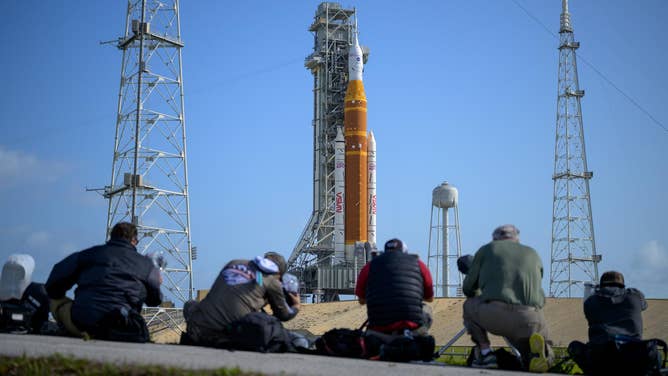
Media aim their remote cameras on NASA’s Artemis II Space Launch System (SLS) rocket and Orion spacecraft, atop a mobile launcher at Launch Complex 39B, Sunday, March 29, 2026, at NASA’s Kennedy Space Center in Florida.
(NASA/Bill Ingalls / NASA)
Here are some of the key milestones that take place starting at L-16 hours:
L-16 hours and counting
- L-15H30M – L-14H: Starting at 15 hours before takeoff, all non-essential personnel leave the Launch Complex.
- L-14H15M – L-12H05M: Crews change the systems from air to gaseous nitrogen (GN2) and fill enclosed cavities with GN2.
- L-13H15M – L-11H45M: The teams activate the ground launch sequencer (GLS), which is a moment when the control of the launch countdown shifts into an automated system that executes the final, time-critical steps needed to launch a rocket.
L-13 hours and counting
- L-12H35M – L-9H50M: A 2-hour, 45-minute built-in countdown hold begins to provide cushion time for certain tasks without impacting the schedule.
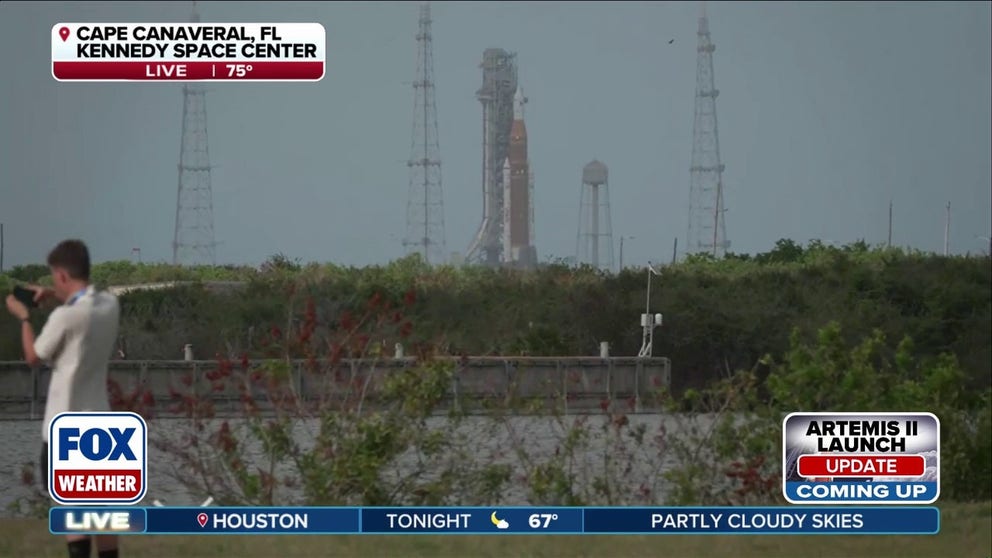
The countdown clock for Artemis II mission has begun
NASA has launched the countdown clock for Artemis II. FOX Weather correspondent Brandy Campbell is on the ground at Kennedy Space Center in Cape Canaveral, Florida, covering everything you need to know about the first crewed mission to the moon since 1972.
- L-10H50M:The launch team evaluates all systems and decides if it’s safe to load propellants into the rocket, also known as tanking.
- L-10H50M – L-9H35M: If the team decides to begin tanking, the spacecraft, Orion, begins to stabilize in a cold environment, liquid oxygen and hydrogen fuel are pre-cooled before full flow begins and the engine-side oxygen plumbing is chilled.
CAUGHT ON CAMERA: BRIGHT FIREBALL REPORTED SHOOTING ACROSS THE SKY IN WASHINGTON AND OREGON
L-10 hours and counting
- L-9H55M – L-9H25M: The liquid hydrogen tanking process begins at a control low flow rate to fill the rocket's tanks.
- L-9H40M – L-9H30M: The liquid oxygen tanking process begins at a control low flow rate to fill the rocket's tanks.
- L-9H30M – L-6H40M: The liquid oxygen tanking rate is increased to fill the tanks to near capacity.
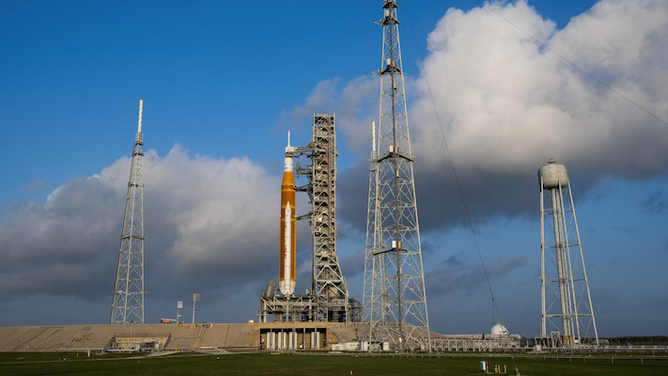
NASA plans to launch Artemis II on Wednesday.
(FOX Weather)
- L-9H25M – L-8H: Liquid hydrogen tanking process speed is increased.
- L-9H05M – L-8H30M: The process of the pre-cooling the liquid hydrogen plumbing on the Interim Cryogenic Propulsion Stage (ICPS).
- L-8H30M – L-7H45M: The ICPS liquid hydrogen filling rate is increased.
MEET THE ASTRONAUTS PREPARING FOR HUMANITY’S RETURN TO THE MOON ON THE ARTEMIS II MISSION
- L-8H – L-7H55M: The final stage of liquid hydrogen fueling begins.
- L-7H55M – terminal count: The level of the liquid hydrogen fuel is maintained until the last phase of the launch countdown.
- L-7H45M – L-7H20M: Crews test the ICPS liquid hydrogen tank to see if it can handle pressure.
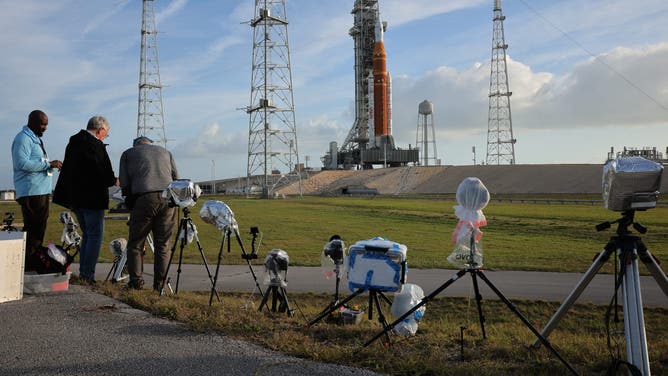
Journalists set up cameras near NASA's 322-foot-tall Artemis II Space Launch System rocket and Orion spacecraft at Launch Complex 39B the day before launch at Kennedy Space Center on March 31, 2026 in Cape Canaveral, Florida.
(Chip Somodevilla/Getty Images / Getty Images)
- L-7H20M – L-7H10M: The final stage of the ICPS liquid hydrogen fueling starts.
- L-7H05M – terminal count: The level of ICPS liquid hydrogen is maintained until the last phase of the launch countdown.
- L-6H40M – L-6H10M: Orion communication systems are activated.
- L-6H40M – L-6H05M: Crews begin the final step in loading liquid oxygen into the core stage tanks.
- L-6H40M – L-6H30M: The engine-side liquid oxygen plumbing on the ICPS is pre-cooled before fueling starts.
- L-6H30M – L-5H45M: The ICPS liquid oxygen filling rate is increased.

Former NASA astronaut shares her expertise on space travel
EXPERT ANALYSIS ‼️: Retired NASA Astronaut Dottie Metcalf-Lindenburger joins FOX Weather to share her expertise and past experience when traveling into space in her career, along with her thoughts on the upcoming Artemis II mission.
- L-6H10M: The launch pad safety procedure is performed, and the launch pad ground crew gathers at the Orion to check the final pre-flight operations.
- L-6H05M – terminal count: Core stage liquid oxygen tank is maintained until the last phase of the launch countdown
L-6 hours and counting
- L-6H: Weather briefing with the flight crew.
- L-5H45M – L-5H30M: Teams preform a pre-launch safety procedure to ensure the ICPS liquid oxygen tank can handle pressure.
- L-5H30M – L-5H10M: Small amounts of liquid oxygen are added to the ICPS tank to maintain nominal levels.
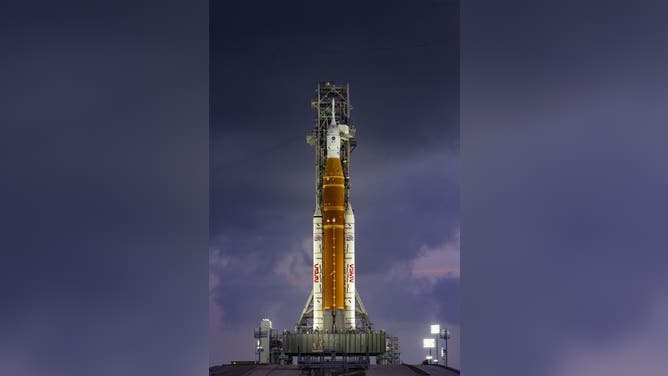
NASA's Artemis II Space Launch System rocket and Orion spacecraft rest on Launch Pad 39B at Kennedy Space Center in Cape Canaveral, Florida, on March 31, 2026, ahead of the crewed lunar mission.
(Jim WATSON / AFP via Getty Images / Getty Images)
- L-5H10M – terminal count: The ICPS liquid oxygen tank is maintained until the last phase of the launch countdown.
- L-5H10M: 1 hour and 10 minute built-in hold begins.
- L-5H10M – L-4H55M: Closeout teams move into the white room to perform the last check and assist astronauts.
- L-4H40M – L-4H10M: The flight crew deploy to the launch pad.
- L-4H: The flight crew board Orion.
- L-3H40M – L-3H10M: Team prep the Orion’s hatch and seal it after the astronauts have boarded.
- L-3H10M – L-2H45M: Technicians check the counterbalance mechanism and measure the seal pressure to ensure the crew module remains airtight and the hatch stays securely closed.
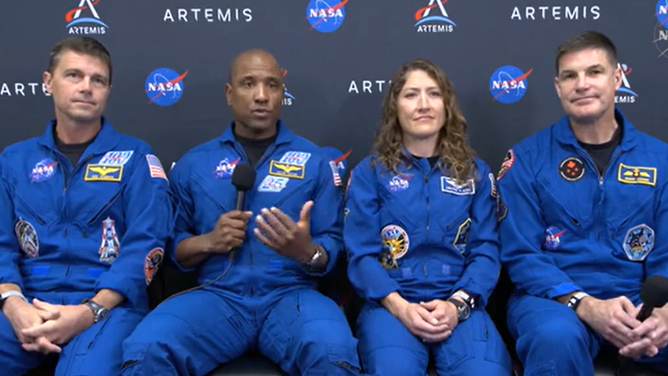
Artemis II crew members CSA (Canadian Space Agency) astronaut Jeremy Hansen, and NASA astronauts Christina Koch, Victor Glover, and Reid Wiseman answer questions leading up to launch date.
(NASA / YouTube)
- L-2H20M – L-1H40M: Service panels around the Orion crew module hatch are installed and secured.
- L-1H40M – L1H30M: The launch abort system (LAS) hatch is closed for flight.
- L-1H10M: The launch director reviews the rocket and thermal protection system.
- L-50M – L-40M: The closeout crew departs the launch complex.
- L-50M: Final NASA test director briefing is held.
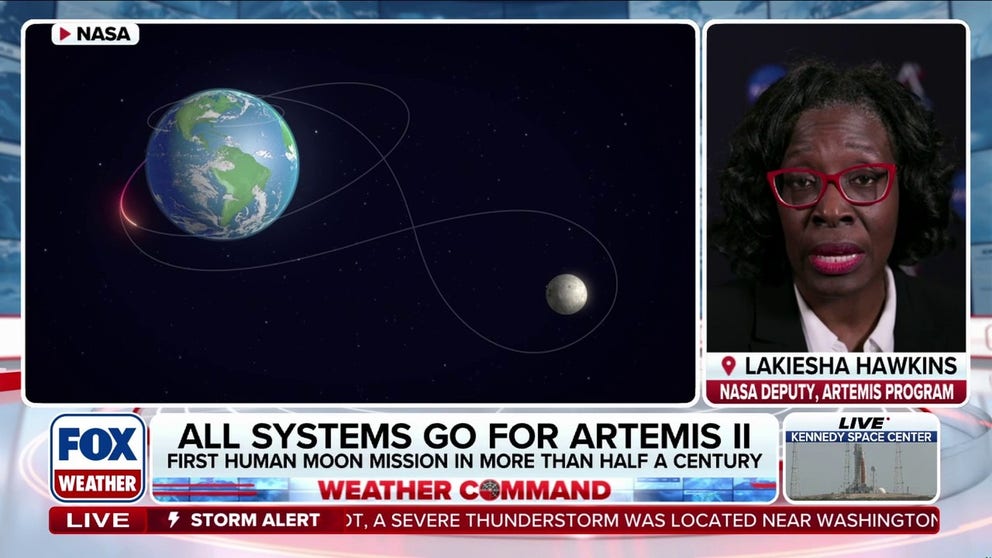
NASA joins FOX Weather to discuss landmark Artemis II launch
Artemis II, set to launch Wednesday, will send four astronauts on a four-day journey to the far-side of the Moon — farther than any humans have gone before. Lakiesha Hawkins, Acting Deputy Associate Administrator for the Exploration Systems Development Mission Directorate at NASA joined FOX Weather to discuss the landmark space mission.
L-40 minutes and holding
- L-40M – Built in 30-minute countdown hold begins.
L-25 minutes and holding
- L-25M: The transition team activates the Orion-to-Earth communication loop.
- L-17M: The launch director polls team to ensure they are "go" for launch.
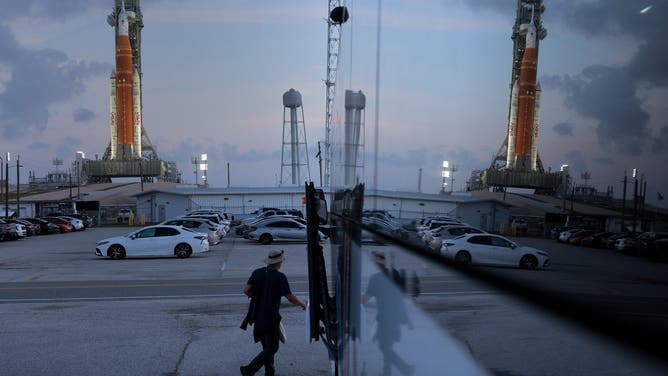
CAPE CANAVERAL, FLORIDA - MARCH 31: NASA's 322-foot-tall Artemis II Space Launch System rocket and Orion spacecraft stand on Launch Complex 39B at Kennedy Space Center on March 31, 2026 in Cape Canaveral, Florida. The 10-day mission will take NASA astronauts Commander Reid Wiseman, Pilot Victor Glover and Mission Specialist Christina Koch and CSA (Canadian Space Agency) Mission Specialist Jeremy Hansen around the moon and back. The astronauts are supposed to fly 230,000 miles out into space, the farthest any human has ever traveled from Earth. (Photo by Chip Somodevilla/Getty Images)
(Chip Somodevilla/Getty Images) / Getty Images)
- L-15M: Flight crew lowers the visors on their helmets.
- L-14M: The flight crew performs a short purge verification, ensuring the cabin is free of excess gases and that environmental systems are functioning normally.
T-10 minutes and counting
- T-10M: The GLS initiates terminal count.
- T-8M: Crew Access Arm retract.
- T-6M: The GLS gives the command to pressurize the core stage propellant tanks, Orion’s ascent pyrotechnics are armed and switches to internal power.
- T-5M57S: The replenishment of core stage liquid hydrogen is terminated.
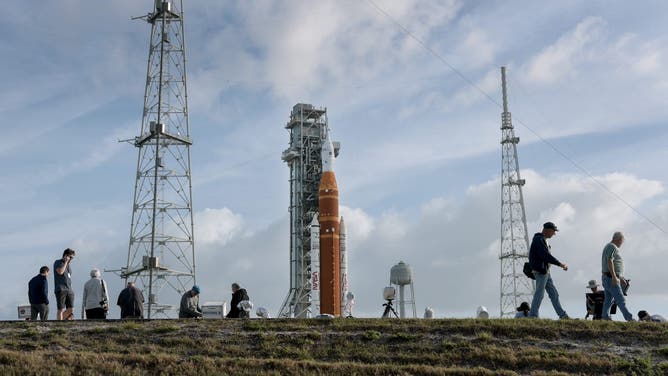
The rocket is being prepared for an April 1st launch on a 10-day mission, which is scheduled to take four astronauts around the Moon and back to Earth.
(oe Raedle/Getty Images)
- T-5M20S: The LAS capability becomes available.
- T-5M20S: NTD lets the commander know LAS capability is available.
- T-4M40S: GLS gives the go to perform the high flow liquid hydrogen bleed check.
- T-4M30S: Flight termination system armed.
- T-4M: GLS authorizes the start of the core stage auxiliary power units (APU). The core stage APU starts and the replenishment of core stage liquid oxygen is terminated.
HERE'S WHY NASA WILL MONITOR THE SUN FOR SOLAR ERUPTIONS DURING ARTEMIS II MISSION
- T-3M30S: The replenishment of ICPS liquid oxygen is terminated.
- T-3M10S: GLS gives the go for purse sequence 4, clearing propellant lines and critical systems of gases or vapors.
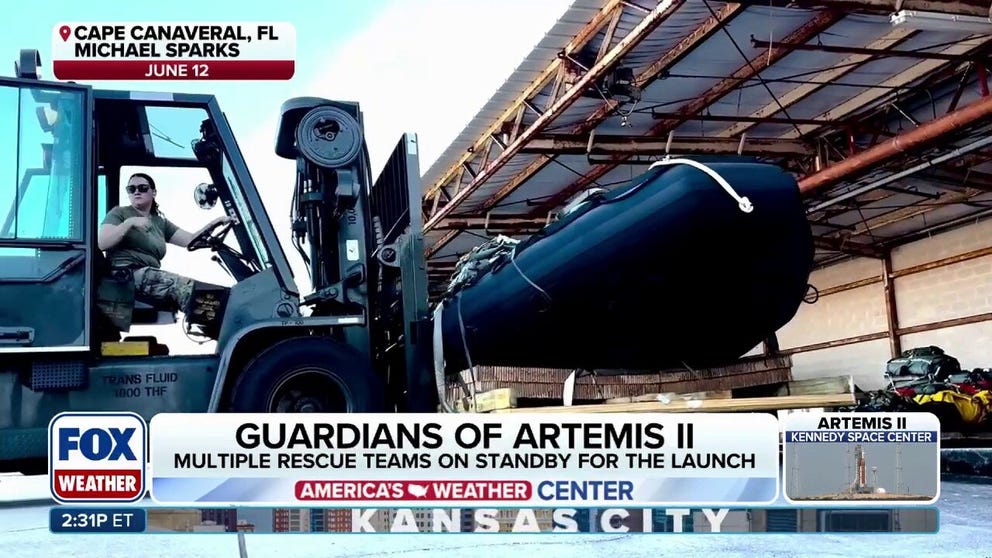
Air Force tasked with Artemis II safety at launch
U.S. Air Force Detachment 3 is ready for the Artemis II launch, and they're tasked with contingency planning during the mission launch. Lt. Colonel Kevin Pieper joins FOX Weather to talk about how long Detachment 3 has been preparing for Artemis II, as well as all they prepare for.
- T-2M02S: ICPS switches to internal battery power.
- T-2M: Booster switches to internal battery power.
- T-1M30S: Core stage switches to internal power.
- T-1M20S: ICPS enters terminal countdown mode.
- T-50S: The replenishment of ICPS liquid hydrogen is terminated.
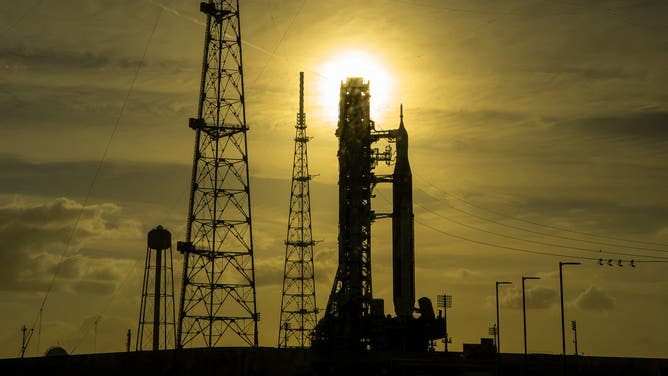
The first window to launch from the Kennedy Space Center in Florida opens Wednesday, April 1 at 6:24 pm (22:24 GMT), and NASA officials said the countdown began at 4:44 pm.
(Jim WATSON / AFP via Getty Images / Getty Images)
- T-33S: The GLS starts the final automated launch sequence.
- T-30S: The core stage flight computer takes control of the countdown and executes the final launch sequence automatically.
- T-12S: Ignition devices are activated to safely burn off residual hydrogen gas.
- T-10S: GLS gives the final command to ignite the core stage engines.
- T-6.36S: RS-25 engines start up.
- T-0: The RS-25 engines ignite, ground umbilical retract and liftoff.