

NASA's Artemis missions: Everything you need to know ahead of the historic moon launch
Picking up where Apollo 17 left off in 1972, NASA's Artemis mission will send astronauts on increasingly difficult missions to explore more of the Moon for scientific discovery, economic benefits and to build the foundation for the first crewed missions to Mars.
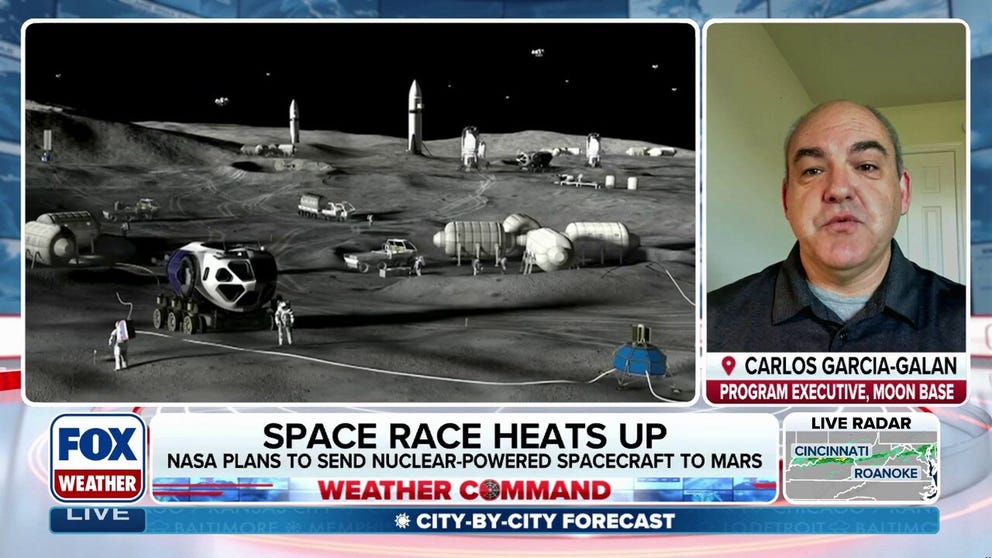
NASA discusses future plans for space race, establishing Moon Base
NASA has big plans for the Artemis Program, which eventually has a target of two crewed missions a year beginning in 2028 with a long-term goal of building a base on the Moon's surface. Moon Base Program Executive Carlos Garcia-Galan joins FOX Weather to talk about NASA's future plans and the Moon Base.
As NASA prepares to launch its second Artemis program flight in a fly-by around the Moon, we're taking a look at 10 of the most important things to know about NASA's lunar exploration program.
Picking up where Apollo 17 left off in 1972, NASA's Artemis program will send astronauts on increasingly difficult missions to explore more of the Moon for scientific discovery, economic benefits and to build the foundation for the first crewed missions to Mars, according to NASA.
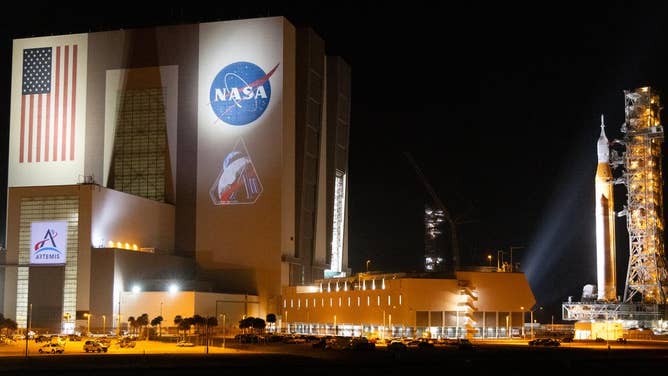
NASA’s Space Launch System (SLS) rocket and Orion spacecraft, secured to the mobile launcher, is seen as it rolls out of the Vehicle Assembly Building to Launch Pad 39B, Friday, March 20, 2026, at NASA’s Kennedy Space Center in Florida.
(NASA/Joel Kowsky)
1. The Artemis Accords
The Artemis Accords were established by NASA and the U.S. Department of State, along with seven other initial signatory nations, established the Artemis Accords in 2020.
Over the last six years, 61 nations have signed the accords.
2. Artemis I
Artemis I launched on Nov. 16, 2022 as the first uncrewed lunar test flight in NASA's Artemis program.
HISTORY MADE: NASA'S MOON ROCKET ROARS TO LIFE LAUNCHING ON ARTEMIS 1 TEST FLIGHT
The launch was delayed several times due to Hurricanes Ian and Nicole, as well as several necessary repairs being made both at the Vehicle Assembly Building and the launchpad.
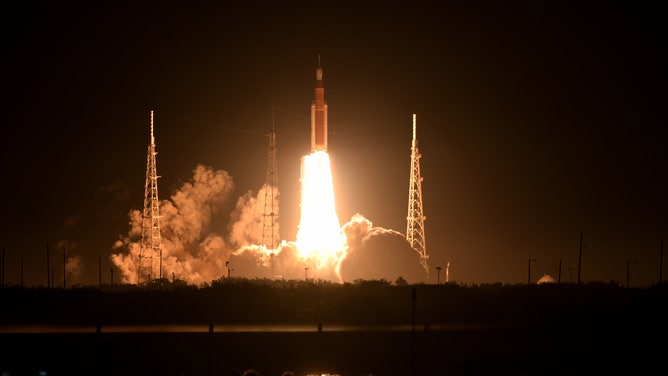
NASA's Space Launch System (SLS) rocket with the Orion spacecraft launches from pad 39B at the Kennedy Space Center for the Artemis 1 mission on November 16, 2022 in Cape Canaveral, Florida. This is the third attempt to launch the Artemis I rocket to the moon after a series of technical and weather delays.
(Paul Hennessy / Anadolu Agency / Getty Images)
Artemis I's mission lasted nearly 26 days, and splashed down on Dec. 11 in the Pacific Ocean.
3. Artemis II
This is the second mission in the Artemis program, and the first crewed mission around the Moon.
Four astronauts, NASA's Reid Wiseman, Victor Glover, Christina Koch and Canadian Space Agency's Jeremy Hansen, aim to travel farther from Earth than humans have in more than 50 years.
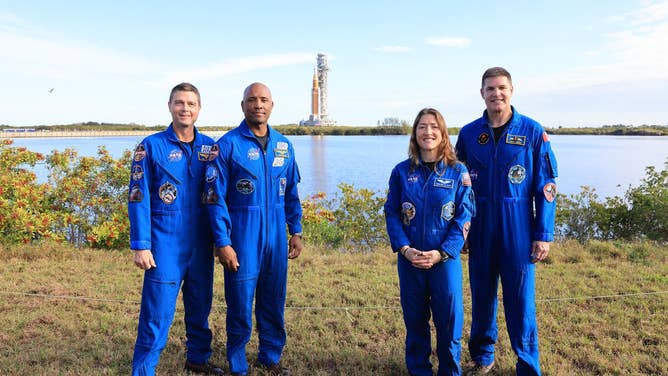
From left to right, Artemis II NASA astronauts Reid Wiseman, commander; Victor Glover, pilot, and Christina Koch, mission specialist, and CSA (Canadian Space Agency) Jeremy Hansen, mission specialist, pose for a photograph during rollout of NASA’s Artemis II SLS (Space Launch System) rocket and Orion spacecraft to Launch Complex 39B at NASA’s Kennedy Space Center in Florida on Saturday, Jan. 17, 2026
(NASA/Kim Shiflett / NASA)
The mission will last 10 days, with the Orion spacecraft and SLS rocket carrying them around the Moon and back to Earth.
4. Artemis II delayed multiple times
Artemis II was originally planned to launch in February 2026. After an initial delay because of the extreme cold, the launch was pushed back to March.
Then, a hydrogen leak prevented the launch of the mission in February. After repairing the leak, a second Wet Dress Rehearsal took place successfully.
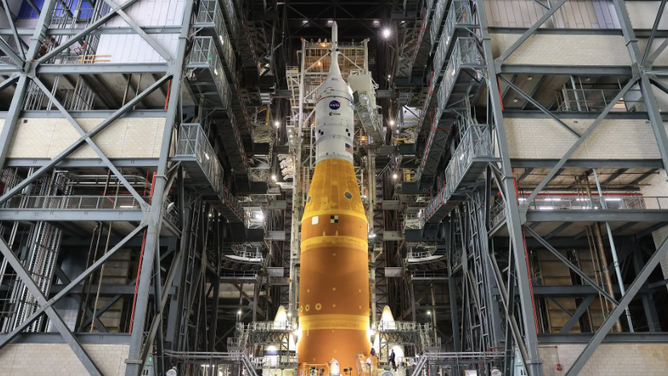
NASA’s Artemis II SLS (Space Launch System) rocket and Orion spacecraft, secured to the mobile launcher, stands vertical inside the Vehicle Assembly building on Tuesday, March 17, 2026, as preparations continue for rollout to Launch Complex 39B at NASA’s Kennedy Space Center in Florida.
(NASA/Kim Shifflett / NASA)
HERE'S WHY NASA WILL MONITOR THE SUN FOR SOLAR ERUPTIONS DURING ARTEMIS II MISSION
The next day, NASA announced Artemis II would be delayed once again and rolled back to the VAB from the launchpad because of a helium flow leak.
5. Artemis timelines accelerated
In late February, it was announced that Artemis III, IV and V, the three Artemis missions previously announced and planned for by NASA, would be happening sooner than originally planned.
Artemis III would plan to launch by April 2027, meanwhile Artemis IV and V would both launch in 2028.
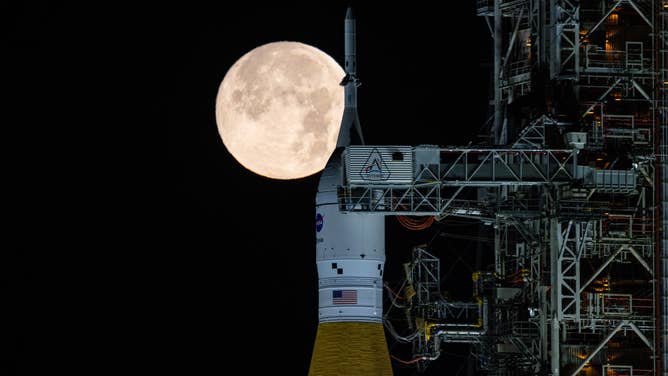
A full Moon is seen shining over NASA’s SLS (Space Launch System) and Orion spacecraft, atop the mobile launcher in the early hours of February 1, 2026.
(NASA/Sam Lott / NASA)
6. Changes with Artemis III, IV and V mission plans
Originally set to be the first crewed lunar landing, Artemis III's mission plan was shifted to attempt a low-Earth orbit with one or both of NASA's lunar landers.
NASA ANNOUNCES CRITICAL CHANGES TO ARTEMIS MISSION'S RETURN TO THE MOON
Artemis IV will now be the first mission to land humans on the surface of the Moon since Apollo 17 in 1972. NASA plans to launch Artemis IV in early 2028.
Artemis V is targeted to be the second launch of 2028. NASA said it expects to start building a lunar base on this mission.
7. Artemis II mission phases announced
With Artemis II's astronauts in Florida and the launch only a few days away, NASA revealed the mission phases.
Artemis II's first phase will include the rocket launch as well as a 24-hour high-Earth orbit.
Our Artemis II crew will be going around the Moon, but they'll always find their way back home 🌎
— NASA Artemis (@NASAArtemis) March 25, 2026
During this complex journey, the four astronauts will travel ~685,000 miles on a trajectory around the Moon and back to Earth.
See their daily agenda: https://t.co/172PVtri2Z pic.twitter.com/zsK5i6pirj
NASA ANNOUNCES ARTEMIS II MISSION PHASES, PLANS FOR FUTURE ARTEMIS PROGRAM LAUNCHES
Phase II will be the journey to the Moon, lasting about four days.
The third phase begins with the lunar fly-by and journey back to Earth.
Phase IV will be the reentry to Earth's atmosphere and splashdown off the coast of San Diego in the Pacific Ocean.
8. NASA announces pause in Gateway
During "Ignition," NASA announced plans to pause the funding to Gateway, an orbiting moon base, to shift toward building a base on the surface of the moon.
Gateway Space Station was planned to launch no earlier than 2027, according to NASA's website.
It was set to be a lunar orbiting space station that would "not only be a home-away-from home for astronauts during extended stays in lunar orbit, but also enable additional capabilities in support of Artemis objectives," according to NASA.
9. Moon Base announced
NASA Administrator Jared Isaacman said the Moon Base will be built in phases, starting with a "repeatable, modular approach" with lunar missions.
Phase 1 will be introducing equipment, learning more about the environment and advancing technology.
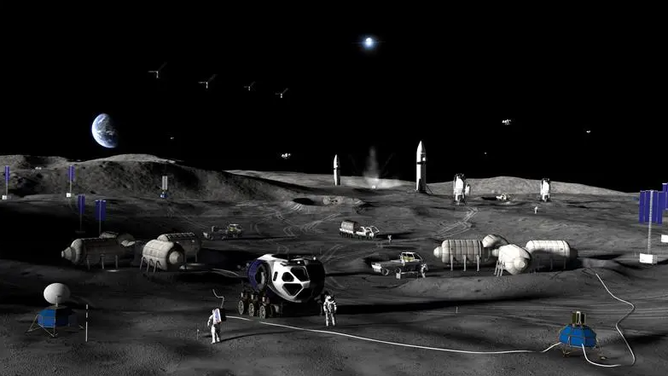
Artistic concept of Phase 3 of NASA’s Moon Base.
(NASA)
NASA PAUSES GATEWAY LUNAR-ORBIT SPACE STATION TO BUILD LUNAR BASE ON THE MOON
Phase 2 will establish early infrastructure on the moon and Phase 3 will set a long-term human presence via the Moon Base.
Isaacman said NASA will spend $20 billion over the next seven years to build the base.
10. Preparing for Mars
While the Artemis program is still in its early stages of missions, NASA says the program will help prepare for humans on Mars.
NASA said engineers and scientists around the country are working to develop the technologies astronauts will use to one day live and work on Mars and safely return home to Earth.