

NASA pauses Gateway lunar-orbit space station to build lunar base on the moon
NASA will spend $20 billion over the next seven years, through 2033, and build the base through dozens of missions working with commercial and international partners towards a deliberate and achievable plan.

Fourth meteor in one week streaks across Michigan sky
The fourth meteor in one week was spotted streaking across the night sky from Warren, Michigan, on Monday night.
NASA announced a series of plans regarding lunar exploration on Tuesday, including that the previously-planned Gateway Space Station is being paused to support a base on the moon's surface.
During "Ignition," NASA expanded on its plans to increase the launch cadence of the future Artemis missions, with a goal of launching crew landings on the moon every six months starting in 2028. They also announced plans to pause the funding to Gateway, an orbiting moon base, to shift toward building a base on the surface of the moon.
WATCH: NASA'S HUBBLE SPACE TELESCOPE CAPTURES RARE PROOF OF COMET BREAKING APART
Gateway Space Station was planned to launch no earlier than 2027, according to NASA's website.
It was set to be a lunar orbiting space station that would "not only be a home-away-from home for astronauts during extended stays in lunar orbit, but also enable additional capabilities in support of Artemis objectives," according to NASA.
NASA ANNOUNCES ARTEMIS II MISSION PHASES, PLANS FOR FUTURE ARTEMIS PROGRAM LAUNCHES
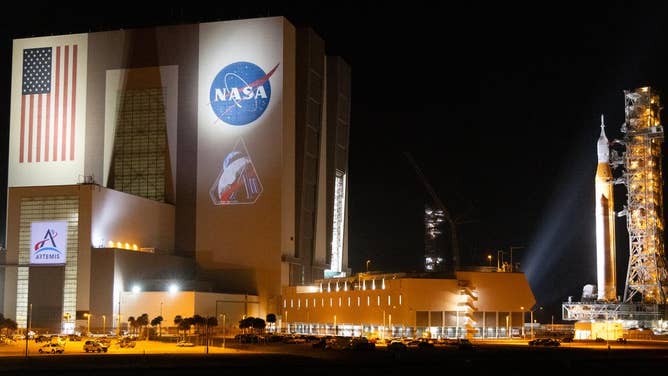
NASA’s Space Launch System (SLS) rocket and Orion spacecraft, secured to the mobile launcher, is seen as it rolls out of the Vehicle Assembly Building to Launch Pad 39B, Friday, March 20, 2026, at NASA’s Kennedy Space Center in Florida.
(NASA/Joel Kowsky / NASA)
Now, the plan has shifted.
"It should not really surprise anyone that we are pausing Gateway in its current form and focusing on infrastructure that supports sustained operations on the lunar surface," NASA Administrator Jared Isaacman said.
The lunar base would be built in phases, starting with a "repeatable, modular approach" with lunar missions.
HERE'S WHY NASA WILL MONITOR THE SUN FOR SOLAR ERUPTIONS DURING ARTEMIS II MISSION
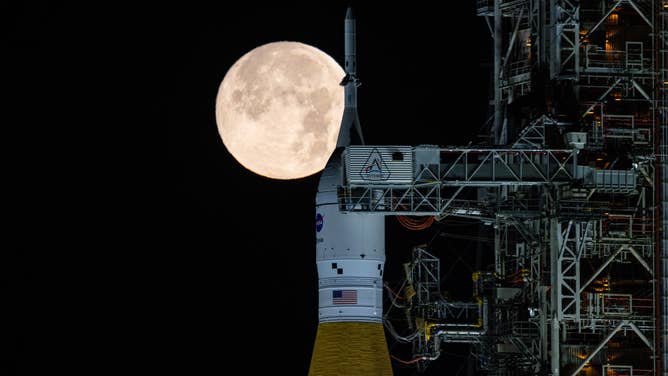
A full Moon is seen shining over NASA’s SLS (Space Launch System) and Orion spacecraft, atop the mobile launcher in the early hours of February 1, 2026.
(NASA/Sam Lott / NASA)
Phase 1
NASA said Commercial Lunar Payload Services (CLPS) deliveries and the Lunar Terrain Vehicle (LTV) program will increase the pace of lunar activity and will bring rovers, instruments and technology demonstrations to the moon.
These items will advance mobility, power generation, communications, navigation, surface operations and a wide range of scientific investigations, NASA said.
NEW DEVELOPMENTS IN NASA ELECTRONICS WILL LEAD TO FURTHER INTERPLANETARY EXPLORATION
Phase 2
Phase two transitions from experimentation to establishing early infrastructure on the moon.
NASA said it will use lessons from earlier Artemis missions to build semi-habitable infrastructure and regular logistics.
SEE IT: JAMES WEBB TELESCOPE CAPTURES DETAILED IMAGES OF DYING STAR
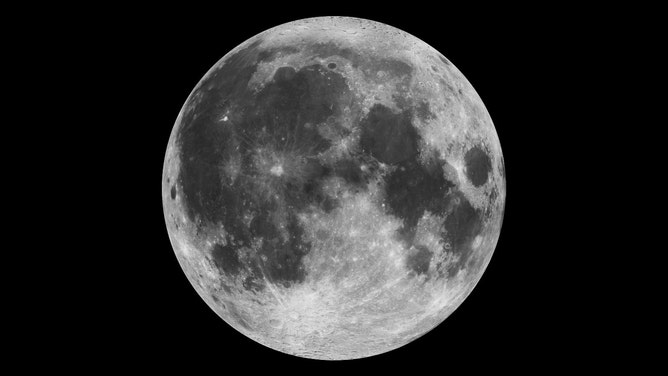
This composite image of the moon using Clementine data from 1994 is the view we are most likely to see when the moon is full.
(NASA Goddard / NASA)
The ultimate goal will be to support regular astronaut operations on the moon's surface, Isaacman said.
Isaacman said at this point, NASA expects to see significant contributions through international partners.
HOW OFTEN DO METEORITES CRASH IN THE US?
For example, the Japanese Aerospace Exploration Agency (JAXA) pressurized rover and possible other partner scientific payloads, rovers and infrastructure and transportation capabilities.

The full moon, which is known as the 'Pink Moon' during April, sets behind Edinburgh Castle. Picture date: Wednesday April 24, 2024.
(Jane Barlow/PA Images / Getty Images)
Phase 3
At this point, phase three would be introduced.
The third and final phase would allow a long-term human presence on the moon.
NASA said as cargo-capable human-landing systems come online, the agency will deliver heavier infrastructure needed for a continuous human foothold on the moon.
Such infrastructure will include the Italian Space Agency's Multi-purpose Habitats (MPH), the Canadian Space Agency's Lunar Utility Vehicle and opportunities for additional contributions in habitation, surface mobility and logistics, NASA said.
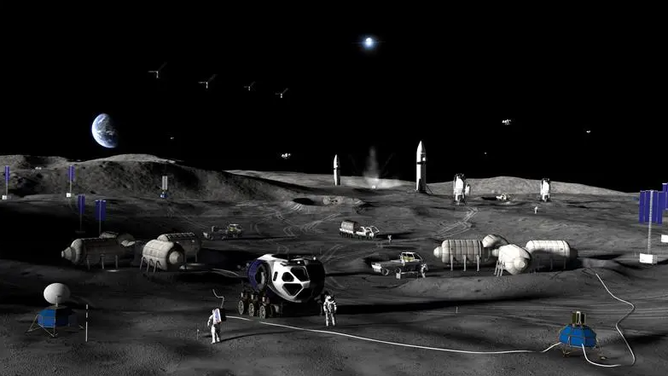
Artistic concept of Phase 3 of NASA’s Moon Base.
(NASA)
"The Moon base will not appear overnight," Isaacman said.
He announced NASA will spend $20 billion over the next seven years, through 2033, and build the base through dozens of missions working with commercial and international partners towards a deliberate and achievable plan.
"Just as there was Mercury and Gemini before Apollo, there will be an evolutionary path to building humanity's first permanent surface outpost beyond Earth," Isaacman said. "We will take the world along with us as they follow along on the NASA moon base website and watch the assembly through lunar relay and observation satellites."