

Live updates: Will Artemis II launch tomorrow? Florida's weather outlook and mission status updates
Live updates: Will Artemis II launch tomorrow? Florida's weather outlook and mission status updates
Download the AppCoverage for this event has ended.
Tomorrow marks a major milestone in space exploration, and FOX Weather will be with you every step of the way as history unfolds.
NASA’s Artemis II mission—the first crewed journey around the moon in more than 50 years—is set to capture the eyes of the world. This groundbreaking mission will send the group of four astronauts farther than any human has traveled since the Apollo era, paving the way for a sustained human presence on the Moon and eventually, Mars.
Weather plays a critical role in every phase of a space mission—from liftoff conditions at Kennedy Space Center to tracking conditions along the flight path—and our team of meteorologists will be breaking down exactly how the forecast could impact the mission up until launch.

FOX Weather Artemis II Launch coverage team
NASA has confirmed the countdown is underway for a scheduled liftoff on April 1, 2026, at 6:24 p.m. EDT from Kennedy Space Center, with an 80% favorable weather forecast. All systems arego for the 10-day crewed mission to orbit the Moon.
This is more than just a launch—it’s the next chapter in human space exploration. Whether you're a space enthusiast, a weather nerd or just curious about this historic moment, FOX Weather is your destination for coverage of the Artemis launch.
Stay with FOX Weather as we track Artemis II and witness history in motion.
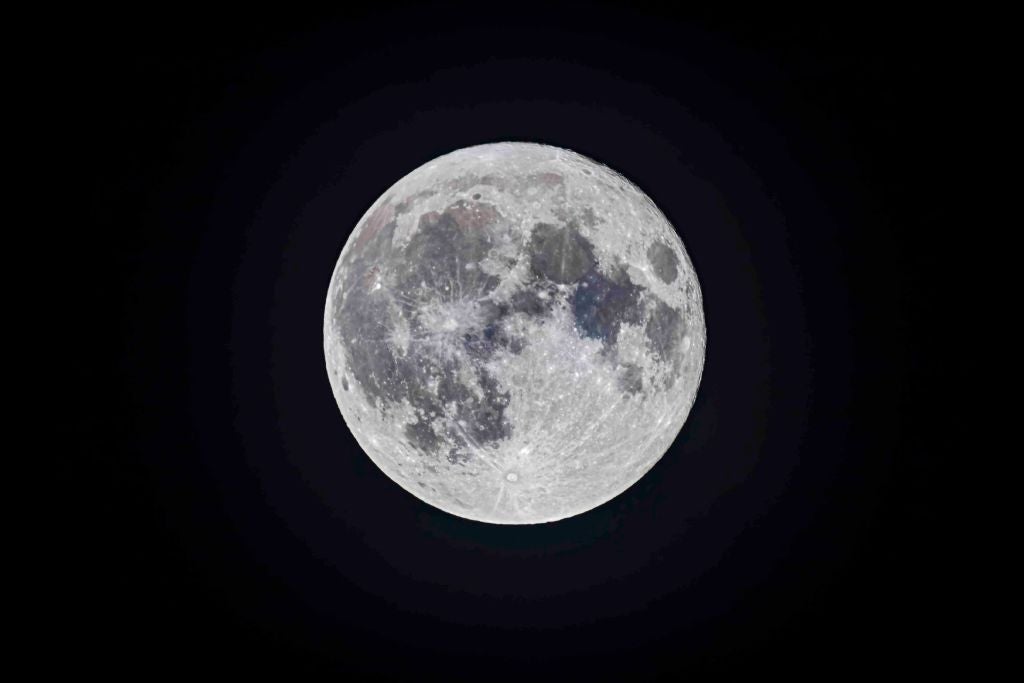
As the countdown tightens and anticipation builds, Artemis II teams are firing on all cylinders, pushing full speed toward a mission that will redefine human spaceflight.
Across every system and discipline, preparations are intensifying for this historic journey beyond Earth orbit.
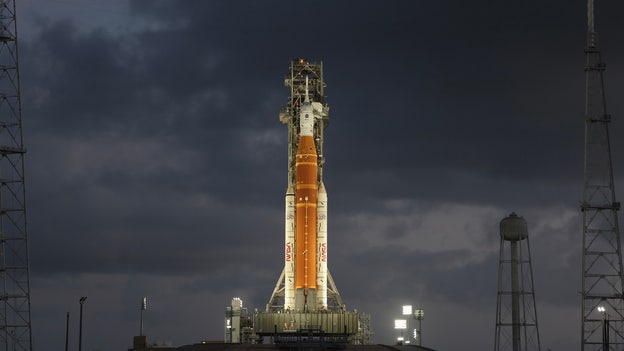
NASA Prepares For Artemis II Moon Mission. Photo: Joe Raedle/Getty Images
Here’s a look at the critical preparations NASA teams took before Artemis II takes flight.
The day began with final health checks on the rocket’s four RS-25 engines. Teams confirmed that sensors, connections, and diagnostic systems are all functioning properly—an important step as the vehicle moves closer to fueling.
Attention then shifted to the upper stage, known as the interim cryogenic propulsion stage, which was powered down into a safe, stable configuration after earlier testing and verification.
Power readiness was another major focus.
Orion’s flight batteries were fully charged to support avionics, communications, and life support systems, while charging operations began on the SLS core stage batteries to ensure reliable performance during launch and ascent.
With crew safety in mind, engineers also conducted leak checks on astronauts’ pressure suits inside Orion, verifying that seals and pressure systems are functioning correctly in the event of a cabin depressurization.
At Launch Complex 39B, preparations are transitioning into their final phase. Non-essential personnel will clear the pad overnight, reducing risk as fueling operations approach.
Looking ahead to launch day, teams will activate the ground launch sequencer—an automated system responsible for coordinating thousands of commands in the final minutes before liftoff.
Engineers will also begin replacing air inside the rocket with inert gaseous nitrogen, creating a stable, non-reactive environment ahead of cryogenic propellant loading.
Together, these steps mark a critical transition from testing to final launch operations.
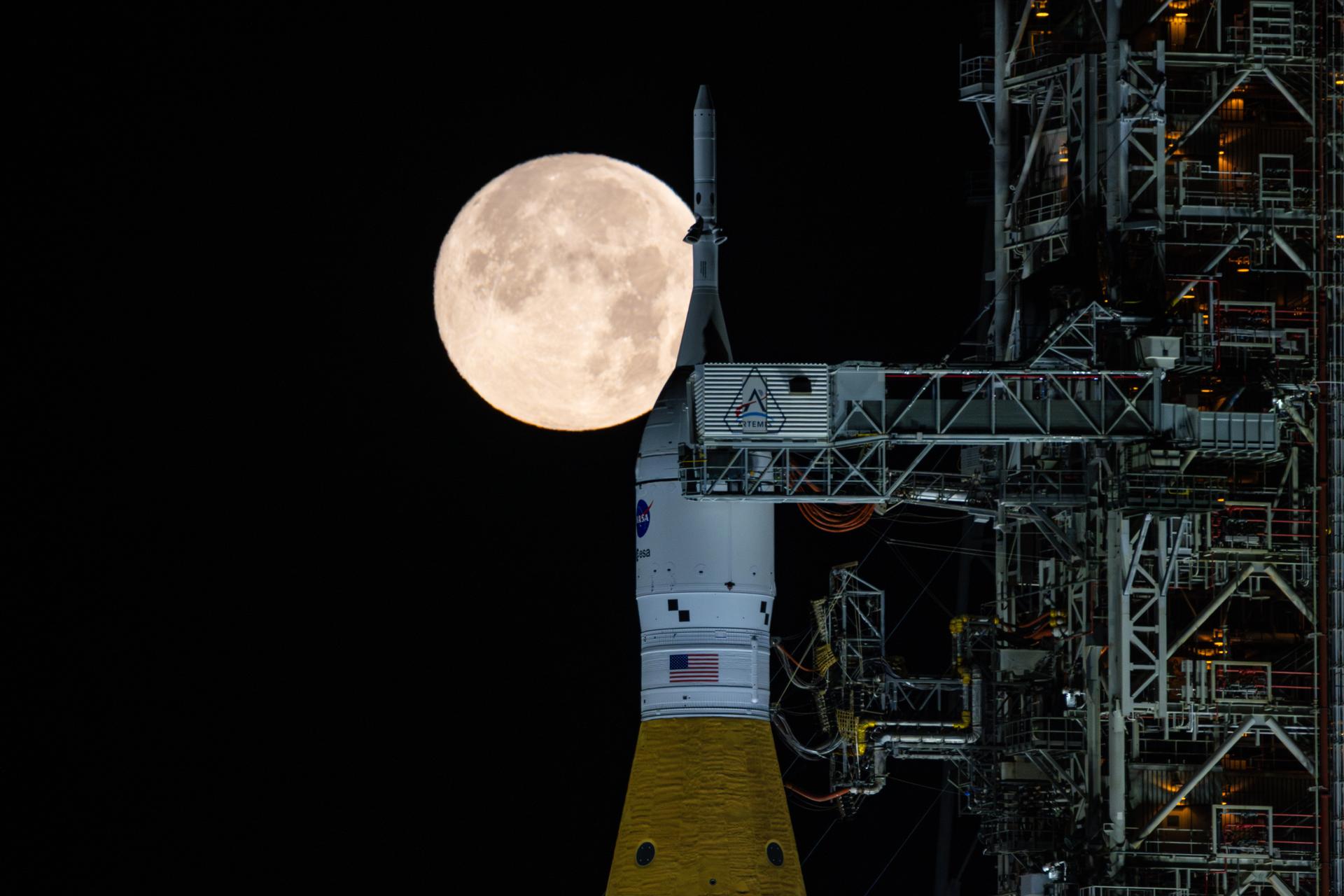
NASA plans for liftoff to start on Wednesday, making it the first crewed rocket ship to return to the moon since 1972.
The launch countdown includes "L Minus" and "T Minus" times. The "L minus" indicates how far away liftoff is in hours and minutes. The "T minus" time is a sequence of events built into the launch countdown.
Each event is planned precisely to make sure the teams have everything necessary before launch day.
Take a look at some of the key milestones that take place starting at L-16 hours at the link below.
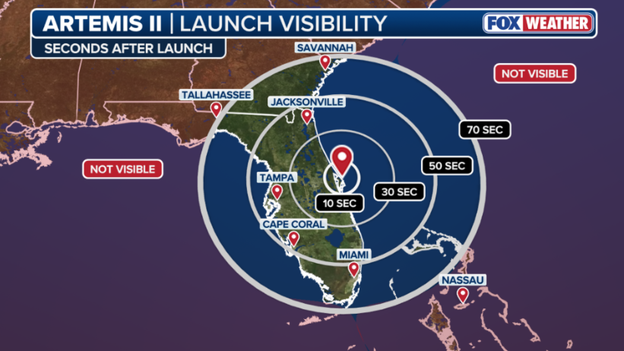
Map shows where the rocket will be visible and how soon after launch it'll appear in the sky.
If you live in Florida and are hoping to see the Artemis II launch in the sky, you may be in luck.
A map from the FOX Forecast Center shows where the rocket will be visible (assuming clouds aren't covering it) and how soon after the launch it will appear in the sky.
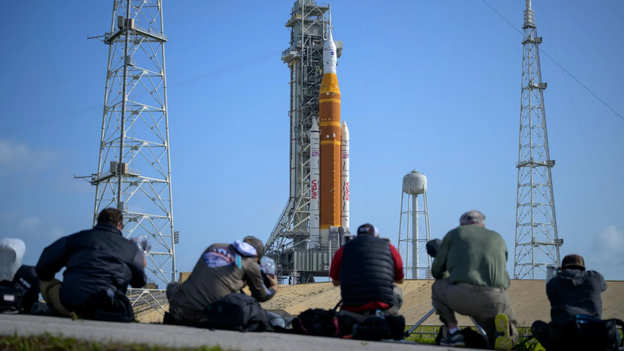
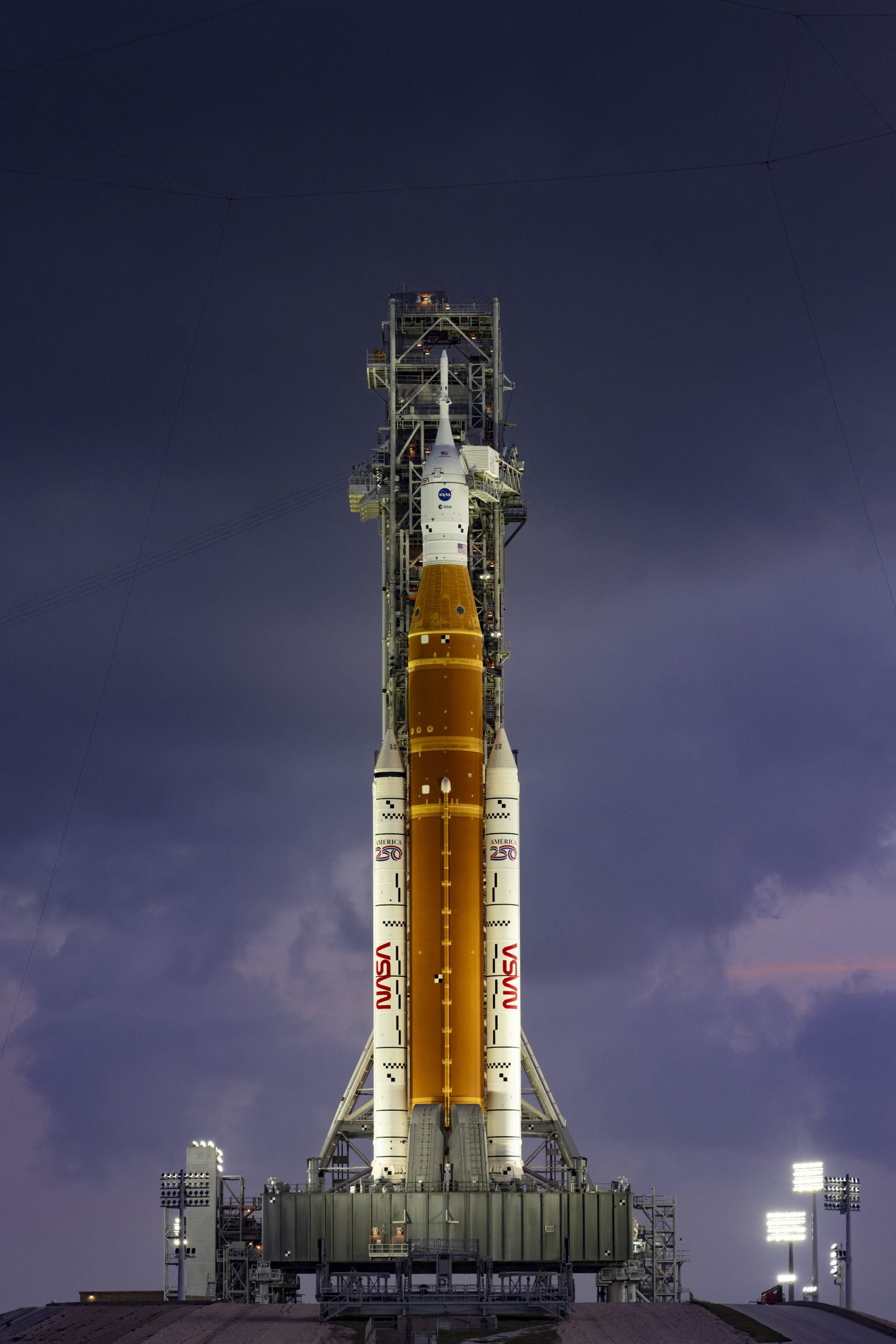
Media aim their cameras on NASA’s Artemis II Space Launch System rocket and Orion spacecraft, atop a mobile launcher at Launch Complex 39B, at NASA’s Kennedy Space Center in Florida.
As the countdown continues for launch, officials say the Artemis II mission could break some Guinness World Records during their journey around the moon.
The Orion spacecraft is equipped with NASA's most powerful Space Launch System, which is being transported to the launch pad by a record-breaking crawler vehicle.
The rocket features the largest solid-fuel boosters ever built.
During the mission, several records are expected to be broken, including the highest altitude reached by a woman early in the flight, highest altitude reached by humans when the spacecraft travels beyond the moon, and potentially, the fastest speed ever achieved by humans on the return to Earth.
NASA said the spacecraft was put together in their Vehicle Assembly Building, which is one of the largest buildings in the world by enclosed volume, coming behind Boeing's Everett Factory in Washington state.
The rocket contains the largest solid-fuel rocket boosters ever made, and they generate 3,600,000 pound-force each of thrust on liftoff. This thrust is comparable to the power of 25 modern airliners running at full throttle.
Have you ever wondered what astronauts eat in space?
From brisket and cobbler to quiche, the four astronauts taking part in the Artemis II mission have a variety of food to choose from.
Crew members will get to pick from more than 10 types of beverages, including a mango-peach smoothie, apple cider, lemonade, coffee and more.
When it comes to food options, they have variety including tortillas, couscous with nuts, macaroni and cheese, veggies and more.
And they'll also have flavoring such as maple syrup, almond butter, spicy mustard and jam.
NASA said the menu is designed to support crew health and performance during the mission around the moon. There is no option to refrigerate or resupply, so all meals must be carefully selected to remain safe, shelf-stable and easy to prepare and consume in the Orion spacecraft.
Space food experts help determine options that balance calorie needs, hydration and nutrient intake while accommodating individual preferences, according to NASA.
Ahead of the highly anticipated Artemis II launch, leading space weather expert Dr. Thomas Berger joined FOX Weather to discuss how solar activity could impact the mission.
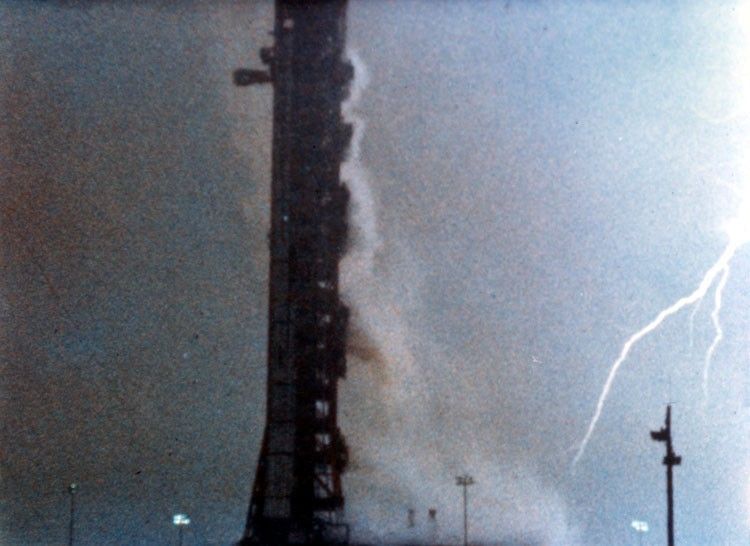
When Apollo 12, NASA's second lunar landing mission, launched from Kennedy Space Center, the space vehicle was struck by lightning— twice. On November 14, 1969, Apollo 12 prepared to bring three astronauts into space, landing on the Moon for the second time ever on a cloudy, rainy day.
NASA had recognized lightning during thunderstorms to be a problem for spaceflight during its early days, so the agency never allowed launch during thunderstorms. However, what they didn't realize at the time, was that a rocket launching into space could trigger lightning if it flew through highly electrified clouds.
While all eyes are on the launch pad at Kennedy Space Center, a different kind of storm is brewing 93 million miles away.
A powerful X1.4-class solar flare erupted from the sun late Sunday, sending a burst of solar particles and a fast-moving Coronal Mass Ejection (CME) toward Earth. This surge in solar activity has prompted NOAA’s Space Weather Prediction Center to issue a G2 (Moderate) Geomagnetic Storm Watch for today.
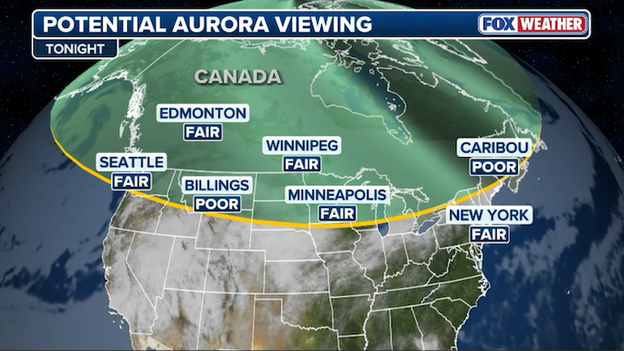
Sunday's solar flare could make the Northern Lights visible in the night sky later tonight.
While the flare caused some temporary radio blackouts over Asia and Australia earlier this week, NASA Associate Administrator Amit Kshatriya confirmed that the space weather is expected to settle well before tomorrow’s 6:24 p.m. ET liftoff.
Mission managers have officially given the "Go" to proceed, noting that the current geomagnetic conditions pose no threat to the Artemis II crew or the SLS rocket’s sensitive electronics.
While NASA remains vigilant—as severe solar activity can interfere with critical radio communications—the current levels are well within the safe flight envelope.

For those on the ground, the only major impact of this solar burp will be a positive one: the potential for a stunning display of the Northern Lights tonight, which could be visible as far south as New York, Wisconsin, and Washington.
During today's prelaunch briefing, Mark Burger, the launch weather officer for the 45th Weather Squadron, confirmed that while the primary launch window remains favorable, meteorologists are closely tracking a "moist and breezy" onshore flow.
This weather pattern is expected to bring intermittent showers to the Space Coast daily, keeping cumulus clouds and ground-level winds as the top watch items for Wednesday's countdown.
While the risk of lightning remains low at just 5–10%, these coastal showers could still trigger strict flight safety constraints if they drift too close to the pad.
Burger also noted that the sun has become more active, which adds another layer to the mission's space weather monitoring.
Looking beyond Wednesday, the outlook becomes more uncertain; backup launch opportunities later in the week appear somewhat less favorable as model discrepancies grow and visibility into the weekend's weather pattern decreases.
For now, Wednesday remains the best chance for liftoff before a more complex large-scale weather pattern begins to settle over the Florida peninsula.
As the countdown to Artemis II intensifies, Senior NASA Test Director Jeff Spaulding has outlined the final, high-stakes timeline for Wednesday's historic mission.
The four-person flight crew is scheduled for a 9:45 a.m. ET wake-up call, followed by a final Earth-side breakfast and medical checks before they begin the journey to Launch Pad 39B.
Once the massive SLS rocket is fully fueled, the specialized closeout crew will head to the pad in the early afternoon to prepare the Orion spacecraft for its passengers.
The astronauts are expected to make their high-profile departure for the pad just before 2 p.m. ET, leading into a series of critical "Go/No-Go" polls from the launch and management teams that will ultimately clear the way for the final 10-minute terminal count.
NASA’s prelaunch news conference is now underway, as mission managers and weather experts gather to provide the final status update before tomorrow’s 6:24 p.m. ET liftoff.
This briefing features key insights from the 45th Weather Squadron and the Artemis II launch team as they review the final countdown milestones and the 80% "Go" forecast for the flight to the Moon.
To ensure the 322-foot-tall SLS rocket can safely clear the tower and navigate the lower atmosphere, NASA and the U.S. Space Force use a sophisticated network of sensors that monitor the air from the ground up to the tip of the lightning mast.
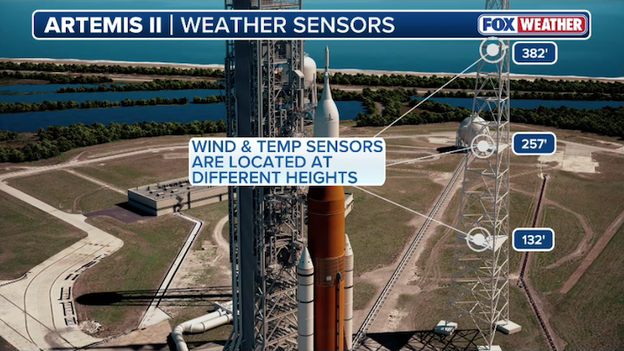
Weather instruments positioned on three towers surrounding Launch Complex 39B provide real-time data on temperature and wind.
Precision monitoring at the pad
At Launch Complex 39B, weather teams rely on three massive permanent lightning towers that surround the rocket. Each of these towers is equipped with launch-critical sensors positioned at four specific heights: 132 feet, 257 feet, 382 feet, and 457 feet.
These instruments—propeller vane anemometers—measure wind speed and direction at one-second intervals, providing a near-real-time map of how the air is moving around the vehicle.
Why the different heights matter
Monitoring multiple altitudes is essential because of a phenomenon known as wind shear. Winds at the surface might be a calm 10 mph, but 400 feet up, they could be gusting twice as fast.
Because the SLS is so large, these varying wind speeds can put immense structural stress on the rocket or push it off its precise flight path during the first few seconds of liftoff.
NASA’s strict safety thresholds for these towers include:
- Peak winds: Must generally stay below a range of 33 to 45 mph depending on the specific altitude.
- Upper-level winds: Beyond the 457-foot towers, NASA uses a Doppler Radar Wind Profiler and weather balloons to track winds up to 60,000 feet, ensuring the rocket doesn't hit high-altitude turbulence that could lead to control problems.
Weather teams are focused on the invisible forces surrounding Launch Pad 39B: the winds. As shown in the image below, sensors across three different towers are constantly measuring wind speeds at various altitudes to ensure conditions stay within NASA's strict safety window.
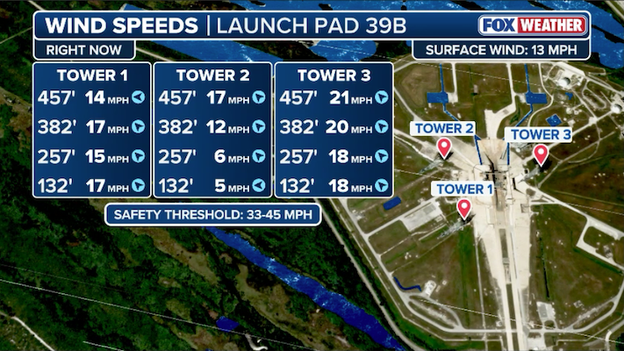
Current wind speeds from the monitoring equipment surrounding Launch Complex 39B at Kennedy Space Center in Florida.
Current surface winds are a light 13 mph, and even at the highest sensor level of 457 feet, speeds are holding steady between 14 and 21 mph.
These numbers are well below the critical safety threshold of 33-45 mph that would trigger a launch delay.
Because the SLS rocket is so tall and sensitive to wind shear—the change in wind speed or direction at different heights—meteorologists will continue to monitor these towers around the clock to ensure the rocket has a smooth path through the atmosphere tomorrow evening.
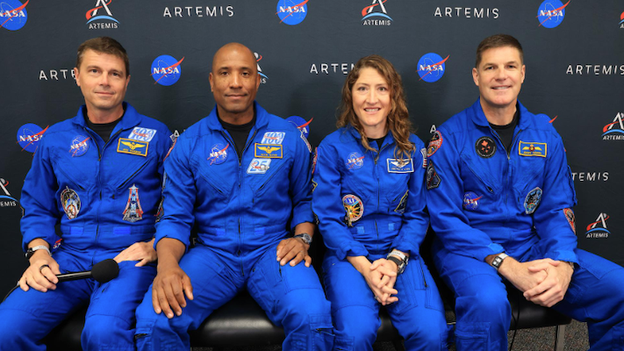
NASA/Kim Shiflett
While the SLS rocket stands ready on the pad, the four Artemis II astronauts are spending their final hours on Earth in a strictly controlled environment.
Commander Reid Wiseman, Pilot Victor Glover, and Mission Specialists Christina Koch and Jeremy Hansen are currently in the final stages of NASA’s Health Stabilization Program, a standard two-week quarantine designed to ensure the crew doesn't carry even a common cold into the cramped quarters of the Orion spacecraft.
Since arriving at the Kennedy Space Center last Friday, the crew has been living in the historic Neil Armstrong Operations and Checkout Building, where contact is limited to essential flight surgeons and cleared personnel.
This soft isolation began in Houston before moving to the Florida coast, allowing the astronauts to finalize mission rehearsals and share virtual briefings with the media while ensuring that a last-minute illness doesn't jeopardize humanity's first crewed trip to the Moon in over half a century.
Artemis II is a 10-day mission that marks humanity's first return to the lunar vicinity in over 50 years.
Unlike the uncrewed Artemis I, this flight will carry four astronauts—Commander Reid Wiseman, Pilot Victor Glover, and Mission Specialists Christina Koch and Jeremy Hansen—on a journey that will take them further from Earth than any human in history.
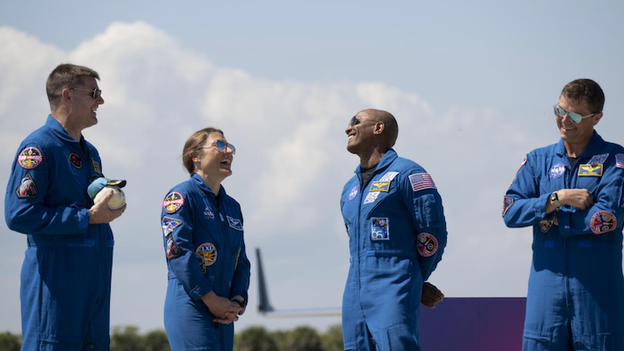
The Artemis II test flight will take Artemis II Comander, Reid Wiseman, Pilot Victor Glover, and Mission Specialist Christina Koch from NASA, and Mission Specialist Jeremy Hansen from the CSA (Canadian Space Agency), around the Moon and back to Earth from Launch Complex 39B at NASA Kennedy. (left to right, Jeremy Hansen, Christina Koch, Victor Glover, Reid Wiseman). (NASA/Jim Ross)
The mission follows a free-return trajectory, a figure-eight flight path where the spacecraft will orbit Earth twice to test life-support systems before swinging around the far side of the Moon.
At its closest approach, the crew will fly approximately 4,600 miles (about 7,400 km) above the lunar surface, providing a basketball-sized view of the Moon before Earth’s gravity naturally pulls the Orion capsule back home for a high-speed splashdown in the Pacific Ocean.
The 45th Weather Squadron is currently tracking a persistent onshore flow that could bring scattered showers to the Space Coast just as the Artemis II launch window opens.
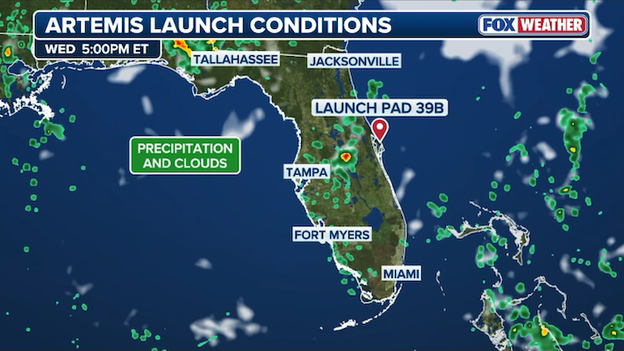
Computer forecast models show the threat for showers popping up near Kennedy Space Center in Florida on Wednesday.
This pattern is fueled by a weakening front to the south, which is expected to trigger intermittent rain pushing in from the Atlantic throughout Wednesday afternoon.
While much of the more organized storm activity is predicted to drift toward the western side of the Florida peninsula by the evening, any lingering showers or thick cloud layers within five nautical miles of the flight path would result in an immediate "No-Go" for the SLS rocket.
Retired NASA engineer and Rocket Boys author Homer Hickam joins FOX Weather just one day before the Artemis II launch. In terms of weather, he’s pretty confident that it will leave the launch pad.
As the final countdown for Artemis II ticks away, the U.S. Space Force's 45th Weather Squadron has released a detailed outlook that keeps the mission at a promising 80% "Go" for Wednesday’s 6:24 p.m. ET liftoff.
While the probability remains high, meteorologists are closely watching a pattern of low-level moisture fueled by a steady, breezy onshore flow.
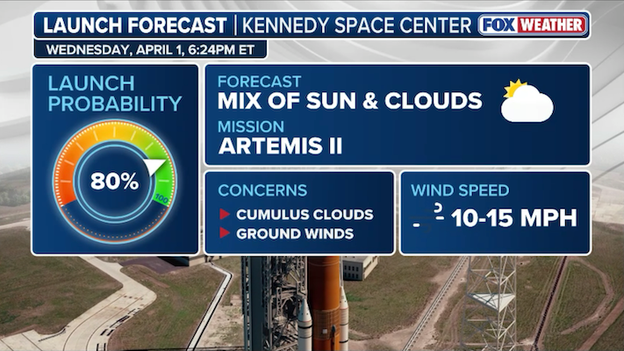
Latest launch weather forecast from the Space Force 45th Weather Squadron.
This setup is expected to trigger intermittent showers moving in from the Atlantic throughout the day, with additional rain potentially bubbling up over land as the daily sea breeze pushes inland during the afternoon.
The primary hurdle for the launch team will be the timing of these coastal showers and the "thick cloud" rules they bring with them.
Forecasters expect the most organized rain and thunderstorm activity to retreat toward the western side of the Florida peninsula by evening, which could leave a clear "keyhole" for the SLS rocket to climb through.
However, because the onshore winds will continue to replenish moisture right at the coast, the mission remains "No-Go" if any of these lingering showers or their associated cloud layers move within 5 nautical miles of the flight path during the two-hour launch window.
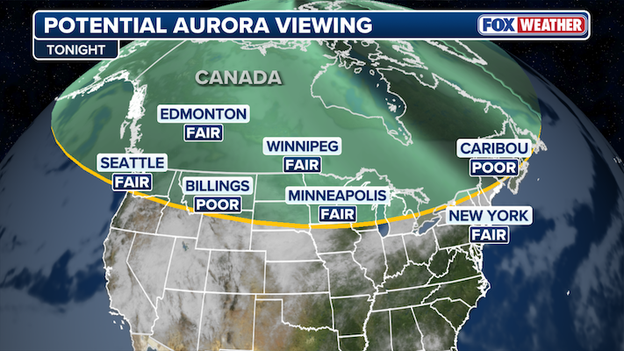
The Northern Lights could be visible across 16 states later tonight.
A powerful solar eruption is setting the stage for a celestial light show tonight, as the Northern Lights could become visible much further south than usual.
Following an X1.4-class solar flare and a subsequent Coronal Mass Ejection (CME) from the Sun, NOAA’s Space Weather Prediction Center has issued a G2 (Moderate) Geomagnetic Storm Watch for March 31.
This surge in space weather means the Aurora Borealis could be visible across as many as 16 U.S. states, potentially reaching as far south as New York, Wisconsin, Wyoming, and Washington.
For the best view, find a dark spot away from city lights and look toward the northern horizon between 10 p.m. and 2 a.m. local time.
We're not expecting the CME to cause any effects. We're not tracking concerns for the mission in general.
NASA is closely monitoring the recent solar activity, but officials confirmed on Monday that the current geomagnetic conditions do not pose a threat to the Artemis II launch.
While space weather can sometimes impact sensitive electronics, the current G2 (Moderate) storm level remains well below the severe or extreme thresholds that would trigger a launch delay.
NASA’s mission management team has already reviewed the latest data and determined that all systems are within acceptable limits to proceed with the countdown.
Former NASA Chief Astronaut Robert Gibson joins FOX Weather ahead of the launch of the Artemis II space mission, which will be the first time the moon has been orbited since Apollo 17, 53 years ago.
Thousands of spectators from around the world are already flooding Florida's Space Coast as Brevard County prepares for a massive economic windfall and historic crowds ahead of tomorrow's Artemis II launch.
Local hotels are fully booked and campsites are at capacity as families gather to witness the first crewed lunar mission in over 50 years, an event officials estimate could generate tens of millions of dollars for the regional economy.
To manage the surge, Port Canaveral has implemented strict access plans, announcing that parking day passes for the popular Jetty Park viewing area are officially sold out and no additional public parking will be available on launch day.
For those lucky enough to have pre-purchased passes, admission is still not guaranteed, reflecting the intense demand to see the SLS rocket lift off and inspire a new generation of space exploration.
As NASA moves into the final stages of the Artemis II countdown, the agency has scheduled a critical prelaunch news conference for 1 p.m. ET today.
This briefing will serve as the final official check-in before tomorrow’s historic moon launch, providing the latest "Go/No-Go" status for the Space Launch System (SLS) rocket and the Orion spacecraft.
A key highlight of the briefing will be the updated weather outlook from Mark Burger, the launch weather officer with the 45th Weather Squadron. While the forecast has held steady at 80% favorable, Burger will provide a deep dive into any emerging atmospheric concerns—such as cloud thickness or coastal winds—that could impact the 6:24 p.m. launch window.
Along with a representative from the launch team, officials will walk through the remaining milestones as four astronauts prepare to embark on humanity's first crewed journey to the lunar vicinity in over five decades.
As the countdown clock ticks toward Wednesday’s historic 6:24 p.m. ET liftoff, the latest forecast from the U.S. Space Force’s 45th Weather Squadron remains a promising 80% "Go" for the Artemis II mission.
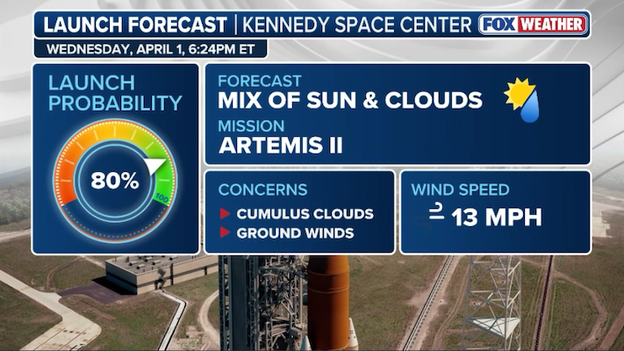
Latest launch weather forecast from the Space Force 45th Weather Squadron.
While meteorologists are keeping a close watch on a weakening front and the potential for gusty winds or low-level clouds at the Kennedy Space Center, the majority of the hazardous weather is expected to stay well south of the launch pad.
With all systems currently "green" and the SLS rocket standing ready on Pad 39B, the primary concern for the two-hour launch window remains the specific cloud thickness and wind constraints required to ensure a safe flight for the four-person crew as they begin humanity's first return to the lunar suburbs in over 50 years.
To get the Artemis II mission off the ground, NASA isn’t just looking for a clear sky; they are following a strict "Go/No-Go" checklist where even a minor weather shift can trigger a scrub.
Safety is the top priority for the SLS rocket, which cannot fly through any rain or even a smoke plume.
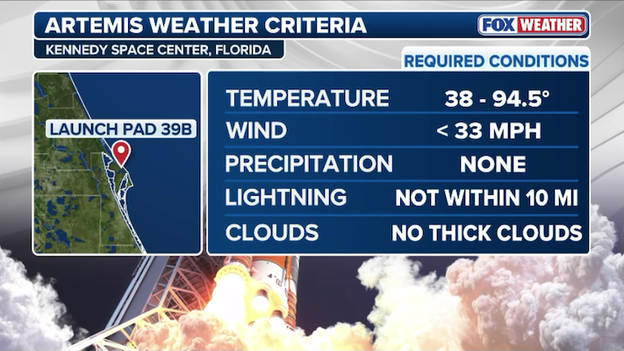
NASA utilizes specific launch weather criteria to determine whether or not Artemis II is safe for liftoff.
Wind speeds are also under a microscope: peak liftoff winds must remain below a range of 33 to 45 mph at various altitudes up to 457.5 feet.
Temperatures are monitored just as closely at two different heights above the pad; the mercury must stay above 41.4°F at all times and cannot exceed 94.5°F for more than 30 minutes, ensuring the rocket's sensitive components and propellants stay within their operational limits.
The lightning rules are perhaps the most complex hurdle for the Space Coast team. Artemis II will stay grounded if lightning is detected within 10 nautical miles of the flight path, requiring a 30-minute clear window before even considering a reset.
This caution extends to the clouds themselves; the mission will not fly through thick cloud layers (over 4,500 feet) that extend into freezing temperatures, nor will it venture near thunderstorm debris or disturbed weather clouds that could trigger a strike.
Even space weather is a factor—severe solar activity that could scramble electronics or kill radio communication is enough to keep the crew on the Earth's surface.
On launch day, it’s not just about the sunshine; it’s about navigating a precise keyhole in the atmosphere.
You’ve reached the beginning of this live coverage.