

Miami beaches buried under record sargassum as experts race to find a solution
A team of researchers from the University of Miami is exploring whether the smelly seaweed could become a resource instead of a waste problem.
FILE: Florida sargassum leaving a smelly odor at Miami Beach
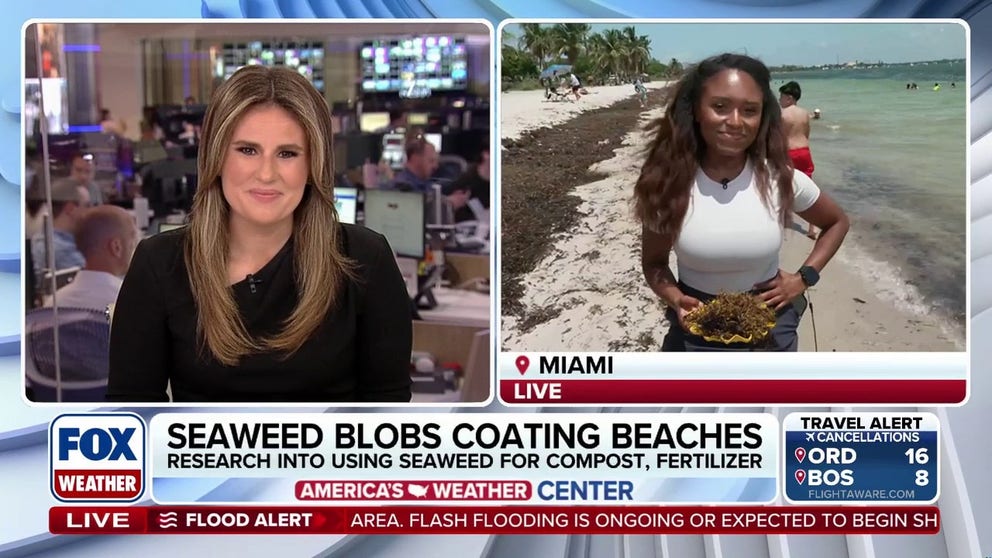
🌿🏖️ SMELLY BEACH: FOX Weather Correspondent Brandy Campbell reports from Miami Beach, where tons of sargassum are washed up on shore, providing an opportunity to use the seaweed for compost or fertilizer in the future.
THE TAKEAWAYS
- Record amounts of sargassum have washed along Miami Beach, overwhelming beach crews.
- Researchers at the University of Miami have proposed pairing the seaweed with black solider flies to fix the problem.
- The team says finding a way to use the seaweed could help reduce costs and create new products.
Record amounts of sargassum have washed ashore along Miami Beach, becoming a growing nuisance for residents, tourists and beach crews.
CLEANUP EFFORTS UNDERWAY AS LARGE AMOUNT OF SARGASSUM SPOTTED ON MIAMI BEACH
City workers have been working around the clock to remove the unwelcome seaweed from the shoreline, but some days, they simply can’t keep up.
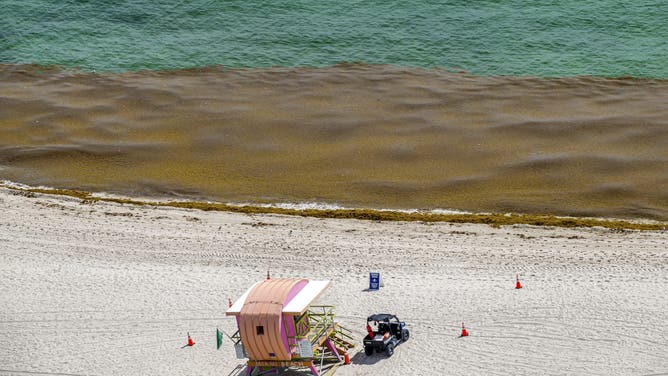
A wall of sargassum deters would-be bathers from entering the Atlantic Ocean.
(Jeffrey Greenberg/Universal Images Group via Getty Images / Getty Images)
Now, a team of researchers from the University of Miami Rosenstiel School of Marine, Atmospheric and Earth Science is exploring whether the smelly seaweed could become a resource instead of a waste problem.
SARGASSUM SEAWEED BLOOMS PLAGUING ATLANTIC BEACHES TRACED BACK TO WEST AFRICA
The idea is to pair sargassum with black soldier fly larvae. The young insects consume organic material and could potentially help turn beach waste into fish food and fertilizer.
"Our goal is not just to provide a solution to reducing sargassum impacts to our shoreline, but to help redesign Florida’s response to it," Professor Daniel Benetti, a leader of the project, said.
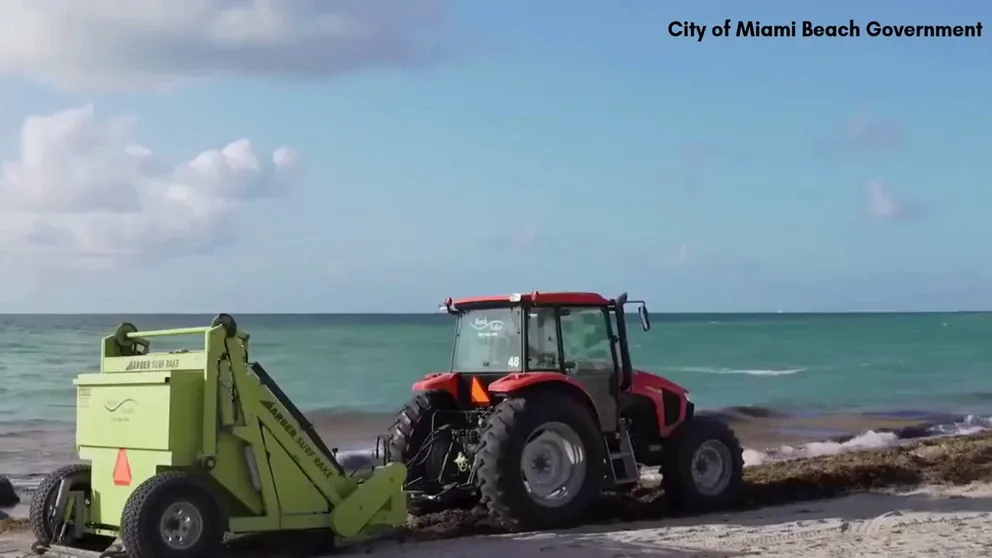
Miami Beach officials respond to heavy sargassum bloom
Sargassum seaweed is washing up along Miami Beach, leading to daily cleanup efforts from city crews. The City of Miami Beach, in coordination with Miami-Dade County Parks, is using beach-friendly equipment to blend the sargassum across the city’s 7.5-mile beach.
Sargassum is a naturally occurring brown seaweed that floats in large masses across the ocean and washes up along the coastlines of numerous states, including Florida, Texas and Louisiana.
The seaweed has become a recurring problem across the Caribbean Sea, Gulf of Mexico and Atlantic Ocean, according to the National Oceanic and Atmospheric Administration.
WHY IS IT CALLED A GREAT WHITE SHARK IF IT'S NOT ACTUALLY WHITE?
As sargassum decomposes on beaches, it can release hydrogen sulfide gas, producing an odor similar to rotten eggs, according to the Florida Department of Health.
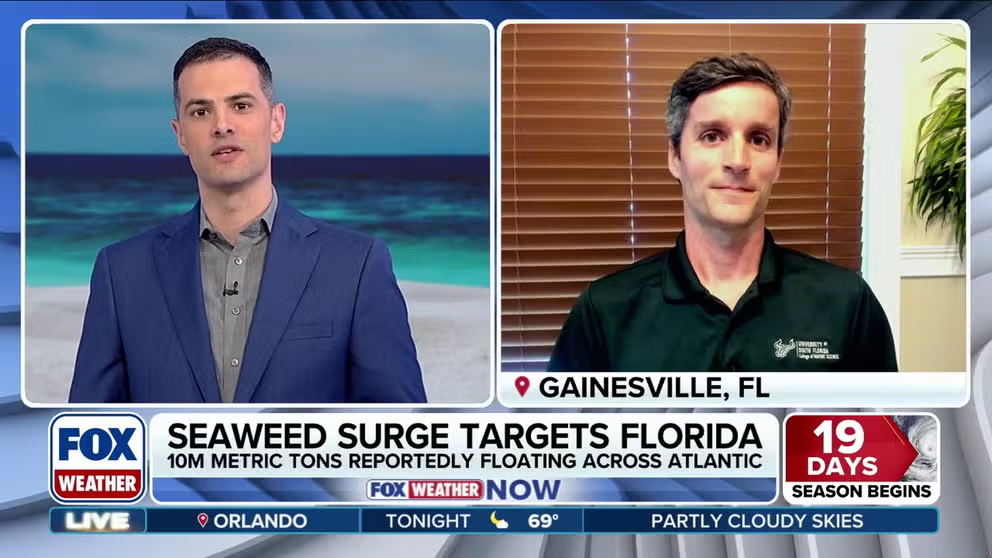
SEAWEED SURGE: Daily satellite tracking maps sargassum spread
SEAWEED SURGE: A sargassum invasion is impacting South Florida beaches, with record levels prompting daily satellite tracking. Brian Barnes, a research professor at the University of South Florida, joined FOX Weather to break down what’s driving the surge and what it means for coastal communities.
Exposure to hydrogen sulfide can irritate the eyes, nose and throat and may be especially problematic for people with asthma and other respiratory conditions.
Sargassum can also contain arsenic, heavy metals, organic contaminants and marine debris that may pose additional risks.
COULD SMELLY SARGASSUM BECOME THE NEXT FOOD PRODUCT?
The sheer amount of seaweed washing ashore also comes with a hefty price tag. The Environmental Protection Agency estimates Miami-Dade County spends about $35 million annually to collect, transport and dispose of sargassum.
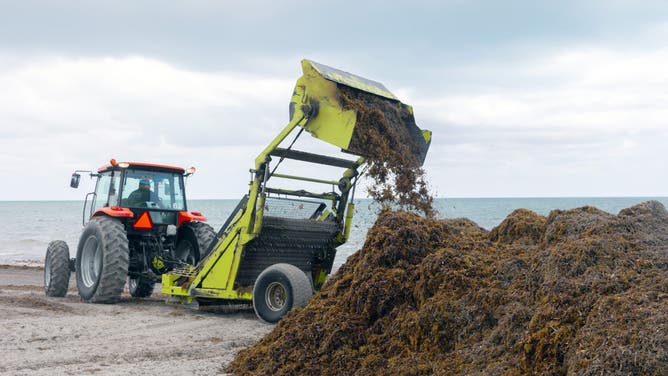
Swaths of sargassum, or seaweed, washed up in Key Biscayne on Thursday, April 24 and was raked into piles to be taken to the landfill.
(Ashley Miznazi/The Miami Herald/Tribune News Service via Getty Images / Getty Images)
Researchers say finding a way to use the seaweed could help reduce those costs while creating new products.
"Instead of treating it as waste, our scalable system will convert it into valuable products for aquaculture, agriculture and emerging bio-based industries," Benetti said.
WHAT IS SEA LICE? HOW TO AVOID THE PARASITE AS SARGASSUM FLOODS SOUTH FLORIDA BEACHES
As part of the study, researchers tested five different waste mixtures that included kitchen scraps, agricultural produce, waste collected from salmon farming tanks and organs and other remains from salmon processing.
The team placed 200 black soldier fly larvae in each mixture for 15 days.
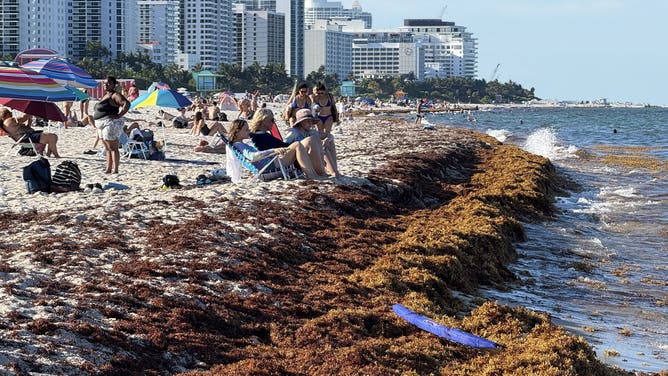
People sit on the sand in south beach, Miami during the seasonal surge of Sargassum seaweed.
(DANIEL SLIM/AFP via Getty Images / Getty Images)
All five diets supported larval growth, while survival rates remained high, ranging from about 94% to 99%.
The experiment did not test sargassum itself, but researchers say the findings provided a foundation for testing other waste sources.
CAN GOOGLE TAKE DOWN THE WORLD'S DEADLIEST ANIMAL?
Before the larvae can be used to process sargassum, researchers have more testing to complete. One key challenge will be determining how to reduce contaminants such as arsenic in the seaweed.
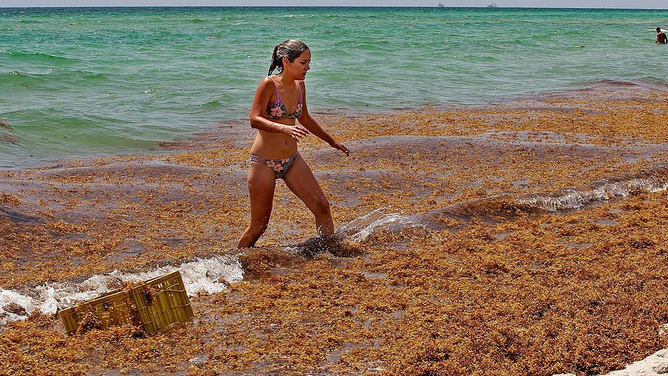
Monica Madrigal find her way out of the ocean through a thick raft of Sargassum seaweed that washed up on the seashore by the 71st Street area in Miami Beach.
(Pedro Portal/Miami Herald/Tribune News Service via Getty Images / Getty Images)
A coastal processing system would also need to handle much larger and less predictable amounts of wet seaweed while controlling for unwanted chemicals, disease-causing microbes, moisture, temperature and overall product quality.
Researchers hope to eventually develop climate-controlled units capable of processing the material on a larger scale.
"We’re turning an environmental burden into a coastal value solution," Benetti said.