

Why is it called a great white shark if it's not actually white?
Many animal species have this type of countershading, though it's most commonly seen in birds and marine animals.
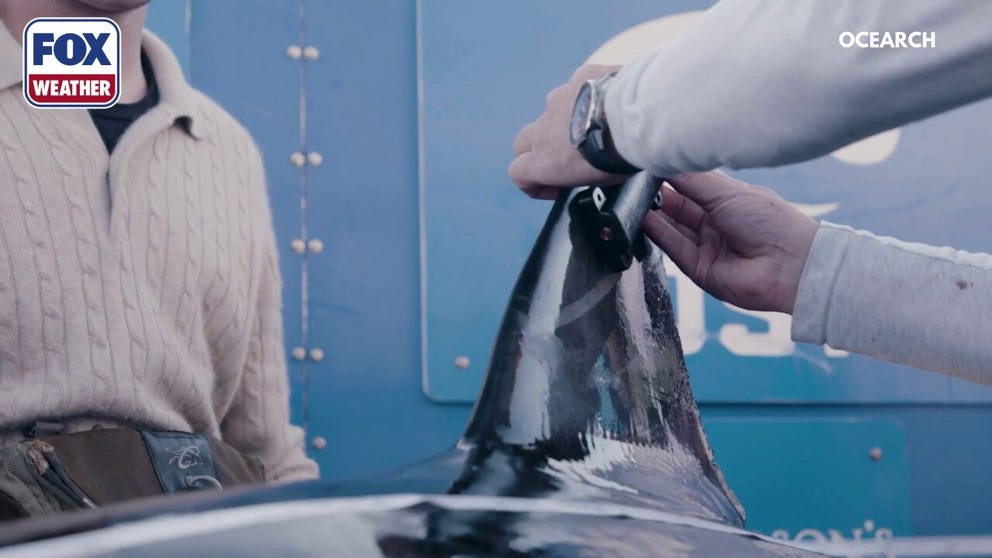
FILE: OCEARCH tags a shark for their shark tracker program in Nova Scotia
Video from an OCEARCH expedition in Nova Scotia back in 2021 shows the shark tagging process, including measuring the shark, taking blood and tissue samples and attaching a tracker to the shark's fin.
Great white sharks are one of the top apex predators of the ocean, with their distinct coloring making them easy to identify.
But how did they get their name if they're not white?
Well, the sharks get their name because of their bright white belly. The rest of a shark's body is gray or grayish-brown.
WATCH: HUNDREDS OF SHARKS AND A LONE STINGRAY CAUGHT ON VIDEO NEAR BEACH IN NORTH CAROLINA
According to OCEARCH, a global nonprofit organization dedicated to researching and protecting sharks, whales, sea turtles and other ocean life, this is called countershading.
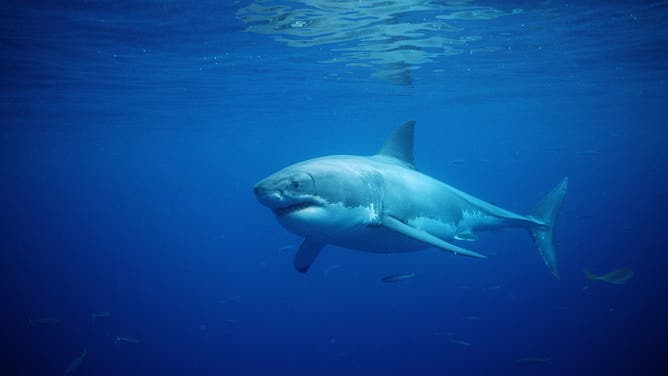
A great white shark patrols the waters near Dangerous Reef off Neptune Island in South Australia, one of the world's premier habitats for the apex predator.
(Photo by Reinhard Dirscherl/ullstein bild via Getty Images / Getty Images)
Countershading is a natural form of camouflage when animals have a darker upper body and white underside to help them hide from predators or prey.
In the white sharks' instance, it's to allow the sharks to sneak up on their prey, and hide from anything that might want to find them.
1,400-POUND GREAT WHITE SHARK MAKES BIG MOVES AS HE HEADS NORTH BEHIND OTHER SHARKS
From above, their dark upper body helps them blend into the ocean below, while their white bellies blend in with the bright sunlight shining through the water.
Many animal species have this type of countershading, though it's most commonly seen in birds and marine animals.
White sharks are one of the most well-studied shark species in the world, according to NOAA Fisheries.
SEE IT: MASSIVE, PREHISTORIC DISCOVERY FOUND BY FAMILY SEARCHING FOR SEASHELLS ON THE JERSEY SHORE
Despite their fearsome reputation as an apex predator, these sharks are actually highly vulnerable to human impacts like bycatching and overfishing, though it's prohibited to fish them.
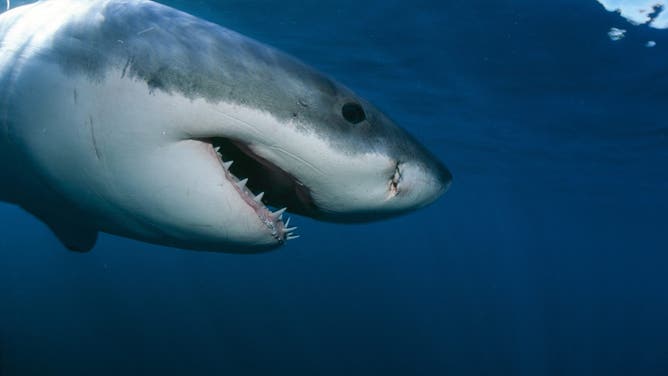
Great White Shark, Carcharodon carcharias, near the water surface, six nautical miles from the coast of Gansbaai, quite close to Dyer Island and Geyser Rock
(Education Images/Universal Images Group / Getty Images)
White sharks are very slow to mature, living 70 years and older, and can grow to be 21 feet long and over 4,000 pounds, according to NOAA Fisheries.
Want to track great white sharks in real time? Keep up with more than 400 other ocean animals by using the free OCEARCH Global Shark Tracker app.