

What is icebreaking and why is it important?
The ships are designed to withstand the pressure of breaking through ice and have a sloped or rounded bow which allows the vessel to ride up onto the ice and use its own weight to break it from above.
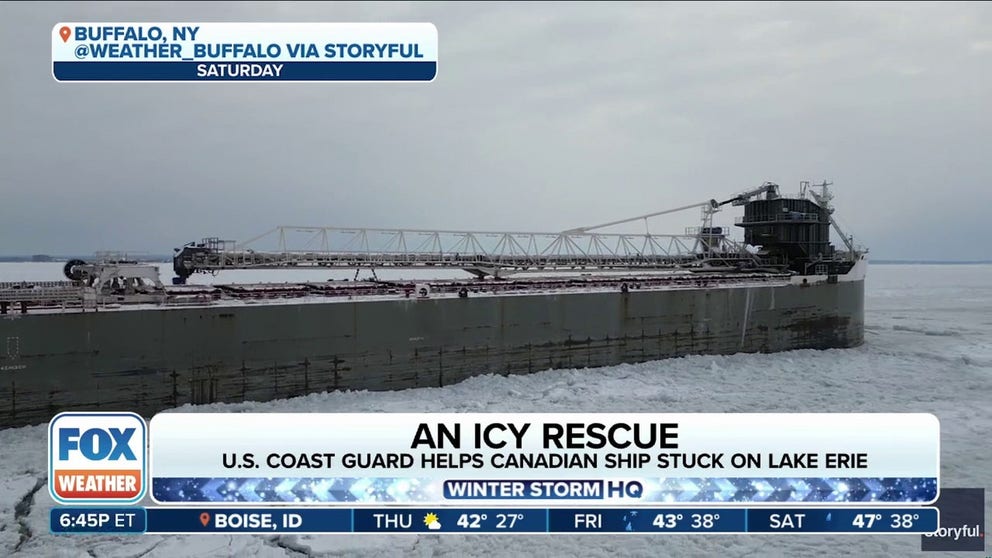
FILE: How the US Coast Guard breaks through thick ice
The agency freed a 663-foot ship trapped in Lake Erie near Buffalo, New York in Jan. 2025.
When ice forms on major waterways in the wintertime or in year-round cold climates, it can seize up marine traffic, not allowing boats to pass through, and often even trapping them in ice.
In order to free these boats from the ice, an icebreaker boat is used to help break up the ice surrounding the boat to allow them to move freely through the water.
CARGO SHIP CARRYING THOUSANDS OF VEHICLES SINKS OFF COAST OF ALASKA
The U.S. Coast Guard is one agency that deploys icebreakers in the winter to help keep critical operations along major waterways running.
What are the ships made of?
Icebreaker ships are made with extremely thick steel, which is often reinforced at the bow and waterline, and are equipped with powerful diesel-electric engines which generate enough force to push the ships through ice, according to the U.S. Coast Guard Pacific and Atlantic Area Public Affairs teams.
The ships are designed to withstand the pressure of breaking through ice and have a sloped or rounded bow which allows the vessel to ride up onto the ice and use its own weight to break it from above, the Coast Guard said.
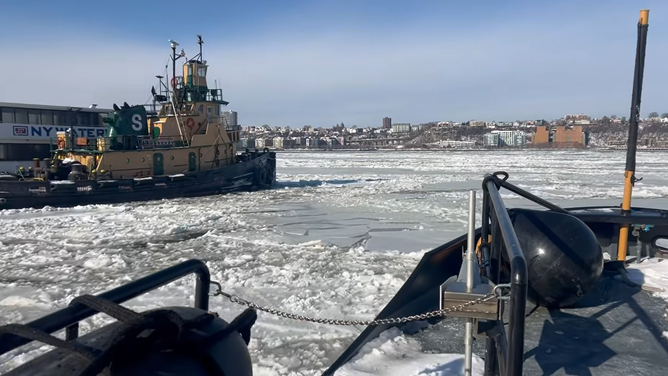
U.S. Coast Guard cutters are busy trying to keep New York's iced-over waterways moving, including freeing an NYPD Harbor Unit vessel that was beset by ice floes Tuesday, Jan. 27, 2026.
(U.S. Coast Guard Northeast/Facebook / FOX Weather)
Different types of icebreaker ships
There are two types of icebreaking done by the Coast Guard: polar icebreaking and domestic icebreaking.
Polar icebreaking is done using three ships: USCGC HEALY and USCGC STORIS, which are medium icebreakers, and USCGC POLAR STAR, a heavy icebreaker.
WATCH: CRUISE SHIP TRAPPED IN PACKED ICE RESCUED BY US COAST GUARD IN ANTARCTICA
The Coast Guard also operates a fleet of small icebreakers, which include nine Bay-class tugs and the USCGC MACKINAW, which primarily operate on the Great Lakes and Northeast Districts as part of the domestic icebreaking mission.
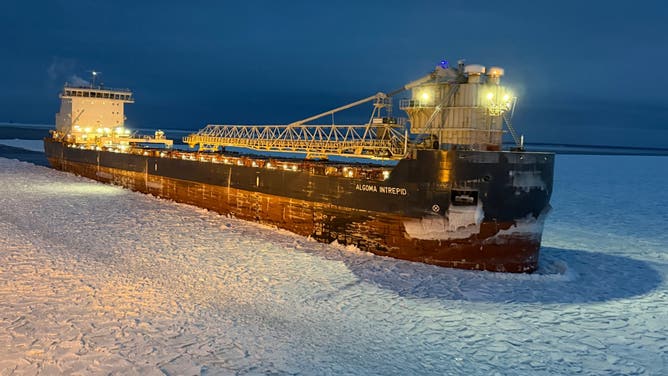
The Algoma Intrepid, a boat that was freed from ice on Lake Michigan by the USCGC Mackinaw on Jan. 25, 2026.
(@USCGGreatLakes/X / FOX Weather)
Additionally, the Coast Guard said it operates five 65’ small harbor tugs that are used to clear shallow water rivers and harbors that are inaccessible to their larger icebreakers.
The Coast Guard’s Juniper Class sea-going Buoy Tender fleet is "ice-capable" and has the ability to break up to 36" of ice through backing and ramming, the agency said.
How does icebreaking work?
The Coast Guard said its icebreakers are managed by a series of long-standing operations, each with a certain geographic focus and triggers based on ice conditions and commercial needs.
PHOTOS: CANADIAN COAST GUARD SHIP GLAZED IN THICK ICE FROM INTENSE WINTER WEATHER
The agency said when a commercial shipping vessel is beset by ice, an icebreaking ship assists by cutting a relief track alongside the stuck vessel, which relieves pressure that is holding it in place.
This process continues until the beset vessel is freed, and the icebreaker will generally lead the vessel through the waterway until it can continue unassisted.
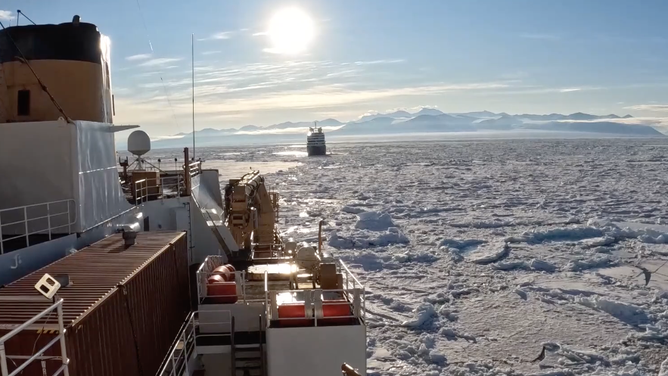
USGC Polar Star breaks up thick ice to clear a path for the trapped cruise ship.
(U.S. Coast Guard Pacific Area/TMX / FOX Weather)
What purpose does icebreaking serve?
Polar icebreaking is done in the ocean and is sent on pre-planned patrols, normally in the higher latitudes or polar regions.
Great Lakes
Icebreaking in the Great Lakes is divided into two main operations: Operation Taconite and Operation Coal Shovel.
Operation Taconite is the largest domestic icebreaking operation in the United States, covering the northern Great Lakes, including Lake Superior and Lake Michigan, the St. Marys River, the Straits of Mackinac and Green Bay, the Coast Guard said.
Operation Taconite's main mission is to keep critical waterways open for the movement of iron ore and other critical cargo.
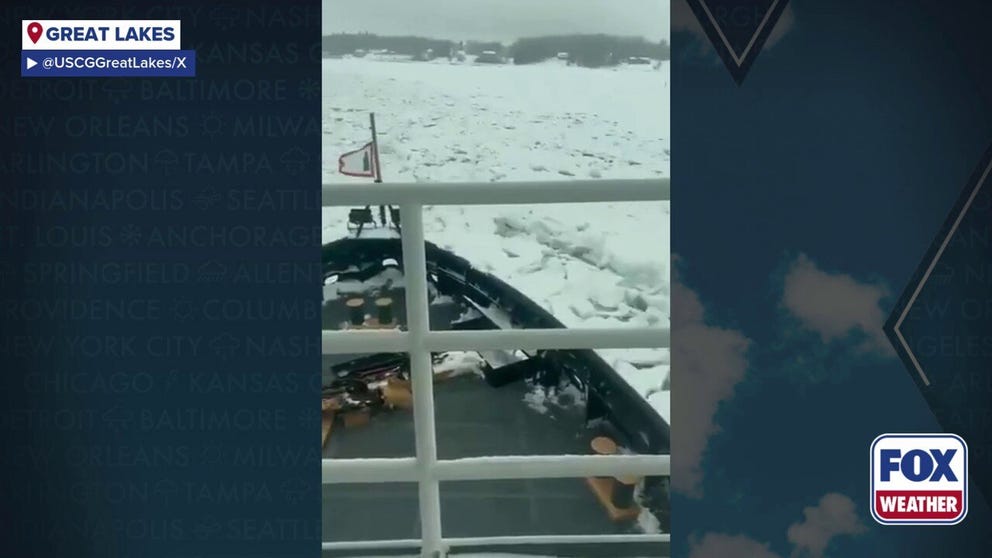
Watch: US Coast Guard frees boat stuck in ice in St. Mary's River
A US Coast Guard boat helped free a 1,000-foot vessel that became trapped in ice in early February 2026 in the St. Mary's River in the Great Lakes.
Operation Coal Shovel covers the southern Great Lakes, including Lake Erie, Lake Ontario and southern Lake Huron, as well as the St. Clair/Detroit River system.
As its name suggests, Coal Shovel's main mission is to facilitate the transport of coal and other vital resources to industrial centers and communities, the Coast Guard said.
US COAST GUARD FREES SHIPS DURING ICEBREAKING OPERATIONS FROM NEW YORK HARBOR TO GREAT LAKES
In addition to that, the operation also plays a crucial role in flood mitigation by breaking up ice jams and providing emergency assistance to ice-bound communities that need food, heating oil or medical access.
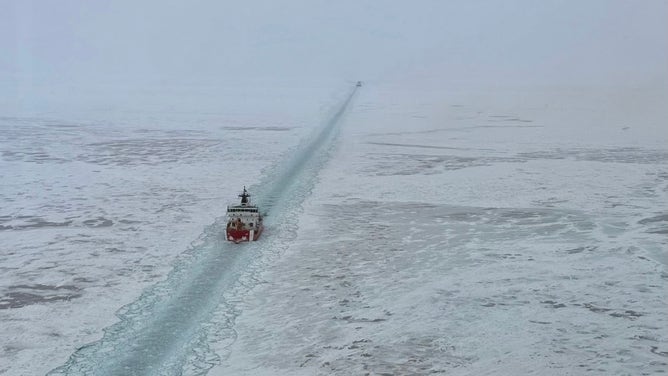
U.S. Coast Guard Cutter Mackinaw responds to vessel beset by ice.
(U.S. Coast Guard Great Lakes/Facebook / FOX Weather)
Northeast
In the Northeast, Operation RENEW is one of the Coast Guard's icebreaking missions.
RENEW is focused on keeping ports and waterways, primarily along the Hudson River, accessible for maritime traffic, the Coast Guard said.
SEE IT: COAST GUARD CUTTER FREES NYPD VESSEL FROM ICEBOUND HUDSON RIVER
Other icebreaking missions in the Northeast ensure the delivery of home heating oil and other critical supplies during the winter.
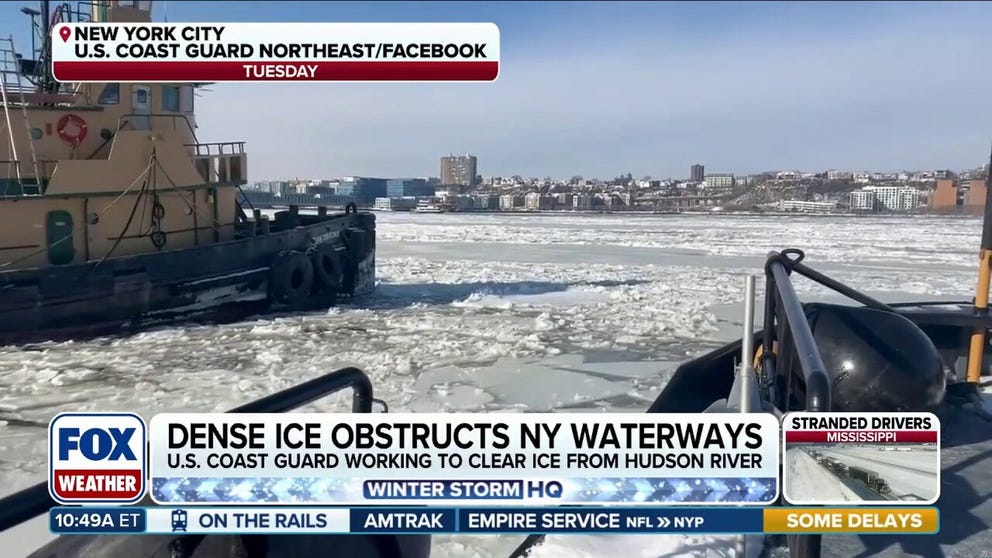
U.S. Coast Guard engaged in icebreaking operation across frozen New York Harbor
U.S. Coast Guard cutters are busy trying to keep New York's iced-over waterways moving, including freeing an NYPD Harbor Unit vessel that was beset by ice floes Tuesday. U.S. Coast Guard Captain Johnathan Andrechik, Captain of the Port for New York and New Jersey, joined FOX Weather Command.
"These icebreaking missions are vital for preventing fuel shortages in communities that rely on maritime transport," the U.S. Coast Guard Pacific and Atlantic Area public affairs teams said.
The Coast Guard said states in New England use 85% of the United States' home heating oil, 90% of which is delivered by barge.
The challenge of icebreaking
Crews operating icebreaking boats, particularly in the polar regions, often work in extremely cold and remote conditions.
Ice conditions can change rapidly depending on the weather and water currents, making navigation difficult and even dangerous for a vessel that's underpowered, the Coast Guard said.
US COAST GUARD UNVEILS FIRST POLAR ICEBREAKER IN MORE THAN 25 YEARS
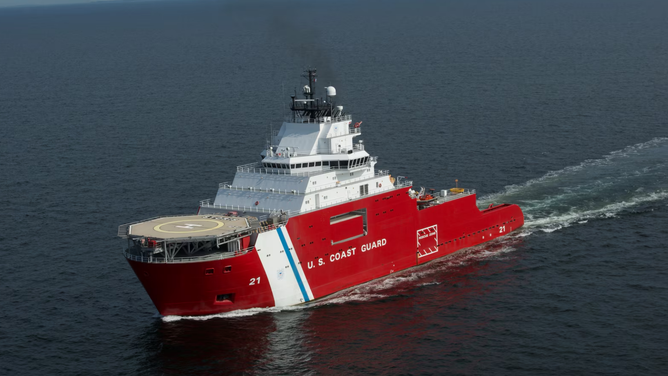
JUNE 2025: U.S. Coast Guard unveils first polar icebreaker in more than 25 years
(U.S. Coast Guard / FOX Weather)
The Coast Guard said the constant impact of ice on the icebreaker ships puts an enormous strain on the ship's hull and machinery, leading to frequent maintenance.
Additionally, some of the Coast Guard's icebreaker ships have been around since the 1960s, the agency said, and as the ships age, even more maintenance is required.
RESTORING HUDSON RIVER ECOSYSTEMS IS ESSENTIAL TO CONTINUE DOLPHIN AND WHALE SIGHTINGS
"The One Big Beautiful Bill Act provides funding for medium and light domestic icebreakers to recap the aging icebreaking fleet," U.S. Coast Guard Pacific and Atlantic Area Public Affairs teams said.
On Wednesday, the Coast Guard announced contracts for 11 new Arctic Security Cutters, fulfilling President Trump's directive to rapidly expand the country's icebreaker fleet. The first vessel is expected to be delivered in 2028. Click here for more information.