

Photos: Canadian Coast Guard ship glazed in thick ice from intense winter weather
Photos shared by the Canadian Coast Guard show the intense winter conditions that brought wet snow and intense winds, causing ice to build up on their vessel.
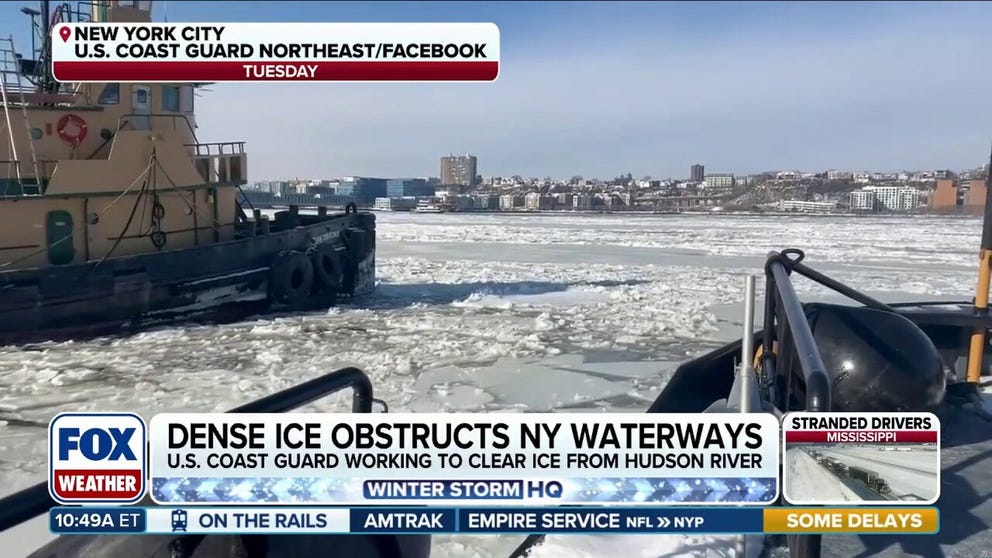
U.S. Coast Guard engaged in icebreaking operation across frozen New York Harbor
U.S. Coast Guard cutters are busy trying to keep New York's iced-over waterways moving, including freeing an NYPD Harbor Unit vessel that was beset by ice floes Tuesday. U.S. Coast Guard Captain Johnathan Andrechik, Captain of the Port for New York and New Jersey, joined FOX Weather Command.
ONTARIO, CANADA – Freezing conditions have caused an incredible icy landscape on a boat traveling Lake Huron in Canada.
Freezing temperatures have plagued North American cities all winter long as people continue to endure the conditions.
Ice cutter boats have been a common sight in popular U.S. areas such as New York City and Long Island, New York, where many boats have become stuck in thick chunks of ice due to dropping temperatures.
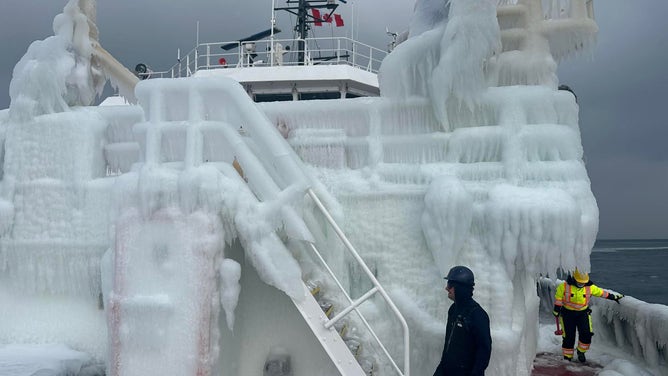
Heavy ice coats the outside of the bridge on a Canadian Coast Guard vessel amid intense winter conditions.
(@CoastGuardCAN / X)
Just north of the U.S., Canada has encountered similar issues, experiencing ice-filled waters as vessels navigate through the winter debris.
PHOTOS: HIKERS SUFFERING HYPOTHERMIA RESCUED AFTER GETTING LOST IN HEAVY SNOW
Photos shared by the Canadian Coast Guard show the intense winter conditions that brought wet snow and intense winds, causing ice to build up on their vessel.
The outside of the bridge where the captain steers the boat, also known as the bridge wing, is almost entirely glazed in thick ice. Most of the deck floor of the vessel is also coated in sheets of ice.
"Like the ice on the lake, crews made quick work of it," the Canadian Coast Guard said on social media.
![Crews on a Canadian Coast Guard ship work to break up large amounts of ice buildup on the boat.]() Image 1 of 3
Image 1 of 3Crews on a Canadian Coast Guard ship work to break up large amounts of ice buildup on the boat. (@CoastGuardCAN / X)
![Members of the Canadian Coast Guard work to break away large ice accumulations on their boat.]() Image 2 of 3
Image 2 of 3Members of the Canadian Coast Guard work to break away large ice accumulations on their boat. (@CoastGuardCAN / X)
![Large amounts of ice build up on a Canadian Coast Guard Vessel in Ontario, Canada.]() Image 3 of 3
Image 3 of 3Large amounts of ice build up on a Canadian Coast Guard Vessel in Ontario, Canada. (@CoastGuardCAN / X)
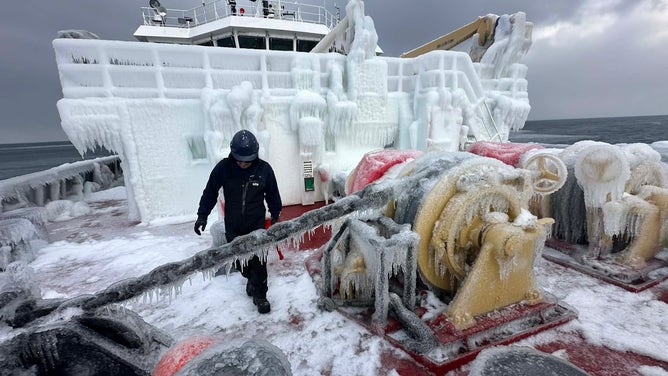
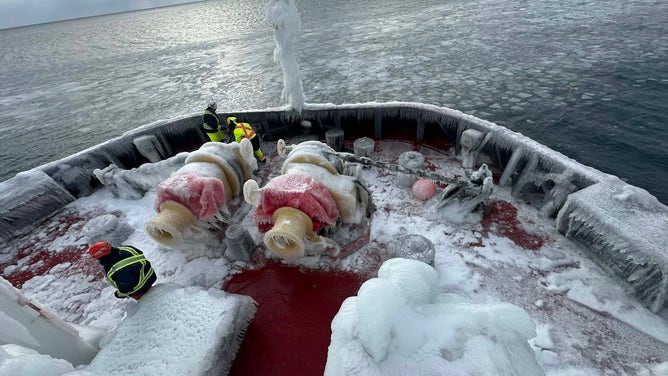
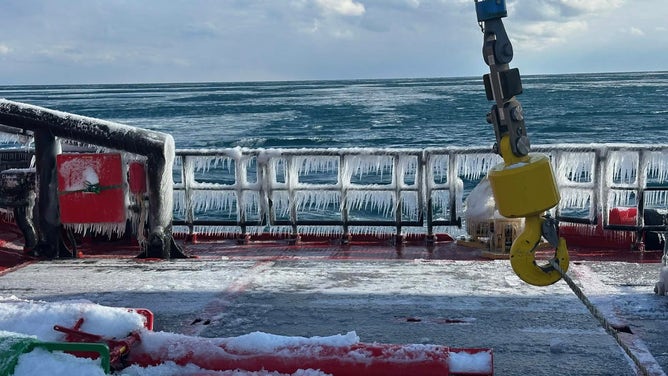
The boat was seen on Lake Huron in Goderich, Ontario. Crew members can be seen wielding red hammers to break away the ice around the entire boat.
THESE ARE THE BIGGEST ICE STORMS TO EVER IMPACT THE US
This event can result from freezing ocean spray, which is an accumulation of ice crystals on a vessel caused by cold water, wind, low air temperature and vessel movement, according to the National Oceanic and Atmospheric Administration (NOAA).