

Record-breaking heat wave causes breathtaking Death Valley superbloom to peak early this year
Intense heat and high winds caused the wildflower superbloom to peak early this year.
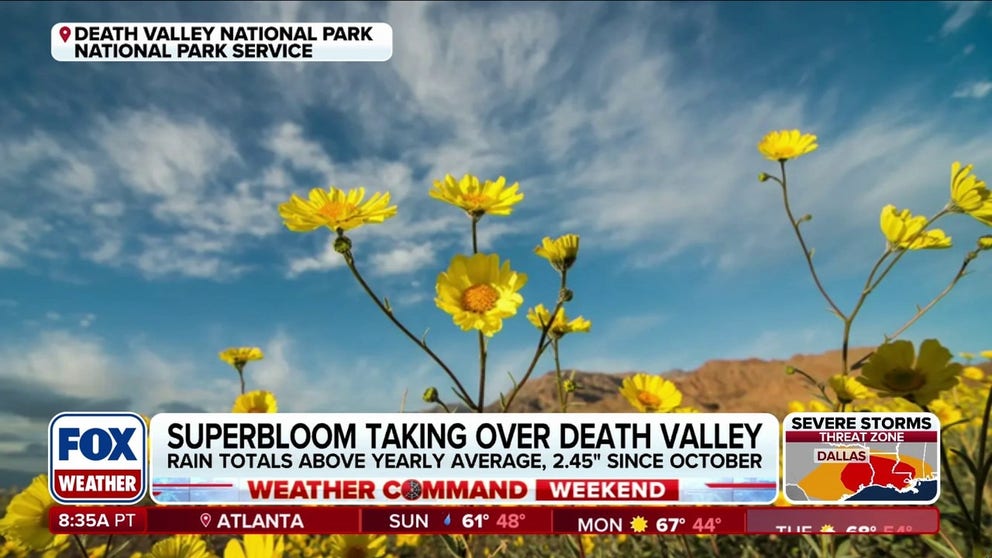
FILE: Death Valley likely to see vibrant colors due to rare superbloom this year
A good bloom year is expected in Death Valley, and sprouts have already been spotted in many areas of the park. Park Ranger Matthew Lamar joins FOX Weather to discuss how recent rainfall and weather conditions that are just right are contributing to the exceptional spring wildflower bloom.
The breathtaking superbloom that takes over Death Valley in the spring is ending early this year as a historical heat wave swarms the region.
HISTORIC HEAT WAVE EXPANDS INTO CENTRAL US AFTER WEEKS OF RECORD HEAT IN THE SOUTHWEST
Within the last week, temperatures surged throughout the Southwest, causing the most intense heat wave ever seen in March, and experts say this pattern will continue into April.
So far, over 1,500 records have been broken across 13 states and at least 95 locations have set new daily records or tied their all-time warmest day for March.
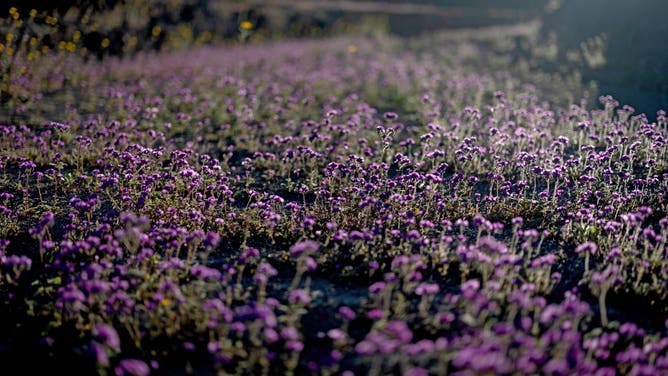
Flowers blooming on Tuesday, March 3, 2026, in Death Valley, CA.
(Eric Thayer / Los Angeles Times via Getty Images / Getty Images)
Extreme Heat Warnings and Heat Advisories were issued across Southern California, Neveda and Arizona, impacting more than 40 million people.
SEE WHEN AND WHERE RARE SUPERBLOOMS ARE HAPPENING WITH THIS INTERACTIVE MAP
The National Park Service (NPS) advised that the intense heat and high winds have led the wildflower superbloom to already reach its peak. Before the heat wave, this was Death Valley National Park's best wildflower bloom since 2016.
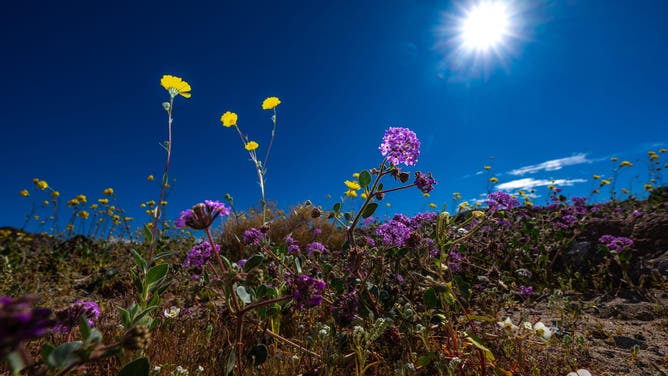
Desert sunflowers and desert sand-verbena bloom south of the Badwater area of Death Valley National Park on Saturday Feb. 28, 2026.
(Will Lester/MediaNews Group/Inland Valley Daily Bulletin via Getty Images / Getty Images)
According to the NPS, the flowers that are located in the lower elevations have started to become setting seeds again. This is the area that was seen as a superbloom of yellow and purple flowers weeks earlier.
The higher elevations will have blooms between April and June. But these flowers tend to be in clusters between shrubs and don’t create the colorful hillsides.
EXTREME HEAT SAFETY: RECOGNIZING SIGNS OF HEAT ILLNESS AND HOW TO TREAT IT
The wildflowers are annuals, also referred to as ephemerals. They are known to be short-lived in order to stay alive during the desert’s more extreme conditions. They lay dormant as seeds, but once there's enough rain, they quickly sprout, grow, bloom and go back to seed again before the dryness and heat return.
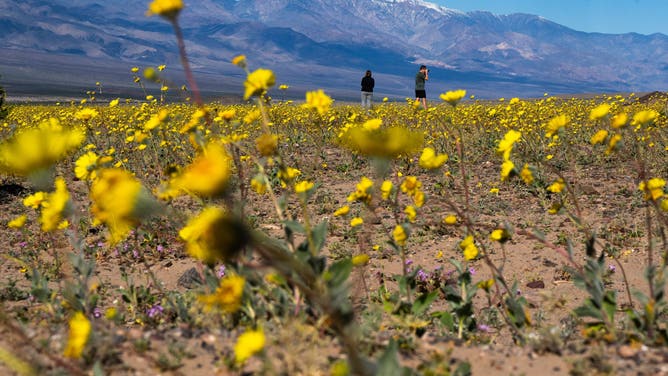
Visitors walk and take photographs amongst a cluster of desert gold wildflowers blooming near Ashford Junction at the southern end of Death Valley National Park on Saturday, Feb. 28, 2026.
(Will Lester/MediaNews Group/Inland Valley Daily Bulletin via Getty Images / Getty Images)
In a typical year, the flowers that bloom in the lower elevations happen between February and mid-April. From mid-April to early May, the blooms begin to develop 3,000 to 5,000 feet above sea level in the upper desert slopes, canyons and higher valleys.
Then from early May to mid-July, the blooms happen at 5,000 to 11,000 feet above sea level on the mountain slopes, in pinyon pine and juniper woodlands.
Although Death Valley is famous for its superblooms, they do not happen every year. Only under perfect conditions does the desert fill with a sea of gold, purple, pink and white flowers.