
Extreme heat safety: Recognizing signs of heat illness and how to treat it
When it is extremely hot outside, our bodies have a more difficult time staying cool and adapting to the weather. This can result in heat illness.
How to recognize signs of heat illness
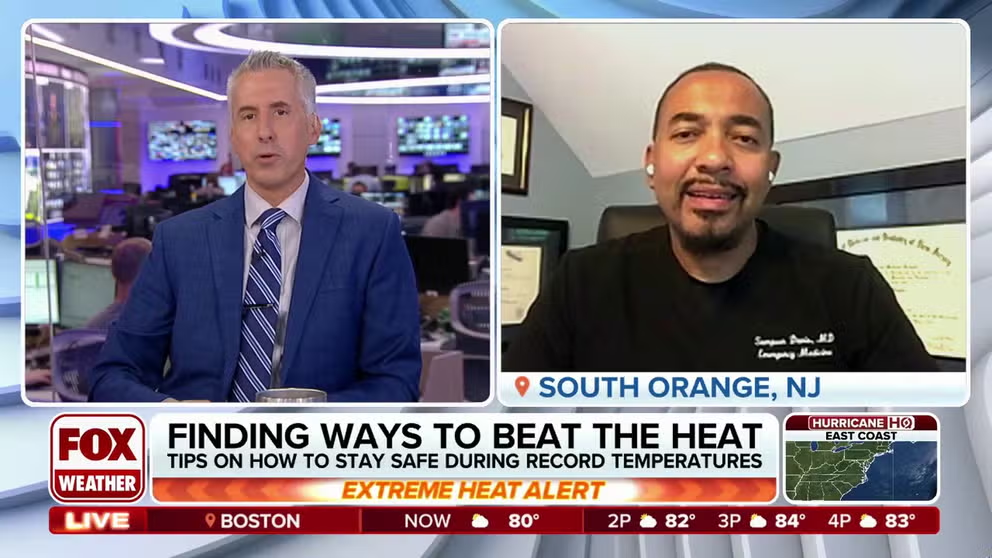
Dr. Sampson Davis has tips on how to protect yourself from extreme heat and how to recognize the symptoms of a heat-related illness.
Heat is the number one cause of weather-related deaths in the U.S., and many don't realize how quickly heat illness can set in during periods of extreme heat.
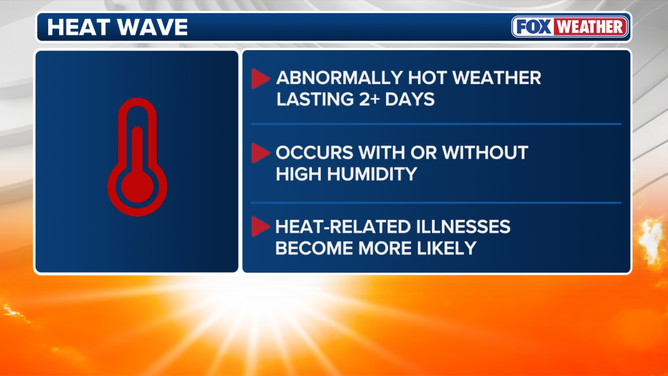
A heat wave is a period of abnormally hot weather that lasts for two days or more, according to the National Weather Service. Heat waves can occur with or without high humidity and they can cover a large area.
Extreme heat is defined as temperatures of 90 degrees or higher combined with high humidity and lasting for two to three days, according to heat.gov.
HEAT KILLS MORE AMERICANS THAN FLOODING, TORNADOES, HURRICANES OR LIGHTNING
Heat wave explainer
Additionally, extreme heat is anything that is much hotter than average for a specific location at a given time of year.
KNOW YOUR HEAT TERMINOLOGY: EXTREME HEAT WARNING, EXTREME HEAT WATCH AND HEAT ADVISORY
When it is extremely hot outside, our bodies have a more difficult time staying cool and adapting to the weather. This can result in heat illness.
There are three types of heat illness: heat cramps, heat exhaustion and heat stroke.
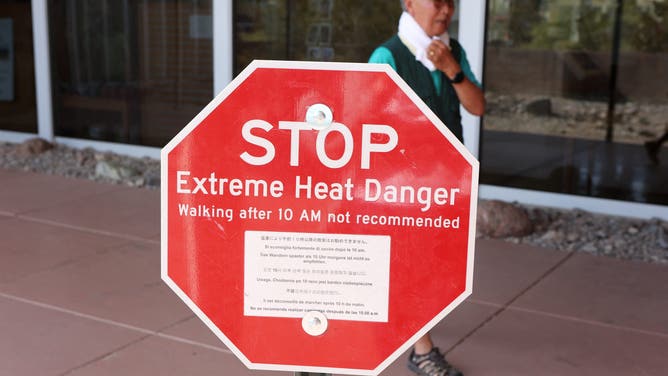
A heat advisory sign is shown at Furnace Creek Visitor Center during a heat wave in Death Valley National Park in Death Valley, California, on July 16, 2023.
(Ronda Churchill / AFP / Getty Images)
Heat cramps
Heat cramps are often the first sign of heat illness. They often present as painful muscle cramps or spasms in the arms, legs or stomach, accompanied by extreme sweating.
ALLERGY SEASON IS WORSE THAN EVER. HERE ARE THE 10 WORST ALLERGY CAPITALS IN THE US FOR 2026
To treat heat cramps, apply firm pressure or gently massage the cramping muscles to relieve the spasms.

NEW YORK, NEW YORK - JULY 29: A person sits next to a fountain in Manhattan as the region experiences another heatwave on July 29, 2025 in New York City.
(Spencer Platt / Getty Images)
Try to get to a cooler environment as soon as you can, shed excess layers and sip water slowly unless nauseous, then stop drinking.
If the cramping lasts for longer than an hour, seek immediate medical attention.
Heat exhaustion
A more severe form of heat illness is heat exhaustion.
Heat exhaustion presents as heavy sweating, weakness or tiredness, along with cool, pale clammy skin and a fast, weak pulse.
SCARED OF SHARKS? FIND OUT WHERE YOU ARE MOST LIKELY TO GET ATTACKED BY A SHARK
Muscle cramps, dizziness, nausea, vomiting, fainting and headaches are often also symptoms of heat exhaustion.
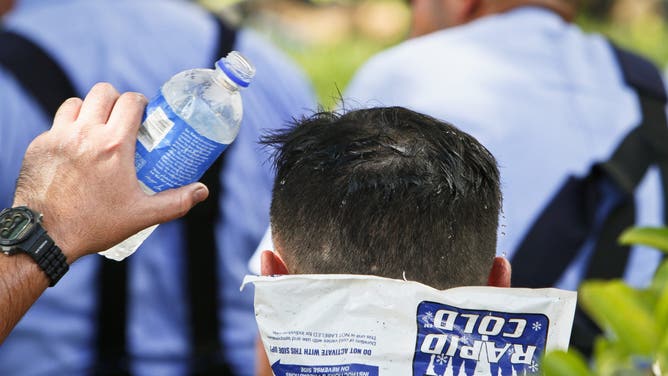
Houston Firefighters try to stay cool while battling a fire at South Houston home on Cortelyou Ln. near Nassau Rd. that spread to an adjoining house Monday, Aug. 9, 2010, in Houston.
(Michael Paulsen / Houston Chronicle / Getty Images)
To treat heat exhaustion, move to a cooler environment, preferably an air-conditioned room, and loosen or remove excess clothing as quickly as possible.
Apply cool, wet cloths and sit in a cool bath, if possible. Sip cool water.
Seek immediate medical attention if vomiting begins or symptoms persist or worsen for an hour or longer.
Heat stroke
Heat stroke is the most severe form of heat illness and requires immediate medical attention.
Signs include a throbbing headache, confusion and slurred speech, nausea, dizziness and a body temperature of 103 degrees or higher.
HURRICANE SEASON 2026: THESE ARE THE STORM NAMES YOU'LL SEE THIS SEASON
Additional signs of heat stroke can be red, hot, dry or damp skin, fainting or loss of consciousness and a rapid or strong pulse.
If presenting with any of these signs, call 911 or get to a hospital immediately.

A Heat Kills sign at the beginning of a trail at Arches National Park in Moab, Utah, US, on Saturday, May 17, 2025.
(Stefani Reynolds/Bloomberg / Getty Images)
"Heat stroke is a severe medical emergency. Delay can be fatal," the National Weather Service said.
While waiting for medical help, immediately get to a cooler place. Get into a cool bath and place cool cloths over the body.
HISTORIC HEAT WAVE BREAKS RECORDS ACROSS SOUTHWEST AS EXTREME HEAT WARNINGS PERSIST FOR MILLIONS
If the temperature is lower than the high 90s, use a fan to help cool down. The NWS said if temperatures are higher than the 90s, do not use a fan as it can make things hotter.
Under no circumstances should any fluids be consumed when experiencing heat stroke.
Who's at risk?
Everyone can be affected by heat.
People with chronic medical conditions, limited mobility or taking certain medications can be subject to heat illness more quickly.
DRIVE INTO SUMMER PREPARED: 5 THINGS TO KNOW WHEN YOU HIT THE ROAD IN EXTREME HEAT

ROCKVILLE, MARYLAND - JUNE 21: Children stay cool on the splash pad at Rockville Town Square as the temperature rises on June 21, 2024 in Rockville, MD.
(Chip Somodevilla / Getty Images)
Babies and small children are at an increased risk for heat illness, along with pregnant women.
Older adults can also be at higher risk for heat illness.
Staying safe
To protect yourself from heat illness, limit outdoor exposure as much as possible.
Try to stay in the shade as much as possible when outside during the day during extreme heat or a heat wave.
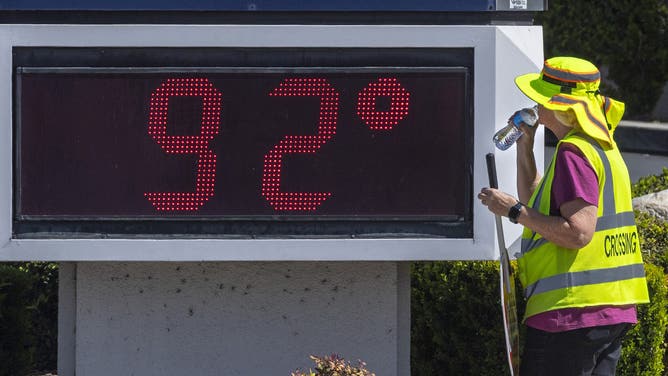
Yorba Linda, CA - April 07: Brenda Verbeck, left, a crossing guard at the intersection of Fairmont and Yorba Linda Boulevards in Yorba Linda, takes a drink as she stands next to a temperature sign that reads 92 degrees on Thursday afternoon, April 7, 2022.
(Mark Rightmire/MediaNews Group/Orange County Register)
Wear hats or sun protection to keep your head cool and drink lots of water or hydrating fluids.
If outdoor activities can't be avoided, do them in the coolest parts of the day.