

Hidden hazard: How to stay safe from harmful algal blooms this summer
Harmful algal blooms are the rapid growth of algae or cyanobacteria in water that can produce toxins that harm people, animals and the environment.

FILE: Harmful algal bloom known as red tide invades Florida
The National Weather Service and NOAA warned people on Florida's Gulf Coast to stay away from the beaches Thursday and Friday due to the high risk of breathing issues caused by red tide. One area where the warning was in place was Lee County, home to Fort Myers and Cape Coral. Lee Health's Chief Medical Officer Dr. Iahn Gonsenhauser joins FOX Weather.
As millions of Americans head to beaches, lakes and other bodies of water this summer, officials are warning about harmful algal blooms that can pose serious health risks to people and pets.
TOXIC ALGAE BLOOM BECOMING DEADLY FOR SEA LIONS, DOLPHINS IN PACIFIC OCEAN
Harmful algal blooms are the rapid growth of algae or cyanobacteria in water that can produce toxins that harm people, animals and the environment.
According to the Centers for Disease Control and Prevention (CDC), these blooms can develop in freshwater, saltwater, brackish water and even drinking water systems.
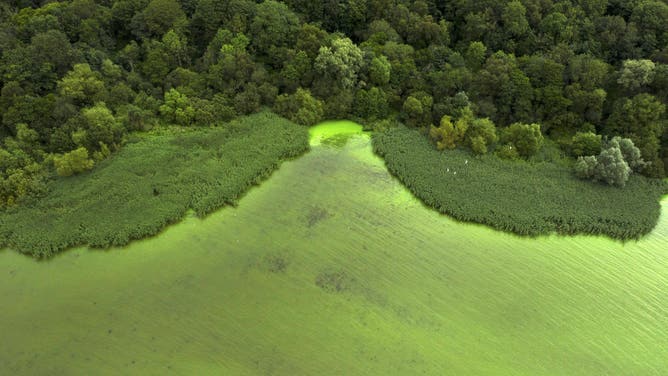
Blue-green algae blooms are seen along the shoreline at a park.
(Charles McQuillan/Getty Images / Getty Images)
Some blooms can look like foam, scum, mats or paint on the surface of the water. They can also grow underneath the water, making some harmful algae blooms hard to see.
They occur around the world and have been reported in all 50 states, as well as Puerto Rico and the U.S. Virgin Islands.
CASE TRACKER: HERE IS WHERE FLESH-EATING BACTERIA CASES HAVE BEEN REPORTED IN THE US
While harmful algal blooms can occur anywhere, some states experience them more frequently or on a larger scale, particularly during the summer.
States with recurring blooms include Florida, Ohio, Michigan, Minnesota, Wisconsin, New York, Pennsylvania, New Jersey, California, Oregon, Texas and Washington.
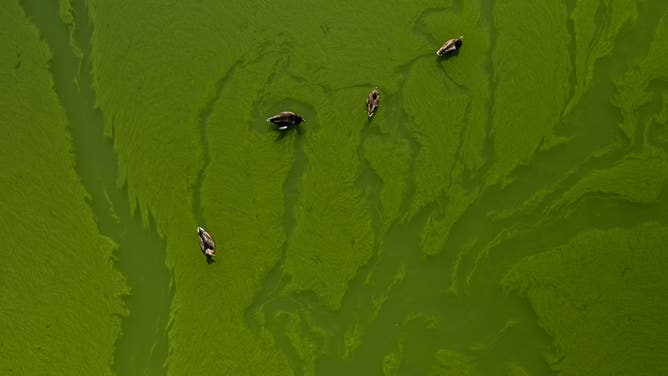
In an aerial view, ducks feed in green water during a harmful algal bloom (HAB) of blue-green algae, also known as Cyanobacteria, at Lake Elsinore in Lake Elsinore, California.
(David McNew/Getty Images / Getty Images)
The U.S. Environmental Protection Agency (EPA) said it works with states and tribes to support harmful algal bloom monitoring programs and maintain resources to help the public track advisories and water conditions.
REPORTS: BEACHGOER BITTEN BY SHARK AT JONES BEACH ON LONG ISLAND
What causes harmful algal blooms?
According to the CDC, many different types of algae cause harmful algal blooms, but cyanobacteria, dinoflagellates and diatoms are the most common causes that make people and animals sick.
Other environmental factors, including warm water temperatures, abundant sunlight and excess nutrients such as nitrogen and phosphorus from fertilizer runoff, wastewater, stormwater and agricultural sources can fuel explosive growth.
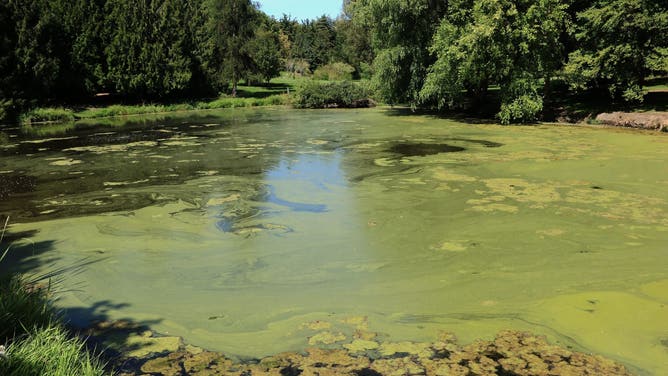
Toxic green algal bloom in pond during summer, Pond in a city park in Moscow Idaho in August.
(Don and Melinda Crawford / Getty Images)
Climate change is also contributing to more frequent and longer-lasting blooms by warming waterways and increasing the likelihood of heavy rainfall that can wash nutrients into lakes, rivers and coastal waters.
HEALTH ADVISORIES ISSUED FOR POPULAR FLORIDA GULF COAST BEACHES DUE TO FECAL BACTERIA IN WATER
How do harmful algal blooms affect your health?
Exposure to harmful algal blooms can cause a range of illnesses depending on the type of algae and how a person comes into contact with it.
People can become sick after swimming or wading in contaminated water, inhaling airborne droplets or eating contaminated fish or shellfish.
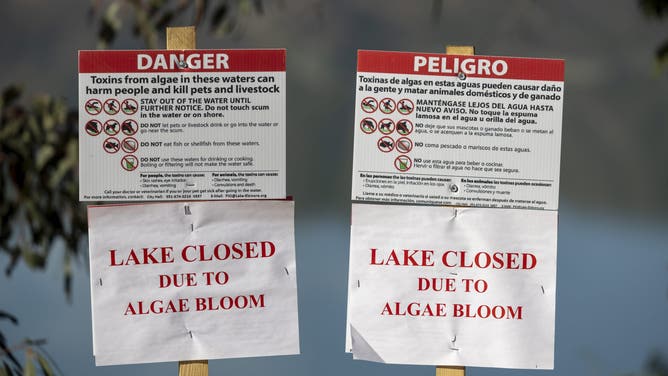
Signage warns that the lake is closed during a harmful algal bloom (HAB) of blue-green algae, also known as Cyanobacteria, at Lake Elsinore.
(David McNew/Getty Images / Getty Images)
Symptoms may include skin rashes and irritation, eye, nose and throat irritation, stomach pain, nausea, vomiting and diarrhea, coughing or difficulty breathing, headaches and dizziness.
Some toxins can also affect the liver or nervous system.
TOXIC ALGAE BLOOM BECOMING DEADLY FOR SEA LIONS, DOLPHINS IN PACIFIC OCEAN
Pets, especially dogs, are vulnerable since they are more likely to drink contaminated water or lick algae from their fur after swimming. Exposure can be life-threatening.
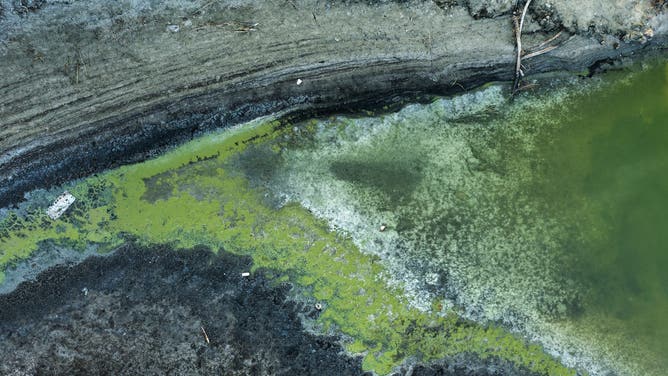
California city closes the lake to all activities, including fishing, swimming and boating, due to the danger of serious illness or death in humans and animals.
(David McNew/Getty Images / Getty Images)
How can you avoid exposure?
Health officials recommend taking the following precautions:
- Follow local beach and public health advisories.
- Avoid swimming, wading or boating in water that appears bright green, blue-green, brown or red, smells bad, has dead fish or animals washed up on its shore or has thick surface scum, foam or paint-like streaks.
- Never drink or cook with untreated water from lakes, rivers or ponds experiencing a bloom.
- Keep children and pets away from water with visible algal blooms.
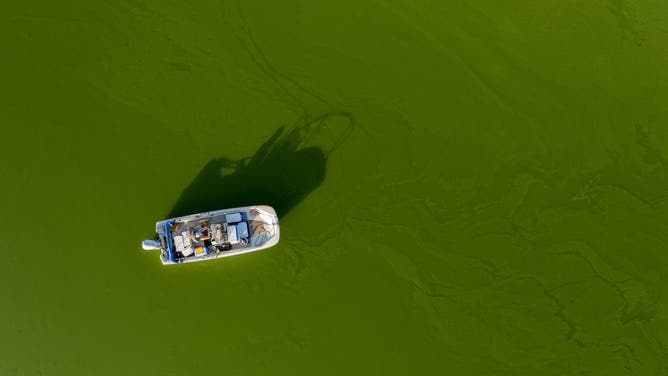
Harmful algal blooms are the rapid growth of algae or cyanobacteria in water that can produce toxins or otherwise harm people, animals and the environment.
(David McNew/Getty Images)
If exposed, immediately rinse yourself and pets off with clean water. Then contact the healthcare provider of the Poison Control hotline.
WHAT IS THE FECAL BACTERIA ENTEROCOCCI AND WHY DOES IT IMPACT BEACHES?
Since harmful algal blooms can develop quickly and change with weather conditions, officials encourage checking local advisories before heading to the water, especially during the warmest months of the year.
A few minutes spent checking water conditions could help keep your summer plans on track.