

2 meteor showers expected to peak this week, but a bright moon will steal the show
Astronomers said both the Southern Delta Aquariids and the Alpha Capricornids will reach peak activity just one night after the full July Buck Moon.
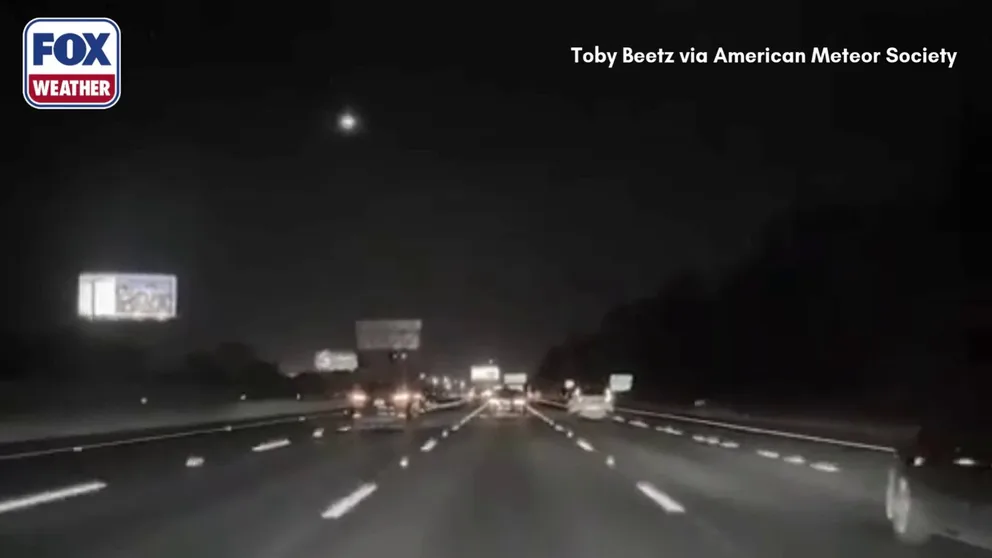
Meteor streaks across night sky
A meteor lit up the sky over Palo Alto, California, while a driver was on the road on Sunday.
Two meteor showers will peak overnight from Thursday into Friday, but most skywatchers shouldn't expect a dazzling celestial display.
AUGUST SKYWATCHING GUIDE: FROM A PLANETARY PARADE AND ECLIPSES TO A METEOR SHOWER
Astronomers say both the Southern Delta Aquariids and the Alpha Capricornids will reach peak activity just one night after the full July Buck Moon.
This will prevent most skywatchers from seeing this event since the moon will still be 98% full.
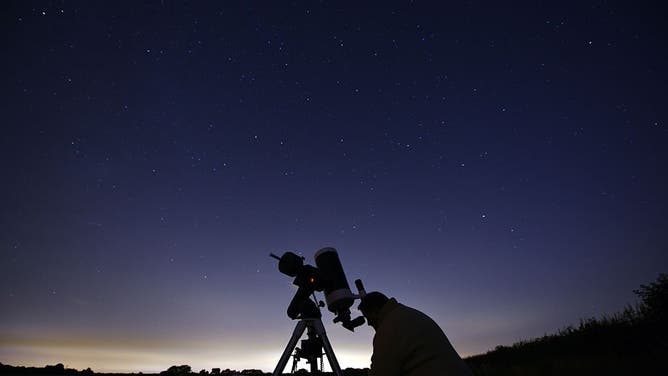
Members of an astronomical society prepare to view a meteor shower.
(Photo credit should read OLI SCARFF/AFP via Getty Images / Getty Images)
According to the American Meteor Society, the Southern Delta Aquariids are active from July 23 through Aug. 23 and are best seen from the southern tropics.
HOW OFTEN DO METEORITES CRASH IN THE US?
The shower typically produces a steady number of meteors, but they are usually faint and rarely produce persistent trains or fireballs.
The Alpha Capricornids, which are active from July 12 through Aug. 12, are a much weaker meteor shower and rarely produce more than five meteors per hour at their peak. However, they are known for creating bright fireballs.
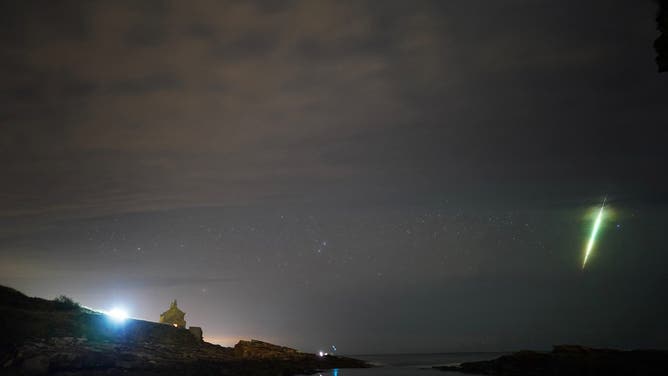
A fisherman watches a meteor shower.
(Owen Humphreys/PA Images / Getty Images)
If you plan to catch the celestial event, the best viewing time will be between midnight and dawn. Observers across the southern U.S., Mexico and the Caribbean will have the best chance of seeing the meteors.
'FIREBALL SEASON' EXPLAINED: WHY METEORS ARE LIGHTING UP SKIES ACROSS THE COUNTRY
Experts recommend keeping the moon behind you or blocked by a building, tree or hill and looking toward the darkest part of the sky.
No special equipment is needed, as the meteors can be seen with the naked eye.
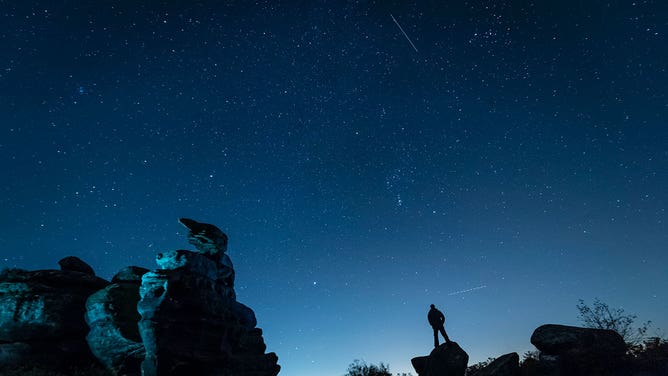
A plane and a Satellite pass by as a man stargazes at Brimham Rocks in Yorkshire.
(Danny Lawson/PA Images via Getty Images / Getty Images)
If clouds or the moon prevent you from seeing these meteor showers, don't worry—you'll have an even better chance in August. The Perseid meteor shower will peak overnight from Aug. 12 to 13.
THE BEST CELESTIAL EVENTS IN 2026 YOU WON'T WANT TO MISS
During this time, the skies will be moonless, and the meteor shower will peak at a rate of 100 meteors per hour.