

The Perseid meteor shower is here and skywatchers could see up to 100 shooting stars per hour
This year's display is expected to be one of the best in years because the peak coincides with a new moon, leaving the skies darker and making even the smallest meteors easier to spot.
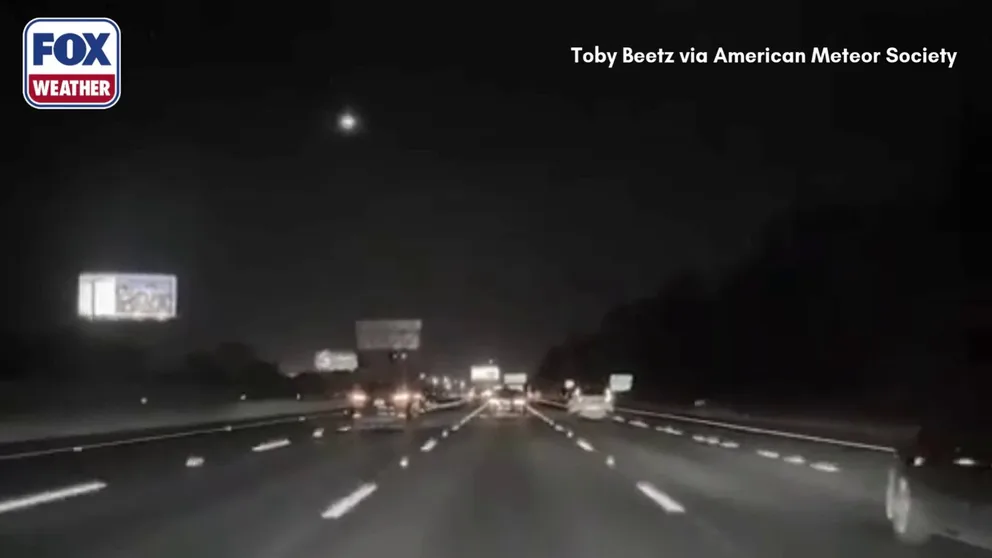
Meteor streaks across night sky
A meteor lit up the sky over Palo Alto, California, while a driver was on the road on Sunday.
Skywatchers, get ready — one of the year's most popular meteor showers is back and set to light up the August night sky.
The Perseid meteor shower is one of the most anticipated astronomical events of the year.
SECTION OF SPACEX FALCON 9 ROCKET EXPECTED TO SMASH INTO THE MOON
The annual shower is known for producing bright, fast-moving meteors and bright fireballs as Earth passes through a trail of debris left behind by Comet 109P/Swift-Tuttle.
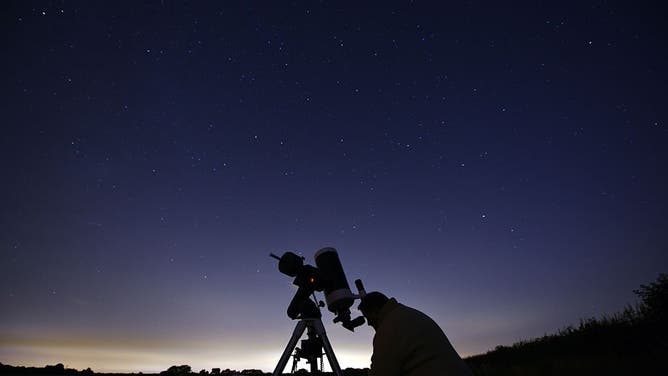
Members of the York Astronomical Society prepare to view the annual Perseids meteor shower in the village of Rufforth, near York, northern England on August 12, 2015.
(Photo credit should read OLI SCARFF/AFP via Getty Images / Getty Images)
The Perseids are active from July 17 through Aug. 24, but the best viewing is expected during the peak from Aug. 12 into Aug. 13.
Under clear, dark skies, observers could see up to 100 meteors per hour, along with fireballs.
This year's display is expected to be one of the best in years because the peak coincides with a new moon, leaving the skies darker and making even the smallest meteors easier to spot.
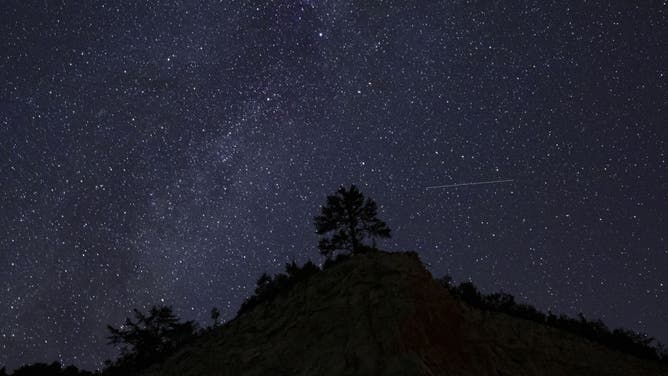
A view of the Perseid meteor shower over Lake Cubuk in Goynuk district of Bolu, Turkiye on August 13, 2024.
(Photo by Isa Terli/Anadolu via Getty Images / Getty Images)
According to the American Meteor Society, the meteors are called the Perseids because they appear to radiate from the constellation Perseus, even though they can be seen across much of the night sky.
THE BEST CELESTIAL EVENTS IN 2026 YOU WON'T WANT TO MISS
The shower's peak comes just hours after a total solar eclipse visible from parts of Greenland, Iceland and Spain. A partial solar eclipse will also be visible across portions of Europe and parts of North America, including some areas in the U.S. and Canada.
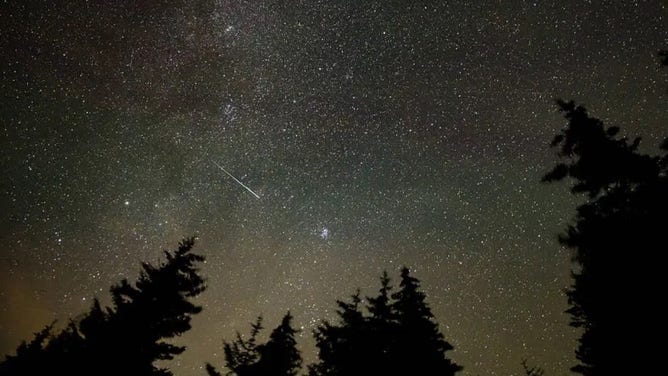
Perseid meteor shower on Wednesday, Aug. 11, 2021, in Spruce Knob, West Virginia.
(NASA / NASA)
For the best viewing experience, experts recommend heading to a dark location away from city lights and streetlamps. Allow your eyes 20 to 30 minutes to adjust to the darkness, avoid looking at your phone, and look up after midnight through the hours before dawn for the greatest chance of spotting a shooting star.
NASA'S EXPERIMENTAL AIRCRAFT FLIES SUPERSONIC FOR THE FIRST TIME
Whether you're an experienced stargazer or simply looking to make a wish on a shooting star, the Perseid meteor shower is one of the summer's most spectacular celestial displays.