

September ends hurricane-free in the Atlantic for the first time in 32 years amid impending Super El Niño
As the calendar flips to October, topical activity generally shifts toward the Gulf and the Caribbean, with storms often generated by the Central American Gyre (CAG).
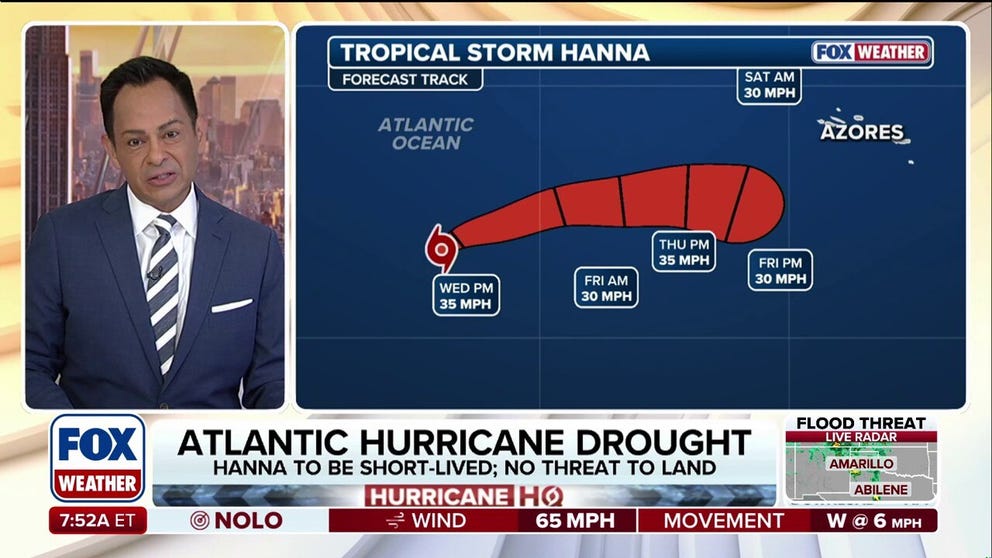
September ends hurricane-free in the Atlantic for first time in 32 years amid strengthening El Niño
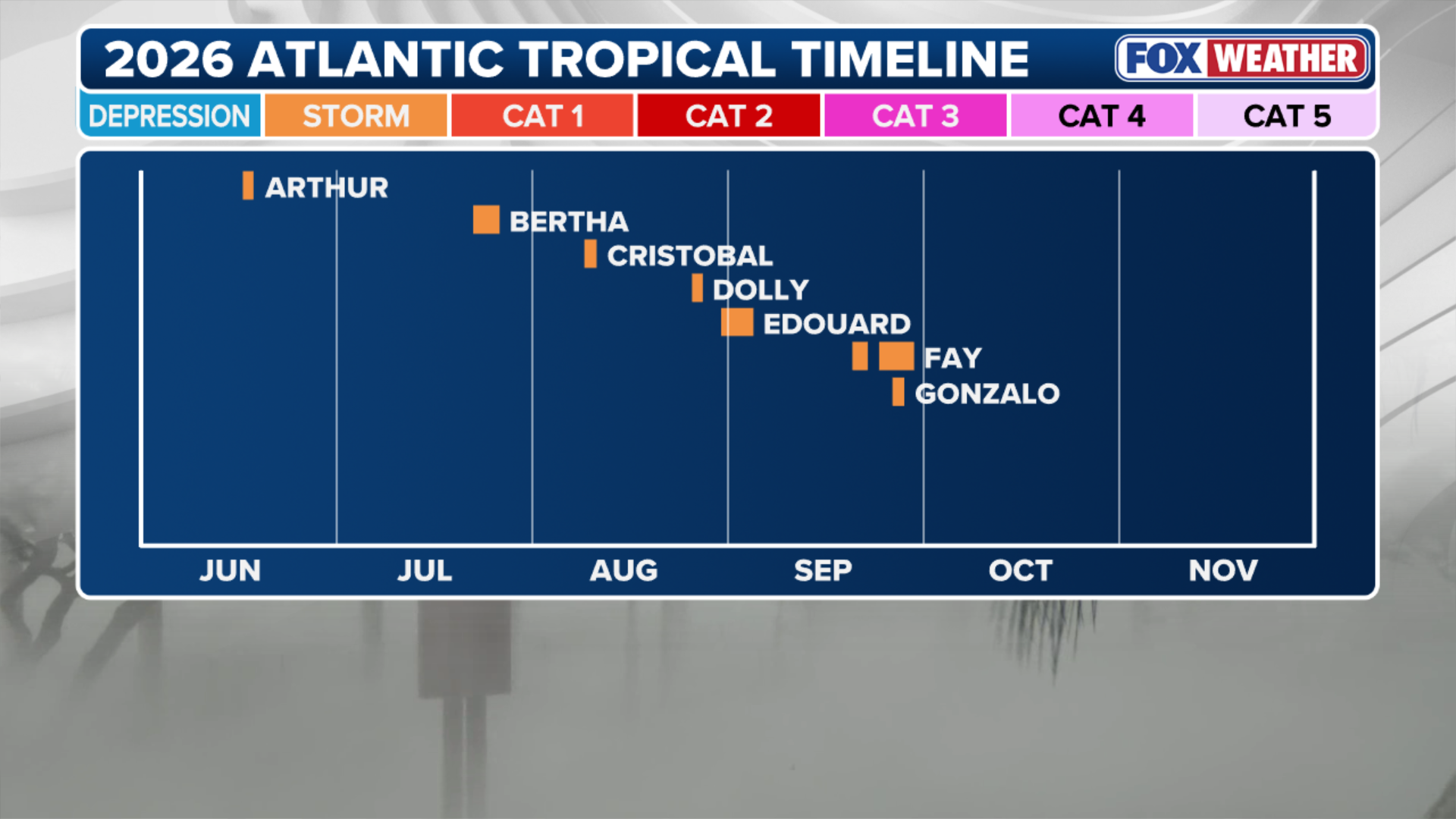
September has come to a close without a hurricane forming in the Atlantic for just the second time in the satellite era (1996), despite being the climatological peak of the season as El Niño-driven winds have suppressed activity this year. Tropical Storm Hanna is on its last legs in the open waters of the Central Subtropical Atlantic after forming Monday morning, becoming just the eighth named storm of the Atlantic hurricane season.
THE TAKEAWAY
- Tropical Storm Hanna is on its last legs in the open Atlantic, becoming just the eighth named storm of the Atlantic hurricane season.
- This would be just the eighth September without a hurricane since the 1850s, and only the second since the start of the satellite era in 1966.
- September is climatologically the peak of the Atlantic hurricane season but hostile El Niño-driven winds have suppressed activity this year.
September has come to a close without a hurricane forming in the Atlantic for just the second time in the satellite era (1966), despite being the climatological peak of the season as El Niño-driven winds have suppressed activity this year.
Tropical Storm Hanna is on its last legs in the open waters of the Central Subtropical Atlantic after forming Monday morning, becoming just the eighth named storm of the Atlantic hurricane season. None of the eight storms have strengthened into hurricanes.
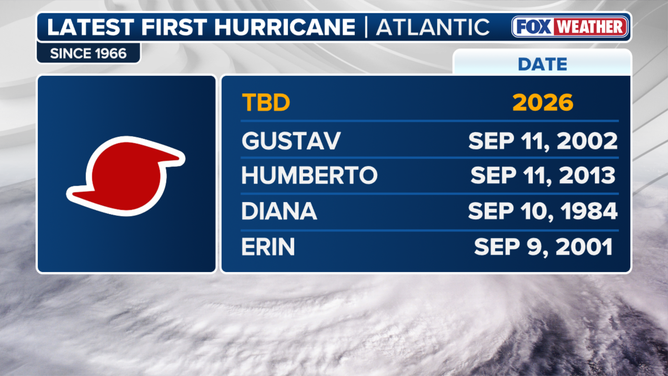
Latest date of first hurricane formation.
(FOX Weather / FOX Weather)
If the entire 2026 Atlantic hurricane season ends without a hurricane, it would be just the third time on record, joining 1914 and 1917.
However, hurricanes could have formed in those years that went undetected because they remained far from land and ships at sea. This would be the first year without a hurricane in the modern era.
HURRICANE POLO FUELING FLOOD THREAT FOR MILLIONS ACROSS THE U.S. SOUTHWEST
Meanwhile, Tropical Storm Hanna is expected to become post-tropical by Wednesday night.

(FOX Weather)
It has been over 330 days since the last hurricane formed in the Atlantic, extending the drought as September nears its end without a single hurricane developing in the basin.
The last hurricane to form in the Atlantic was Hurricane Melissa, which developed on Oct. 13, 2025.
EL NIÑO JUST BROKE A HISTORIC TEMPERATURE RECORD — AND IT’S STILL INTENSIFYING
The hostile El Niño-driven winds have suppressed activity across the Atlantic this season. The strong winds produced by the climate pattern hinder tropical development; calm conditions are generally more conducive to hurricane formation.
(FOX Weather)
El Niño conditions have strengthened significantly, now with a 97% chance of becoming a Super El Niño between October and December 2026, according to NOAA.
When water temperatures in the El Niño zone, which is in the Central Pacific, reach at least 2 degrees Celsius above average for at least three consecutive months, it is considered a Super El Niño.
October tropical activity typically shifts toward the Gulf and the Caribbean
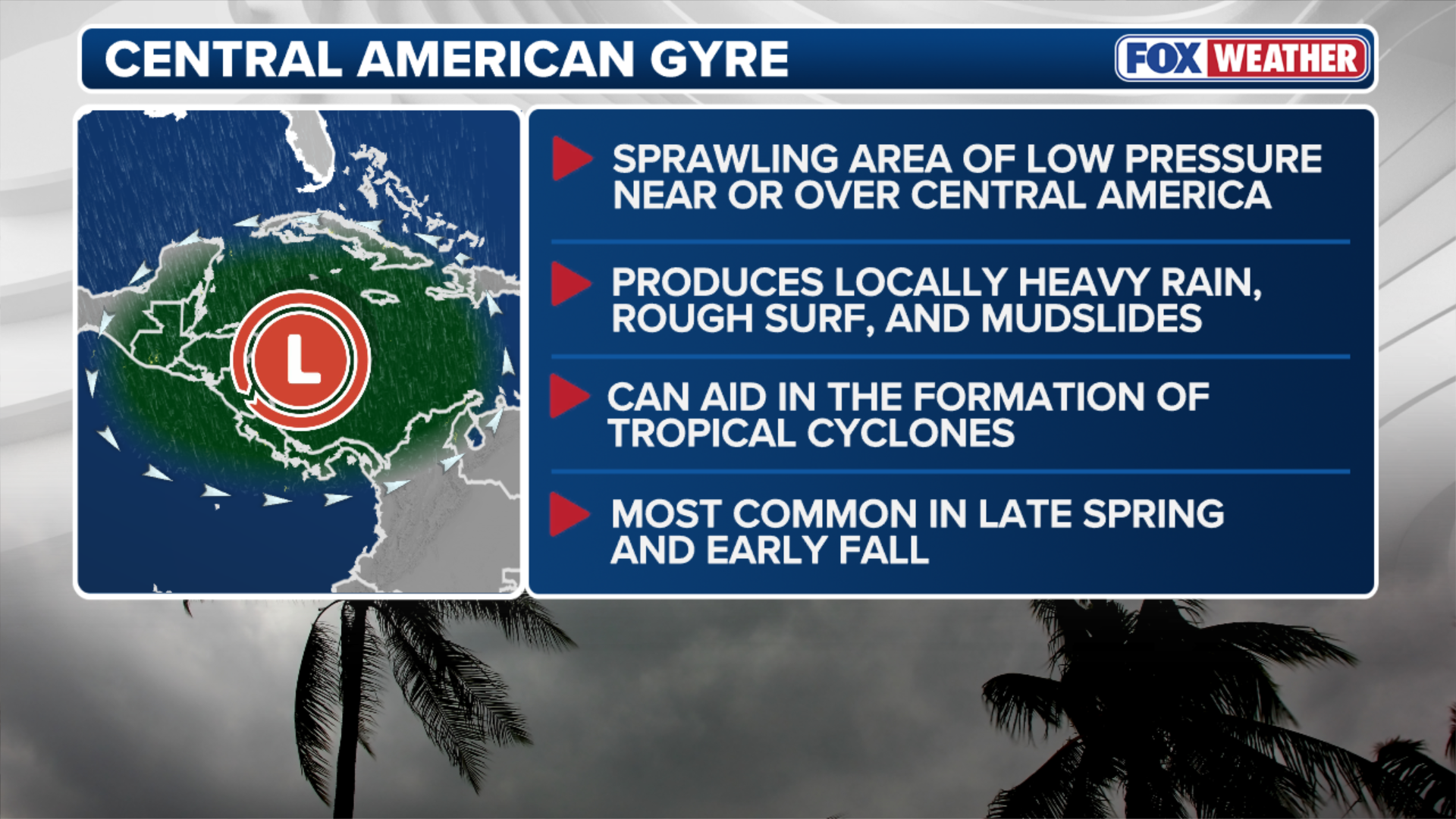
As the calendar flips to October, topical activity generally shifts toward the Gulf and the Caribbean, with storms often generated by the Central American Gyre (CAG).
The CAG is a sprawling area of low pressure that forms in the spring and fall over Central America that can produce locally heavy rain, rough surf and mudslides, and can generate tropical systems in both the Gulf and Eastern Pacific.
7 THINGS TO KNOW ABOUT MUDSLIDES
(FOX Weather)
In fact, Hurricane Idalia was spawned by the CAG in 2023, according to the FOX Forecast Center.
However, during Super El Niño years, no tropical systems formed in the Gulf or Caribbean in October during those years since 1960, the FOX Forecast Center found.
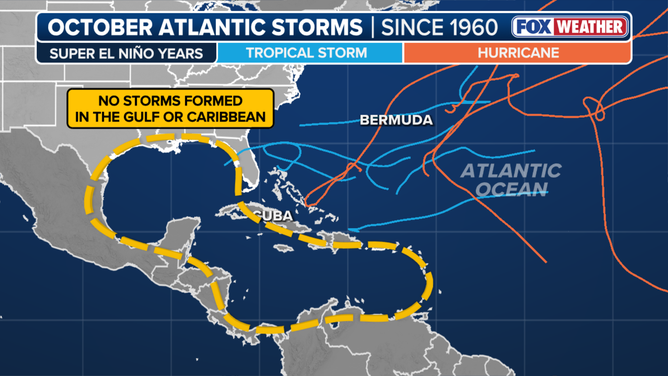
"Homegrown" tropical systems have not formed during Super El Niño years since 1960.
(FOX Weather)
"Right now, extended forecasts continue to highlight the possible development closer to Mexico, likely in the Bay of Campeche, close to the Yukatan Peninsula," the FOX Forecast Center said.
"The same forecasts also point to simultaneous development in the East Pacific, which is more expected as this region has been extremely active so far this season."