

Super El Niño could be short-lived as major weather pattern shift brings La Niña into focus
Since 1950, all seven strong El Niño episodes have transitioned to either neutral conditions or La Niña by the following hurricane season.
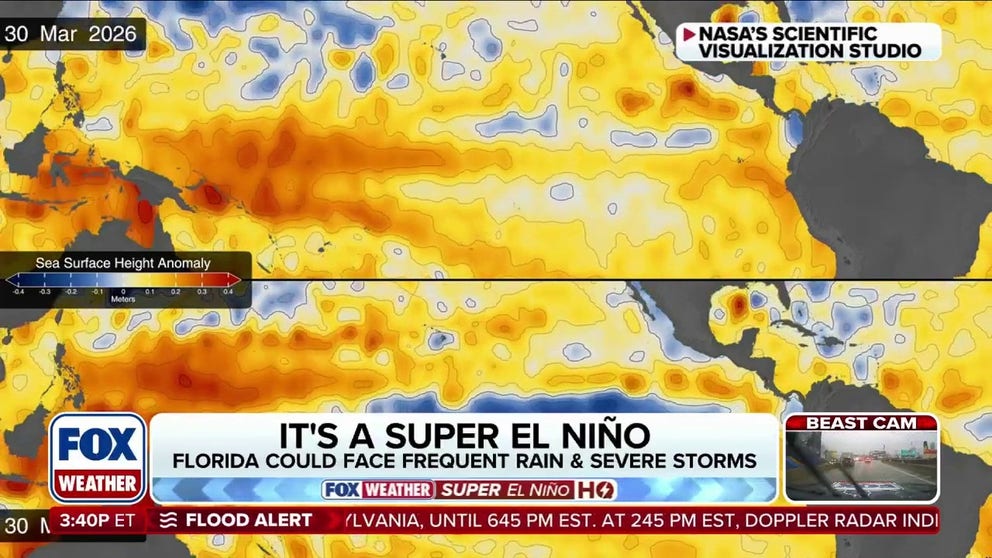
Super El Niño officially declared as a wild winter ahead nears
NOAA announced that El Niño has officially reached Super El Niño status, following its significant influence on this year's hurricane season and setting the stage for the upcoming winter. FOX Weather Hurricane Specialist Bryan Norcross joins us live to explain what a Super El Niño could mean for the year ahead and what Americans can expect.
THE TAKEAWAY
- Strong or Super El Niño events typically transition to La Niña by hurricane season.
- These rapid transitions are driven by changes in the Pacific Ocean and atmosphere.
- As El Niño fades and La Niña develops, wind shear can decrease, creating more favorable conditions for tropical development.
NOAA's Climate Prediction Center (CPC) announced Thursday that the 2026 El Niño has officially reached Super El Niño status, also known as a Very Strong El Niño.
However, forecasters note that strong or Super El Niño events rarely remain at their peak for long.
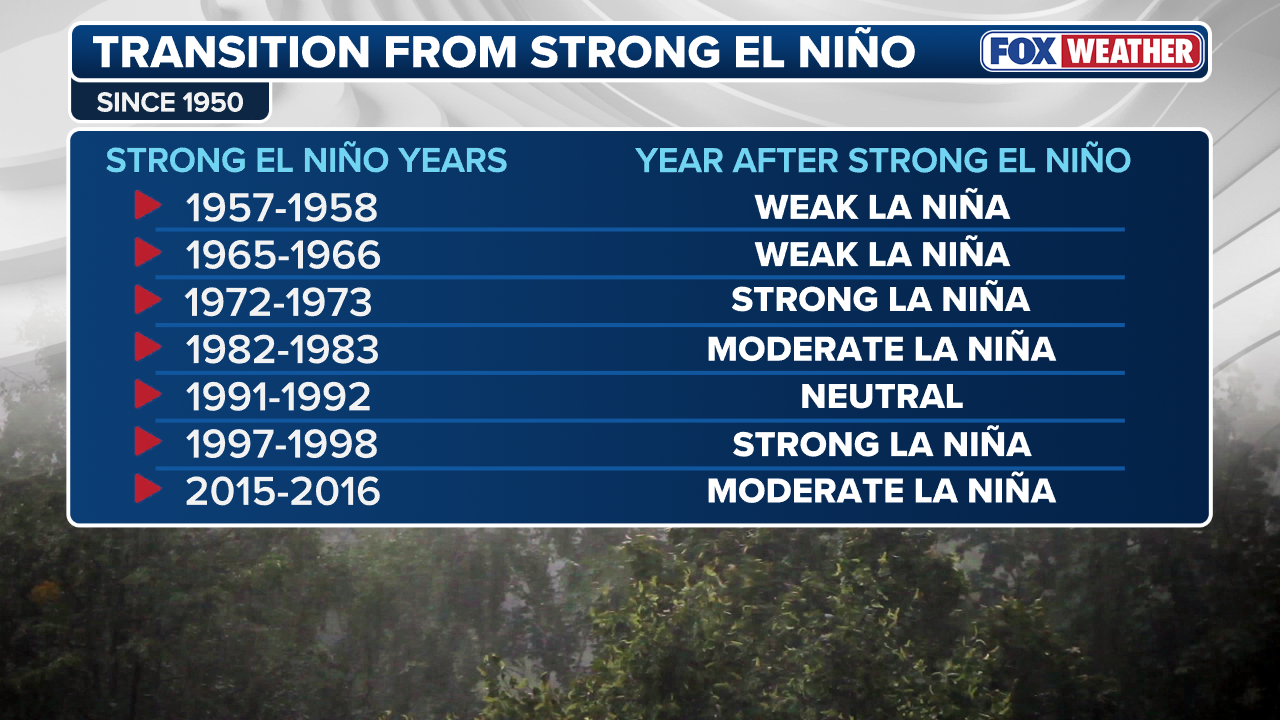
Since 1950, all seven strong El Niño episodes have transitioned to either neutral conditions or La Niña by the following hurricane season.
(FOX Weather)
Some of the most dramatic transitions followed the 1972-73 and 1997-98 Super El Niño events, both of which eventually gave way to La Niña conditions.
The 1982-83 and 2015–16 events also transitioned into moderate La Niña conditions, while the 1991-92 event was the exception, returning to neutral conditions instead.
NASA SATELLITES REVEAL STRIKING OCEAN COLOR CHANGE AS SUPER EL NIÑO STRENGTHENS
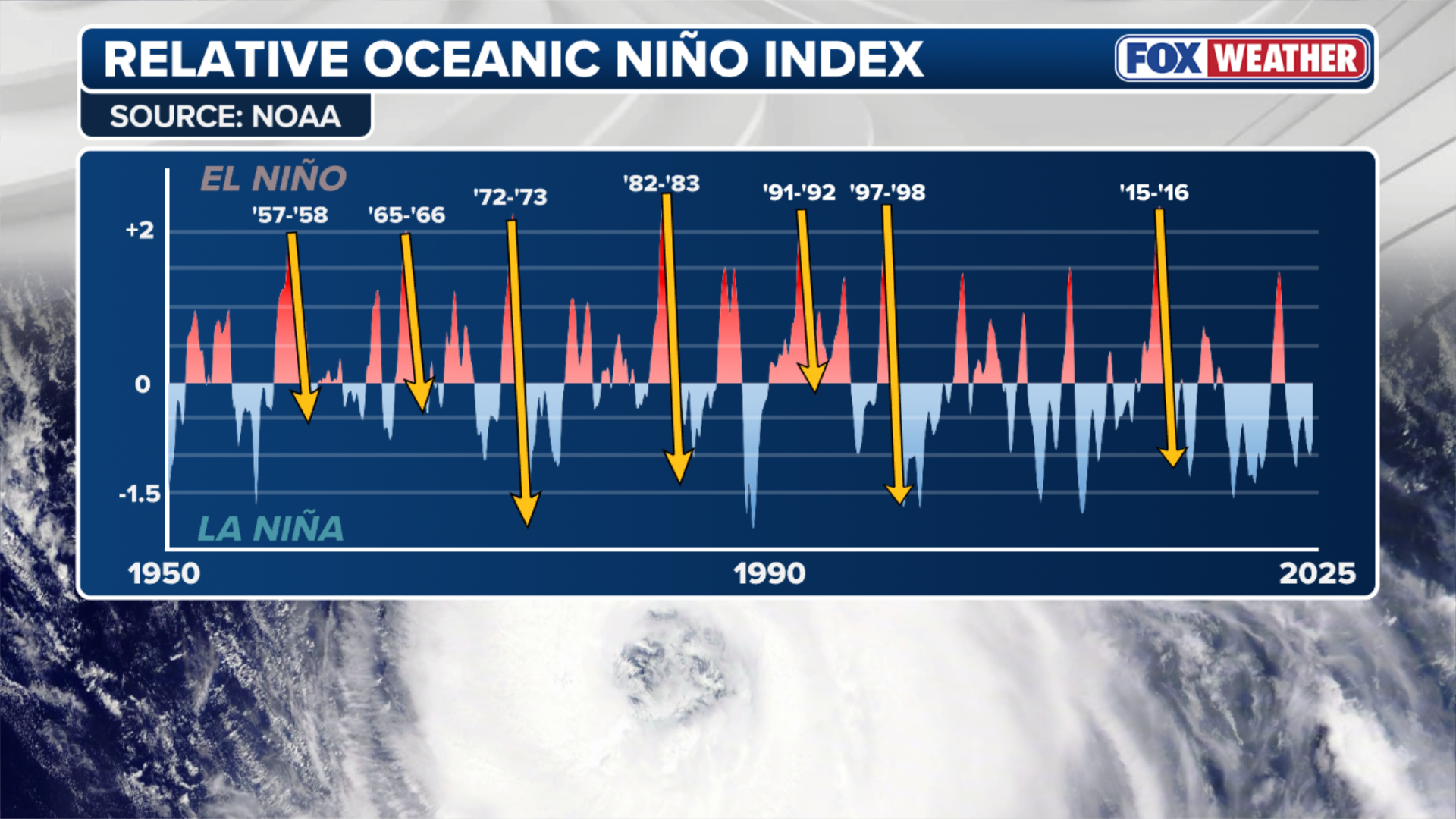
According to the FOX Forecast Center, these rapid transitions are driven by changes in the Pacific Ocean and atmosphere.
(FOX Weather)
During El Niño, unusually warm ocean waters fuel increased thunderstorm activity, which alters wind patterns and ocean currents across the Pacific.
SUPER EL NIÑO FUELED WINTER COULD UNLEASH MORE STORMS, DRIVING MORE ACTIVE PATTERN INTO THE SOUTH
As a Super El Niño event weakens, those changes can help bring cooler water back toward the surface, allowing La Niña conditions to develop within a matter of months.
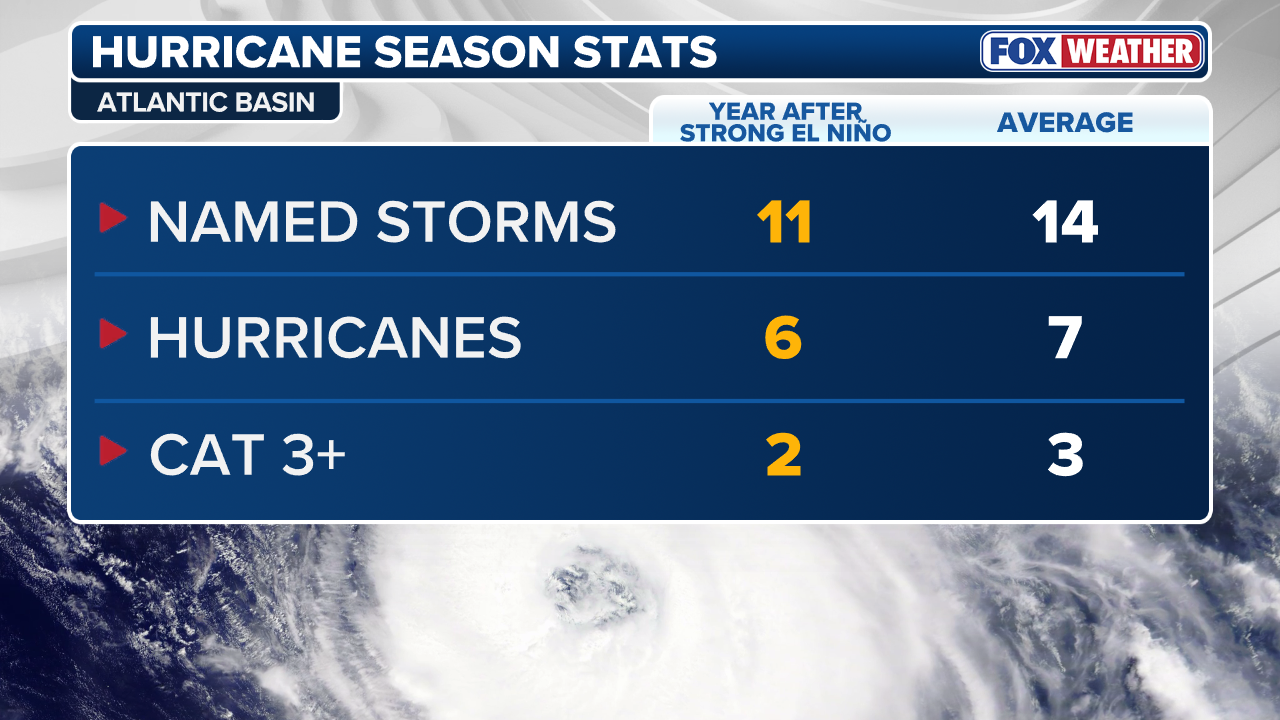
This transition matters for the upcoming Atlantic hurricane season. During El Niño, increased wind shear across the Atlantic can make it more difficult for tropical storms and hurricanes to organize and strengthen.
(FOX Weather)
However, as El Niño fades and La Niña develops, wind shear can decrease, creating more favorable conditions for tropical development.
That said, the transition does not guarantee a busy hurricane season.
SUPER EL NIÑO THEN AND NOW: HOW THIS YEAR'S STRENGTHENING EVENT COMPARES TO HISTORIC EXTREMES
In previous Strong El Niño years, the Atlantic averaged 11 named storms, six hurricanes and two major hurricanes, all slightly below the historical averages.
Ocean temperatures, atmospheric moisture and wind patterns will ultimately help determine how active the following hurricane season becomes.