

Arctic blast ushers in freezing, potentially record cold for 235 million Americans to kick off La Niña winter
Monday is set to be the coldest day of the arctic air outbreak, where temperatures will be subzero across Montana, the Dakotas, Wyoming, Minnesota and Wisconsin. By Friday, the cold will expand from the Midwest all the way to the I-95 corridor, causing record low temperatures in the morning, affecting Pittsburgh, New York, Indianapolis, and Baltimore.
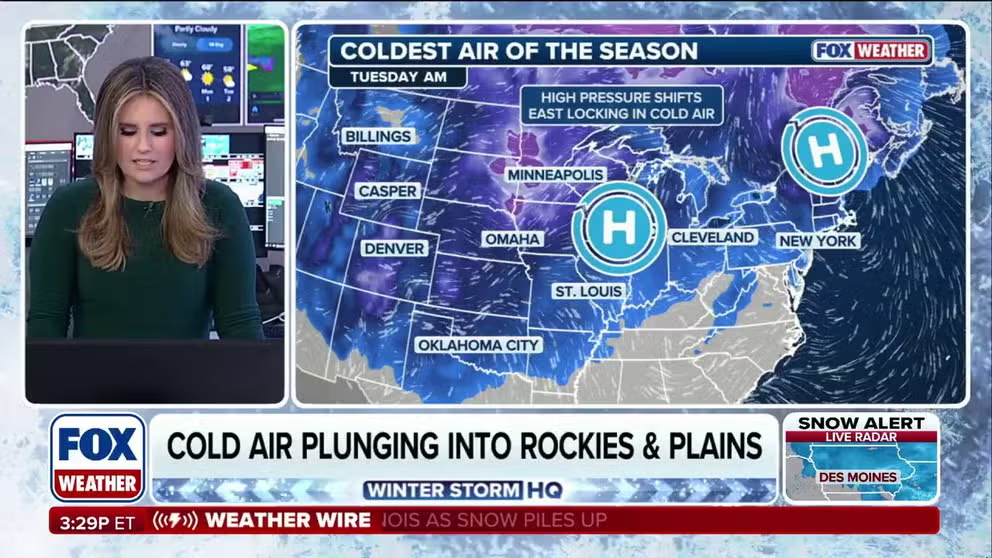
WINTER STORM HQ: Arctic air to bring winter chill to millions of Americans to kick off December
A winter chill will plunge into as a blast of arctic air will kick off December. FOX Weather Meteorologist forecast the cold front that will travel east across US affecting millions of Americans with some of the coldest temperatures of the season.
Arctic air is sweeping the nation just in time for the start of meteorological winter, causing over 235 million Americans to experience below freezing temperatures through the end of the week.
Monday is set to be the coldest day of the arctic air outbreak, where temperatures will be subzero across Montana, the Dakotas, Wyoming, Minnesota and Wisconsin.
COAST-TO-COAST STORM KICKS OFF DECEMBER WITH MAJOR IMPACTS FROM HEAVY SNOW TO ICE
Cold Weather Advisors are in effect for northern Montana since the wind chill will cause it to feel 20 to 30 degrees below zero while Chicago, Milwaukee and Des Moines may wake up to single-digit temperatures. Those cities’ temperatures are not expected to climb above zero at any point this week.
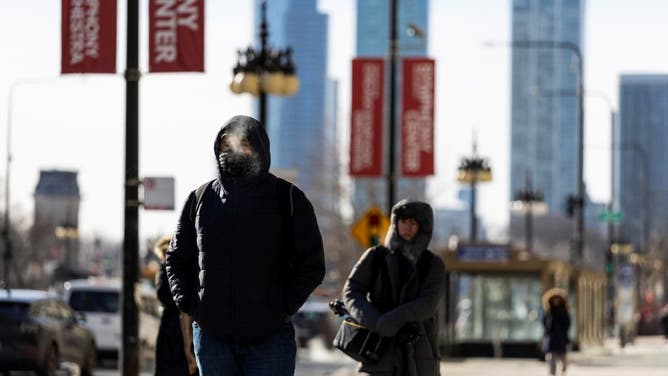
People bundled up walk on a street in Chicago, the United States, on Feb. 18, 2025. Despite the sunshine, it is likely the coldest day of this week in Chicago on Tuesday, with the highest temperature being minus 23.9 Celsius degrees and the lowest plunging to minus 28.3 Celsius degrees. The wind chill is at minus 31.6 Celsius degrees.
((Photo by Vincent D. Johnson/Xinhua via Getty Images) / Getty Images)
The bitterly cold air is also expected to reach as far south as the lower Mississippi River Valley, which may lead to a minor ice event.
According to the FOX Forecast Center, the arctic blast dropped into the Mountain West from Canada due to a dip in the jet stream on Saturday, and continued to spread the cold air across the south and east throughout the weekend.
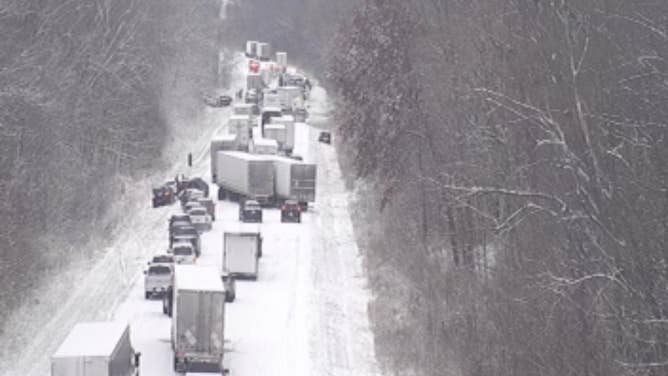
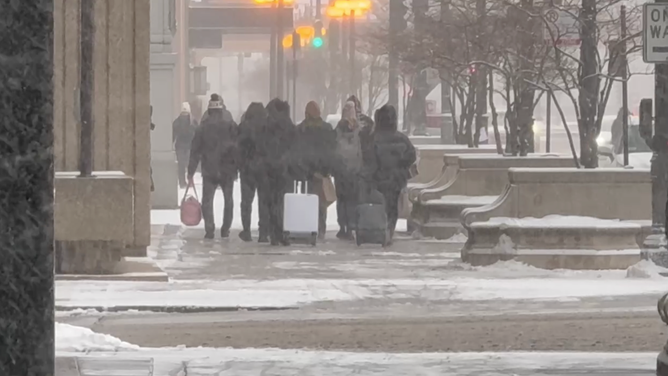
On top of the arctic blast, millions of Americans are enduring two powerful winter storms. One record storm over the Thanksgiving holiday weekend which slammed the Midwest with up to a foot of snow.
![]() Image 1 of 8
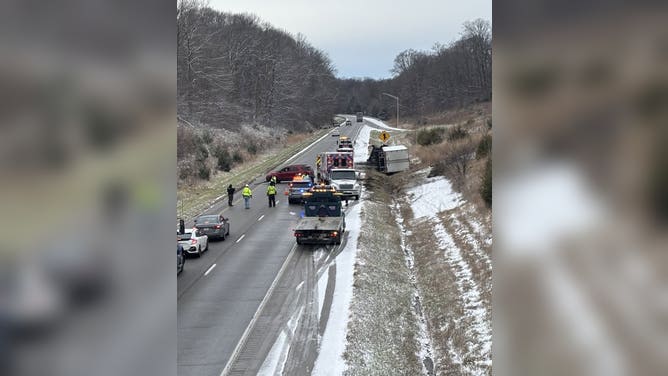
Image 1 of 8Several slide offs and crashes closed I-70 westbound between the 13 and 15-mile markers, near Terre Haute, Indiana (Indiana Department of Transportation: West Central)
![People walking through heavy snow in Chicago on Saturday.]() Image 2 of 8
Image 2 of 8People walking through heavy snow in Chicago on Saturday. (Robert Ray)
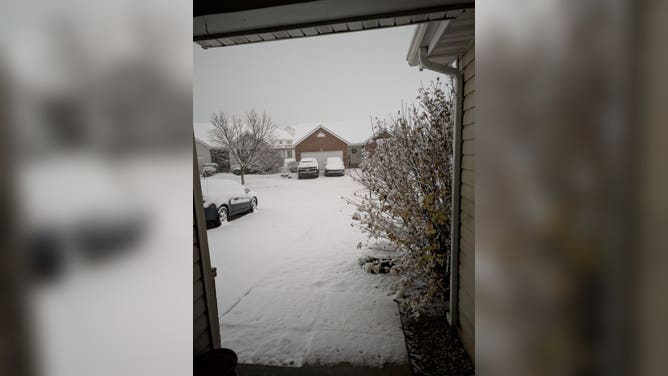
![Photo shows a driveway and cars covered in snow in O'Fallon, MO.]() Image 3 of 8
Image 3 of 8Photo shows a driveway and cars covered in snow in O'Fallon, MO. (Rebecca Witte Smith/Facebook )
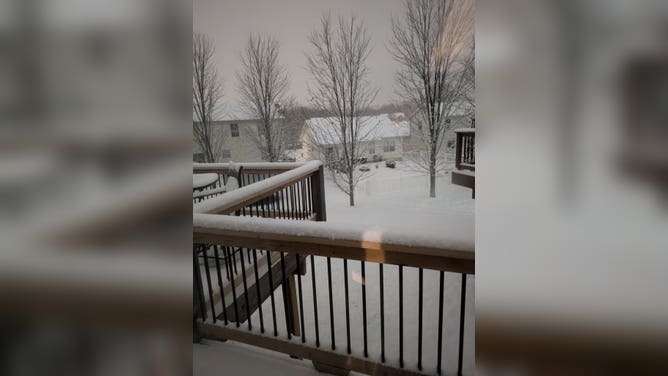
![A snow-covered back porch in O'Fallon, MO during a major winter storm on Nov. 29, 2025.]() Image 4 of 8
Image 4 of 8A snow-covered back porch in O'Fallon, MO during a major winter storm on Nov. 29, 2025. (Rebecca Witte Smith/Facebook )
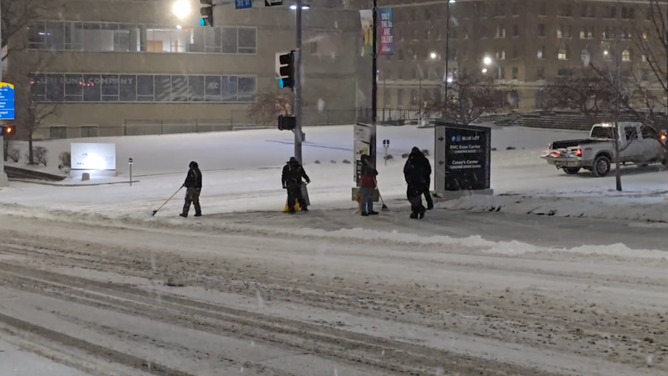
![]() Image 5 of 8
Image 5 of 8People shovel snow on saturday morning in Des Moines, Iowa. (FOX Weather Storm Specialist Mike Seidel)
![]() Image 6 of 8
Image 6 of 8A multi-car pile up in Grant County, Indiana on I-69 resulted in a temporary road closure. (Grant County Sheriff's Office)
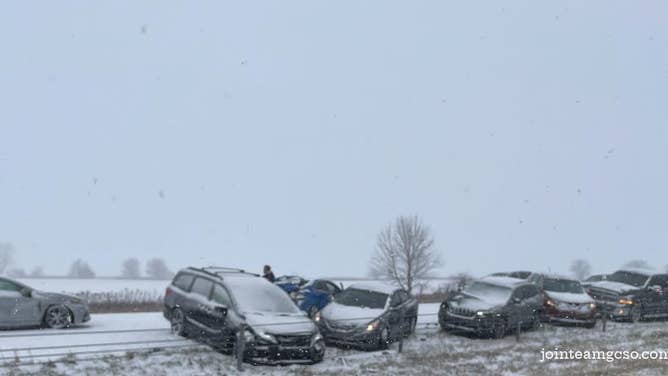
![]() Image 7 of 8
Image 7 of 8The Putnam County Sheriff's Office in Indiana responded to 12 motor vehicle crashes in the span of two hours on Saturday as snow continues to fall in the Midwest. (Putnam County Sheriff's Office)
![Delta flight skid off runway in Des Moines, IA upon icy landing]() Image 8 of 8
Image 8 of 8Delta flight skid off runway in Des Moines, IA upon icy landing (IowannaStorm/ X )

Meanwhile, the other cross-country storm moved out of Canada into the Rockies on Sunday, which will cause even more snow due to the arctic blast temperatures as it charges east.
Many areas will continue to experience below freezing temperatures on Tuesday and Wednesday with the coldest air lingering over the High Plains and Upper Midwest.
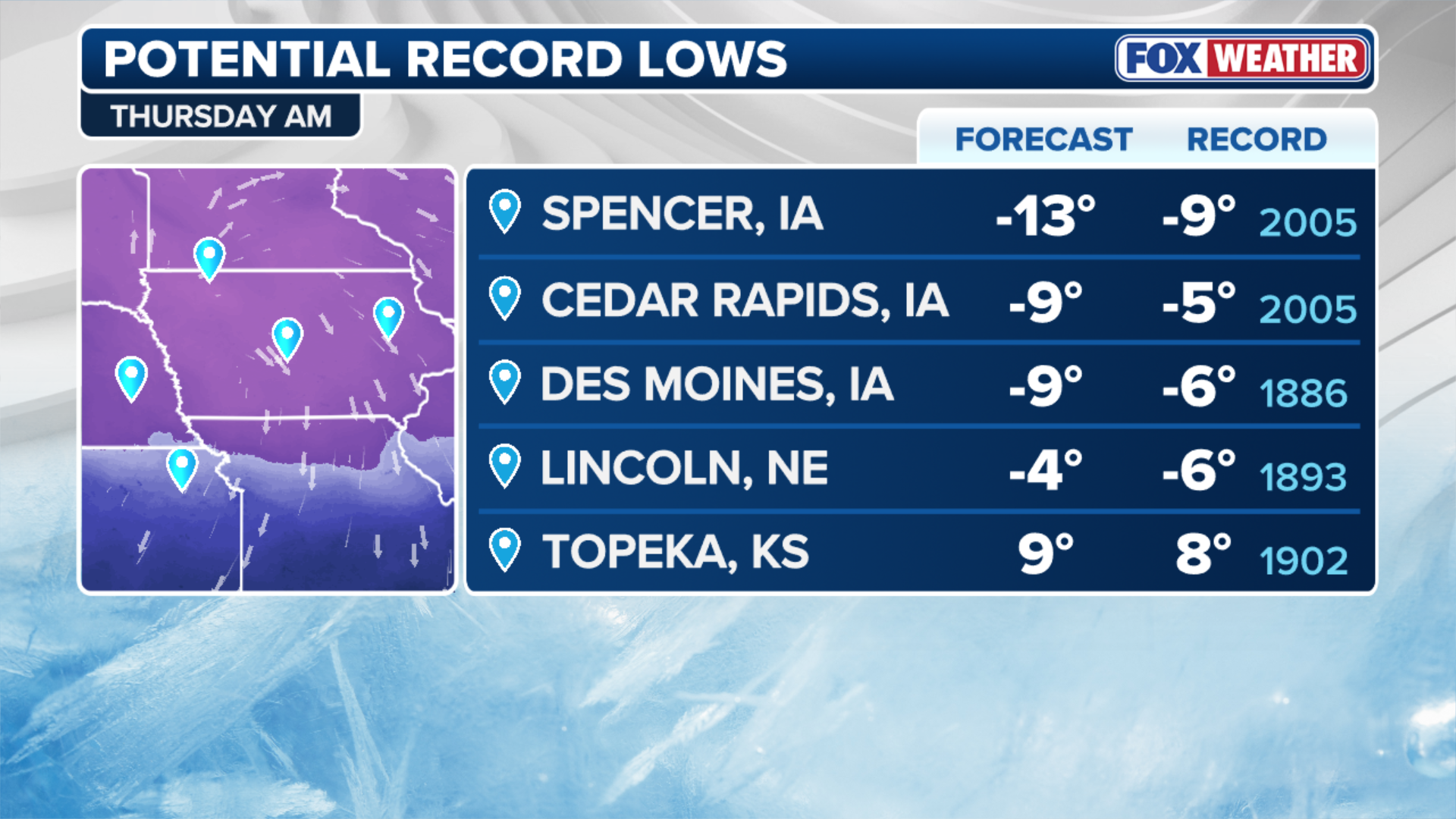
By Thursday and Friday, a cold front will move through the nation, ushering in another surge of arctic air. This push of freezing air will make conditions even colder, setting the stage for potentially record-breaking lows in the morning.
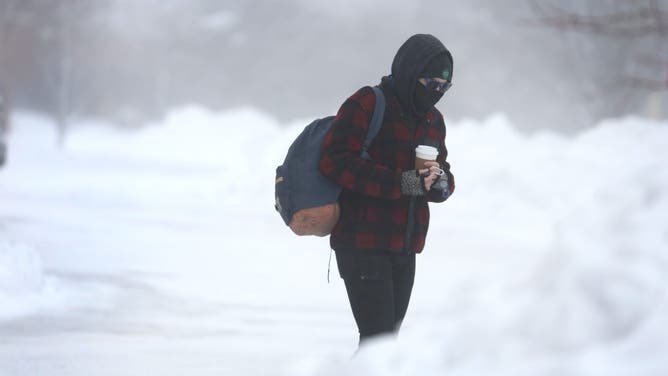
WEST DES MOINES, IOWA - JANUARY 13: Motorists navigate through blowing snow during a cold windy day on January 13, 2024 in West Des Moines, Iowa.
(Scott Olson / Getty Images)
The cold blast will impact the Midwest on Thursday, creating below zero morning temperatures in the Dakotas, Minnesota, Wisconsin and Iowa.
(FOX Weather)
By Friday, the cold will expand from the Midwest all the way to the I-95 corridor, causing record low temperatures in the morning, affecting Pittsburgh, New York, Indianapolis, and Baltimore.
Morning temperatures are expected to be in the single digits across the Midwest and Great Lakes while the I-95 corridor will see temperatures in the upper teens to lower 20s.

(FOX Weather)
Experts say that these temperatures are more typical for early February than December, which validates the forecasts from early November that predicted a cold and snowy start to the winter due to a weakening in the Polar Vortex and the emergence of the La Niña climate pattern.

FILE - People walk in freezing cold temperatures on February 4, 2023 in New York City, where temperatures were expected to reach a high of 27F (-3C). - The northeastern US and Canada are experiencing an Arctic blast that could see some areas record their lowest ever wind chill temperatures. The US National Weather Service (NWS) warned that parts of Maine might see wind chills of minus 60 degrees Fahrenheit (minus 51 degrees Celsius). "This is an epic, generational arctic outbreak," the NWS office in Caribou, near Maine's border with Canada, wrote in an advisory. (Photo by ANGELA WEISS / AFP) (Photo by ANGELA WEISS/AFP via Getty Images)
(Getty Images)
According to NOAA's Climate Prediction Center, the cold and snow conditions will remain for most of the first half of this month.