

Record amounts of sargassum wash ashore along the coast, prompting concerns for beachgoers
Researchers say that at least 4% of the ocean's surface is covered by clumps and mats of sargassum.
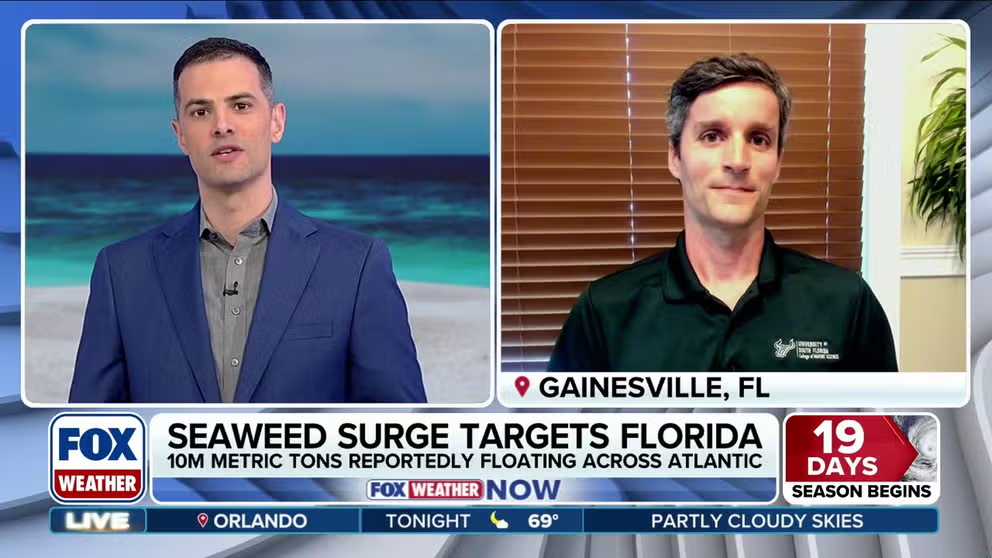
SEAWEED SURGE: Daily satellite tracking maps sargassum spread
SEAWEED SURGE: A sargassum invasion is impacting South Florida beaches, with record levels prompting daily satellite tracking. Brian Barnes, a research professor at the University of South Florida, joined FOX Weather to break down what’s driving the surge and what it means for coastal communities.
FLORIDA - Record-high amounts of sargassum seaweed were reported across the Caribbean, Gulf of Mexico and Atlantic Ocean last month.
CLEANUP EFFORTS UNDERWAY AS LARGE AMOUNT OF SARGASSUM SPOTTED ON MIAMI BEACH
According to a report from the University of South Florida's Optical Oceanography Lab, sargassum continued to increase in most regions, resulting in a record-high amount for the month of May.
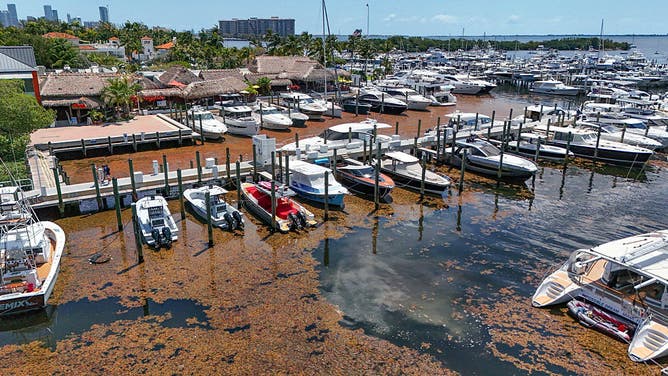
A seaweed belt surrounds boats moored along Dinner Key Marina outside of Monty's Coconut Grove restaurant in Miami, Florida.
(Al Diaz/The Miami Herald/Tribune News Service via Getty Images / Getty Images)
Researchers say that at least 4% of the ocean's surface is currently covered by clumps and mats of sargassum, and those amounts are likely to increase in June.
WHAT IS SEA LICE? HOW TO AVOID THE PARASITE AS SARGASSUM FLOODS SOUTH FLORIDA BEACHES
They expect 2026 to be another major sargassum year if levels exceed 75% of historical values. As of now, it appears the region could experience a record year by the summer of 2026.
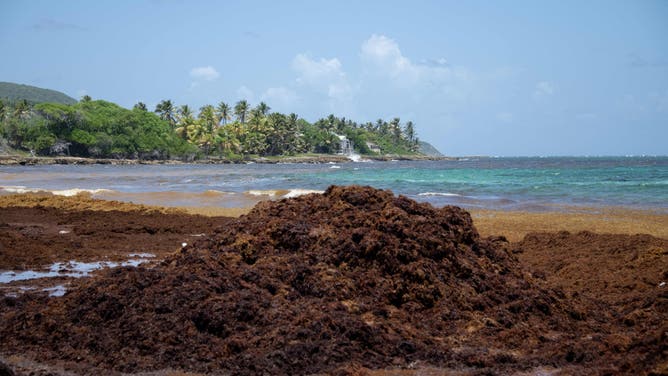
Dead Sargassum (dark) and live Sargassum (clear) washed up on the shore outside Capesterre de Marie Galante.
(Photo by OLIVIER MORIN/AFP via Getty Images / Getty Images)
What is sargassum?
Sargassum is a naturally occurring brown seaweed that floats in large masses across the ocean and washes up along the coastlines of numerous states, including Florida, Texas and Louisiana.
Since 2011, however, sargassum has become a recurring problem in the Caribbean Sea, Gulf of Mexico and Atlantic Ocean, according to the National Oceanic and Atmospheric Administration (NOAA).
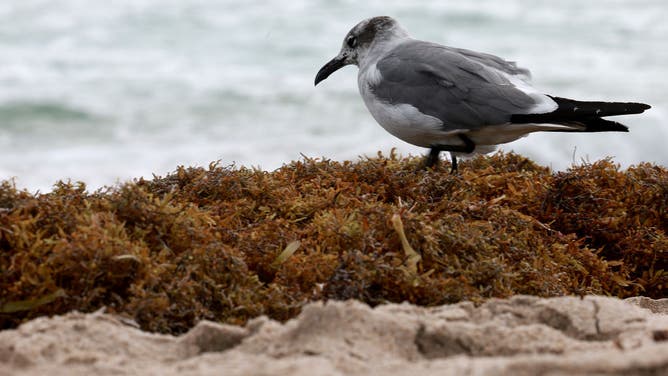
A seagull walks over seaweed that washed ashore in Fort Lauderdale, Florida.
(Joe Raedle / Getty Images)
The Florida Department of Health said sargassum releases hydrogen sulfide gas as it decomposes on beaches, producing an odor similar to rotten eggs.
Is sargassum dangerous?
The hydrogen sulfide from the sargassum can irritate the eyes, nose and throat and may be especially problematic for people with asthma and other respiratory conditions.
COULD SMELLY SARGASSUM BECOME THE NEXT FOOD PRODUCT?
Sargassum can also contain high levels of arsenic, heavy metals, organic contaminants and marine debris that may be harmful to humans.
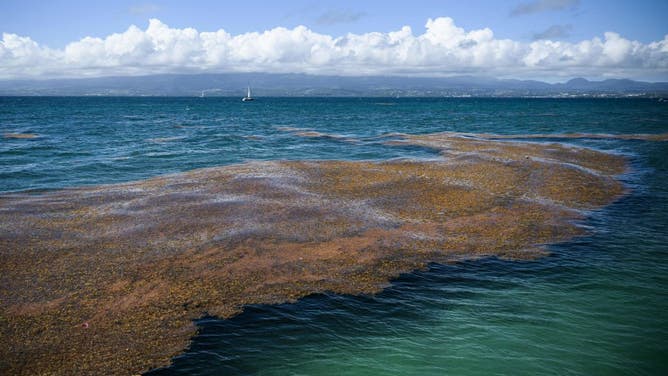
Sargassum seaweed floats across the ocean.
(LOIC VENANCE / AFP / Getty Images)
The seaweed does provide an important habitat for migratory organisms that have adapted specifically to this floating algae, including crabs, shrimp, sea turtles and commercially important fish species such as tuna and marlin.
SARGASSUM SEAWEED BLOOMS PLAGUING ATLANTIC BEACHES TRACED BACK TO WEST AFRICA
However, tiny creatures that live within the seaweed can cause skin rashes and blisters when they come into contact with humans.