

Hawaii’s coral reefs have their own insurance policy — and it could help save them after disaster strikes
Since its purchase, the policy has been triggered twice, providing $200,000 following Hurricane Lala and another $300,000 after Hurricane Lowell.
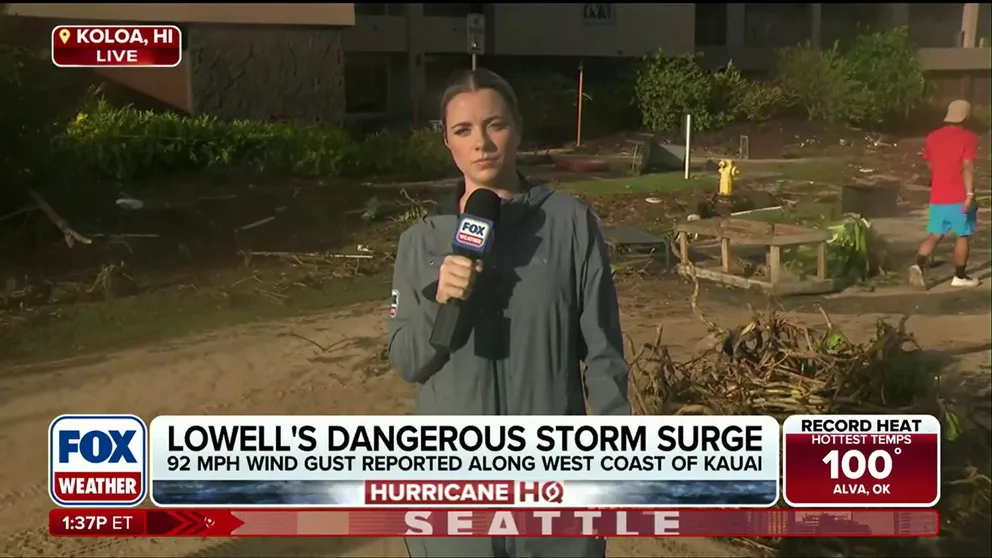
Damage left behind in Hawaii after Hurricane Lowell makes rare direct hit
🌀 THE AFTERMATH: FOX Weather Correspondent Katie Byrne continues her coverage from Koloa, Hawaii, where cleanup efforts are slowly underway after Hurricane Lowell impacted the state, and damage and debris litter communities.
THE TAKEAWAY
- The Nature Conservancy made history by becoming the first organization in the U.S. to insure Hawaii’s coral reefs.
- The policy has been triggered twice, providing $200,000 following Hurricane Lala and another $300,000 after Hurricane Lowell.
- The Hawaii policy is parametric insurance, which means a payout is triggered when predetermined conditions are met.
It’s common to insure your car, home or apartment. But what about a coral reef?
In 2022, The Nature Conservancy made history by becoming the first organization in the U.S. to insure Hawaii’s coral reefs, creating a financial safety net to help restore the fragile ecosystems after hurricanes and tropical storms.
TIMELINE: WHEN HAWAII WILL START FEELING HURRICANE LOWELL'S IMPACTS
The innovative insurance policy has a maximum payout of $2 million, and a minimum payout is $200,000.
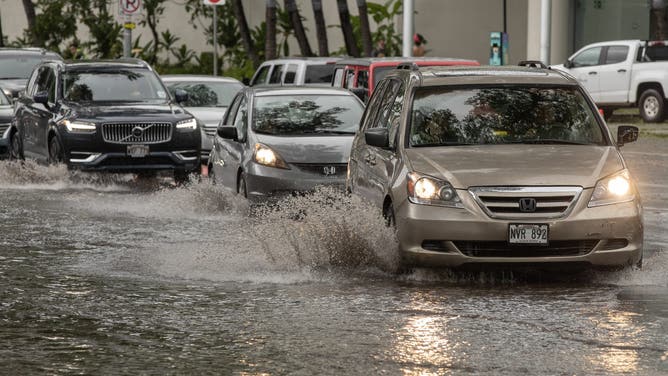
Vehicles make their way through a flooded intersection in front of the Hawaii Convention Center in Honolulu, Hawaii, on August 16, 2026. Hurricane Lala was pulling away from Hawaii's Big Island early Sunday, as heavy rain and strong winds struck the US Pacific state and officials warned of potentially dangerous flooding. The heavy rain and flood risk will then spread westward across the island chain on Sunday, according to the NHC.
(Eugene Tanner / AFP / Getty Images)
Since its purchase, the policy has been triggered twice, providing $200,000 following Hurricane Lala and another $300,000 after Hurricane Lowell.
POWERFUL CATEGORY 3 HURRICANE LOWELL TRACK SHIFT COULD CAUSE RARE, DIRECT HIT ON HAWAIIAN ISLANDS
"Reefs are incredibly valuable to the state of Hawaii," Eric Roberts, senior manager of climate disaster risk finance at The Nature Conservancy, said. "And even maybe more importantly than that, they are incredibly important to Hawaiian culture."
The policy was created to help address the growing risk that hurricanes and tropical storms pose to Hawaii’s coral reefs. If certain storm conditions are met, the policy provides funding that can be used for rapid coral reef repair and restoration.
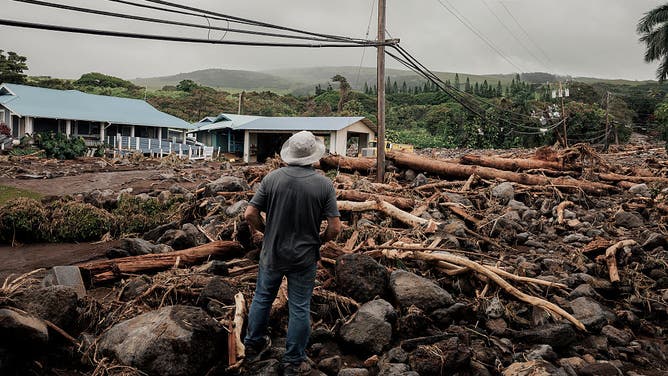
A man watches debris flow along Ka'alaiki Road after Hurricane Lala in Naalehu, Hawaii, Monday, Aug. 17, 2026. The Category 1 hurricane brought heavy rain and strong winds to the island of Hawaii before moving away without making landfall, causing extensive damage to towns along the island's southern end.
(Stephen Lam/San Francisco Chronicle via Getty Images / Getty Images)
The Hawaii policy was modeled in part on the world’s first coral reef insurance policy, which was established in Quintana Roo, Mexico, in 2019. However, The Nature Conservancy developed a different approach for Hawaii.
Unlike traditional insurance, which generally requires an assessment of damage before a claim is paid, the Hawaii policy is parametric insurance. That means a payout is triggered when predetermined conditions are met, rather than being based directly on the amount of damage.
"So, for reef insurance, bigger storms will create a bigger payout," Roberts said.
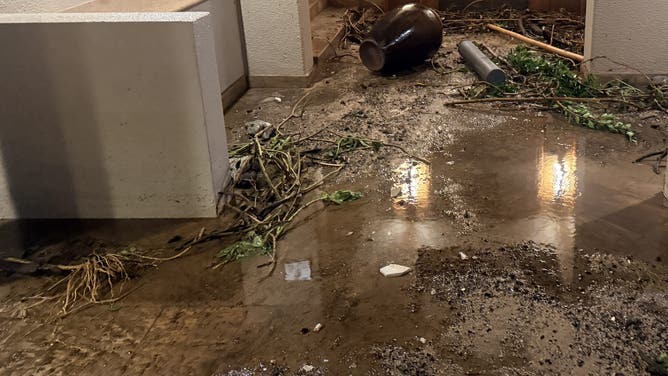
Hurricane Lowell brings extensive damage to Kauai hotel
(FOX Weather)
The Hawaii policy uses several geographic zones and wind-speed thresholds to determine how much money is paid out.
The innermost zone covers the main Hawaiian Islands, while three additional concentric zones extend farther offshore. Each zone is paired with specific wind-speed thresholds, and the location and intensity of a storm determine the size of the payout.
ODDS FOR POSSIBLE TROPICAL DEVELOPMENT IN THE ATLANTIC FALL TO LOW AMID BREWING 'SUPER' EL NIÑO
"So storms of greater wind speeds hitting any of those different zones will cause a greater payout, but the closer you get to the islands, more to the center circle, the greater the payout in most cases," Roberts said.
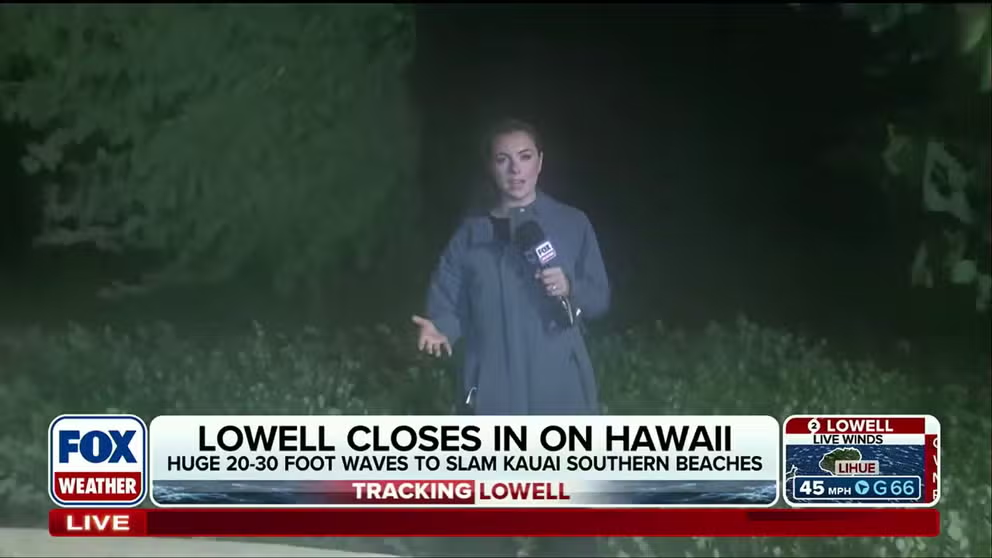
Conditions on Kaua'i deteriorate as Hurricane Lowell blasts Hawaii with powerful winds
🌀DIRECT HIT: The strongest winds from the Category 2 Hurricane Lowell are passing within Hawaii's western islands. FOX Weather Correspondent Katie Byrne is on the beaches of Kōloa on Kaua'i where conditions are rapidly deteriorating. Watch FOX Weather for LIVE Hurricane Lowell coverage:
That structure allows the policy to provide funds quickly after qualifying storm events, but it also comes with an important distinction: a payout does not necessarily mean a reef sustained significant damage.
"So, on the one hand, you could have a storm event that triggers the insurance payout, but there’s very little damage," Roberts said. "And so you still get the money, but there is no damage."
The opposite can also happen.
"On the other hand, you could have a storm event where there’s damage that happens, but it doesn’t actually trigger the insurance at all," Roberts said.
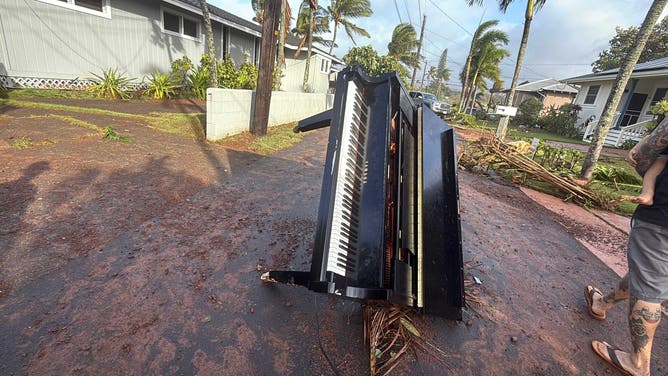
Damage from Hurricane Lowell Poipu, Hawaii, on Sep. 8. 2026.
(Jennifer Hill / FOX Weather)
When Tropical Storm Lala brought sustained winds of 65 mph, it triggered a $200,000 payout. Hurricane Lowell later approached the Hawaiian Islands as a Category 2 hurricane, triggering a second payout of $300,000.
WHY IS IT SO RARE FOR HURRICANES TO MAKE LANDFALL ON HAWAII?
For coral reefs, getting that money quickly can make a significant difference in how much damage can be repaired.
"One of the most important features for reef insurance in particular, when these storms come through, and they damage the corals, they break off corals, they turn them over. Roberts said. "The longer that those coral fragments are on the sea floor, the more likely they are to die. But if you can have the money to get out into the water to start collecting those coral fragments, and then you can reattach them to the coral colony, they have a greater chance of surviving."
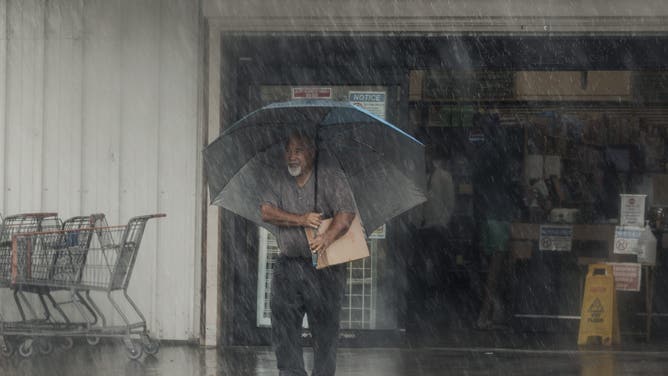
A resident carries supplies during Hurricane Lala in Hawaiian Ocean View, Hawaii, Saturday, Aug. 15, 2026. The storm strengthened into a hurricane as it approached Hawaii, with up to 25 inches of rain possible on the island of Hawaii, commonly known as the Big Island. (Photo by Stephen Lam/San Francisco Chronicle via Getty Images)
Roberts notes that once the payout is received, the team, in collaboration with Hawaii Emergency Reef Restoration Network, a coalition of government agencies including scientists, nonprofits and community groups, will begin removing debris from the reef.
Items such as beach chairs, tree trunks and ladders can continue damaging coral after a storm, by continuing to knock loose additional coral fragments.
OCEAN WAY MUSIC FESTIVAL CANCELED AFTER DANGEROUS SURF FROM HURRICANE MARIE CAUSES COASTAL EROSION
Restoration teams can then begin repairing damaged coral colonies using specialized underwater equipment.
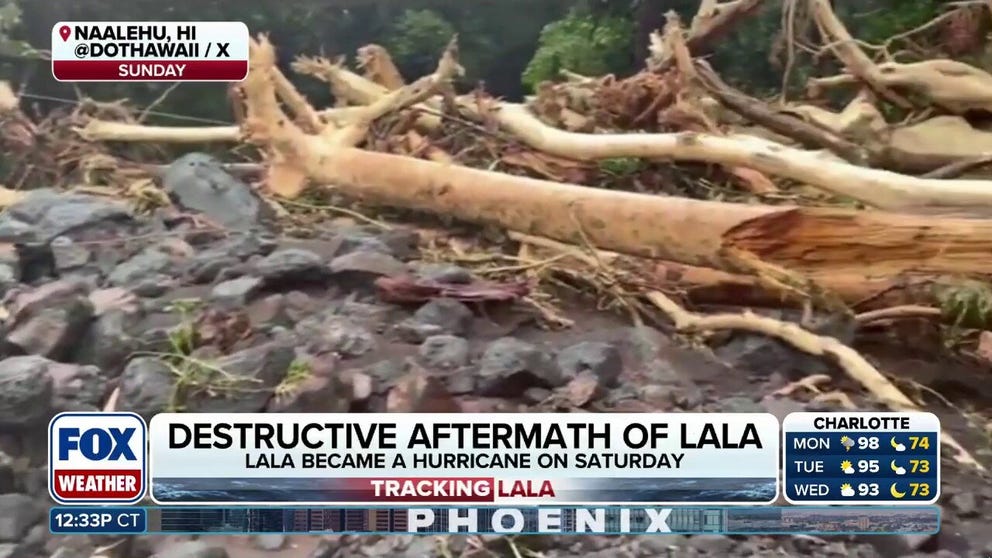
Destruction left behind by Hurricane Lala in Hawaii as cleanup efforts begin
HURRICANE AFTERMATH ‼️: FOX Weather Correspondent Katie Byrne reports from Honolulu, Hawaii, where early cleanup efforts are underway as downed trees, flooded roads and power outages plague the state. #Hawaii #Hurricane #FOXWeather
Underwater airbags can help lift large pieces of damaged coral and reposition them on the seafloor. Teams can also use underwater pneumatic drills to create small holes where coral fragments can be secured back onto a reef.
HURRICANE SWELLS REVEAL FORGOTTEN HISTORY BENEATH ICONIC CALIFORNIA BEACH
"That quick payout is vital for reef insurance in particular, because we can save so many coral fragments that way," Roberts said.
Hawaii’s coral reef insurance policy is part of a growing effort to use insurance to protect vulnerable ecosystems from natural disasters.
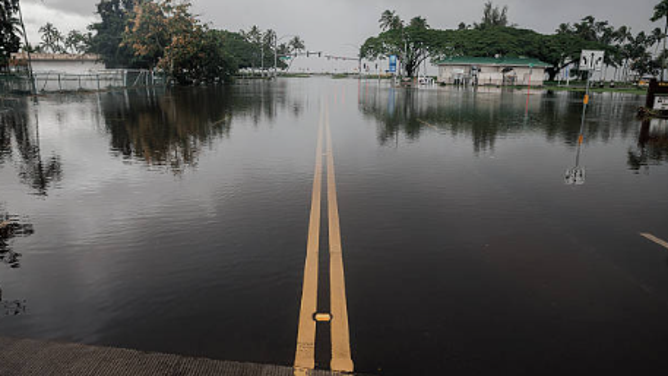
A flooded road is seen the day after Hurricane Lala in Hilo, Hawaii, Sunday, Aug. 16, 2026. The Category 1 hurricane brought heavy rain and strong winds to the island of Hawaii before moving away without making landfall.
(Stephen Lam/San Francisco Chronicle / Getty Images)
According to The Nature Conservancy, 18 reef insurance policies have either been established or are in development.
THE BIGGEST HURRICANES AND TROPICAL STORMS TO THREATEN HAWAII IN THE LAST 10 YEARS
The organization hopes to expand the model to other regions, such as the Bahamas, where a coral reef insurance program is currently in development.
"Our goal is to expand the model, geographically and to new ecosystems, as well as to new risks," Roberts said. "It can apply to mangrove ecosystems, coastal dunes, potentially salt marsh."