

Why are hurricanes so rare in Hawaii?
For a hurricane to "make landfall" on a specific area, the center of its eye needs to hit land.
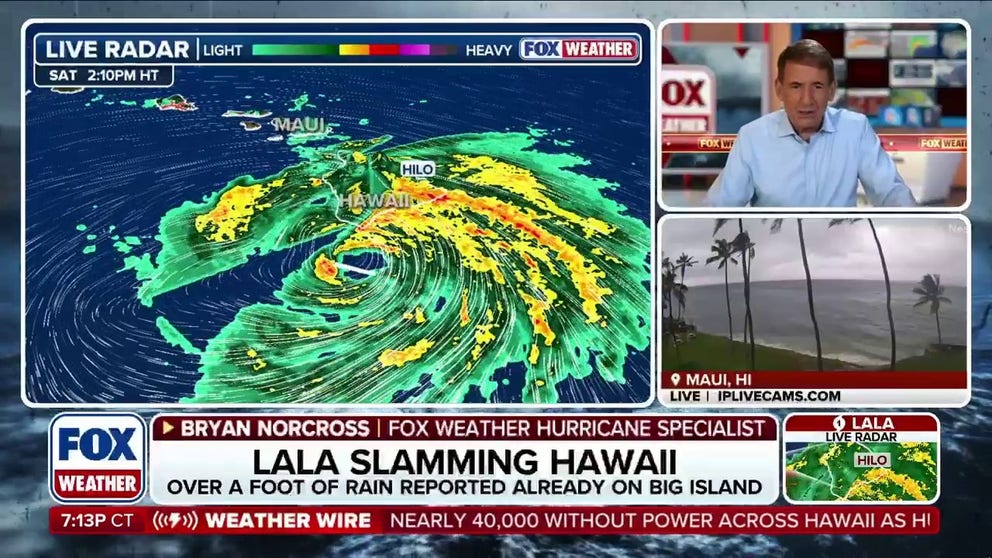
Direct landfall unlikely, but Hurricane Lala’s impacts inevitable for Hawaii
EXCLUSIVE ANALYSIS: FOX Weather Hurricane Specialist Bryan Norcross analyzes the newest advisory from the National Hurricane Center. While direct landfall doesn't look likely, that doesn't mean the impacts of Hurricane Lala won't be felt on the Hawaiian Islands.
THE TAKEAWAY
- Landfalling hurricanes are not common in Hawaii.
- The rarity is mainly due to water temperatures, high pressure and wind shear.
- For a hurricane to make landfall, the center of its eye needs to hit land.
Hawaii has only seen a few direct landfalling hurricanes in the last century, with many storms over the years passing near the islands, but never directly hitting them.
So, why is it so rare that hurricanes make landfall in Hawaii?
The answer involves a few factors, mainly water temperatures, high pressure and wind shear.
For a hurricane to "make landfall" on a specific area, the center of its eye needs to hit land.
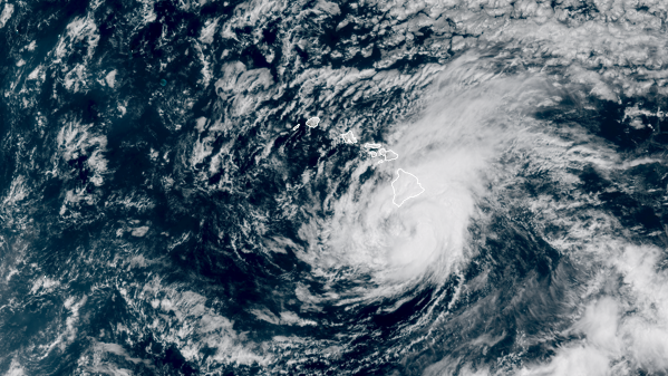
Hurricane Lala on satellite
(CIRA CSU / NOAA)
According to the FOX Forecast Center, waters around Hawaii are usually in the 70s, which is not ideal for strong hurricane formation.
Tropical systems need warm water that's at least 80 degrees to fuel them and become strong enough to form into a tropical storm or hurricane.
HOW ARE HURRICANES RATED? THE SAFFIR-SIMPSON HURRICANE WIND SCALE EXPLAINED
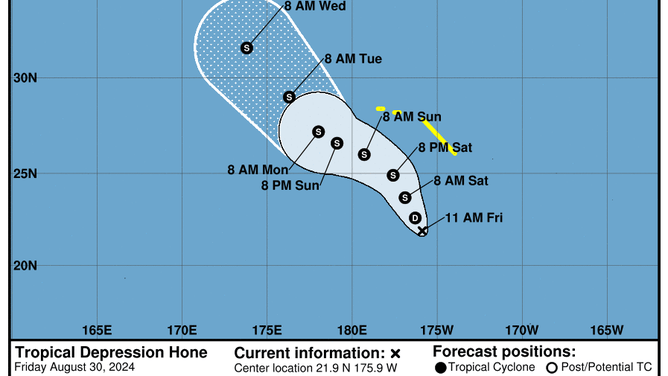
Track of Hone in the Pacific
(NOAA)
Because tropical storms and hurricanes typically form in the Eastern Pacific and move west into the Central Pacific, the storms are entering cooler waters, which limits formation.
During El Niño years, sea surface temperatures in the Pacific Ocean trend warmer, which aids tropical system formation, typically.
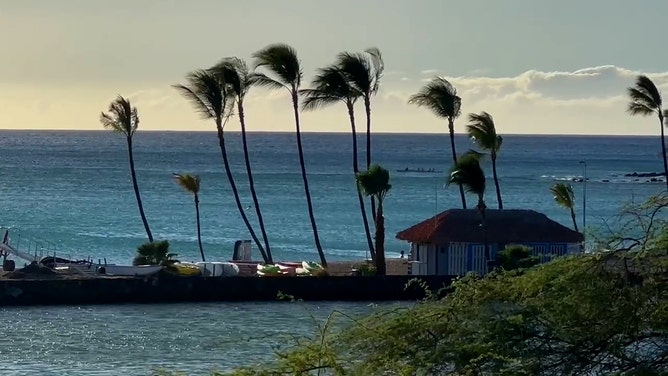
FILE - Breezes fill palm trees in Hawaii
(Robert Ray / FOX Weather)
Additionally, an area of high pressure which typically sticks to the northeast of the islands keeps the weather consistent all year. This high pressure is the highest from May through October, also known as hurricane season.
This high pressure helps steer hurricanes and tropical storms away from Hawaii, as we've seen in years past, with a lot of close calls, but not as many direct landfalls.
THE BIGGEST HURRICANES AND TROPICAL STORMS TO THREATEN HAWAII IN THE LAST 10 YEARS
Just a few examples from recent years include Hurricane Hone, which passed south of Hawaii in 2024, Hurricane Douglas in 2020 and Hurricane Lane in 2018, which skirted the islands.
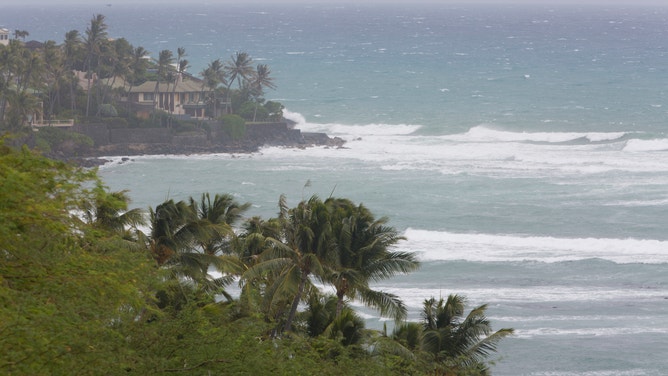
HONOLULU, HI - AUGUST 24: A large home on the coast is hit by waves from Hurricane Lane on August 24, 2018 in Honolulu, Hawaii.
(Kat Wade / Getty Images)
According to the FOX Forecast Center, the one exception could be when a hurricane forms to the south and moves north, allowing it to spend more time in the exceptionally warm waters in the Pacific much further south of Hawaii.
One example of this would be Hurricane Iniki in Sept. 1992, which formed to the southeast of Hawaii and tracked north, directly into Kauai.
Wind shear also inhibits tropical system formation and strengthening.
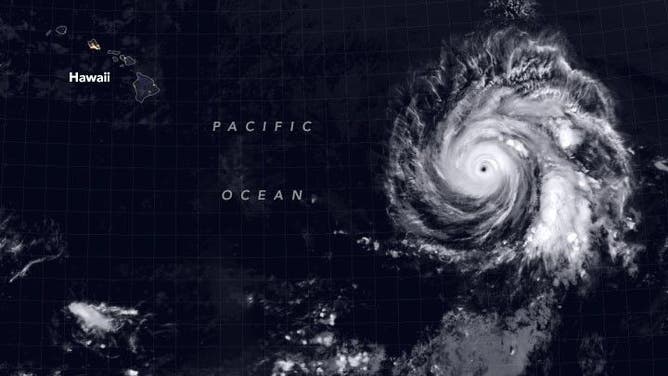
Hurricane Douglas on July 23, 2020.
(NASA’s Terra satellite / NASA)
The FOX Forecast Center said when tropical systems move to the west near Hawaii, they often run into strong wind shear, which is pushing into the East, over the islands.
All of these factors, combined with the fact that Hawaii is just not a large landmass, which mathematically makes it less likely to be hit directly by a tropical system, contribute to the reason that hurricanes and tropical storms hitting Hawaii are considered rare.