

Your guide to identifying some of the most common ticks found in the US
Ticks can be found year-round, but their peak season of activity runs from April to September when it's warm outside.

FILE: How to stay safe during tick season
Here are some tips from Dr. Andrew Handel, pediatric infectious disease physician at Stony Brook Children’s Hospital, on how people can prevent and treat tick bites.
As awareness of tickborne diseases increases, it's important to know which ticks can cause these diseases, where you can find them and how to identify them.
Illnesses like Lyme disease, Rocky Mountain spotted fever and alpha-gal syndrome seem to be becoming more and more common as understanding of these sicknesses rise with time and the number of cases.
PLANNING ON BEING OUTSIDE? HERE'S HOW TO CHECK AND PROTECT YOURSELF FROM TICKS
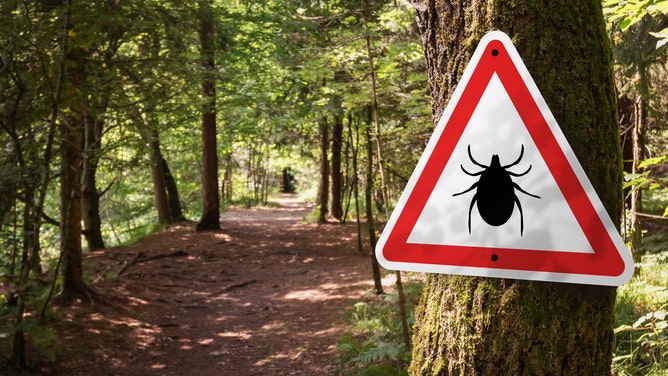
Infected ticks warning sign in a forest. Risk of tick-borne and lyme disease.
(24K-Production / Getty Images)
Ticks can be found year-round, but their peak season of activity runs from April to September when it's warm outside.
Blacklegged or 'deer' tick
The blacklegged tick, also called the deer tick, is commonly found in the eastern half of the U.S., according to the Centers for Disease Control and Prevention (CDC).
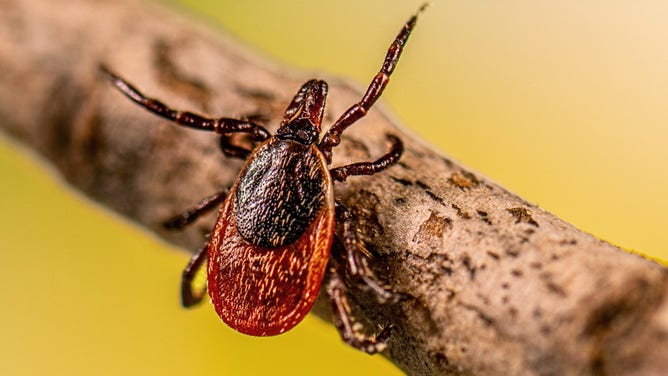
A photo of Ixodes scapularis (blacklegged tick)
(CDC / FOX Weather)
The blacklegged tick can be identified by its reddish-orange body and black "shield" on its back, along with black legs.
NASA LOOKS TO IMPROVE FORECASTING OF DENGUE RISKS IN PUERTO RICO
These ticks can cause a number of illnesses in humans, including:
- Anaplasmosis
- Babesiosis
- Ehrlichiosis due to Ehrlichia muris eauclairensis
- Lyme disease
- Borrelia miyamotoi disease
- Powassan virus disease
American dog tick
The American dog tick is found widely east of the Rocky Mountains, and in limited areas west of the Rocky Mountains, according to the CDC.
These ticks have dark brown bodies and legs with adult females having an off-white colored "shield" on their backs. The male ticks have more of a mottled appearance on their shields, according to LymeDisease.org.
CAN GOOGLE TAKE DOWN THE WORLD'S DEADLIEST ANIMAL?
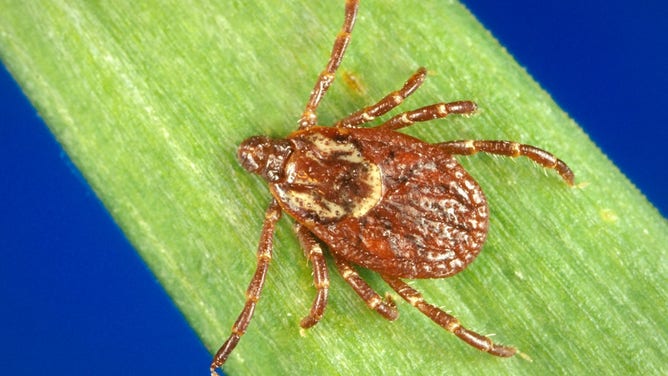
A photo of Dermacentor variabilis (American Dog tick).
(CDC)
American dog ticks are known to transmit Rocky Mountain spotted fever and tularemia.
Lone star tick
The lone star tick is found widely across the Midwest, Southeast and Northeast, mainly prevalent in the South.
This tick has a reddish-brown body and legs, with females having a white spot or "lone star" on their back.
SUMMER PEST PROBLEMS? HERE'S HOW TO SPOT AND GET RID OF COMMON HOUSEHOLD BUGS
Lone star ticks are known to aggressively bite, and their saliva can be irritating, causing redness and discomfort at the bite site, according to the CDC.
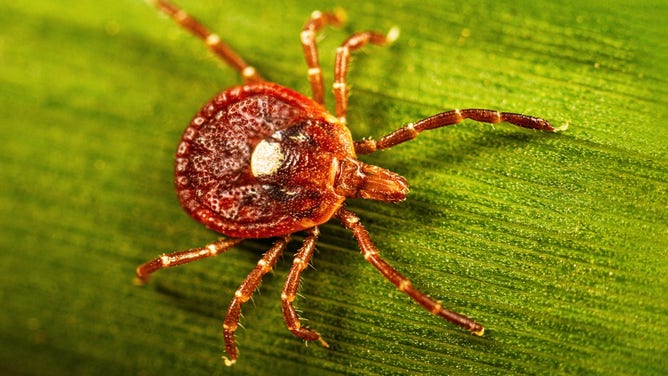
A photo of Amblyomma americanum (Lone star tick).
(FOX Weather)
These ticks can cause a number of illnesses in humans, including:
- Ehrlichiosis due to Ehrlichiosis chaffeensis and Ehrlichiosis ewingii
- Heartland virus disease
- Southern tick-associated rash illness (STARI)
- Bourbon virus disease
- Tularemia
Additionally, it's believed that a lone star tick bite can cause a delayed red meat allergy called alpha-gal syndrome, which can be life-threatening in some cases.
Western blacklegged tick
The western blacklegged tick is mostly found on the Pacific Coast, mostly in California.
DEADLY TICK-BORNE DISEASE THAT CAN CAUSE BRAIN DAMAGE SPREADING ACROSS THE US
These ticks have a reddish body with a black shield and black legs.
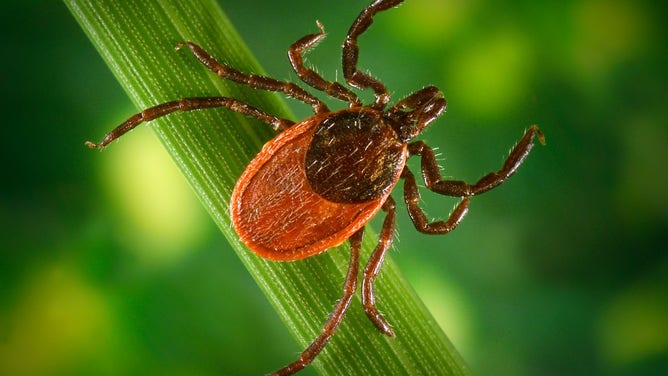
Ixodes pacificus (Western blacklegged tick).
(CDC)
Western blacklegged ticks can transmit Lyme disease, anaplasmosis and Borrelia miyamotoi (hard tick relapsing fever), according to the CDC.
Rocky Mountain wood tick
The Rocky Mountain wood tick is found in Rocky Mountains states in the Northwestern U.S. at elevations of 4,000 feet to 10,500 feet, according to the CDC.
These ticks look very similar to American dog ticks, with reddish-brown bodies and legs. Male Rocky Mountain wood ticks have a cream-colored shield.
FEDERAL OFFICIALS UNVEIL NEW PLAN IN THE FIGHT AGAINST LYME DISEASE AND TICK-BORNE ILLNESS
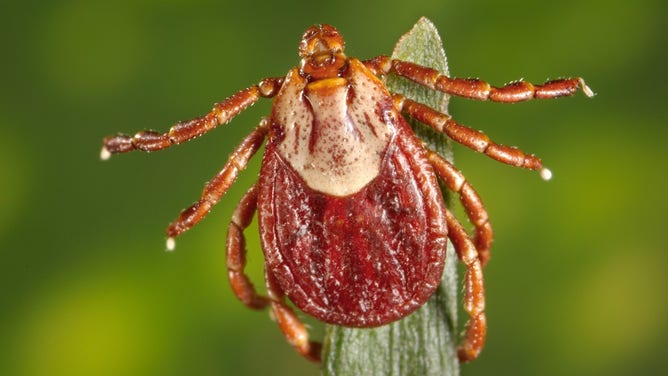
Photo of a Dermacentor andersoni (Rocky Mountain wood tick).
(CDC / FOX Weather)
Rocky Mountain wood ticks transmit Rocky Mountain spotted fever, Colorado tick fever and tularemia.
According to LymeDisease.org, the saliva of the Rocky Mountain wood tick contains a neurotoxin that can occasionally cause tick paralysis in humans and pets. The toxin can take anywhere from 24 to 72 hours to dissipate after the tick is removed.
Brown dog tick
The brown dog tick is found all over the world, including everywhere in the U.S.
These ticks are reddish brown-bodied with brown legs and a brown shield and have a narrower body than most ticks. Dogs are the primary hosts for these ticks, but they can bite humans and other animals.
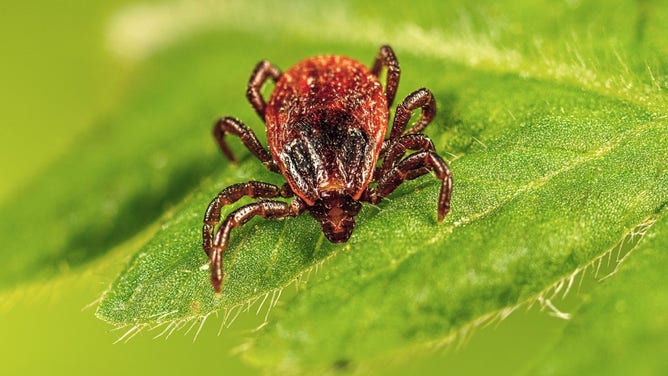
A photo of Rhipicephalus sanguineus (brown dog tick).
(CDC)
Brown dog ticks can transmit a number of diseases to dogs. They can transmit Rocky Mountain spotted fever to humans.
Gulf Coast tick
The Gulf Coast tick is primarily found in the Southeastern U.S., with smaller populations in the Midwest, Northeast and Southwest, according to the CDC.
These ticks have reddish brown bodies with light-colored legs and a cream-colored shield.
OFFICIALS AIM TO COMBAT SPREAD OF FLESH-EATING PARASITE WITH NEW STERILE FLY PRODUCTION FACILITY
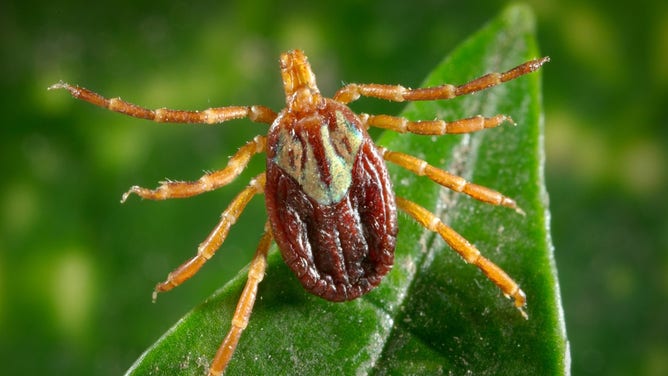
A photo of Amblyomma maculatum (Gulf Coast tick).
(CDC)
Gulf Coast ticks can transmit a form of spotted fever called Rickettsia parkeri rickettsiosis to humans.
Asian longhorned tick
The Asian longhorned tick is native to China, Japan, the Russian Far East and the Korean Peninsula, according to the Mayo Clinic.
However, the species has been found in several U.S. states since first being documented in the country in 2017.
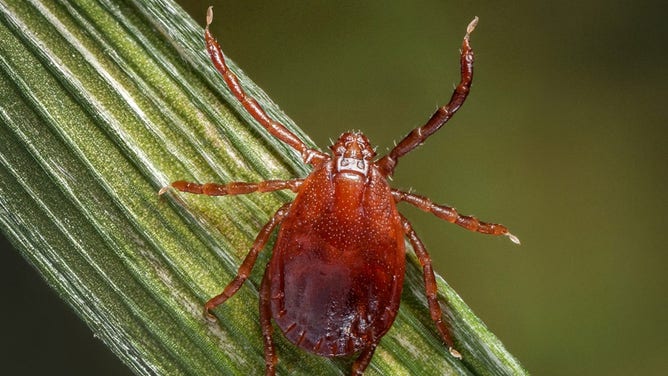
A photo of the Haemaphysalis longicornis (Asian longhorned tick).
(CDC / FOX Weather)
These ticks have large brown bodies and legs.
According to the CDC, compared with well-known native ticks, the Asian longhorned tick appears to be less attracted to humans. But in other countries, it can pass along pathogens to humans.
The CDC said tests are still ongoing to see if humans in the U.S. can be impacted by a bite from this tick.
For more information about ticks and their impacts in the U.S., visit the CDC website.