

Officials aim to combat spread of flesh-eating parasite with new sterile fly production facility
New World screwworms feed on the tissue or flesh of warm-blooded animals and people, according to the CDC.
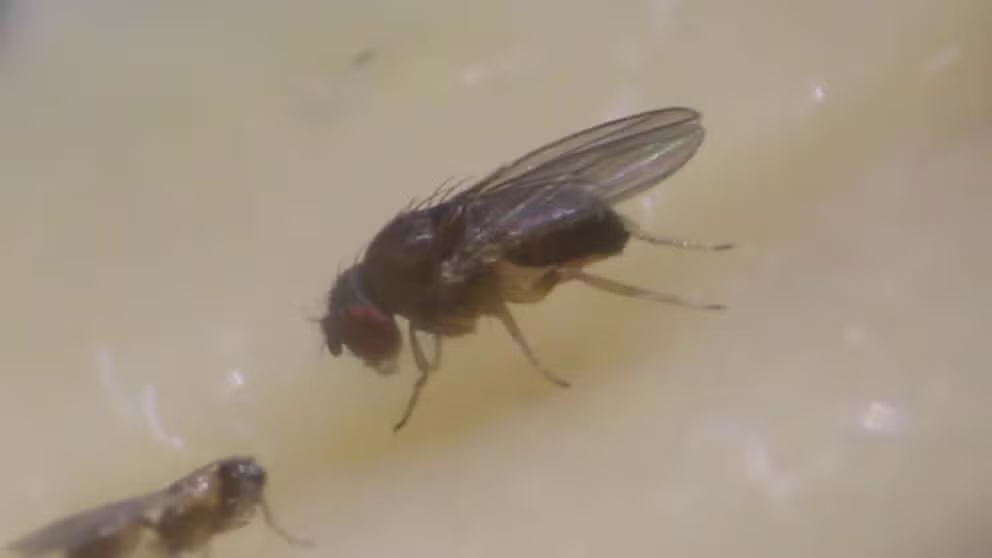
FILE: New parasitic wasp species tries to implant egg in fruit fly
(Courtesy: "Drosophila are hosts to the first described parasitoid wasp of adult flies" in nature, with authors' permission)
Officials are looking to combat the spread of a potentially deadly, flesh-eating parasite that is creeping uncomfortably close to the U.S. after being reported about 60 miles from the Texas border, according to a new study.
The U.S. Department of Agriculture (USDA) study notes that the New World screwworm is about 60 miles away from the Texas border in Nuevo León.
"This is now the northernmost active case in Mexico, and that puts Texas squarely in the crosshairs. The fact that this detection falls within the current sterile fly dispersal zone tells you just how real and active this fight already is," Sid Miller, commissioner of the Texas Department of Agriculture, said.
THIS POTENTIALLY DEADLY, FLESH-EATING PARASITE IS GETTING CLOSER TO THE US
According to the Centers for Disease Control and Prevention (CDC), New World screwworms are a species of parasitic fly that feeds on the tissue or flesh of warm-blooded animals and people.
They lay their eggs in open wounds and body openings such as the eyes, nose, mouth or genitals.
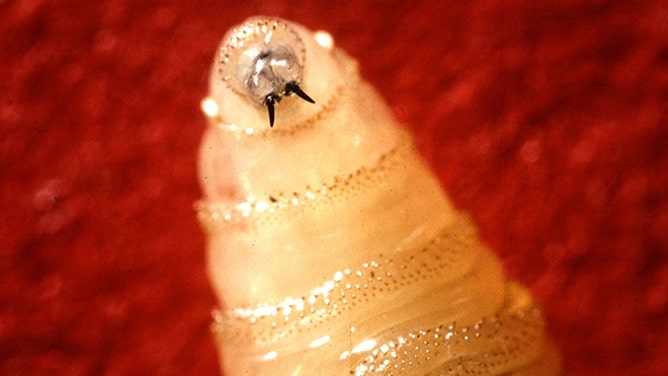
The New World screwworm is a species of the parasitic fly that completes part of its lifecycle by feeding on the tissue or flesh of warm-blooded animals and people.
(USDA / FOX Weather)
When the maggots hatch, they burrow and feed on the living tissue or flesh.
After about seven days, the larvae will come out of their host and burrow into the surrounding soil, where they'll eventually emerge as an adult screwworm fly.
HEALTH OFFICIALS WARN OF DEADLY BRAIN-EATING AMOEBA AS SUMMER APPROACHES
"I’ve said it before, and I’ll say it again: when it comes to protecting our livestock industry, we must go on offense. That means ramping up surveillance, tightening coordination at the border and making absolutely certain every available resource is deployed to stop this dangerous pest," Miller said.
NEXT STEPS
The USDA and the U.S. Army Corps of Engineers have made strides towards screwworm preparedness by partnering together to break ground on a new sterile fly production facility that will be located in Edinburg, Texas.
"Breaking ground on this facility marks a major investment in safeguarding America’s livestock and the producers who feed this nation. This puts NWS sterile fly production in American hands, so we do not have to rely on other countries for the best offensive measure to push screwworm away from our borders," U.S. Secretary of Agriculture Brooke L. Rollins said.
BE ON THE LOOKOUT: SICK AND DEAD SQUIRRELS IN CALIFORNIA PARK TRIGGER CONCERNS AMONG RESIDENTS
The new facility is intended to start operations in November 2027, hopefully producing 100 million sterile flies per week and will then continue to reach its full production capacity of 300 million sterile flies per week.
Since female screwworm flies only mate once in her life, mating with a sterile male will make sure that their eggs don’t hatch.
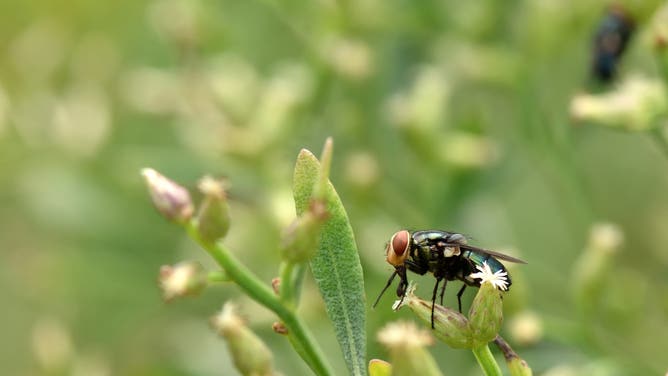
If you're into insects, this guy may be for you. Why its called a Secondary Screwworm Fly is because the original screwworm fly was eradicated. Nonetheless, this blowfly makes an interesting conversation piece.
(Getty Images)
The Texas Department of Agriculture assured that they are keeping a close eye on any screwworm developments.
"USDA has been working with Mexican authorities to track and respond, and those efforts matter, but this is no time to let up," Miller said.
PETS TO PESTS: GOLDFISH FOUND TO BE HARMFUL TO NATURAL FRESHWATER ECOSYSTEMS
Officials are advising that you take the following steps if you suspect the presence of a screwworm:
- Look for New World screwworm flies, maggots, larvae or eggs on livestock.
- Be alert to foul odors or drainage around the nose, ears, umbilicus or genitalia.
- Check animals often for signs of myiasis and secondary infections.
For more information about New World screwworms and USDA’s prevention efforts, visit Screwworm.gov.