

Health officials warn of deadly brain-eating amoeba as summer approaches
Health officials across the country are advising residents to remain alert for a rare, but deadly pathogen.

FILE: New test for brain-eating amoeba
Eight years after their son died from a brain-eating amoeba, the Smelskis are relieved to help announce a new test in their home state. FOX 35 Orlando explains.
Health officials across the country are advising residents to remain alert for a rare but deadly pathogen as summer approaches.
Naegleria fowleri, commonly known as the "brain-eating amoeba," is a naturally occurring organism found in soil and warm freshwater, including lakes, rivers, ponds and hot springs.
DEADLY BRAIN-EATING AMOEBA FOUND IN IOWA BEACH AS TEMPERATURES RISE
In rare instances, it has also been detected in poorly maintained swimming pools, splash pads and other recreational water venues.
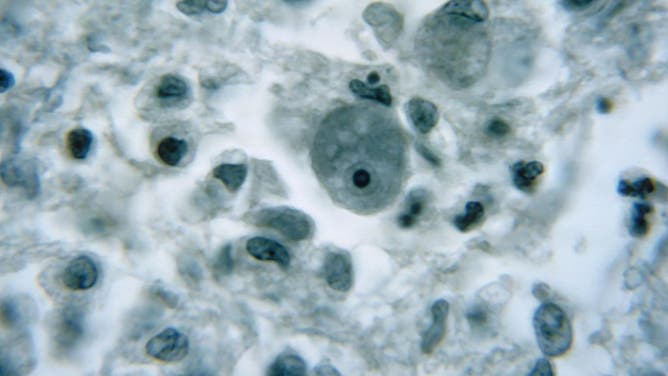
This photomicrograph of a brain tissue specimen depicts the cytoarchitectural changes associated with a free-living amebic infection, which may have been caused by either a Naegleria fowleri, or an Acanthamoeba sp. Naegleria fowleri produces an acute, and usually lethal, central nervous system (CNS) disease called primary amebic meingoencephalitis (PAM).
(Smith Collection/Gado / Getty Images)
While exposure to the organism is relatively common, infections are extremely rare. When they do occur, they can lead to a severe and often fatal brain infection known as primary amebic meningoencephalitis (PAM).
Between 1962 and 2024, 167 cases were reported nationwide, with only four known survivors. Typically, fewer than 10 people in the U.S. are infected each year.
CHILD DIES FROM SUSPECTED 'BRAIN-EATING AMOEBA' AFTER SWIMMING IN NEBRASKA RIVER
In July, the Centers for Disease Control and Prevention (CDC) updated its awareness campaign and clinical guidance to help healthcare professionals diagnose cases earlier.
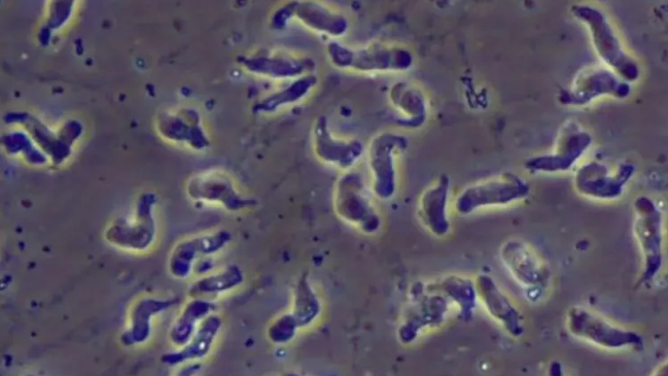
Naegleria fowleri, the brain-eating amoeba that causes primary amebic meningoencephalitis, can be caught in warm water locations.
(CDC)
The new recommendations include enhanced diagnostic workflows using PCR testing and antigen detection, updated water testing protocols for high-risk areas and revised treatment guidance for compassionate-use drugs.
The updates come as local health departments across the southern U.S. issued warnings following a heat wave that had pushed freshwater temperatures to record highs. These conditions can increase the likelihood of naegleria fowleri growth.
DEADLY WATERS: 2 LIVES CLAIMED AS SWIMMERS TRY TO SAVE CHILD SWEPT AWAY BY RIP CURRENT
Officials say the updated guidelines will serve as a "front line in environmental screening for naegleria in warm, untreated water bodies, especially those near recreational zones or residential developments."
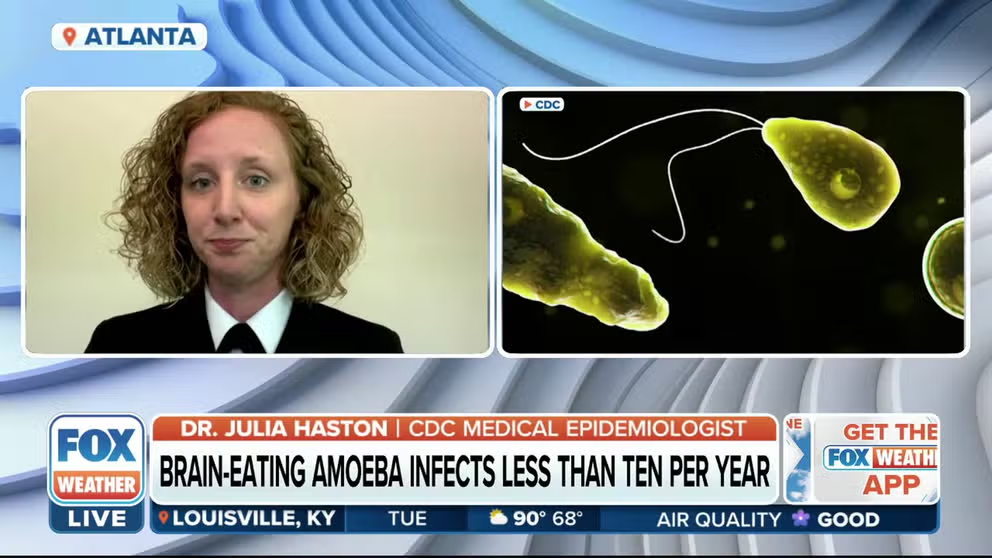
Brain-eating amoeba poses deadly risk for swimmers; occurs in warm freshwater
This rare but deadly brain-eating amoeba forced state officials to close an Iowa beach for swimming. Dr. Julia Haston, CDC Medical Epidemiologist, explains more about the brain-eating amoeba.
Rapid testing is expected to play a key role in supporting local hospitals and urgent care centers, particularly because early symptoms can resemble bacterial meningitis.
Public health labs are also preparing to expand testing capacity in the event of outbreaks and to train healthcare professionals on proper sample collection and handling.
FLORIDA REPORTS SPIKE IN FLESH-EATING BACTERIA CASES FOLLOWING RECENT HURRICANES
Despite the organism’s alarming nickname, experts emphasize that infections remain extremely rare. Still, they encourage the public to stay informed and take simple precautions, especially during warmer months when freshwater activities are more common.