

Emperor penguins declared endangered species amid the decline in sea ice
Scientists warn that current projections suggest the population could be reduced to half by the 2080s.
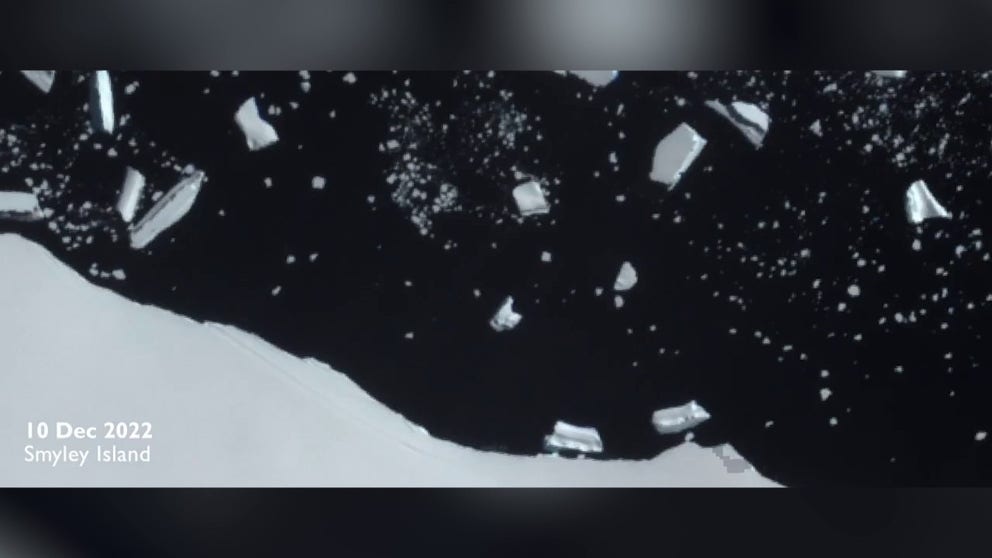
FILE: 'Catastrophic breeding failure' of penguins caused by low sea ice in Antarctica
Record-low levels of sea ice in western Antarctica in late 2022 led to the breeding failure of four emperor penguin colonies, according to a study published on Thursday. (Courtesy: European Commission, Copernicus SENTINEL-2 via Storyful)
The emperor penguin has been reclassified from near threatened to endangered on the IUCN Red List after satellite data showed the species’ population has declined to around 20,000 adult birds.
Scientists warn that current projections suggest the population could be reduced to half by the 2080s.
EXPERTS SAY MILLIONS OF SPOTTED LANTERNFLIES COULD PLAGUE NEW YORK CITY THIS YEAR
"Penguins are already among the most threatened birds on Earth," Martin Harper, CEO of BirdLife International, said. "The emperor penguin’s move to endangered is a stark warning that climate change is accelerating the extinction crisis before our eyes."
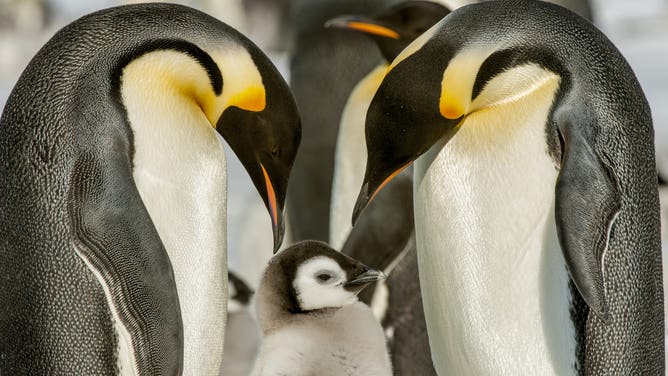
An Emperor penguin (Aptenodytes forsteri) couple with chick on the sea ice at Snow Hill Island in the Weddell Sea in Antarctica.
(Wolfgang Kaehler/LightRocket via Getty Images / Getty Images)
According to the IUCN, the primary driver of this decline is climate change in Antarctica. The rising temperatures are causing earlier break-up and loss of sea ice, which has reached record lows since 2016.
In order to sustain their population, the emperor penguins require sea ice that is fastened to the coastline to set up a habitat for their chicks during molting season, which is when the chicks are not waterproof.
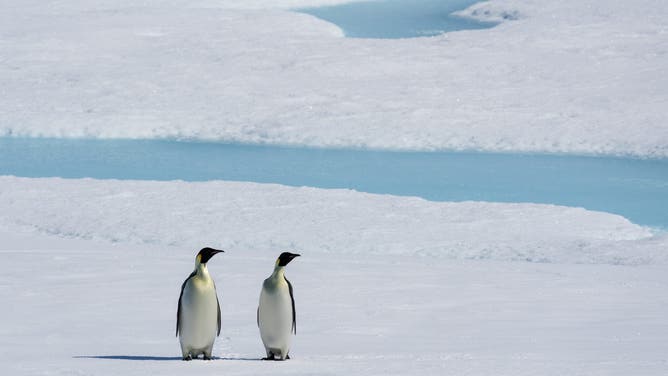
Emperor penguin pair on sea ice, the Larsen B Ice Shelf, in the Weddell Sea, Antarctica.
(Sergio Pitamitz/VW Pics/Universal Images Group via Getty Images / Getty Images)
If the ice breaks up too early, it can result in the death of the chicks.
"Early sea ice break-up in spring is already affecting colonies around the Antarctic, and further changes in sea ice will continue to affect their breeding, feeding and molting habitat," Dr Philip Trathan, member of the IUCN SSC Penguin Specialist Group who worked on the emperor penguin Red List assessment, said.
7 THINGS YOU PROBABLY DON’T KNOW ABOUT PENGUINS
"Emperor penguins are a sentinel species that tell us about our changing world and how well we are controlling greenhouse gas emissions that lead to climate change," he continued.
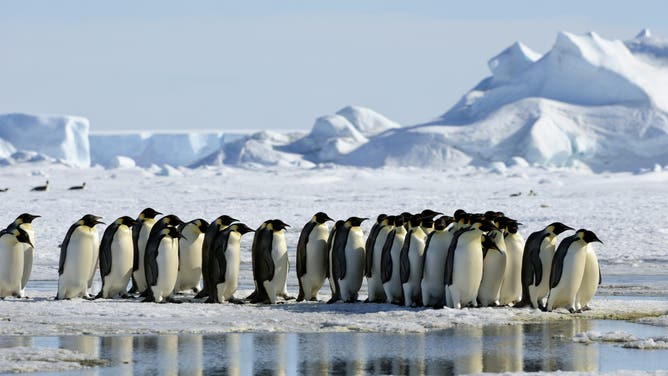
A group of emperor penguins on the way to the colony.
(Wolfgang Kaehler/LightRocket via Getty Images / Getty Images)
While it is challenging to link events like breeding colonies collapsing into the sea before the chicks can swim to population changes, climate models indicate emperor penguin populations will decline rapidly this century without dramatic reductions to greenhouse gas emissions.
SALAMANDERS IN MANHATTAN: HERE'S HOW YOU CAN HELP PRESERVE THEIR HABITAT
"These important findings should spur us into action across all sectors and levels of society to decisively address climate change," Dr. Grethel Aguilar, IUCN director general said. "The declines of the emperor penguin…on the IUCN Red List is a wake-up call to the realities of climate change."