

Here's why barrier islands are important during hurricane season
Protecting native vegetation, restoring sand dunes and limiting artificial disruption are key to ensuring these natural shields continue guarding our coastlines for generations to come.
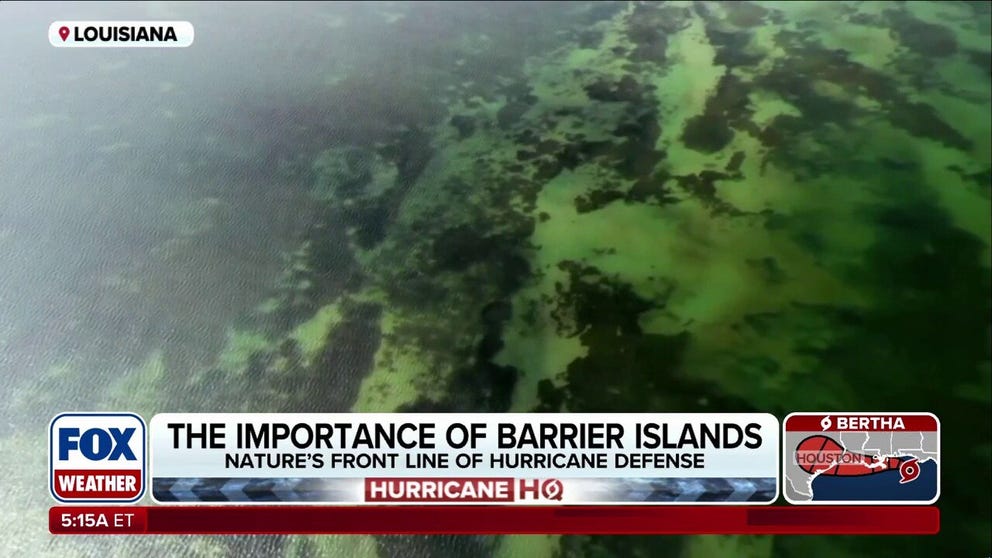
The importance of barrier islands during hurricane season
Acting as a first line of defense against wave action and storm surge, barrier islands protect the mainland during hurricane season. FOX Weather Senior Correspondent Robert Ray visits the Chandeleur Islands in Louisiana to explain how these islands work and how past storms have impacted them.
As hurricanes threaten the U.S. coastline each year, barrier islands play an important role in helping protect coastal communities and environments.
Sitting just offshore, these natural landforms act as a buffer between the open ocean and the mainland, taking the brunt of severe storms.
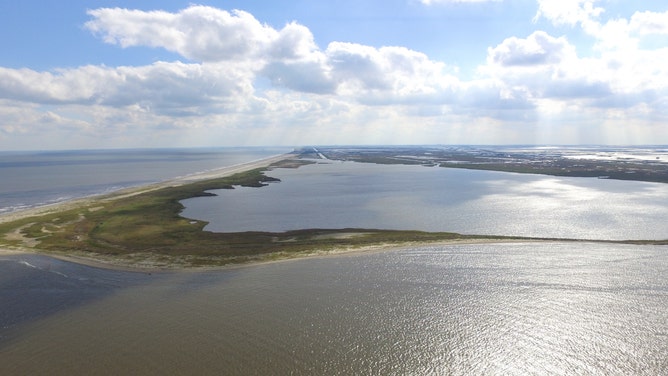
Drone image of a barrier island that was impacted by the Deepwater Horizon oil spill
(nuballawalla / Getty Images)
PROPERTY SUSTAIN HURRICANE DAMAGE? HERE'S WHAT YOU SHOULD DO
What is a barrier Island?
Barrier islands are long, narrow stretches of sand that run parallel to the coastline.
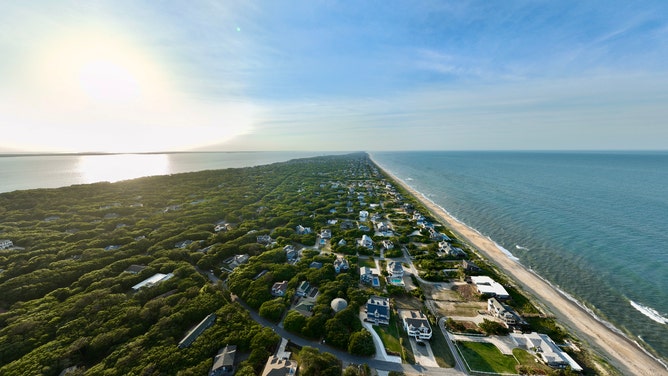
Aerial view of Duck, North Carolina, showcasing the unique geography of the Outer Banks barrier islands. The Atlantic Ocean stretches across the foreground while the Currituck Sound is visible beyond the coastal community, highlighting the narrow strip of land that separates ocean and sound along North Carolina’s coast.
(Samuel Frontino / Getty Images)
Iconic barrier islands protect both bustling coastal communities — like North Carolina’s Outer Banks, Florida’s Sanibel Island and Texas’s Galveston Island — and vital wilderness areas, such as Louisiana’s Chandeleur Islands.
HOW TO PREPARE FOR HURRICANE SEASON
Separated from the mainland by bays, lagoons or marshes, they constantly shift and reshape due to waves, tides and storms.
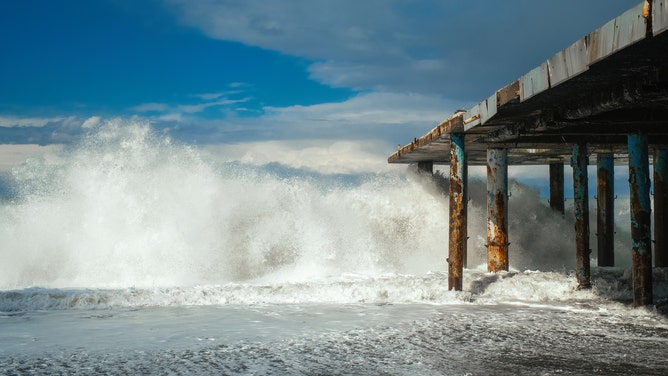
Storm in the sea
(ArtMarie / Getty Images)
According to the U.S. Geological Survey (USGS), barrier islands are dynamic landforms that naturally migrate over time as sand is moved by wind and water.
How do barrier islands protect the coast?
When a storm strikes, barrier islands absorb the initial impact before powerful hazards reach populated mainland areas. They help by:
Absorbing wave energy: Breaking down massive ocean waves before they hit the mainland.
Slowing storm surge: Acting as a physical wall to reduce inland flooding.
HERE'S WHAT TO DO IF YOU ENCOUNTER A FLOODED ROAD
Protecting sensitive wetlands: Shielding estuaries, salt marshes, and inland communities from direct ocean exposure.
Reducing inland erosion: Healthy sand dunes and native vegetation bind the sand, stabilizing the shoreline against erosion.
Sheltering marine ecosystems: The calm waters behind the islands create protected lagoons and salt marshes that serve as vital habitats for sea turtle nesting, migratory birds and fish nurseries.
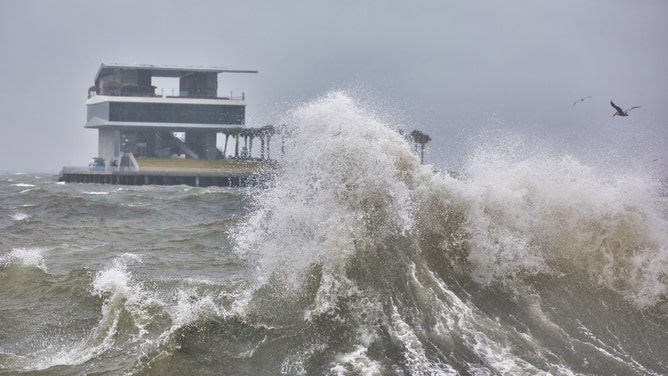
A wave crashing against a seawall on Tampa Bay during a tropical storm with the St Pete Pier in the background.
(Glen Richard / Getty Images)
Experts say healthy dunes and natural vegetation on barrier islands also help stabilize and reduce erosion during storms.
WHAT IS COASTAL EROSION AND WHY IS IT DANGEROUS?
While barrier islands are naturally dynamic, they face increasing pressure today.
Sea-level rise, stronger hurricane seasons and coastal development can disrupt an island's ability to naturally rebuild itself.
Protecting native vegetation, restoring sand dunes and limiting artificial disruption are key to ensuring these natural shields continue guarding our coastlines for generations to come.