

What is coastal erosion and why is it dangerous?
Experts say that coastal erosion causes roughly $500 million in damage to properties and structures per year.
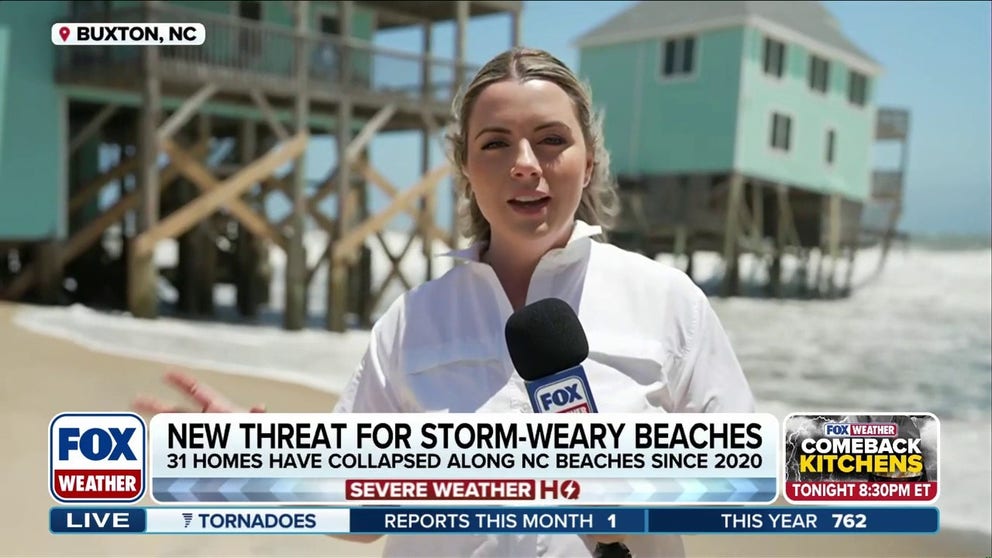
Coastal homes in North Carolina under another threat from rough ocean conditions
‼️ HOMES UNDER THREAT: FOX Weather Correspondent Katie Byrne reports from Buxton, North Carolina, where a renewed coastal threat is putting homes in danger as rough surf and strong winds persist. This comes after countless homes were destroyed last year. #Northcarolina #Ocean #Beaches #FOXWeather
Erosion at beaches comes in different forms of severity; sometimes what can seem like an odd appearance to the beach can often be something much worse.
An example of persistent coastal erosion affecting beaches over time is in Buxton, North Carolina, where numerous homes have collapsed as a result.
WATCH: ENTIRE OCEANFRONT HOME MOVED AWAY FROM SHORE TO PRESERVE PROPERTY IN OUTER BANKS
Since 2020, 31 beachfront homes have collapsed along North Carolina’s Outer Banks, according to Cape Hatteras National Seashore.
So what is this natural occurrence that causes so much destruction?
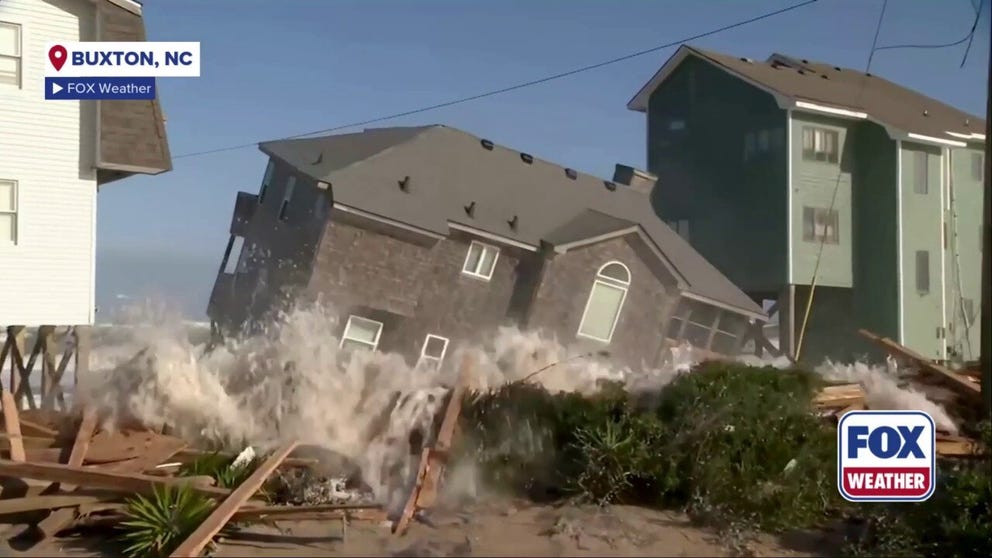
North Carolina coastal flooding causes another home to collapse
Another house in Buxton, North Carolina, has been added to the list of destruction as the effects of Post-Tropical Storm Imelda have destroyed an additional home.
Coastal erosion is the process in which local sea level rises, creating strong wave action and coastal flooding that wear down or carry away rocks, soils and sand along the coast, according to the U.S. Climate Resilience Toolkit.
Experts say that coastal erosion causes roughly $500 million in damage to properties and structures per year.
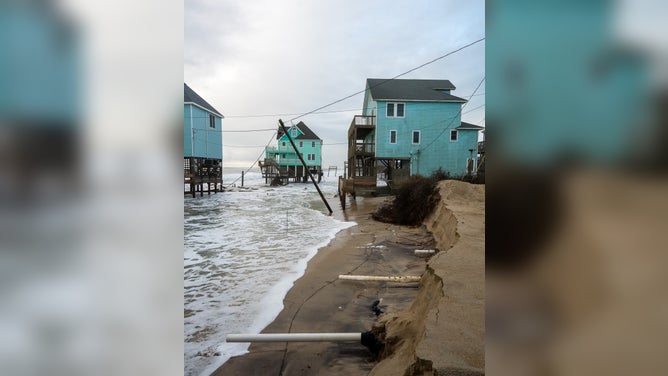
Debris from homes washed away by rough surf in Buxton, North Carolina after Hurricane Imelda passed off shore in October 2025.
(Instagram/@b_the_photos / FOX Weather)
Erosion is the movement of beach materials by a combination of high waves, currents, tides or wind, according to the National Weather Service.
VIDEO: 11TH HOME COLLAPSES ON NORTH CAROLINA'S OUTER BANKS AS DEVASTATING COASTAL EROSION CONTINUES
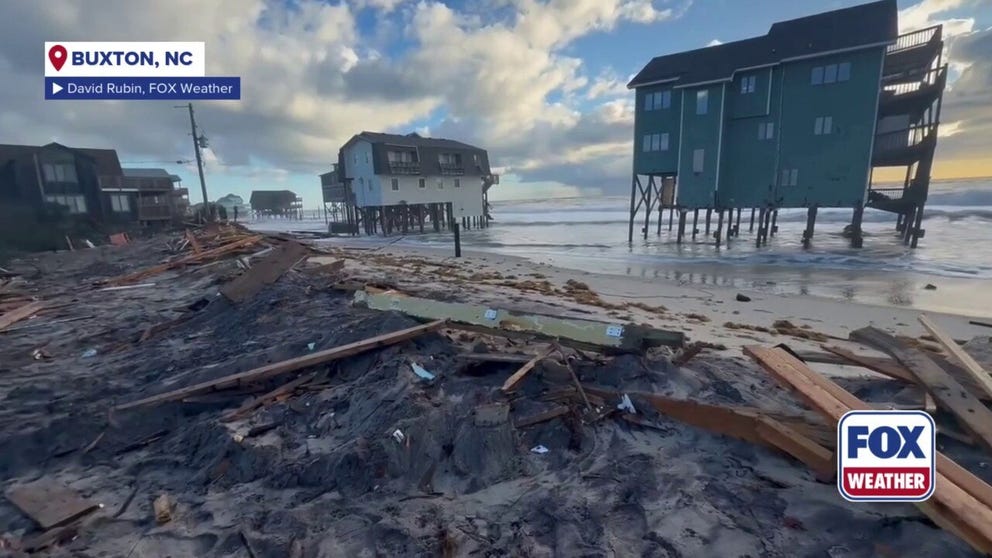
Debris litters Buxton, North Carolina after homes collapse in rough surf
Video shows massive piles of debris in Buxton, North Carolina after rough surf from passing Hurricane Imelda brought down eight homes in Buxton last week and one in Rodanthe.
Coastal erosion is not just a safety threat to nearby structures; it also affects and damages habitats for marine animals and other species.
Shoreline protection structures, such as seawalls, can help prevent beaches from coastal erosion and from moving inland as sea levels rise.
THIS COMPANY IS FIGHTING THE SEA TO PROTECT NORTH CAROLINA COASTAL HOMES
Over time, homes that were once hundreds of feet from the beach are now dangerously close to the ocean, and residents have fled, leaving more homes at risk of collapse.