

Here's how to keep your furry friends safe this winter season
Bitter cold weather can pose serious health issues for cats and dogs, but there are a few safety tips to protect your pet.
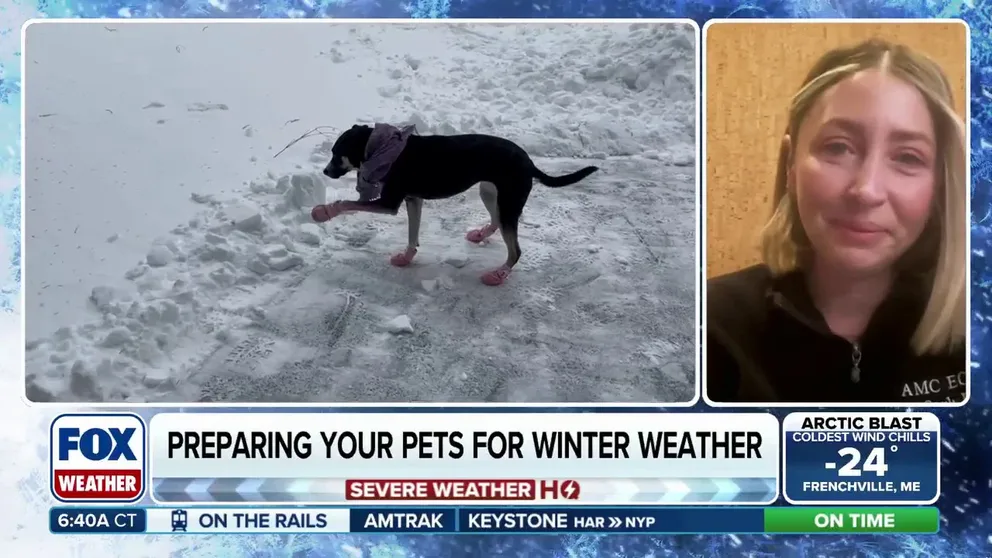
Keeping pets safe during extreme cold and winter weather
When it's cold outside you bundle up to stay warm, so it's important to learn how to protect your pets during the extreme cold, too. Dr. Carly Fox, senior veterinarian at Schwarzman Animal Medical Center, joins FOX Weather to give some tips to keep your pets safe.
Most of North America has already endured harsh winter conditions this season with back-to-back snowstorms and numerous arctic blasts. The extreme weather has not only become a threat to you, but can become dangerous for your four-legged friends, too.
Bitter cold weather can pose serious health issues for cats and dogs, such as frostbite and hypothermia.
The chemicals from ice-melting agents are also poisonous and can kill your pet if they lick it off their bare paws.
COAST-TO-COAST STORM TO BRING HURRICANE-FORCE WINDS, TRICKY TRAVEL CONDITIONS AMID LA NIÑA WINTER
The exposure to winter’s dry, cold air, chilly rain and snow can cause animals to feel itchy, making them extremely uncomfortable.
But there are ways to prevent cold weather discomforts and dangers. Here are a few safety tips to help keep your four-legged friends safe this winter season.
SEE IT: PANCAKE ICE CREATES RARE SPECTACLE ON LAKE MICHIGAN AMID FRIGID TEMPERATURES
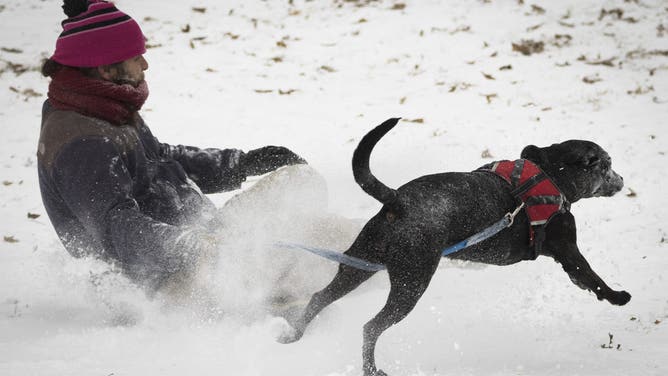
BLOOMINGTON, INDIANA, UNITED STATES - 2021/02/09: A sledder and a dog race down a hill at Reverend Ernest D. Butler Park on 9th Street.
(Jeremy Hogan/SOPA Images/LightRocket via Getty Images / Getty Images)
1. Stay inside
If it is too cold for you, it is probably too cold for your pet. It is a common belief that cats and dogs are more resistant to cold weather because of their fur, but that is not true. Like people, pets are susceptible to frostbite and hypothermia. To keep them safe, it is better to keep them inside.
2. Check their paws
Frequently check your dog or cat’s paw for signs of cold weather injuries or damage. The freezing air can cause cracked or bleeding pads. Pay attention to their feet to make sure there aren’t ice balls stuck in between their foot pads or toes.
Also, using petroleum jelly or vet-approved paw protection can prevent sand and salt from getting lodged into your furry friend’s paws.

Two police officers in Ohio save a dog that had fallen through a frozen pond
Thanks to the quick thinking from the Medina Police and Fire Department, Ace was able to escape any serious injuries and return to his family.
3. Avoid antifreeze and cold weather chemicals
Antifreeze and winter weather chemicals like ice melts are extremely lethal for dogs and cats. Thoroughly clean up any spills and make sure those chemicals are not on your pet’s paws.
If your pet does end up walking into these products, wipe down or wash your furry friend’s feet, legs and belly to remove those chemicals.
It is also best to use products that contain propylene glycol rather than ethylene glycol. There are plenty of pet-safe de-icers out there that can protect your pets and others in the neighborhood.
4. Play dress-up
If your pet has short hair or seems to be bothered by cold weather, consider using a sweater or a coat. It is best to own several in case one gets wet. Some pet owners also use booties to protect their furry friend’s feet.
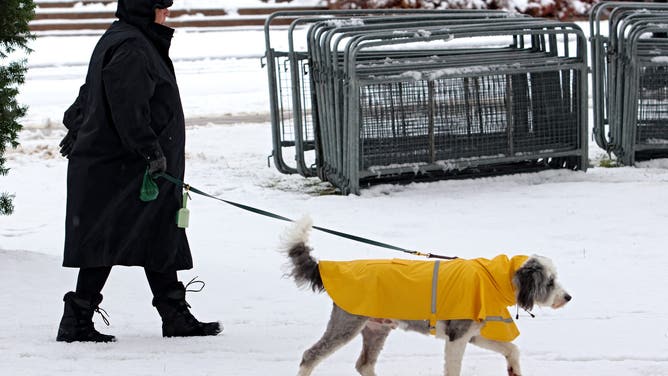
A person walks a dog at Gage Park after a morning snowfall in Brampton, Ontario, on November 30, 2025.
(Mike Campbell/NurPhoto via Getty Images / Getty Images)
5. A collar and microchip are you and your pet’s best friend
Many pets can become lost during the winter because snow and ice hide recognizable scents that may normally help your pet find their way back home. Make sure your furry friend has a microchip and a well-fitted collar with up-to-date identification and contact information.
MANY CITIES ACROSS THE U.S. ARE EXPERIENCING THE SNOWIEST STARTS TO THE WINTER SEASON IN DECADES
6. Winter wellness
Lastly, it is important that your pet has a wellness check every year. Certain medical conditions such as arthritis can flare up during the winter. It is as good a time as any to check to see if they are healthy for the freezing weather.