

Video: Pancake ice creates rare spectacle on Lake Michigan amid frigid temperatures
Drone footage captured a rare scene when frigid temperatures allowed pancake ice to spread across Lake Michigan on Dec. 15. It’s formed when a lake or saltwater begins to freeze, with wave action breaking the ice layers into chunks.
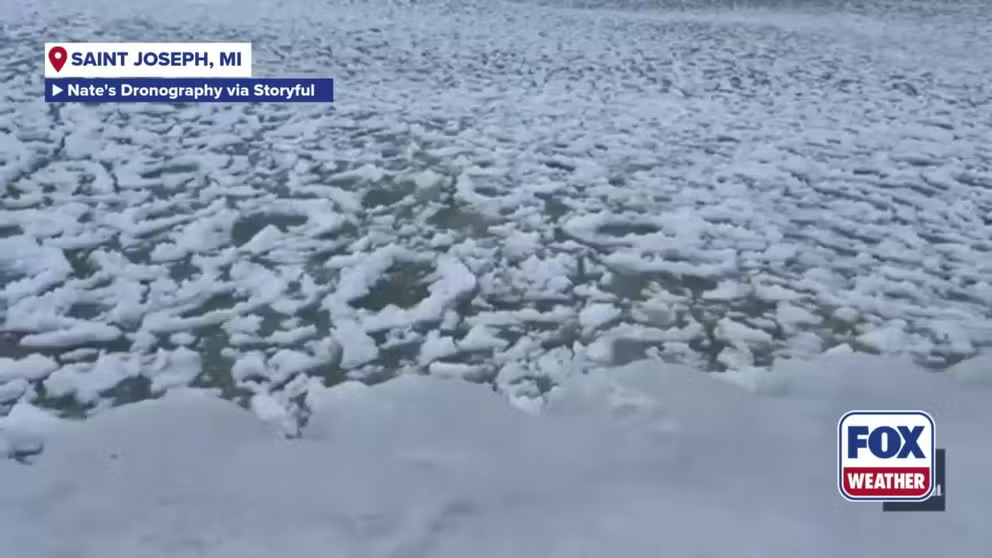
Rare pancake ice forms on Lake Michigan amid Arctic chill
Drone footage captured a rare sight on Dec. 15, as frigid temperatures allowed pancake ice to surround the North Pier Lighthouse on Lake Michigan.
SAINT JOSEPH, MI- This week’s cold snap swept the nation, creating a pancake ice spectacle across the surface of Lake Michigan on Monday, Dec 15.
Drone footage captured the rare scene, showing it surrounding the North Pier Lighthouse as it synced up with the rocking waves.
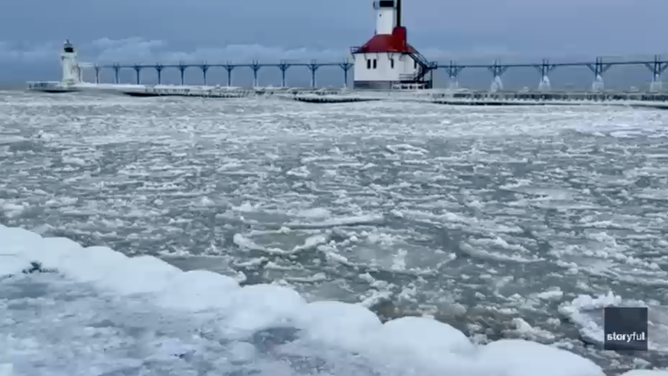
Pancake ice surrounding the North Pier Lighthouse on Lake Michigan Dec. 15.
(Nate's Dronography via Storyful / FOX Weather)
This type of ice is referred to as pancake ice solely based on its round shape, but is formed when a lake or saltwater begins to freeze, with wave action breaking the ice layers into chunks.
PANCAKE ICE IN MICHIGAN: WHAT IS IT?
Specifically, these chunks then bump into each other, forming round edges and creating a disc-like pancake shape.
These formed discs tend to be slushy and soft.
According to the U.K. Met Office, the U.K.'s national weather and climate service, pancake ice is also believed to form when foam on a river begins to freeze.
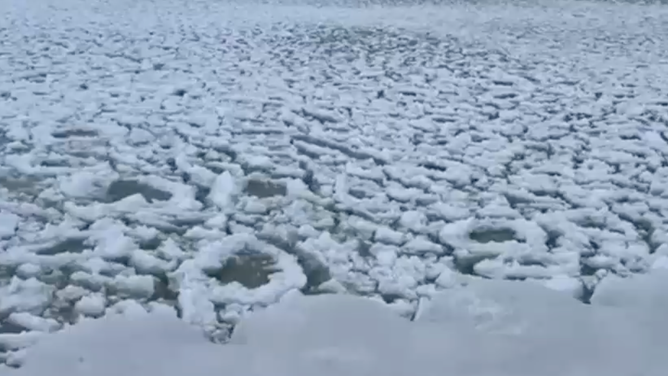
Pancake ice across the surface of Lake Michigan Dec. 15.
(Nate's Dronography via Storyful / FOX Weather)
The foam collides and gets sucked into an eddy, which is a swirling current of water, resulting in the circular pancake shape.
Pancake ice can also consolidate together into even bigger sheets in rougher conditions.
This is a rare occurrence, but can be brought on by extreme cold temperatures.
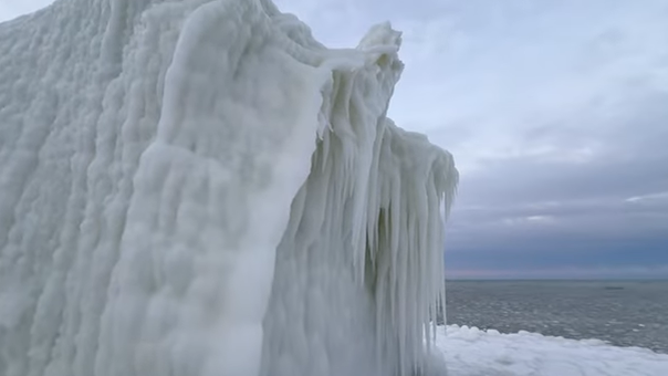
Icicles on a lighthouse beacon in Michigan on Monday morning.
(Nate's Dronography via Storyful / FOX Weather)
From the Upper Midwest into northern New England, temperatures dropped to the single digits this weekend and some regions fell into the negative teens, with high winds that added to the impact.
These conditions created the perfect environment for pancake ice to form.