

Timeline: Artemis II's final hours in space to splashdown in the Pacific Ocean
We're taking a look at the schedule for the crew on the last day of the mission as they complete the last steps to getting back to Earth.
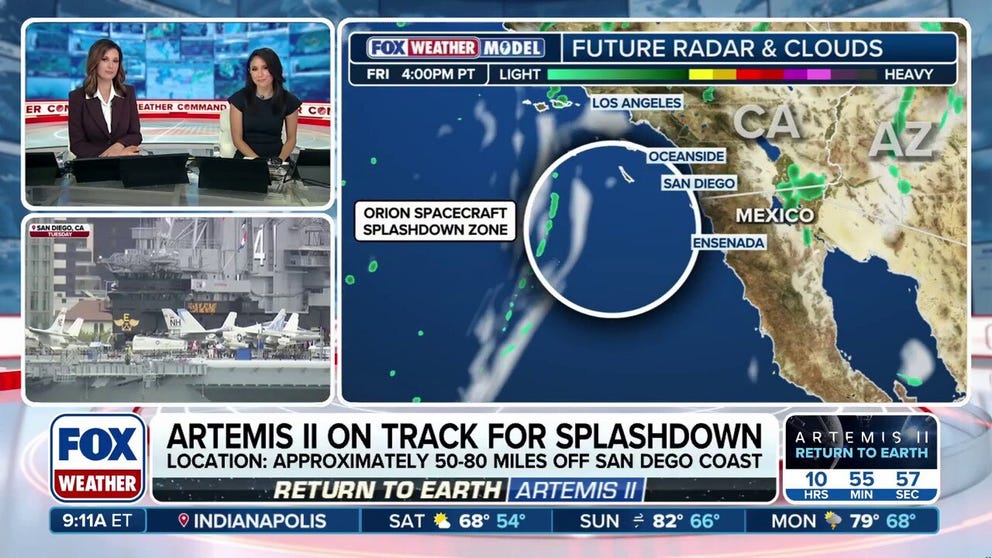
Artemis II splashdown forecast: Orion on track for landing
The FOX Forecast Center is monitoring storms near the Artemis II splashdown zone just off the coast of San Diego. Currently, it looks like the hazardous weather will hold off, allowing the crew to land in the target area. Stay with FOX Weather for full Artemis coverage through splashdown.
Friday is the last day of the historic Artemis II mission to the Moon and back, and it's a jam-packed schedule for the crew aboard the Orion spacecraft as they prepare to reenter Earth's atmosphere and splashdown in the Pacific off the coast of California.
The 10-day mission had a successful liftoff and journey to the Moon. Now, they're just hours away from completing their final task.
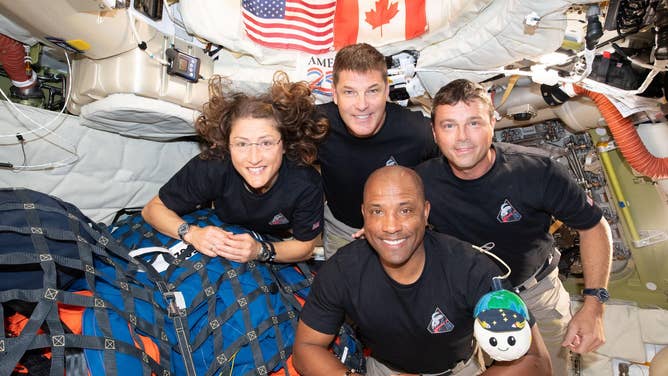
April 7, 2026) – The Artemis II crew – (clockwise from left) Mission Specialist Christina Koch, Mission Specialist Jeremy Hansen, Commander Reid Wiseman, and Pilot Victor Glover – pause for a group photo with their zero gravity indicator "Rise," inside the Orion spacecraft on their way home.
(NASA)
We're taking a look at the schedule for the crew on the last day of the mission as they complete the last steps to getting back to Earth.
11:35 a.m.- 1:50 p.m. ET — Wake up and Cabin configuration
Upon waking up at 11:35 a.m. ET, the crew of Orion will spend the first few hours of the day configuring the cabin for reentry to Earth.
This includes stowing final items from the mission, getting seats in the correct position and getting ready for the day.
2:53 p.m. ET — Final RTC burn
At 2:53 p.m. ET, Orion will do a Return Trajectory Correction Burn to keep the spacecraft on track.
This is the final RTC burn of the mission, and will fine-tune Orion's path to Earth.
FORECAST SHOWS LIGHT RAIN IS HOLDING OFF FOR ARTEMIS II SPLASHDOWN OFF SAN DIEGO ON FRIDAY
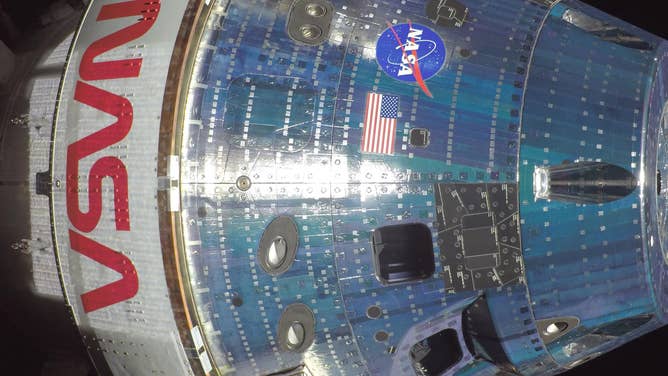
(April 7, 2026) - NASA’s Orion spacecraft is pictured here from one of the cameras mounted on its solar array wings. At the time this photo was taken at 8:33 a.m. ET, the Artemis II crew was in a sleep period ahead of beginning their seventh day into the mission.
(NASA)
The burn will also put Orion in the right orientation to minimize excessive heating on its heat shield as it enters the atmosphere at 24,000+ mph.
3:20 p.m. ET — Configuring continues
NASA Astronauts Reid Wiseman, Victor Glover and Christina Koch, along with Canadian Space Agency Astronaut Jeremy Hansen will continue configuring the cabin.
5:05 p.m. ET — Entry Checklist begins
At 5:05 p.m. ET, the Artemis II crew will begin their entry checklist.
This includes getting into their space survival suits for reentry.
IS NASA CONSIDERING RECLASSIFYING PLUTO AS A PLANET IN OUR SOLAR SYSTEM?
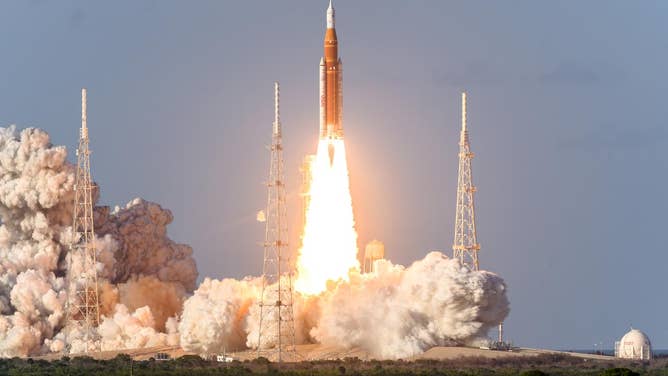
Four astronauts aboard NASA’s Orion spacecraft atop the SLS (Space Launch System) rocket launch on the agency’s Artemis II test flight, Wednesday, April 1 from Launch Complex 39B at NASA’s Kennedy Space Center in Florida.
(NASA/Eric Bordelon / FOX Weather)
6:30 p.m. ET — NASA coverage begins
At 6:30 p.m. ET, NASA will begin its live coverage on the reentry and splashdown of Orion.
Coverage will include the landing and recovery of the crew, expected to end at 9:35 p.m. ET.
7:33 p.m. ET — Crew module separates
At 7:33 p.m. ET, the Crew module will separate from the European Service module about 20 minutes before the crew enters Earth's upper atmosphere.
The European Service Module is the European Space Agency's contribution to the Artemis II mission.
WHY WILL THE ARTEMIS II SPACECRAFT LAND IN THE OCEAN AND NOT ON LAND?

(April 7, 2026) - Members of the International Space Station Expedition 74 (left) and Artemis II (right) crews are seen at once on the screens inside the International Space Station flight control room in Mission Control at NASA's Johnson Space Center in Houston. The two crews connected in a 15-minute ship-to-ship call on April 7, 2026, while the Artemis II crew was on its way back from the Moon.
(ROBERT MARKOWITZ NASA-JSC / NASA)
It served as the powerhouse of the spacecraft as it provided in-space maneuvering capability, power, and other commodities necessary for life support, including consumables for the astronauts, like water, oxygen and nitrogen, NASA said.
7:37 p.m. ET — Crew module raise burn
At 7:37 p.m. ET, Orion will conduct a raise burn.
This burn will get Orion into the correct position for reentry.
7:53 p.m. ET — Communication blackout as Orion enters Earth's atmosphere
At 7:53 p.m. ET, Orion will enter Earth's upper atmosphere at 400,000 feet.
This is when a roughly 6-minute communications blackout between the Artemis II crew and mission control at Johnson Space Center begins.

(April 7, 2026) – The Artemis II crew – (clockwise from left) Mission Specialist Christina Koch, Mission Specialist Jeremy Hansen, Commander Reid Wiseman, and Pilot Victor Glover – take time out for a group hug inside the Orion spacecraft on their way home.
(NASA)
Peak heating will also occur at this point, when Orion will reach roughly 5,000°, putting the spacecraft's heat shield through the ultimate test.
7:59 p.m. ET — NASA regains communication with Artemis II
Just a few seconds before 8 p.m. ET, NASA will regain communications with Artemis II's crew as they get closer to splashdown.
The vehicle will also conduct a few rolls to help slow it down after communication is recovered.
Moon joy [noun]
— NASA (@NASA) April 10, 2026
the feeling of intense happiness and excitement that only comes from a mission to the Moon
The Artemis II crew bring us endless Moon joy. pic.twitter.com/7vrS1lLd0C
8:03 p.m. ET — Drogue parachutes deploy
Four minutes before splashdown at roughly 22,000 feet, the drogue parachutes on Orion will deploy to slow its descent.
8:04 p.m. ET — Main parachutes deploy
One minute after the drogue parachutes deploy, the main parachutes will deploy at 8:04 p.m.
This occurs at roughly 6,000 feet.
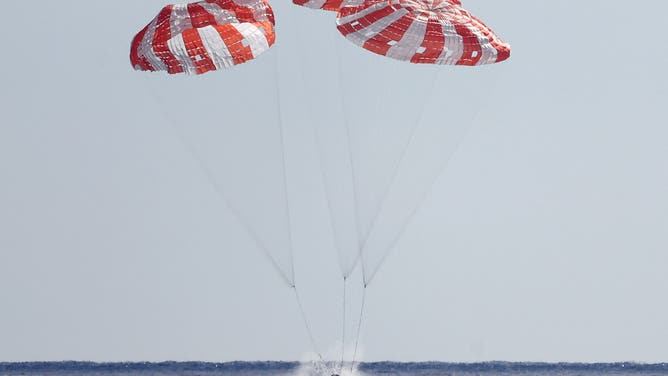
FILE: AT SEA, PACIFIC OCEAN - DECEMBER 11: NASA's Orion Capsule splashes down after a successful uncrewed Artemis I Moon Mission on December 11, 2022 seen from aboard the U.S.S. Portland in the Pacific Ocean off the coast of Baja California, Mexico. A 26-day mission took the Orion spacecraft to the moon and back which completed a historic test flight that coincided with the 50th anniversary of the landing of Apollo 17 on the moon, the last time that NASA astronauts walked there.
(Mario Tama / Getty Images)
8:07 p.m. ET — Splashdown!
At 8:07 p.m., after nearly 10 days in space, Artemis II's crew will splash down in the Pacific Ocean off the coast of San Diego.
8:07-10:07 p.m. ET — Crew extraction
Crew extraction and recovery is expected to take 45 minutes to one hour after splashdown, NASA said.
The USS John P Murtha is on standby and will deploy helicopters to pick up the astronauts and take them to the ship for a medical evaluation.
HERE'S WHAT HAPPENS IN THE MOMENTS FOLLOWING THE ARTEMIS II SPLASHDOWN
USS John P. Murtha (LPD 26) is underway in the U.S. 3rd Fleet area of operations supporting NASA’s Artemis II mission, standing ready to retrieve the crew and Orion spacecraft following splashdown in the Pacific Ocean. 🚀🌕
— U.S. Indo-Pacific Command (@INDOPACOM) April 9, 2026
Artemis II marks the first crewed mission around the… pic.twitter.com/fVNjMh1F98
The crew will remain on the boat dependent on their condition post-splashdown.
10:30 p.m. ET— One final press conference
NASA will hold a post-splashdown press conference at Johnson Space Center in Houston.
More details on the press conference will follow.