

Look up: Rare Blue Moon and 4 planets will shine across the sky at the end of May
This rare celestial event will occur on May 31, and despite its name, the moon will not actually appear blue.
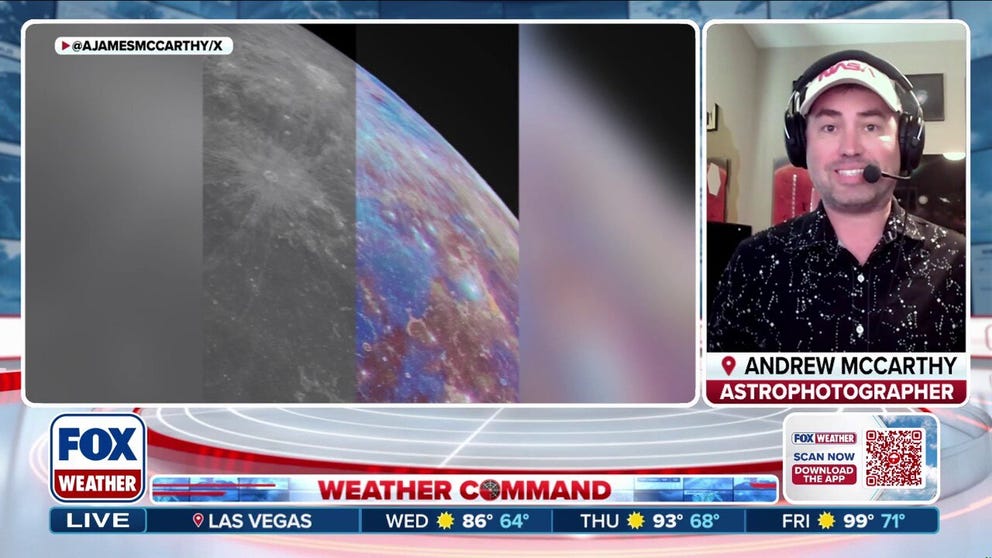
FILE: See the moon beyond the naked eye as Astrophotographer Andrew McCarthy breaks down his Artemis II collaboration
Astrophotographer Andrew McCarthy joins FOX Weather to showcase some of the iconic photos from the historic Artemis II mission. McCarthy details his collaboration with Commander Reid Wiseman and how he enhances these images to show features invisible to the naked eye.
Skywatchers, get ready — May is ending with the second full moon of the month, known as a Blue Moon.
MAY SKYWATCHING GUIDE: FROM METEOR SHOWERS TO MICROMOONS, HERE IS WHAT TO LOOK UP FOR
This rare celestial event will occur on May 31, and despite its name, the moon will not actually appear blue.
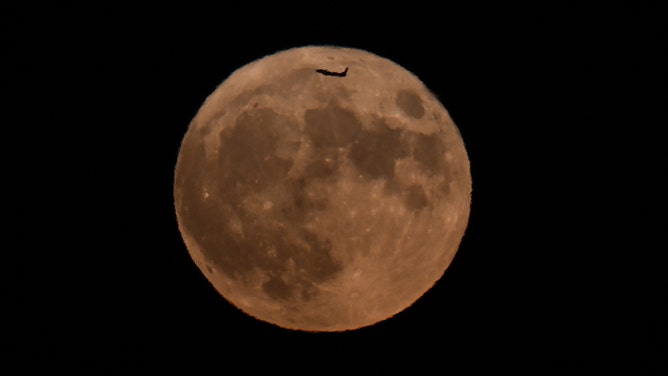
Super moon known as 'blue moon' rises over the Golden Gate Bridge in San Francisco, California, on August 30, 2023.
(Tayfun Coskun/Anadolu Agency / Getty Images)
According to the Old Farmer’s Almanac, the term Blue Moon refers to when multiple full moons occur within the same month. However, there are actually two definitions of the term, though the more common usage describes the type of moon occurring this month.
ASTEROID DISCOVERED DAYS AGO TO MAKE CLOSE EARTH FLYBY ON MONDAY
A seasonal Blue Moon refers to the third full moon in a season that contains four full moons. Meanwhile, a calendrical Blue Moon is the second full moon within a single month.
Experts say a calendrical Blue Moon is relatively rare because the moon’s phases last about 29 ½ days, while most months have 30 or 31 days. A full moon typically falls on the first or second day of a month — except in February.
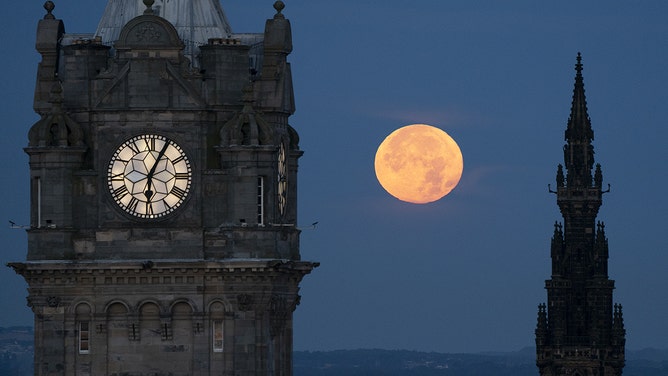
The super blue moon sets between the Balmoral Clock and the Scott Monument in Edinburgh on Thursday, August 31, 2023.
(Jane Barlow / PA Images / Getty Images)
As a result, a Blue Moon occurs about once every 30 months on average.
THE BEST CELESTIAL EVENTS IN 2026 YOU WON'T WANT TO MISS
This will be the first time two full moons have appeared in the same month since August 2023, and it won’t happen again until December 2028.
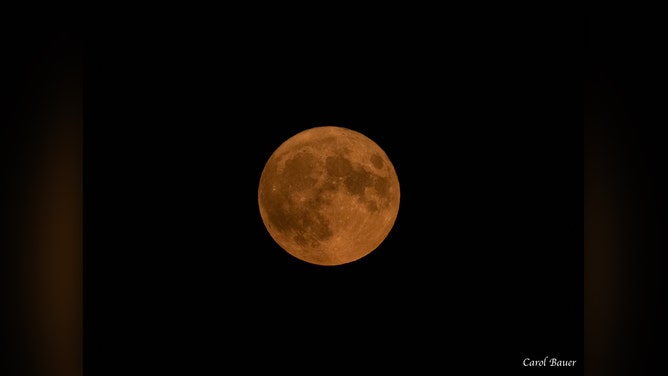
The second full moon rising over Graceville, Minnesota, on Wednesday, August 30, 2023.
(@carolbauer320 / X / FOX Weather)
Additionally, early-rising skygazers may be able to catch a glimpse of Mars and Saturn in the eastern sky. Experts recommend setting your alarm 45 to 60 minutes before sunrise and looking toward the east.
On top of that, skywatchers may also get a chance to see Venus and Jupiter as they inch closer together. The best time to view this phenomenon is about 30 to 45 minutes after sunset.
HOUSE-SIZED ASTEROID MAKES SAFE CLOSE FLYBY PAST EARTH
Even though May is ending with a lineup of exciting celestial events, skywatchers should keep their eyes on the skies as June brings even more cosmic sights to enjoy. From dazzling planetary pairings to bright moonlit nights, the season is shaping up to be a spectacular one for stargazers.