

OCEARCH tracker lights up as white sharks surge along East Coast and Gulf
Monitoring each ping allows researchers to accurately track how these apex predators navigate the ocean, providing vital insights into their seasonal migrations and daily habits.
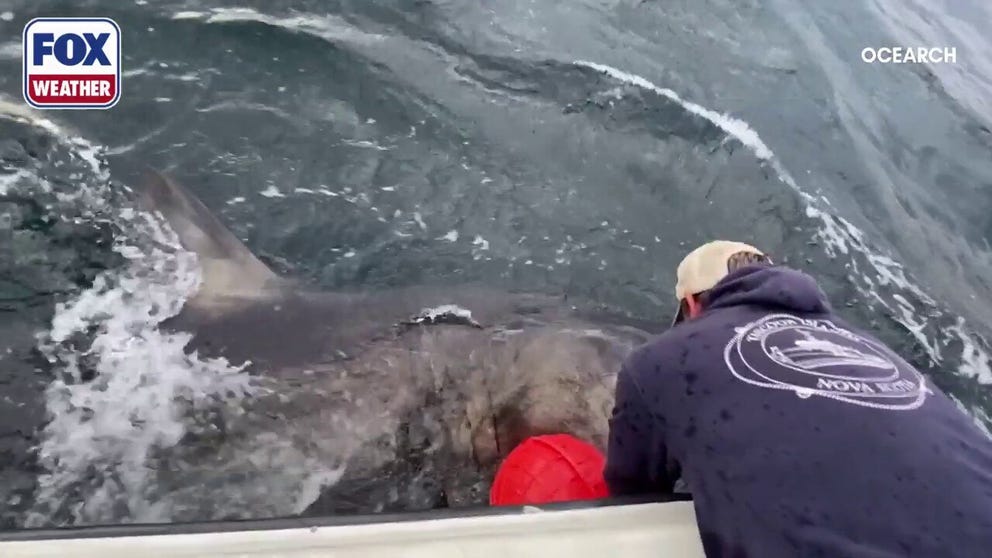
Nearly 1,400-pound great white ‘Goodall’ pings near Gulf Coast
Coming in at 13 ft 1 in and 1,393 pounds, Goodall is a female great white first tagged on September 30, 2025, and released in Mahone Bay, Nova Scotia, by the Tancook Islands Marine Field Station team in collaboration with the OCEARCH science and fishing teams. She was recently detected about 9 miles off the Gulf Coast near Port Richey, Florida, on March 17.
The past several days have been a high-traffic period for the OCEARCH Global Shark Tracker.
Various Western North Atlantic white sharks have been lighting up the tracker along the East Coast and throughout the Gulf—including the largest male great white shark the organization has ever tagged, Contender.
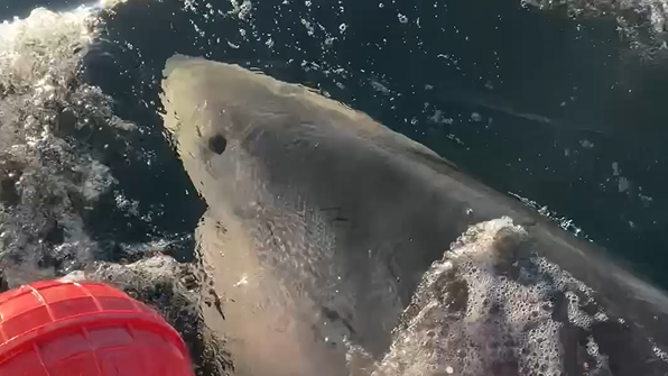
Contender, the 14-foot, 1600 pound great white shark on the day he was tagged by OCEARCH in January 2025.
(OCEARCH / FOX Weather)
He has been joined by many other familiar "faces"—or should we say jaws—cruising through the warmer Atlantic waters, such as Ernst, Ripple, Cayo, and Webster, just to name a few.
SEE IT: WILDLIFE SERVICE OFFICIALS SEIZE 1,600 POUNDS OF ILLEGAL SHARK FINS IN ALASKA
Monitoring each ping allows researchers to accurately track how these apex predators navigate the ocean, providing vital insights into their seasonal migrations and daily habits.
According to OCEARCH, tracking data from 92 white sharks shows that the Gulf serves as a consistent winter habitat for the Western North Atlantic population.
"More than half of the sharks tracked — 57 individuals across all life stages — spent significant time in the Gulf or Straits of Florida, primarily between December and May," OCEARCH said.
This discovery upends long-held beliefs about the predators' migrations in the western North Atlantic.
Here is an overview of the recent activity from OCEARCH's Global Shark Tracker:
Ernst-
Ernst, a female great white shark, was tagged in October 2025 in Mahone Bay, Nova Scotia.
On April 13, the 12-foot, 1,000-pound shark pinged near the Gulf of America, by Tampa, Florida.
Contender—
Contender, weighing nearly 1,700 pounds and measuring 13 feet 9 inches, is the largest male great white shark that OCEARCH has ever tagged.
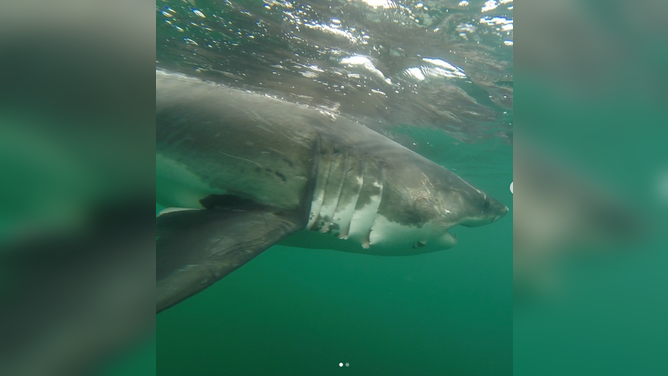
Ernst, the great white shark, has gotten the attention of scientists amid increased activity.
(OCEARCH / Instagram)
He was tagged in January 2025 off the Florida–Georgia border.
NEW RESEARCH FINDS GULF OF AMERICA IS THE IDEAL HABITAT FOR GREAT WHITE SHARKS DURING THE WINTER
Most recently, on April 14, he was detected pinging along the eastern coast of North Carolina.
Ripple—
On April 15, Ripple, who was also tagged in Mahone Bay, Nova Scotia in 2025, was tracked near the Southern Gulf of America, between Naples and the Florida Keys.
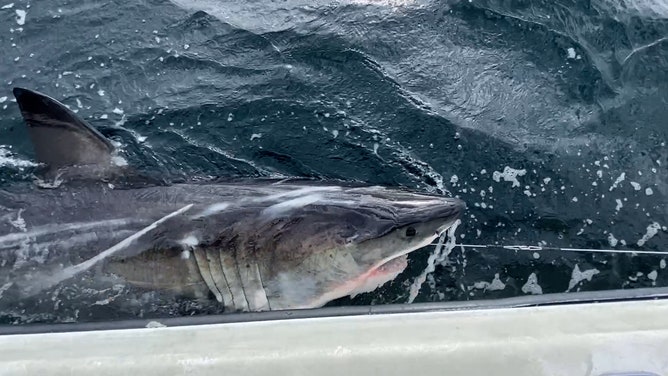
Ripple, a sub-adult male white shark was tagged on Sept. 30, in Mahone Bay off the coast of Nova Scotia.
(OCEARCH / FOX Weather)
He is a subadult male white shark, measuring over 11 feet long and nearly 780 pounds, and represents the 106 white sharks sampled in the Western North Atlantic, according to OCERACH.
Cayo—
Cayo was tracked pinging near Palm Beach, Florida, on April 10.
The female white shark was first tagged in July 2025 and weighs just under 700 pounds.
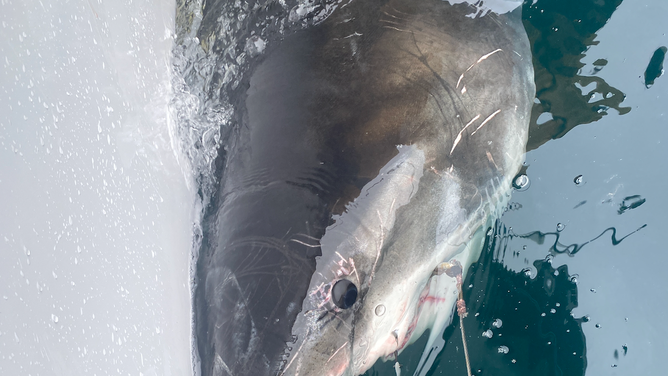
CAYO upon being tagged in Nova Scotia in July by OCEARCH.
(OCEARCH / FOX Weather)
Webster—
OCERACH classifies Webster as a "powerful" adult male white shark, weighing just over 1,000 pounds.
He is another shark first tagged in Mahone Bay, Nova Scotia, in 2025.
GREAT WHITE SHARK BELLA PINGS OFF LOUISIANA COAST IN POSSIBLE 'NEW SHARK HOTSPOT'
As of April 12, Webster was pinged near Florida's Treasure Coast, closer to the Vero Beach area.
All of these sharks, along with others, have recently logged significant miles across the western North Atlantic, and as summer approaches, many will begin shifting their movements back toward cooler northern waters in Atlantic Canada and the broader North Atlantic.
Other sharks and sea animals like him can be tracked in real-time using the free OCEARCH Global Shark Tracker app.