

Invasive jellyfish with a painful sting returns to Jersey Shore, raising public health concerns
Officials warn that this species is not native to New Jersey waters, but they have the potential to become a public health issue due to their potent sting.
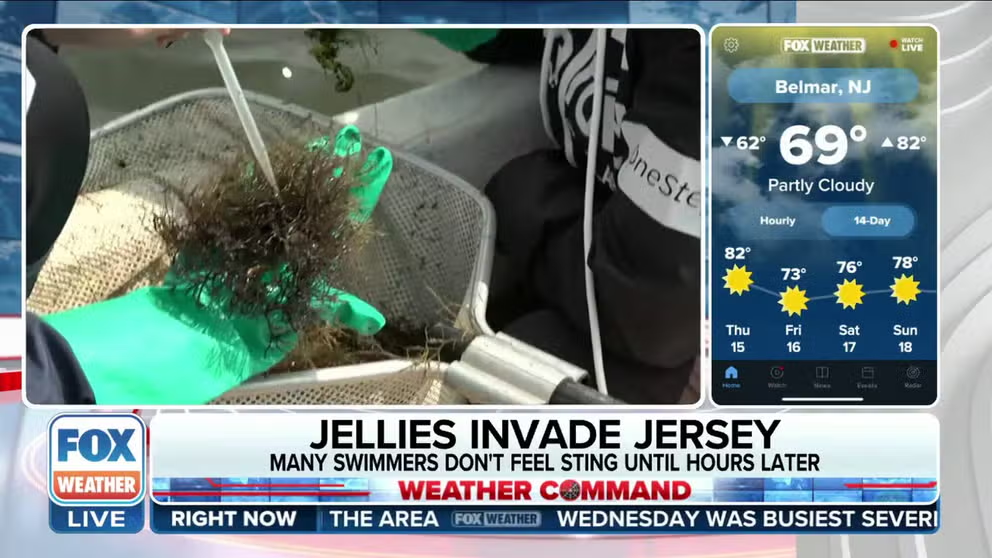
Stinging jellyfish spotted up and down Jersey Shore
People are spotting clinging, stinging jellyfish at the Jersey Shore. Paul Bologna, a Montclair State University marine biologist, is going out in Barnegat Bay collecting samples of the jellies. FOX Weather's Katie Byrne reports.
New Jersey authorities are warning residents about the return of an invasive jellyfish known for its painful sting.
The Clinging jellyfish, which carries potent venom capable of causing severe pain and other localized symptoms, has been spotted along the Jersey Shore.
Officials warn that this species is not native to New Jersey waters, but has the potential to become a public health issue due to its potent sting.
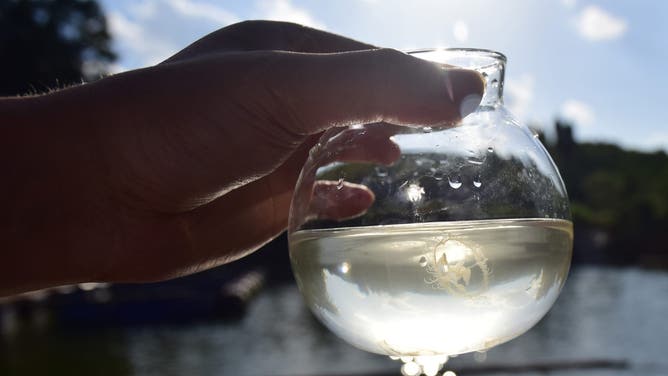
A worker looks at a tiny jellyfish in a glass.
( Costfoto/Future Publishing via Getty Images / Getty Images)
Native to the Pacific Ocean, the species has also been found from Maine to New Jersey, as well as in other parts of the world.
According to the New Jersey Department of Environmental Protection (NJDEP), Clinging jellyfish are extremely small creatures that grow to about 1 inch in diameter.
They are transparent in appearance and feature a distinctive reddish-orange to yellow cross, making them difficult to spot in the water.
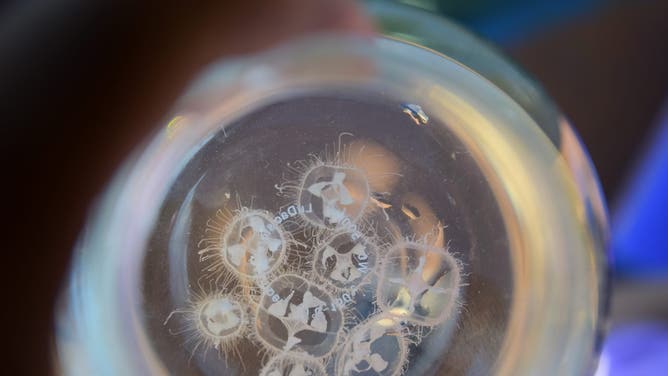
New Jersey authorities are warning residents about the return of an invasive jellyfish known for its painful sting.
(Costfoto/Future Publishing via Getty Images / Getty Images)
Residents across New Jersey have been posting on social media about an increase in sightings.
One user wrote, "Our first clinging jellyfish of the season. Be aware of the shallow estuaries with vegetation like algae where they reside."
Another posted, "Banner day on Barnegat Bay collecting clinging jellyfish. BTW, confirmed sting last Sunday of a child who spent four days in immense pain, so be careful out there."
A third user noted, "Beachwood Beach full of jellyfish today."
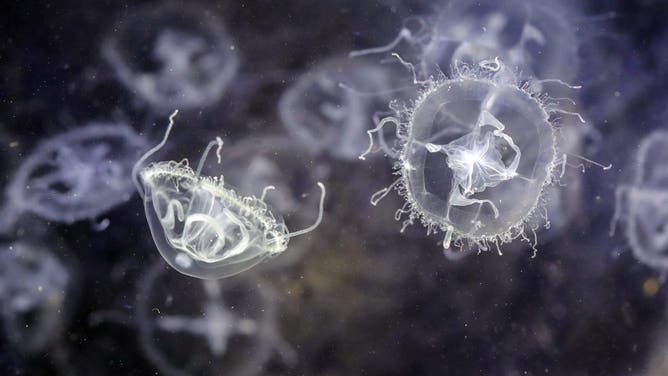
New Jersey residents have been posting on social media about the increase sightings of the Clinging jellyfish.
(TPG/Getty Images / Getty Images)
Officials say Clinging jellyfish thrive in temperate regions, particularly in shallow bays and estuarine waters where tides are not strong enough to dislodge them.
They can often be found in eelgrass beds, seaweed, and areas with abundant small marine animals.
The NJDEP says their blooms typically occur from mid-May through the summer, with adults commonly found into early August.
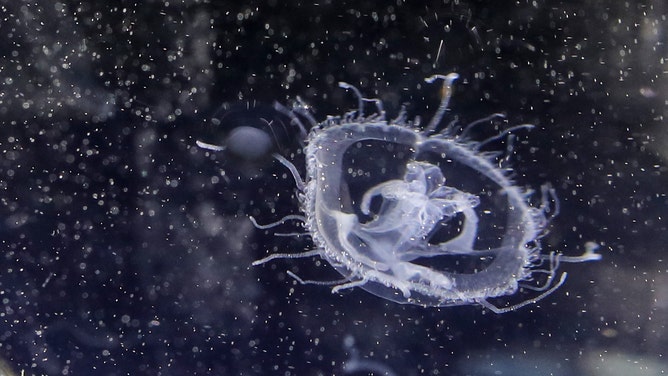
Officials warn that this species is not native to New Jersey waters, but they have the potential to become a public health issue.
(TPG/Getty Images / Getty Images)
As a result, residents should exercise extra caution during the summer months, since encounters with the jellyfish are more likely.
If someone is stung by a Clinging jellyfish, reactions can vary depending on an individual's sensitivity to the toxin.
SUMMER PEST PROBLEMS? HERE'S HOW TO SPOT AND GET RID OF COMMON HOUSEHOLD BUGS
While the sting can be extremely painful and may cause severe localized symptoms, no fatalities from Clinging jellyfish stings have been documented.