

Coldest air of winter, extreme wind chill looms for millions of Americans as big freeze descends on Eastern US
This upcoming blast of arctic air will bring potentially the coldest mornings of winter so far to cities like New York, Washington D.C. and Pittsburgh on Monday and Tuesday.
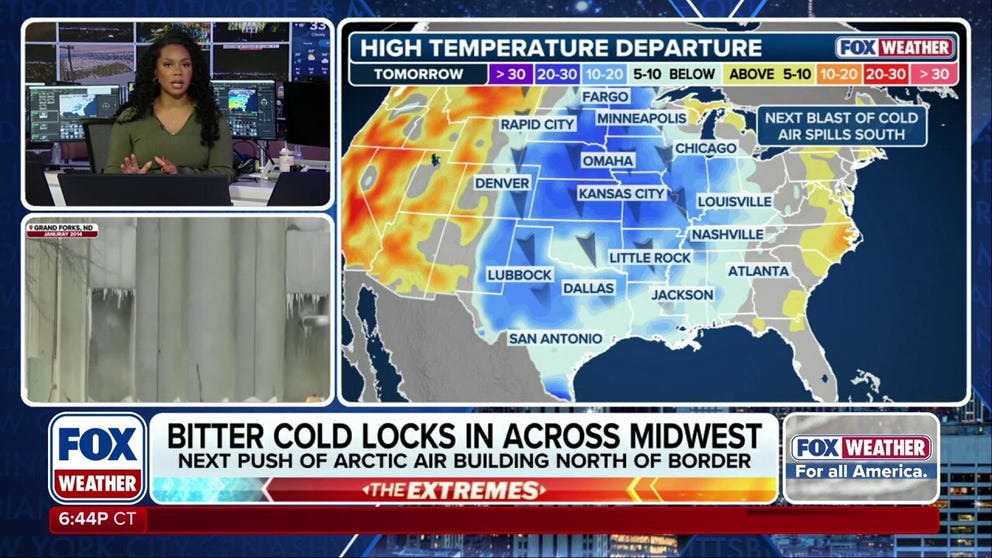
Bitter cold locked into the Eastern US and continues through the next week
Winter weather has exploded as eastern portion of the U.S. are facing some of the coldest temperatures of the season, from Minnesota to Florida. Millions of Americans will face below freezing temperatures into next week as cities including New York City, Washington D.C. and Pittsburgh could see the coldest temperatures of the season so far.
Another push of arctic air is expected to dive out of Canada and unleash a big freeze to millions of Americans in the Eastern U.S., as this week's frigid temperatures are just an introduction to a prolonged stretch of dangerous cold to come.
This bitter descent will pack a punch with its dangerous wind chills that will impact nearly 100 million Americans facing sub-zero temperatures.
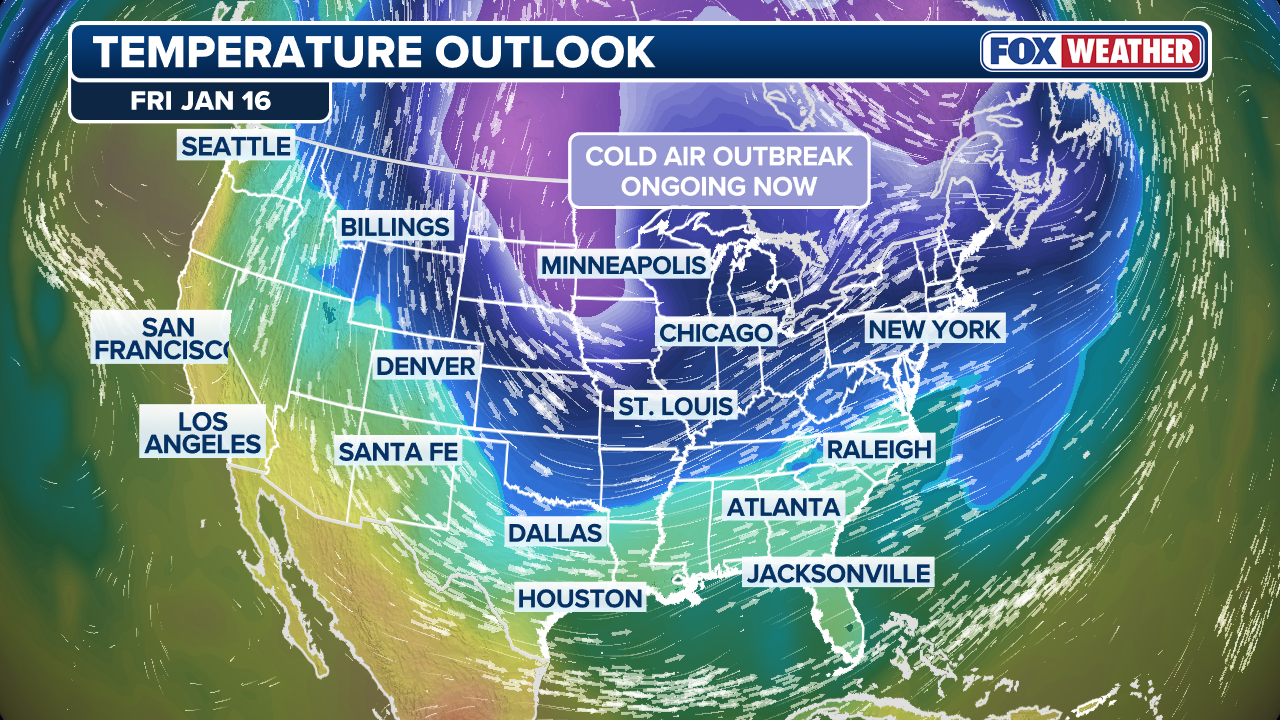
Winter weather has already taken hold in the U.S. with more cold to come in the season. Soon, courtesy of a deep dip in the jet stream influenced by a disrupted Polar Vortex, even more arctic air will linger throughout January.
(FOX Weather)
Ongoing frigid temperatures are just the start, as millions of Americans from the Dakotas to Pennsylvania will feel even colder air this weekend.
A reinforcing shot of bitterly cold air drops into the Central states on Saturday.
HOLIDAY WEEKEND SNOW EXPECTED FOR NORTHEASTERN I-95 CORRIDOR
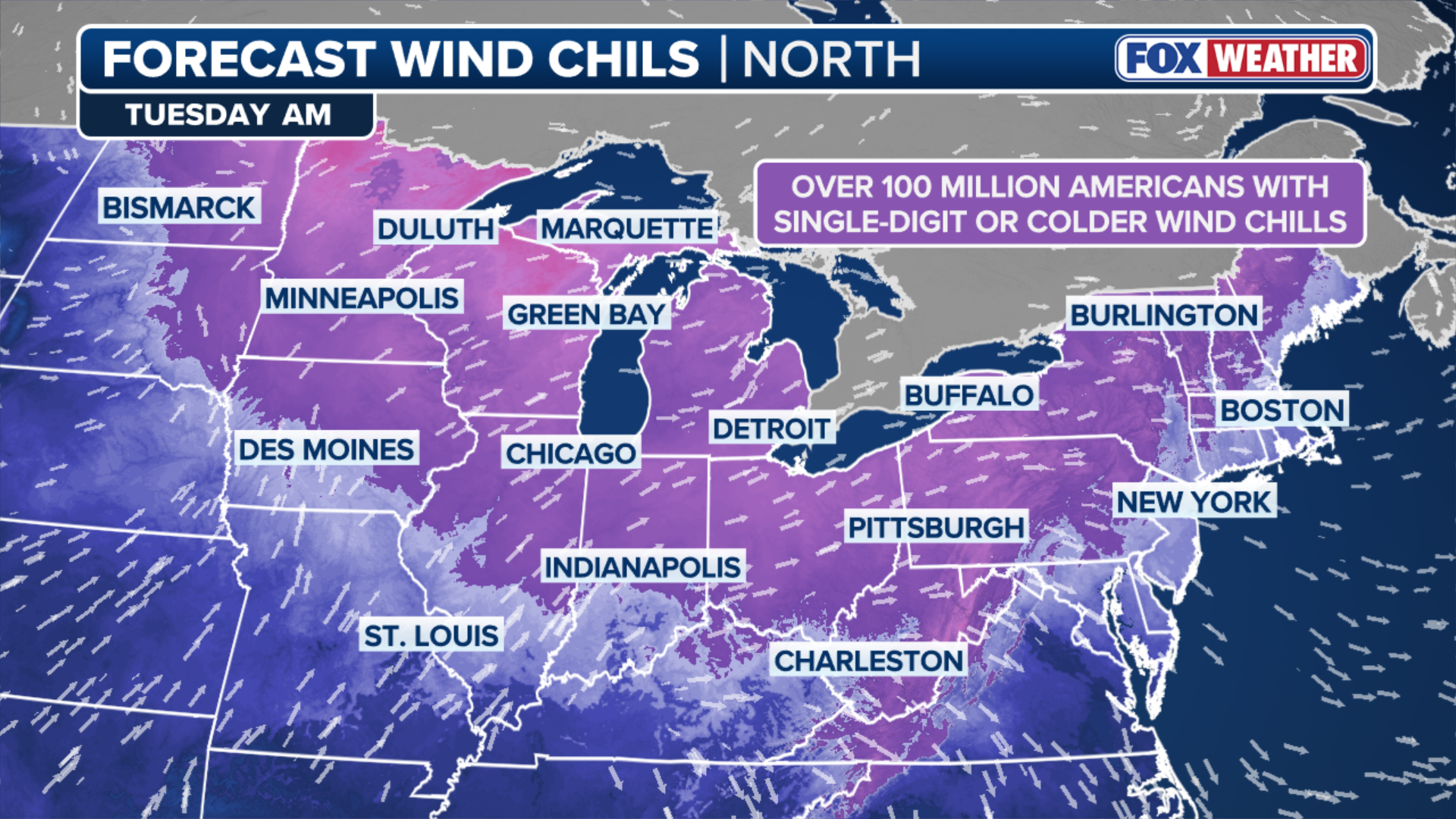
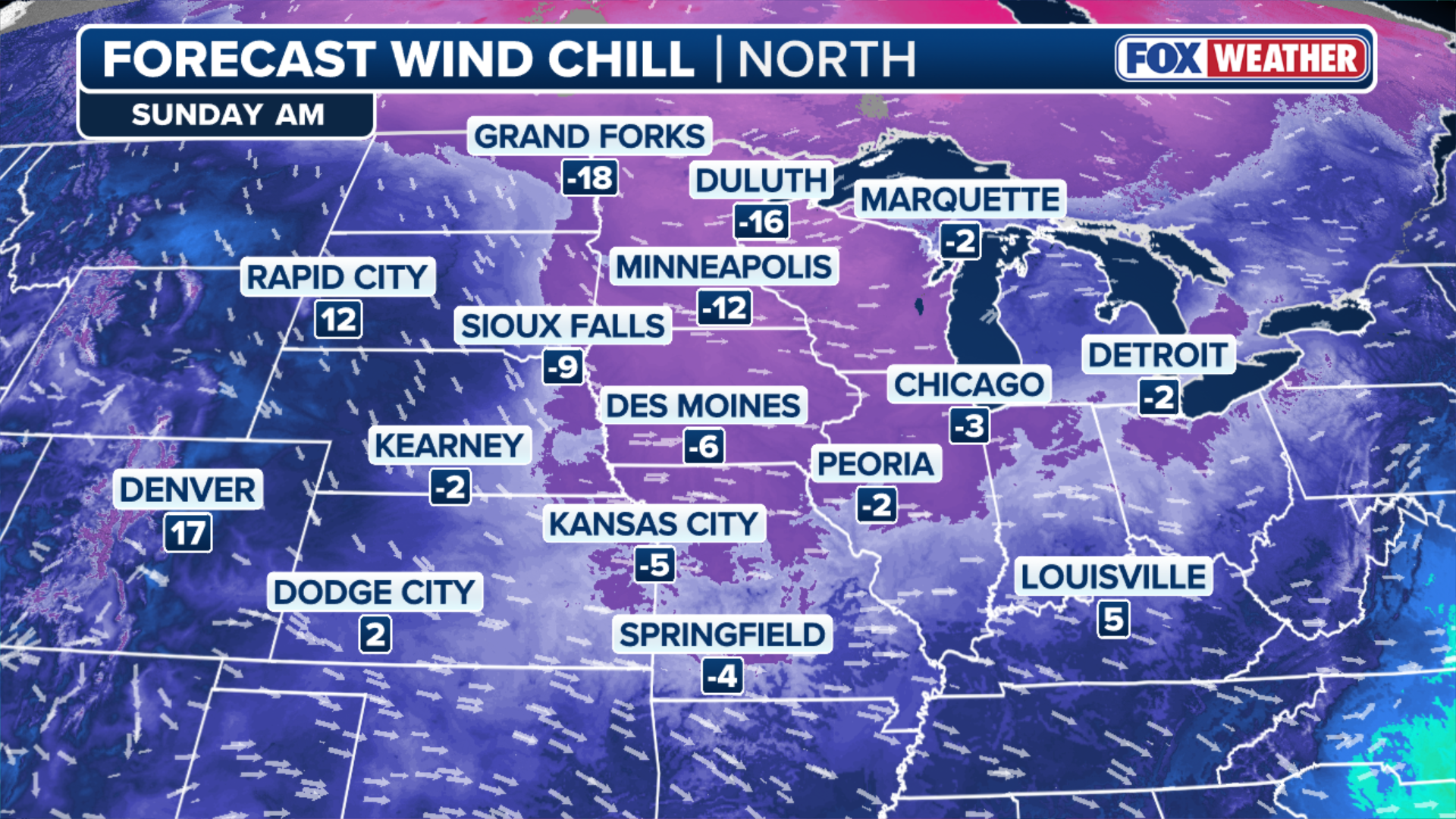
Highs across the Dakotas, Iowa, and Minnesota may struggle to reach 10 degrees at the warmest. By Sunday morning, sub-zero wind chills will extend across roughly a dozen states, stretching from the eastern Dakotas to far western Pennsylvania.
(FOX Weather)
Highs on Sunday may not crack the freezing mark as far south as Tennessee. Meanwhile, Atlanta will remain in the 40s and North Florida in the 50s. Farther north, cities such as Chicago, Detroit, and Minneapolis will see highs languish in the teens.
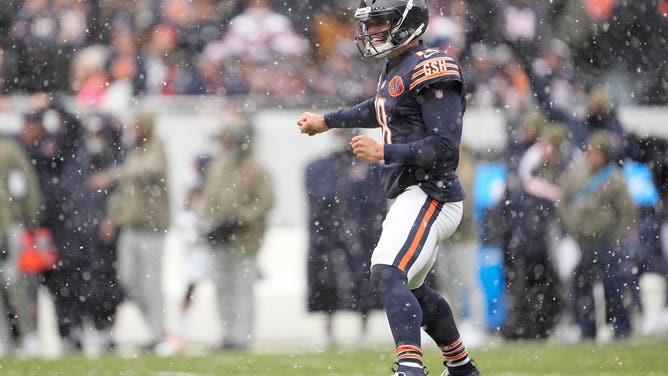
CHICAGO, ILLINOIS - NOVEMBER 09: Caleb Williams #18 of the Chicago Bears celebrates after a touchdown at Soldier Field on November 09, 2025 in Chicago, Illinois. The Bears face off against the Los Angeles Rams in Chicago on Sunday, with current forecasts suggesting temperatures in the teens with wind chills hovering near zero.
(Patrick McDermott / Getty Images)
Sunday evening’s NFL Divisional Playoff game between the Los Angeles Rams and the Chicago Bears will have a high risk of weather impact (ROWI), as current forecasts suggest temperatures in the teens with wind chills hovering near zero.
RAMS VS. BEARS PLAYOFF GAME COULD BREAK RECORDS FOR ONE OF COLDEST
(FOX Weather)
The upcoming blast of arctic air will bring the coldest mornings to cities like New York, Washington D.C. and Pittsburgh, which could be the coldest of the winter thus far on Monday and Tuesday.
After sub-freezing temperatures dipped into the south and along the Gulf Coast this week, the region will once again face the cold, unfortunate news for iguanas recovering from this week's freeze.
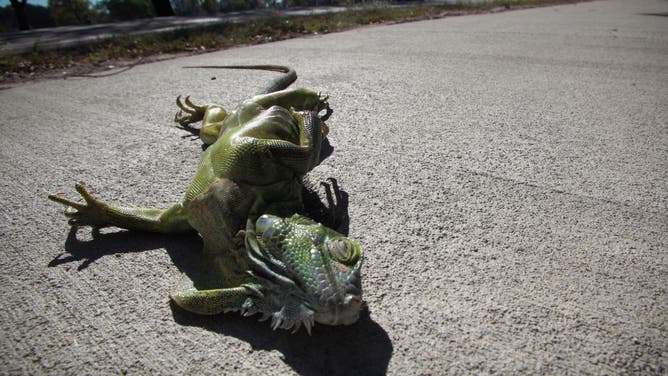
Iguanas typically begin to lose mobility when temperatures reach 50 degrees. Below that, the cold can completely immobilize them.
((Cristobal Herrera/South Florida Sun Sentinel/Tribune News Service via Getty Images) / Getty Images)
DANGEROUS WIND CHILL
Cities including Pittsburgh, Indianapolis, Chicago, and Des Moines will all see actual air temperatures in the single digits to kick off the work week.
Combined with the wind, this will be a recipe for dangerous wind chills. The Twin Cities will wake up to wind chills below -20 degrees on Monday.
WHAT DOES THE WIND CHILL MEAN?
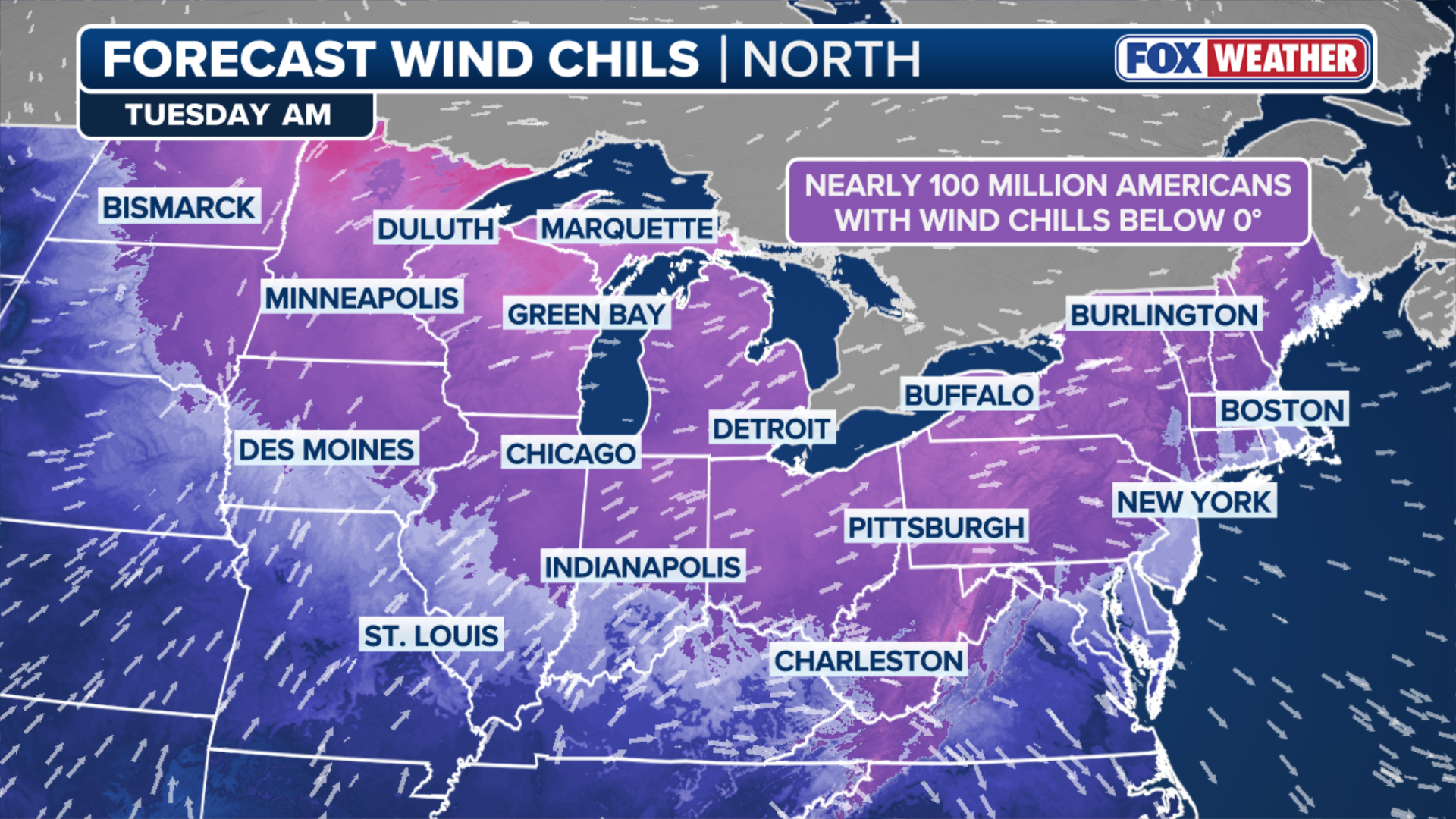
Across northern Minnesota and Wisconsin, wind chill values may drop as low as -40 degrees. Further south, St. Louis, Detroit, Louisville, Pittsburgh, and Burlington, Vermont, will all experience sub-zero wind chills.
(FOX Weather)
According to the FOX Forecast Center, nearly 100 million Americans will face wind chills below zero on Tuesday.
Long-range forecasts suggest that most of the affected areas across the Eastern United States should remain bundled up as the cold pattern packing below-average temperatures is forecast to persist through the end of the month and into February.