

Lightning-sparked wildfires rage across Oregon and Washington after mid-July severe storms
Three of the Northwest's most impactful wildfires were ignited by lightning during a mid-July outbreak of thunderstorms across Oregon and Washington.
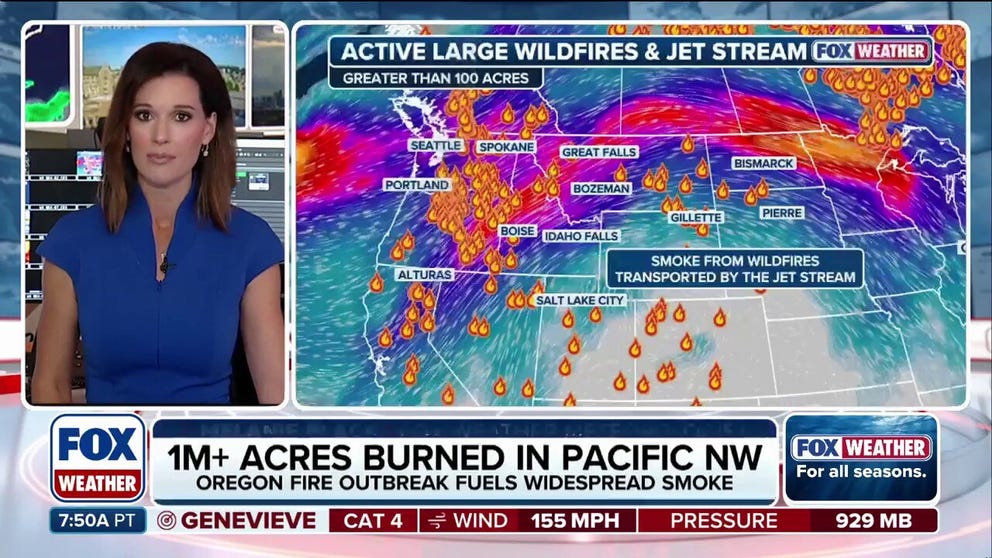
Firefighters race to contain wildfires that have exploded across the Northwest
Firefighters across the Pacific Northwest are battling multiple lightning-caused wildfires that have scorched hundreds of thousands of acres. Thick smoke has created unhealthy air quality across parts of Oregon, Washington and Idaho.
Wildfires ignited by mid-July severe weather continue to spread across Oregon and Washington as persistent heat, dry fuel and gusty winds challenge firefighters across the mountainous terrain of the Northwest.
The three largest and highest-priority wildfires burning across the region all share a common origin: lightning.
WHY DRY THUNDERSTORMS POSE WILDFIRE, DUST STORM RISKS
A series of dry thunderstorms swept across the Pacific Northwest in mid-July, producing thousands of lightning strikes that ignited dozens of wildfires across Oregon and Washington, according to the National Interagency Fire Center (NIFC) and regional incident management teams.
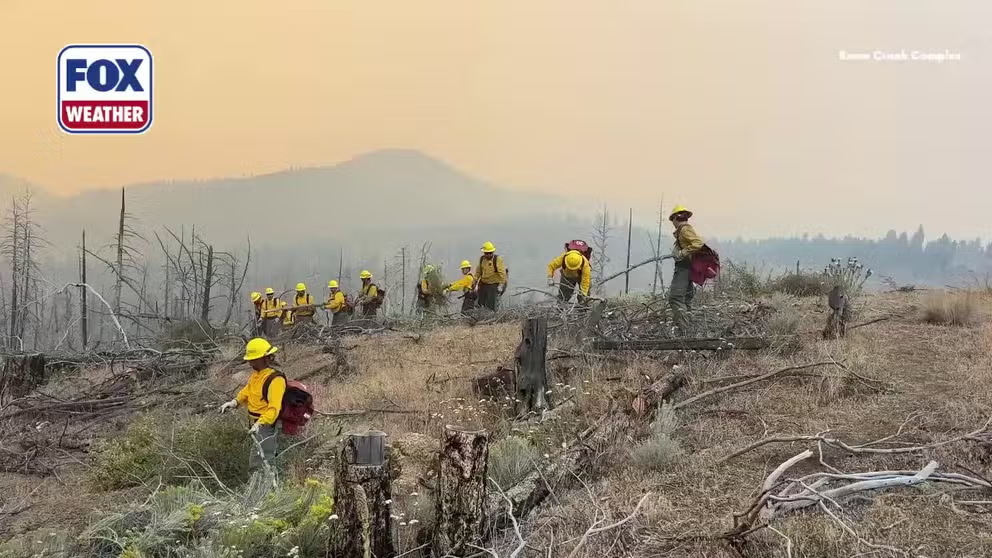
Crews fight to contain the Rowe Creek Complex fire
As part of the Rowe Creek Complex suppression effort, firefighters are doing far more than cutting containment lines in Oregon. In steep, rugged terrain, crews have spent countless hours clearing branches, brush, downed trees and hazardous snags from the fire's edge to build stronger, more defensible barriers before the flames arrive.
Dangerous fire weather ranging from hot temperatures, dry vegetation, low humidity and gusty winds allowed the lightning-sparked fires to spread rapidly across the region.
The Oregon State Fire Marshall dispatched a firefighting task force to Baker County in northeastern Oregon overnight Monday after a new wildfire sparked over the weekend, as multiple evacuation orders remain in effect across parts of Oregon, Washington and Idaho.
WILDFIRE SMOKE FROM THE NORTHWEST SWEEPS ACROSS THE US TO MID-ATLANTIC AND SOUTHEAST
As of Monday, the NIFC reported more than 30 large active wildfires burning across the Northwest that have collectively consumed nearly one million acres, including 21 fires in Oregon alone. Fire officials also reported 10 new fire starts and five new large incidents over the previous 24 hours as wildfire activity remained elevated across the region.
 Active Wildfires in the West.
(FOX Weather)
The surge in wildfire activity prompted the NIFC to raise the nation to Preparedness Level 5 — the highest level on the five-tier scale —on July 18. The designation remains in effect until wildfire activity and the demand for crews, aircraft and equipment decline nationwide.
HOW THE LAY OF THE LAND AFFECTS WILDFIRE BEHAVIOR
According to the FOX Forecast Center, winds are expected to ease through the week, reducing fire weather conditions. However, no rain is expected in the Northwest over the next week.
Smoke from the fires will continue to degrade air quality across Oregon, Washington, Idaho, Montana and perhaps as far east as North Dakota. Boise, Idaho, has been under consistently degrading air quality, staying firmly in the Very Unhealthy category.
The FOX Forecast Center expects the heaviest smoke to shift eastward across the country through the week. However, most of the smoke is forecast to stay high in the atmosphere, which will prevent air quality from declining across much of the eastern U.S., unlike the heavy band of Canadian wildfire smoke that mixed down closer to the surface earlier in July.
 Wildfires in Oregon.
(FOX Weather)
Rowe Creek Complex
As the region's largest active fire, the Rowe Creek Complex fire has burned over 200,000 acres in north-central Oregon.
The Rowe Creek Complex was sparked by lightning on July 15 and has since grown into one of the largest active wildfires in the country, fueled by hot, dry conditions and wind-driven fire behavior.
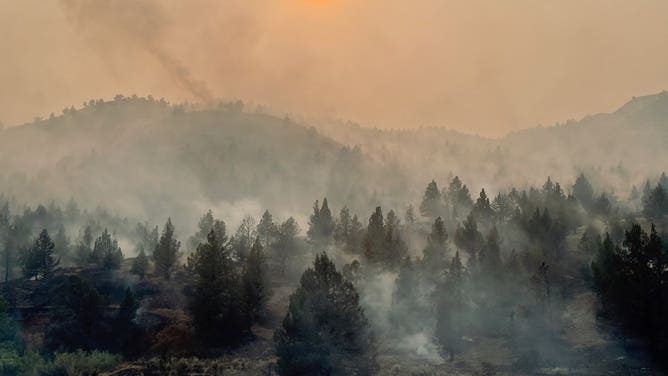
Ignited by lightning during a mid-July thunderstorm outbreak, the Rowe Creek Complex has rapidly expanded to more than 208,000 acres amid hot, dry and windy conditions.
(Rowe Creek Complex)
According to the latest update from the Rowe Creek Complex Incident Management Team, the wildfire has scorched 208,759 acres and is 31% contained, as more than 1,100 firefighters continue working to strengthen containment lines ahead of another day of critical fire weather.
DEW POINT VS. HUMIDITY: WHICH ONE IS A BETTER MEASURE OF HOW MUGGY THE AIR FEELS?
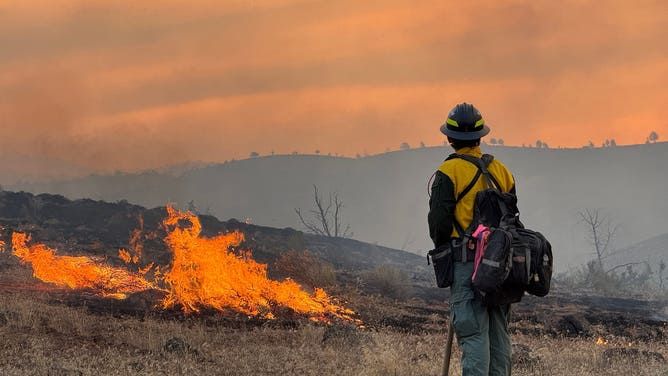
More than 1,100 firefighters have been battling the Rowe Creek Complex since it was ignited by lightning on July 15, working to contain one of the nation's largest active wildfires
(Rowe Creek Complex)
According to the Oregon State Fire Marshal, the fire is burning across Wheeler, Wasco and Crook counties, about 10 miles south of Fossil, in central Oregon, and has triggered hundreds of evacuations across impacted areas.
The Rowe Creek Complex consists of multiple lightning-caused fires sparked by thunderstorms on July 15.
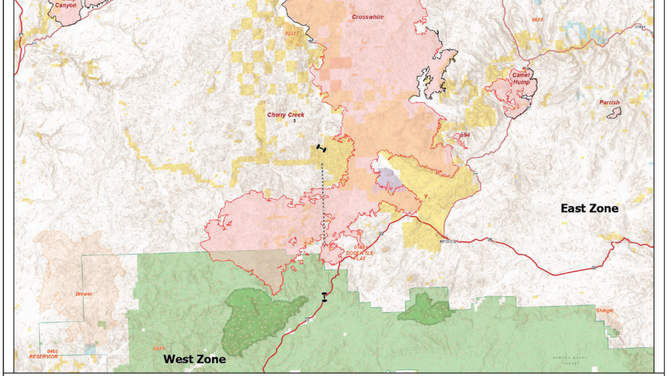
The map shows the Crosswhite Fire has grown into the largest fire within the Rowe Creek Complex, accounting for much of the complex's nearly 199,000-acre footprint as firefighters continue working to strengthen containment of the incident.
(Rowe Creek Complex Incident Management Team / FOX Weather)
As the fires grew, several merged into the Crosswhite Fire, which has since become the largest fire in the complex, according to the Rowe Creek Complex Incident Management Team.
The Rowe Creek Complex has also impacted portions of the Ochoco National Forest, prompting the U.S. Forest Service to expand emergency closures across national forest lands, roads and trails as firefighters continue to battle the blaze.
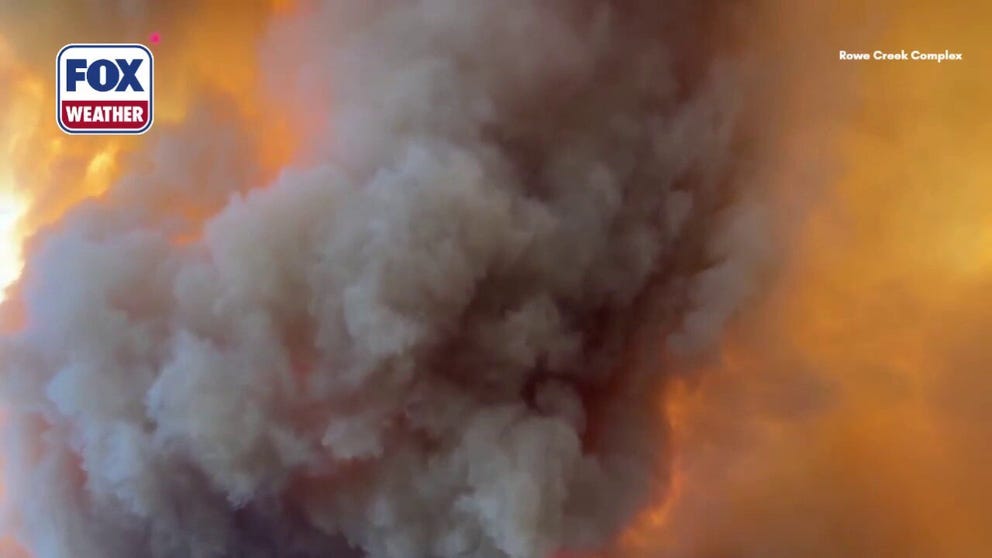
Rowe Creek Complex Fire sends massive smoke plume over Central Oregon
A massive smoke plume blankets the Oregon sky as the Rowe Creek Complex has grown to more than 200,000 acres after being sparked by lightning earlier this month.
Akawa Butte Fire
While the Rowe Creek Complex continues to dominate the Northwest in size, the Akawa Butte Fire has become the region's most pressing wildfire threat because of its proximity to homes and communities in Central Oregon.
Dubbed the nation's top firefighting priority by the National Interagency Fire Center, more than 1,000 firefighters are battling the Akawa Butte Fire near Sisters, a small mountain community about 20 miles northwest of Bend.
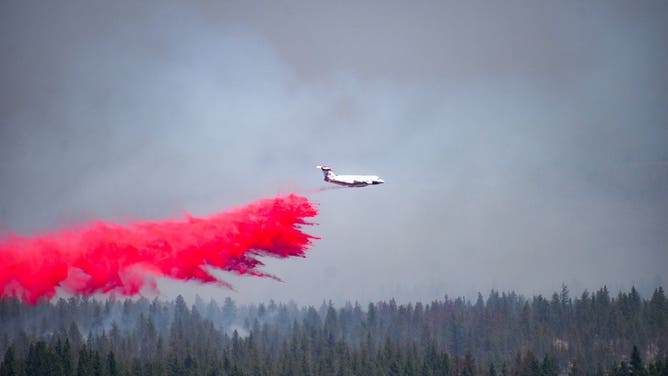
More than 1,000 firefighters are battling the Akawa Butte Fire, which has been designated the nation's top firefighting priority by the National Interagency Fire Center because of the threat it poses to nearby communities including Sisters, Oregon.
(Akawa Butte Fire)
The Akawa Butte Fire has destroyed two homes as firefighters work to protect additional residences and infrastructure near Sisters.
According to the Oregon State Fire Marshal, the fire has burned more than 27,000 acres and is just 5% contained as of the latest update.
THE COMPLEX RELATIONSHIP BETWEEN WILDFIRES AND WILDLIFE
The Akawa Butte Fire was sparked by lightning during a series of thunderstorms that ignited multiple fires across Central Oregon in mid-July.
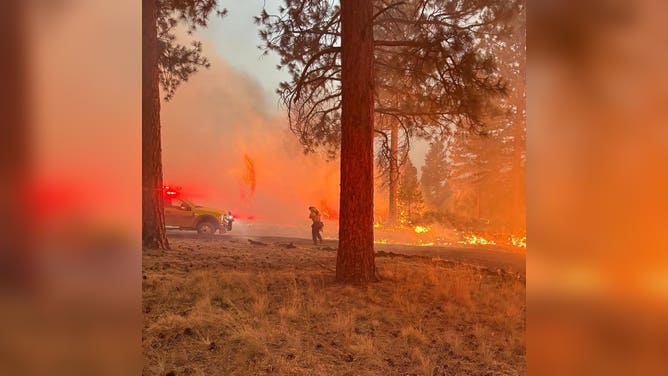
The Akawa Butte Fire has burned more than 26,000 acres across Deschutes and Jefferson counties in Oregon since it was ignited by lightning on July 16.
(Akawa Butte Fire)
Kaiser Canyon Fire
While Oregon is home to the Northwest's two largest wildfire priorities, neighboring Washington is battling a major blaze of its own.
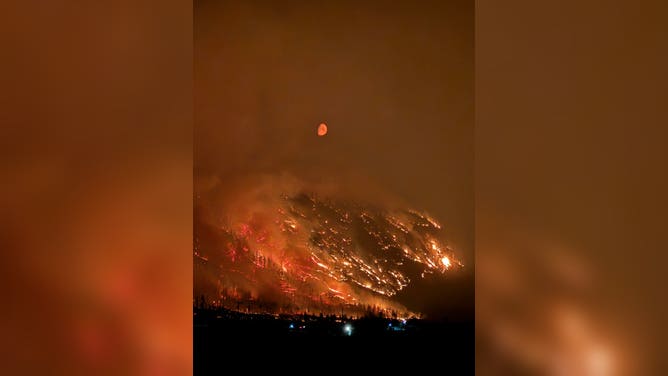
The Kaiser Canyon Fire was sparked by lightning on July 16 and is burning on the Confederated Tribes of the Colville Reservation near Nespelem in north-central Washington, spanning Okanogan and Ferry counties.
(Colville Tribal Broadcasts, News and Information)
The Kaiser Canyon Fire has grown into the state's largest active wildfire, scorching more than 110,000 acres on the Colville Indian Reservation in north-central Washington.
 Wildfires in Washington.
(FOX Weather)
According to the Kaiser Canyon Fire Incident Management Team, the lightning-caused wildfire has burned more than 121,000 acres and is 9% contained. More than 760 personnel are assigned to the incident as firefighters continue working to strengthen containment lines.
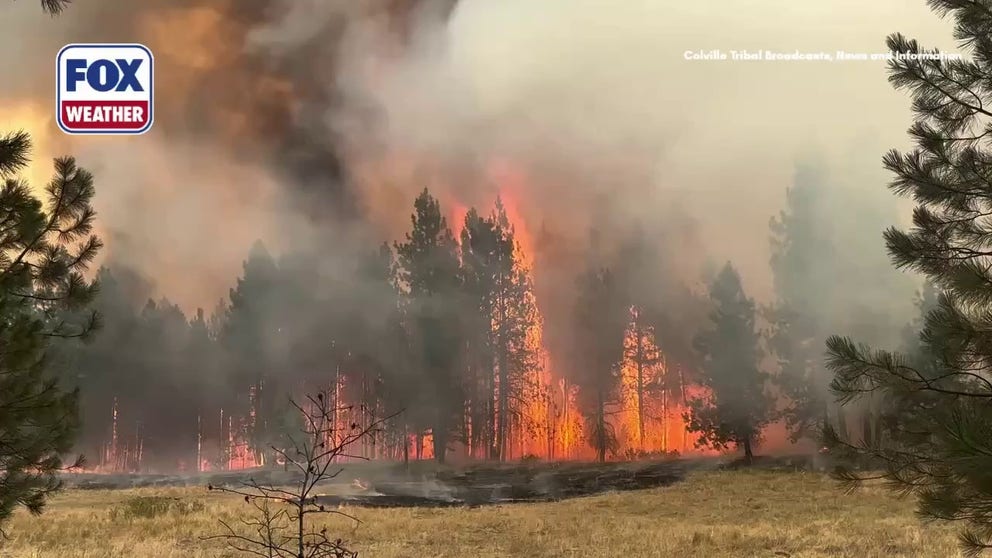
Intense fire behavior captured on Washington's Kaiser Canyon Fire
Video captures the intense fire behavior firefighters are battling on Washington's Kaiser Canyon Fire, a lightning-caused wildfire that has burned more than 110,000 acres on the Colville Indian Reservation.
The Kaiser Canyon Fire was sparked by lightning on July 16 and is burning in Okanogan County in north-central Washington, according to InciWeb.