

Venomous spiders lurking inside DC government buildings have surprising benefits, expert says
Unlike spiders commonly seen spinning webs around homes, Mediterranean recluses are nocturnal and extremely shy, often disappearing into cracks and crevices when disturbed.
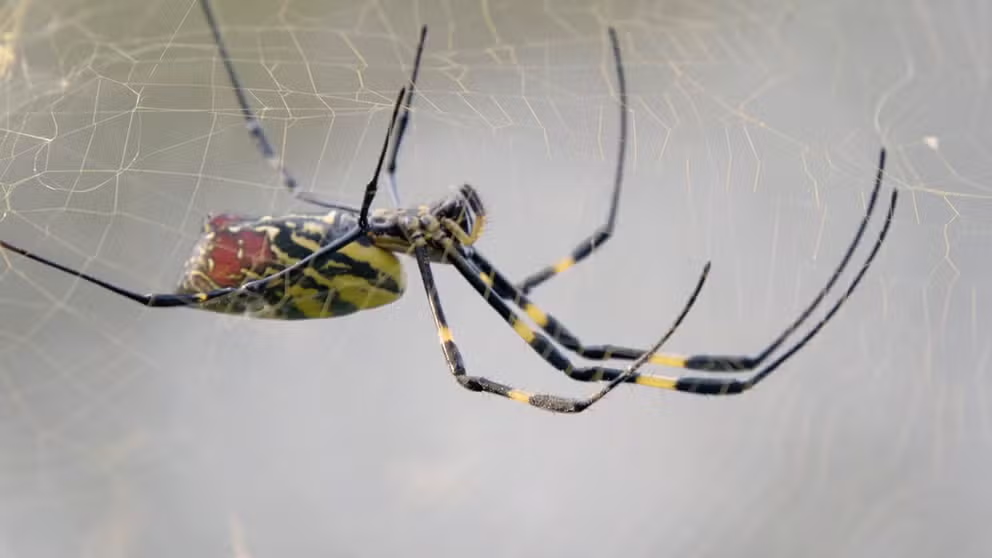
FILE: East Asian Joro spider likely to spread beyond Georgia
FILE: Joro spiders can survive better in a brief freeze, suggesting they can exist in a colder climatic region than the Southeast.
WASHINGTON, D.C. – A secretive, venomous spider native to the Mediterranean has been discovered living inside government buildings in Washington, D.C., raising questions about how the unusual critter arrived in the nation's capital and whether they pose a danger to people.
Known as the Mediterranean recluse spider, the species originates from parts of Europe and North Africa and has a history of turning up in buildings far from its native habitat.
SCIENTISTS DISCOVER BIZARRE NEW HAPPY-FACED SPIDER WITH UNIQUE GENETICS IN INDIA
A study published in American Entomologist documented the spiders in 14 federal government buildings in the Washington, D.C., area over a 10-year period, with researchers finding them primarily in basements, foundation walls and other underground spaces.
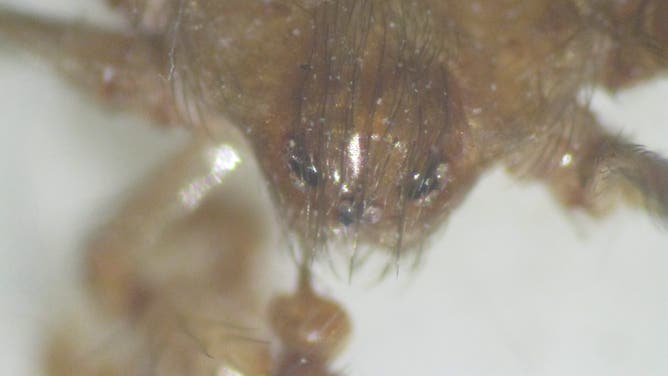
A close-up of the Mediterranean recluse spider.
(Dr. Gale Ridge / FOX Weather)
Unlike spiders commonly seen spinning webs around homes, Mediterranean recluses are nocturnal and extremely shy, often disappearing into cracks and crevices when disturbed.
Dr. Gale E. Ridge, an associate scientist at the Connecticut Agricultural Experiment Station, told FOX Weather that these spiders can actually be beneficial because they hunt common building pests, including cockroaches and termites.
GLOWING BLUE SPIDER AMONG DOZENS OF UNKNOWN SPECIES DISCOVERED IN UNCHARTED ANGOLA HIGHLANDS
Why are these spiders turning up in Washington, D.C.?
Ridge explained that the constant movement of people and their belongings around the world could help explain why Mediterranean recluse spiders have established themselves inside buildings in the nation's capital.
Washington is home to numerous government agencies, museums and international institutions, where employees and their families frequently relocate from overseas. For example, State Department employees regularly move between international assignments, often bringing furniture and personal belongings with them.
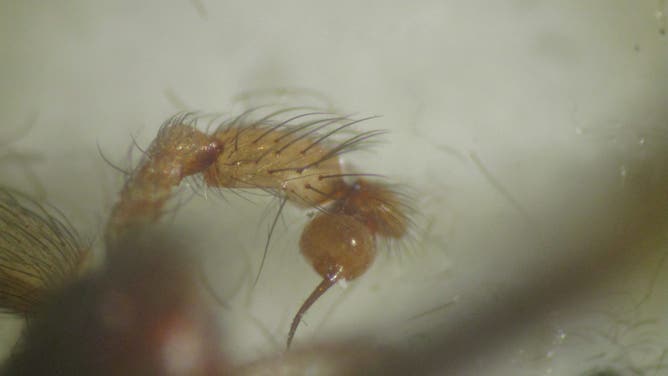
A close-up of the Mediterranean recluse spider.
(Dr. Gale Ridge / FOX Weather)
These movements can unintentionally transport spiders into new environments, where they may remain hidden for years.
The species has also been documented in other parts of North America, particularly inside large institutional and commercial buildings.
Are Mediterranean recluse spiders dangerous?
Although Mediterranean recluse spiders are venomous, Ridge emphasized that their presence does not necessarily represent a significant public health threat.
Like other recluse spiders, they produce venom containing enzymes that help them subdue prey and break down the internal tissues of insects, according to Ridge.
However, these spiders generally avoid human contact and are more likely to retreat into hiding than confront people.

United States Capitol Building in Washington DC public building
(eric1513 / Getty Images)
Ridge explained that producing venom requires considerable energy, and spiders use it primarily for hunting or defending themselves when threatened.
She also said she was unaware of any confirmed cases involving a person being envenomated by a Mediterranean recluse spider.
THESE BEETLES CAN SENSE WILDFIRES AND RACE TOWARD THE FLAMES WHILE TICKS FACE A DIFFERENT FATE
Despite their venom, researchers have not found evidence that the populations documented inside Washington buildings pose a significant public health concern.
Connecticut records its own unusual spider discovery
The species has also attracted attention in Connecticut, where the Connecticut Agricultural Experiment Station documented its first state record of the Mediterranean recluse spider in 2025, according to the agency's official records.
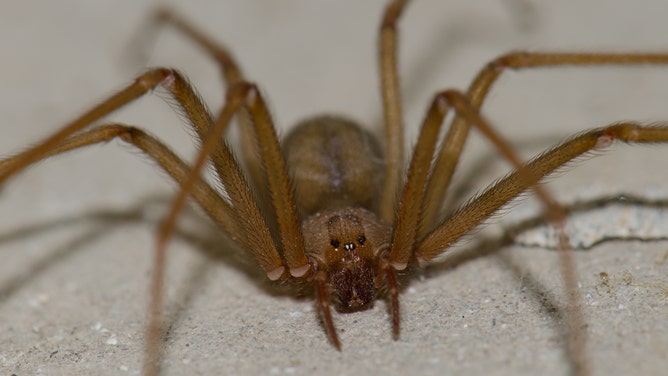
Mediterranean recluse spider (Loxosceles rufescens). Pajonales. Integral Natural Reserve of Inagua. Tejeda. Gran Canaria. Canary Islands. Spain.
(Víctor Suárez Naranjo / Getty Images)
The discovery highlights how easily unusual spiders can go unnoticed, particularly when they spend most of their time in dark, secluded areas.
Ridge noted that Connecticut is home to more than 600 spider species, many of which play important roles in controlling insect populations.
DRIVER RECOUNTS TERRIFYING ENCOUNTER WITH CHARGING BISON IN YELLOWSTONE NATIONAL PARK
Mediterranean recluses can be especially difficult to identify because they resemble other recluse species, including the better-known brown recluse.
One distinguishing characteristic is their unusual eye arrangement: six eyes grouped into three pairs, forming a triangular pattern.
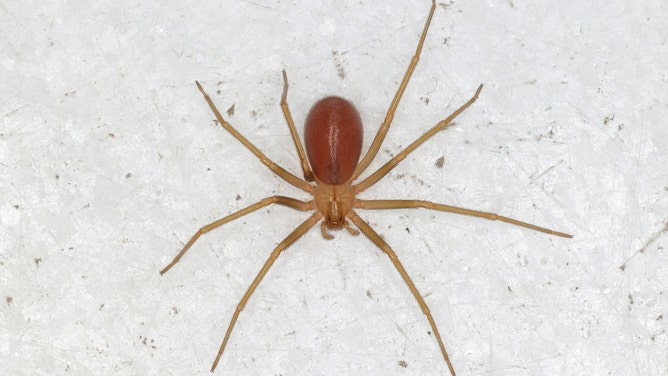
Loxosceles rufescens the Mediterranean recluse spider,violin spider, originated in the Mediterranean region.
(Frank Buchter / Getty Images)
Ridge recommends contacting an expert if someone suspects they have encountered one. A clear photograph can help, but preserving a specimen safely for professional identification can provide more reliable results.
While the thought of venomous spiders quietly inhabiting government buildings may sound alarming, Ridge emphasized the important role spiders play in keeping insect populations under control.
"We'd be 6 feet deep in flies worldwide without spiders," Ridge said.