

Scientists discover bizarre new happy-faced spider with unique genetics in India
Happy-faced spiders are found in highly elevated and damp environments.
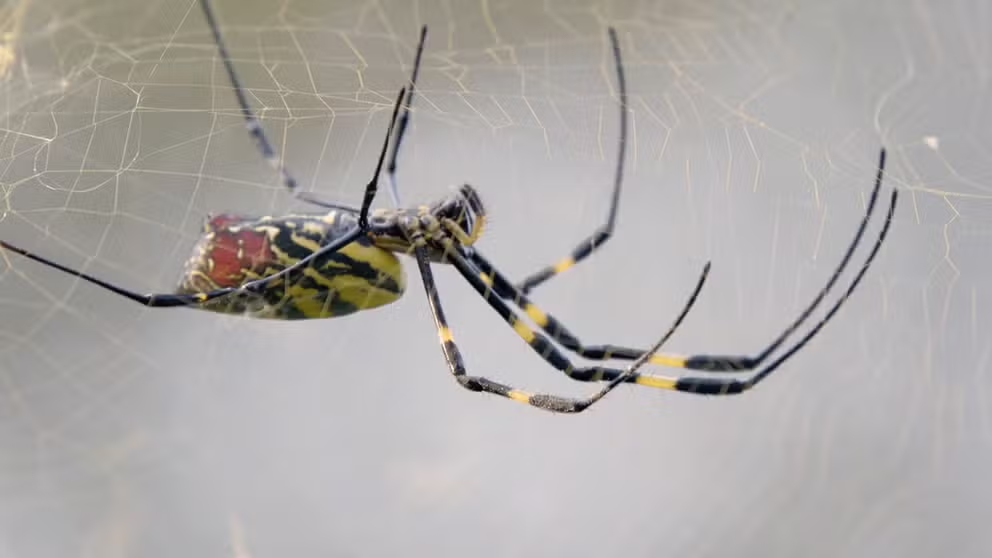
FILE: East Asian Joro spider likely to spread beyond Georgia
Joro spiders can survive better in a brief freeze, suggesting they can exist in a colder climatic region than the Southeast.
INDIA – A tiny, creepy species of spider known as the happy-face spider has recently been discovered in India.
Known for its iconic array of color patterns, the happy-face spider gets its name from patterns that resemble a smiling face.
The new species, Theridion Himalayana, which belongs to the spider family Theridiidae, is just one of 577 others; it is known as one of the most diverse due to several significant traits.
GLOWING BLUE SPIDER AMONG DOZENS OF UNKNOWN SPECIES DISCOVERED IN UNCHARTED ANGOLA HIGHLANDS
These spiders are found in highly elevated and damp environments. The happy-face spider was first discovered in 1900 on the Hawaiian Islands.

UTTARAKHAND, INDIA - 2016/10/16: The valley of the Ganges River, one of the world's longest river, winds through rice fields in Western Himalayas. The river which rises in the Indian state of Uttarakhand, not far from the Chinese border, flows on 2,525 km to the south and enters Bangladesh where it empties into the Bay of Bengal in the Indian Ocean.
(Thierry Falise/LightRocket / Getty Images)
Officials captured and examined 61 spiders in total.
Upon the discovery of this new species in the Western Himalayas of India, the spider exhibited polymorphism in both males and females, with patterns resembling a smiling face and dots in red, black and white, in different styles.
Notably, these spiders can have 32 different color/pattern variations, including the iconic smiling face on their backs.
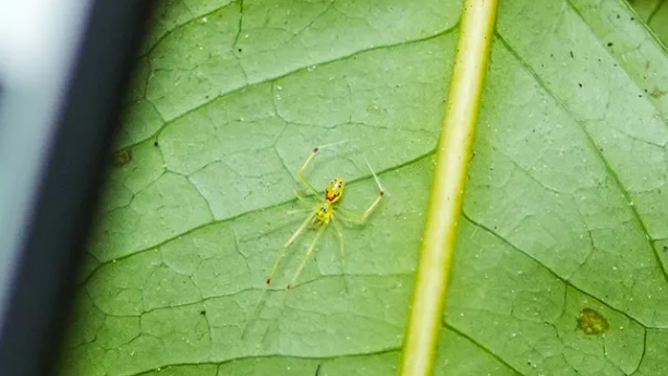
Happy face spiders can be seen in the Kīpahulu District of Haleakalā.
(M. McMasters / NPS)
Through further research, scientists found that the species contains a genetic variation of around 8.5%, indicating a separate and new evolutionary lineage, according to Evolutionary Systematics.
Experts are unsure why the face-like marking occurs on this creature, as it could relate to predator avoidance, mating, camouflage or other natural behaviors that have led to this feature over time.
FIRST-KNOWN BLACKTIP SHARK NURSERY DISCOVERED IN HAWAIIAN WATERS
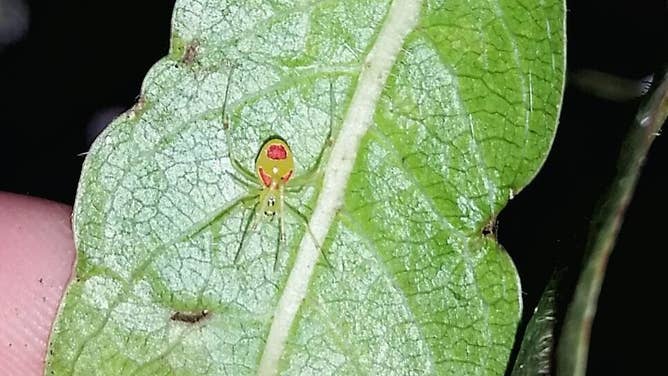
Hawaiian happy-face spider found during the 2015 Bioblitz.
( Pacific Island Ecosystems Research Center / USGS)
Through further research, scientists can discover how these spiders evolved and what may have contributed to these morphs.
FOURTH CASE OF RARE, HIGHLY INFECTIOUS 'RABBIT FEVER' CONFIRMED IN NEW YORK CITY SUBURB
This goes a long way toward understanding how an environment can influence these changes in the bodies of these insects.