

Australian government invests hefty sum to eradicate unwelcomed invaders overrunning an entire island
On Australia's Kangroo Island, uninvited feral cats have posed a major threat to rare, native species, and a coalition of forces has pledged millions of dollars to eradicate them from the island completely.
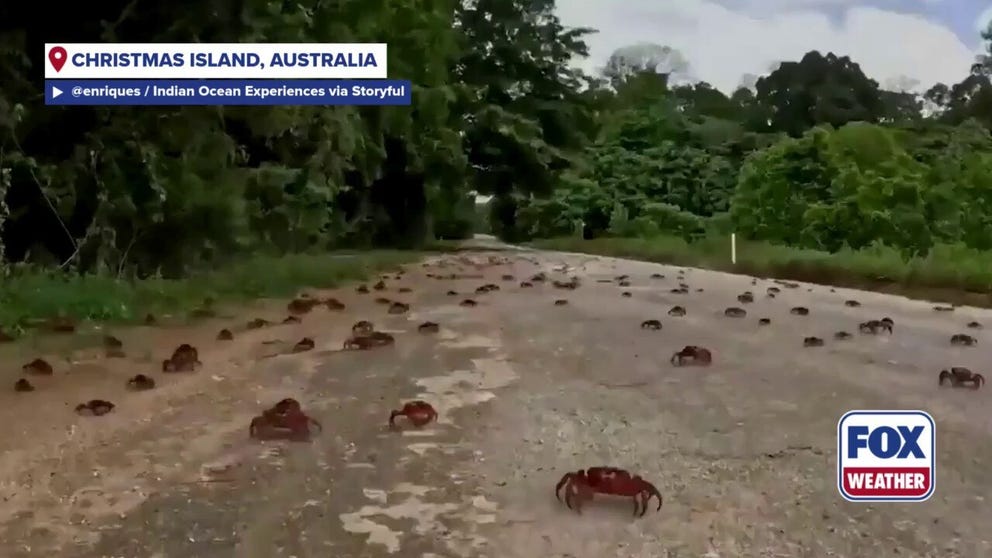
FILE: Millions of red crabs swarm Australian island in annual migration
The annual red crab migration on Christmas Island has begun, as millions of crabs have emerged simultaneously from their burrows in search of a mate.
AUSTRALIA – In the U.S., cats are cherished companions and, for many families, beloved members of the household. But when domestic cats become feral, they can turn into a serious environmental threat.
In Australia, one of the world's most beloved pets has become one of its most destructive invasive predators.
On Australia's Kangroo Island, uninvited feral cats have posed a major threat to rare, native species, and a coalition of forces has pledged millions of dollars to eradicate feral cats from the island completely.
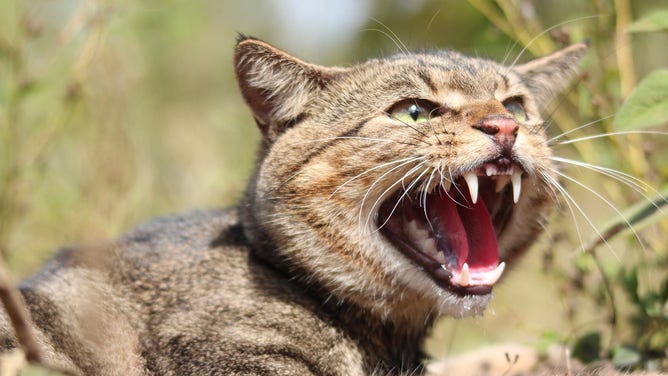
Feral cats are among Australia's most destructive invasive species, threatening more than 200 nationally listed threatened species and contributing to the extinction of more than 20 native mammal species.
(PestSmart)
On July 25, the Australian federal government invested an additional $2.7 million to "finish the work of eradicating feral cats" from the Dudley Peninsula, according to a government press release.
The hefty investment comes with an ambitious goal: the island’s feral cat eradication project aims to eradicate feral cats by 2030.
MEET THREEHALVES: THE VIRAL ROBOT DESIGNED FOR EARTH'S MOST DANGEROUS ENVIRONMENTS
Just how bad has the feral cat problem gotten on Kangaroo Island? Well, they don't exactly eat tuna fish for dinner like your average household cat.
"Sadly, feral cats have contributed to the extinction of more than 20 Australian mammal species, and with Kangaroo Island home to more than 30 threatened species, tackling feral cats is a big part of ensuring those species have a healthy future," Federal Minister for the Environment and Water Murray Watt said.
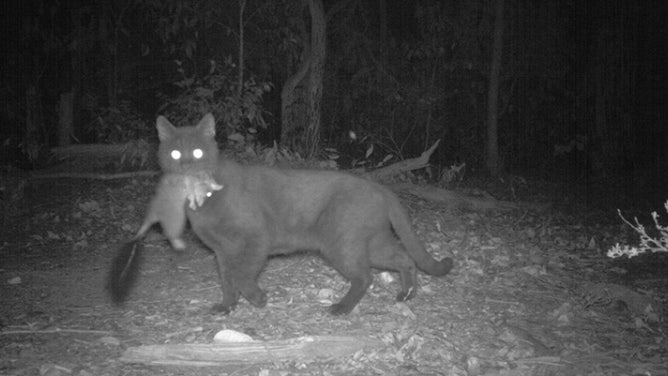
Feral cats are a recognized threat to more than 200 nationally listed threatened species in Australia, making them one of the country's most significant drivers of biodiversity loss.
(Government of Western Australia)
Once complete, the eradication will create a permanent safe haven for threatened native species like the Kangaroo Island echidna, southern brown bandicoot and the hooded plover, which are all threatened by feral cats.
The Dudley Peninsula has been isolated from the rest of Kangaroo Island by a three-kilometer cat-proof fence, creating a secure zone that prevents feral cats from reinvading the area.
YOU CAN EAT THESE 5 INVASIVE ANIMALS TO HELP POPULATION CONTROL, US FISH & WILDLIFE SERVICE SAYS
The eradication effort combines cutting-edge technology with community participation, using a remotely monitored landscape-scale trap network, AI-powered 4G cameras that provide near real-time cat locations, specially trained detection dogs, thermal drones and a "Call in a Cat" reporting program.
The fight against feral cats has been underway in Australia for years. Across the country, conservationists have developed increasingly sophisticated eradication programs to protect native wildlife.
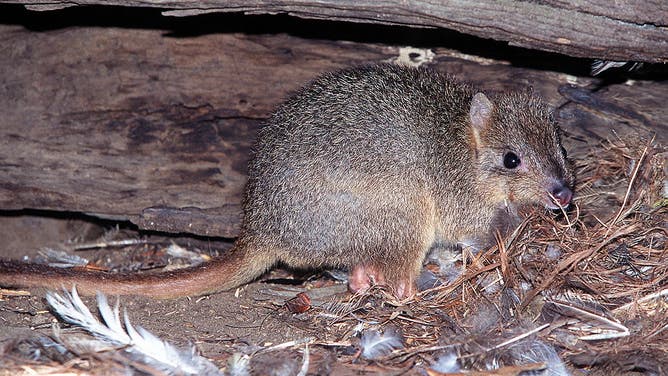
A rare Burrowing Bettong hides under a hollow log near Cygnet River on Kangaroo Island 14 April, 1999 having been driven to near extinction on mainland Australia by foxes and feral cats. The species survives on a handful of offshore islands and is now being reintroduced to protected mainland reserves.
(TORSTEN BLACKWOOD/AFP via Getty Images / Getty Images)
The investment comes in addition to $800,000 from the South Australian government and philanthropic investments of $370,000 through the Invasive Species Council, with more than $7 million invested since 2020.
So how do these millions of dollars in investment to eradicate the non-native nuisance get put to use?
According to the press release, the funds will allow the government to remove all remaining feral cats from the Dudley Peninsula and prevent further incursions, while boosting the resilience of at-risk species to better withstand and recover from future challenges such as the potential spread of H5 avian influenza.
BISON MATING SEASON IS UNDERWAY, AND IT'S BEST TO GIVE THEM SPACE
"The KI community has achieved great results in recent years in reducing feral cat numbers, but we’re conscious that without further effort, numbers could rebound," Watt said. "That’s why our governments are working together to make sure the teams have what they need to make a lasting impact on KI."
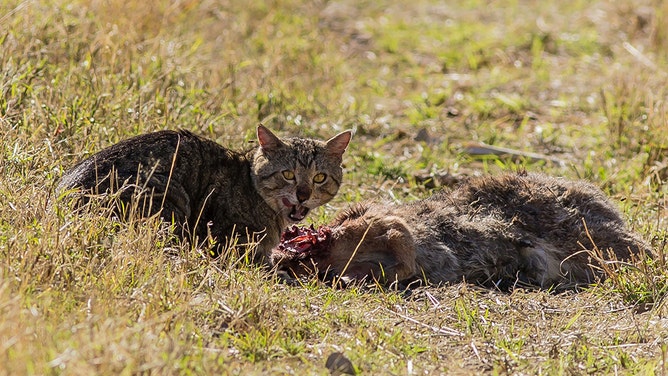
Found across 99.9% of Australia's landmass, feral cats kill more than 1.5 billion native vertebrates and 1.1 billion native invertebrates every year.
(PestSmart)
Feral cats aren't the first unwelcome species the government has had to eradicate. Kangaroo Island has a strong track record of eradicating feral animals, having successfully removed feral deer, feral goats and feral pigs.
"Island eradication is among the most effective conservation investments we can make," Invasive Species Council CEO Jack Gough said. "By permanently removing feral cats, we can secure a future for unique wildlife like the critically endangered Kangaroo Island dunnart, while placing South Australia at the forefront of one of the most significant conservation achievements in our nation's history."
AFTER GREAT WHITE SHARK ATTACK, AUSTRALIA'S MOST POPULATED STATE DOUBLES DOWN ON DRONE SHARK PATROLS
According to the Australian government's latest Threat Abatement Plan for Predation by Feral Cats that was published in 2024, Australia is home to an estimated 1.4 to 5.6 million feral cats, with populations fluctuating significantly in response to rainfall and prey availability.
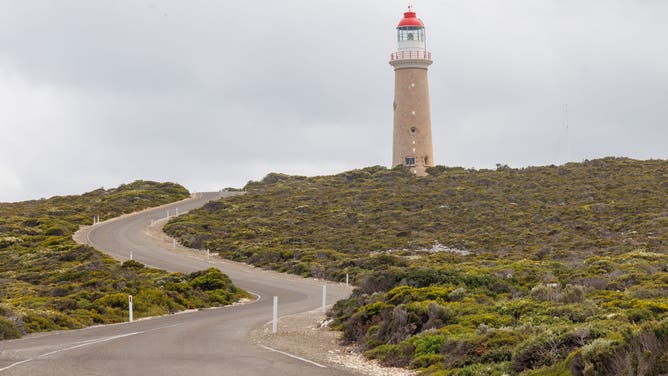
Winding road leading to the Cape du Couedic lighthouse through a coastal landscape in Flinders Chase National Park located in the west of Kangaroo Island also called KI in southern Australia on February 7, 2025.
(Getty Images)
Despite their reputation in the United States as beloved household pets, cats introduced into non-native environments can establish wild, feral populations that quickly become highly effective predators.
Feral cats are among Australia's most destructive invasive predators, killing more than 2.6 billion native animals each year — including over 1.5 billion vertebrates and around 1.1 billion invertebrates — while threatening more than 200 nationally listed threatened species, according to the Australian government.
SCIENTISTS WARN THE CLOSURE OF THE STRAIT OF HORMUZ COULD TRIGGER A MARINE SUPER-SPREADER EVENT
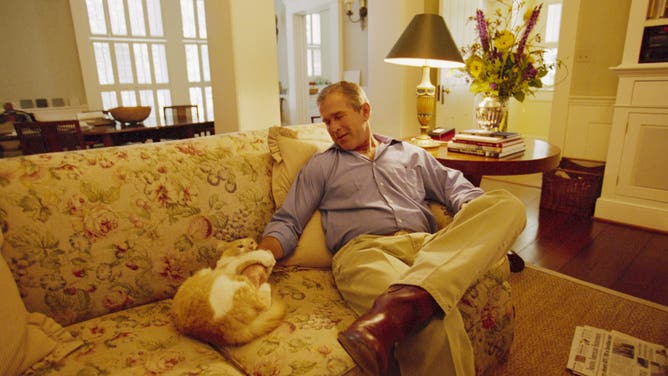
President George W. Bush plays with his cat, Ernie, at the Governor's Mansion in Austin, Texas. While domestic cats are cherished companions, feral cats introduced into non-native environments have become one of Australia's most destructive invasive predators.
(Brooks Kraft LLC/Sygma via Getty Images / Getty Images)
With the new investment to eradicate the feral cat entirely, Kangaroo Island has become one of the world's leading examples of invasive predator management.
According to the Kangaroo Island Landscape Board, since 2020, conservation teams have removed more than 1,800 feral cats from the island's Dudley Peninsula, reducing the estimated population to fewer than 150 animals by 2025 and bringing the world's largest feral cat eradication project on a populated island within reach.