

Bison mating season is underway, and it's best to give them space
The annual bison rut is underway, bringing booming bellows, fierce rivalries and plenty of relationship drama to the prairie.
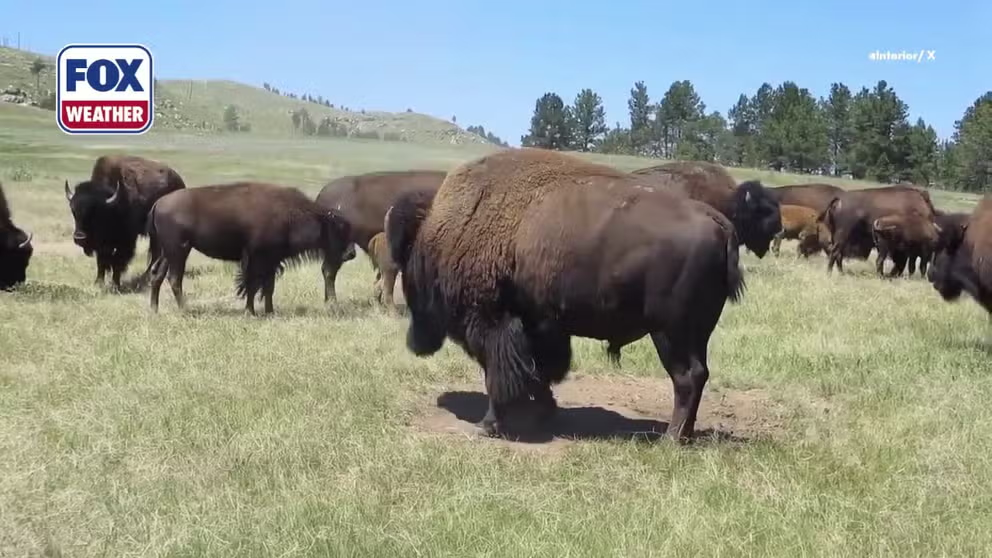
Bison rut season returns
From now until September, it’s mating season for bison. Bulls compete for mates and can become much more aggressive. When visiting public lands, give the bison plenty of space and admire them from a safe distance away.
The annual mating season is in full swing for American bison, so if you're visiting a national park this summer, don't become the third wheel in a bison love story and be sure to keep your distance from North America's largest land mammals.
American bison enter their mating season that stretches from June through late September, and peaks in July and August.
WHAT IS YOUR STATE ANIMAL? SEE THE OFFICIAL LIST FEATURING ALL 50 STATES
Every summer, romance returns to the prairie, and for American bison, winning a mate means proving who's the biggest, loudest and strongest bull in the herd.
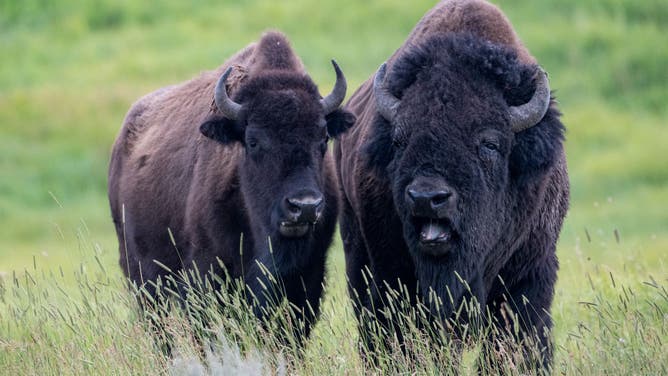
A male Bison (R) bellows as he courts the female during the mating season, also called the Rut, on August 9, 2024 in Yellowstone National Park, Wyoming.
(Jonathan Newton/Getty Images / Getty Images)
With peak mating season now underway, the American bison's annual rut has already made headlines after a 2,000-pound bull charged 65-year-old Carl McDaniel, launching him nearly 8 feet into the air at Yellowstone National Park.
As the annual rut begins, a noticeable shift sweeps through the herd: bull bison become far more aggressive as they compete for the opportunity to mate.
BRAIN-EATING AMOEBA DETECTED IN WATER AT ICONIC US NATIONAL PARKS, STUDY FINDS
Mature bulls become very aggressive, bellowing, rolling in the dirt and clashing with other males to prove dominance and win mating rights.
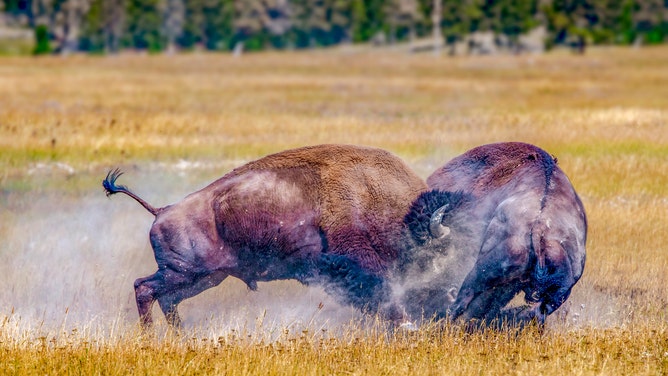
Bull bison clash head-to-head during mating season, using their immense strength to compete for breeding rights and establish dominance within the herd.
(Getty Images)
In an effort to show off strength, bulls wallow in open fields, rolling violently in the dirt to display their aggression, at points kicking up clouds of dust.
So, it's important to exercise caution around these massive mammals. They're bigger and faster than they look, with male bison, known as bulls, weighing up to 2,000 pounds, standing as tall as 6 feet at the shoulder and capable of sprinting up to 35 mph.
SEE IT: TOURISTS CAUGHT WANDERING ON DANGEROUS AND DEADLY EDGE OF YELLOWSTONE HOT SPRING
While aggression is a given, bulls compete against one another in a decathlon of courtship displays to win the chance to mate.
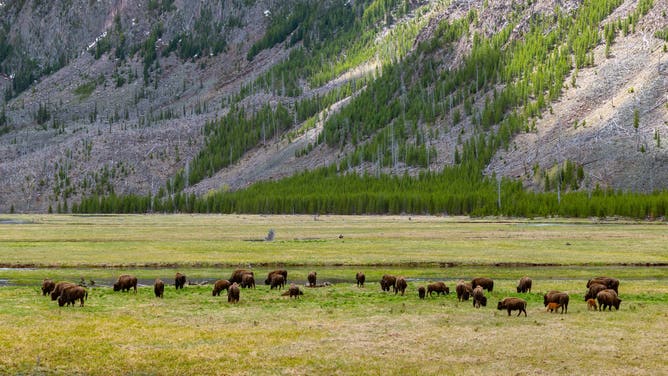
Yellowstone National Park is home to the largest bison population on public land in the U.S., with nearly 5,300 animals estimated before the 2025 calving season. Here, a herd of bison grazes alongside newborn calves, known as "red dogs," on May 25, 2021.
(AaronP/Bauer-Griffin/GC Images / Getty Images)
Romance on the range
It's the most wonderful time of the year, and love is in the air, but for bison, courtship is loud, competitive and relationships are a little complicated.
Beginning in early June, mature bulls compete for mating opportunities.
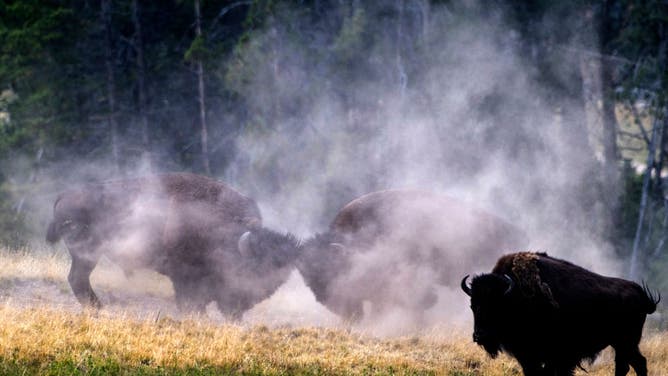
Two male Bison battle for dominance during the rut, mating season, as a female walks away on August 9, 2024 in Yellowstone National Park, Wyoming.
(Jonathan Newton/Getty Images / Getty Images)
The rut may be brief, but bull bison certainly make the most of it.
Bison are polygynous, not monogamous. During a rut, bulls may mate with multiple females, while females typically mate with one bull during each breeding cycle, according to the National Park Service.
WATCH: FISHERMAN NARROWLY AVOIDS BISON ENCOUNTER IN YELLOWSTONE NATIONAL PARK
When a bull finds a partner, it uses booming bellows, wallowing and intimidating threat displays to warn off competitors.
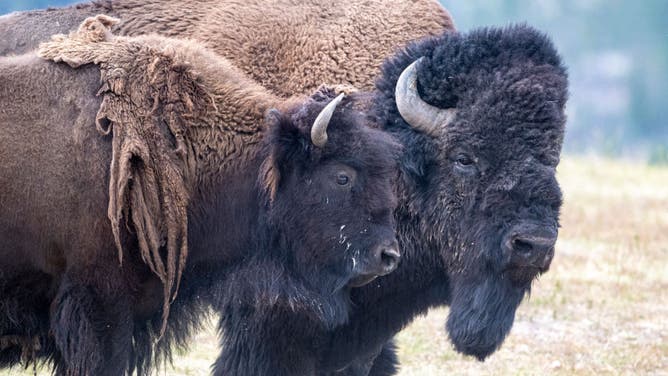
A male Bison (R) follows a female in an attempt to mate during the Rut on August 9, 2024 in Yellowstone National Park, Wyoming.
(Photo by Jonathan Newton/Getty Images / Getty Images)
Singing for a fling
In the competition to win over a mate, bull bison pull out all the stops. They may not show up in an Ivy League suit carrying a bouquet of flowers, but they do bring their singing voice.
During mating season, bison bulls across Yellowstone National Park, South Dakota, Utah and other protected federal lands fill the prairie with deep, booming bellows.
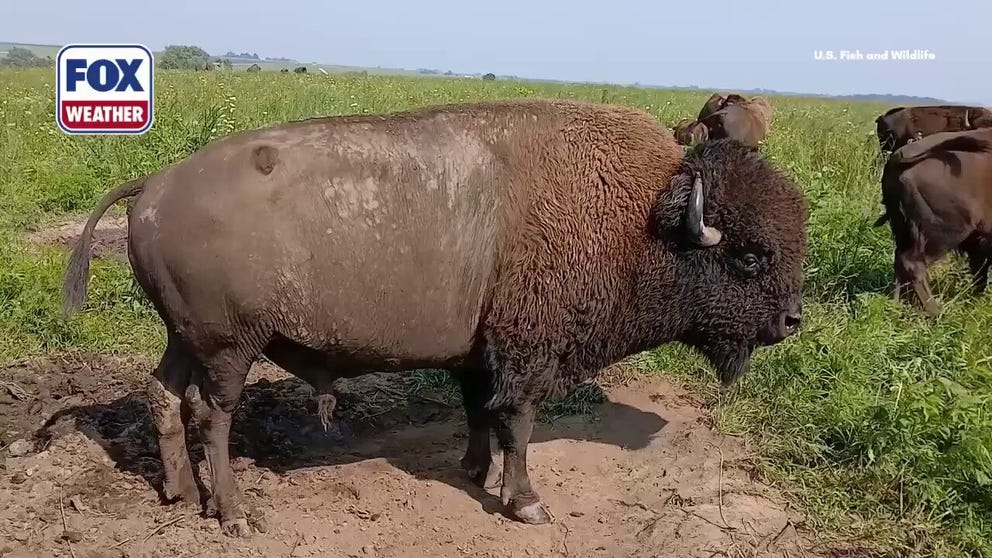
The sound of the rut: Bison bulls bellow in the Plains
Mating season is in full swing at Neal Smith National Wildlife Refuge in Iowa, where bison bulls compete for the chance to mate by unleashing deep, resonating bellows that echo across the prairie.
During their deep, low-frequency bellows — a moo on steroids that echoes across the prairie — bulls often stick out their tongues in dramatic fashion, creating a picture-perfect moment for photographers and wildlife enthusiasts.
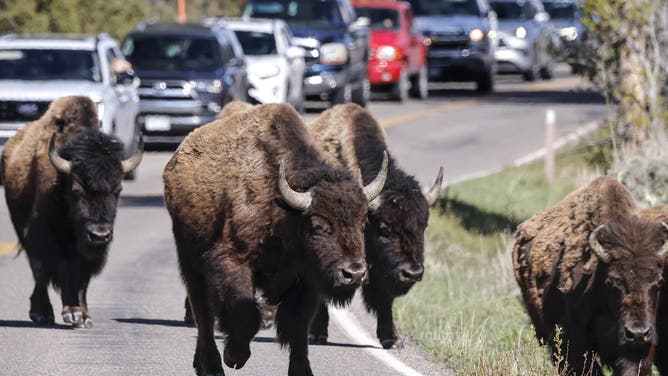
Bison walk along a roadway as drivers wait during a "bison jam" on May 19, 2026 in Yellowstone National Park, Wyoming.
(Mario Tama/Getty Images / Getty Images)
According to the National Park Service, scientific studies suggest the acoustic qualities of a bull's bellow — including its frequency, duration and volume — signal dominance, helping females identify the strongest and most competitive mates.
Researchers say these vocalizations can reveal a male's competitive ability, physical condition and overall health, providing females and rival bulls with valuable information about his fitness.
MEET THE GRAY WOLF: HOW THE APEX PREDATOR, LARGEST MEMBER OF THE DOG FAMILY HAS EVOLVED
It's important to give bison plenty of space year-round, but it's especially critical during the summer rut.
In Yellowstone National Park, federal regulations prohibit harassing, approaching or feeding wildlife, and the National Park Service recommends staying at least 25 yards away from bison at all times, particularly during mating season, when bulls are at their most aggressive.