

Glowing blue spider among dozens of unknown species discovered in uncharted Angola highlands
The findings offer vital new insights into a critical landscape that feeds four of Africa’s largest river systems: the Congo, the Okavango, the Zambezi and the Cuanza.
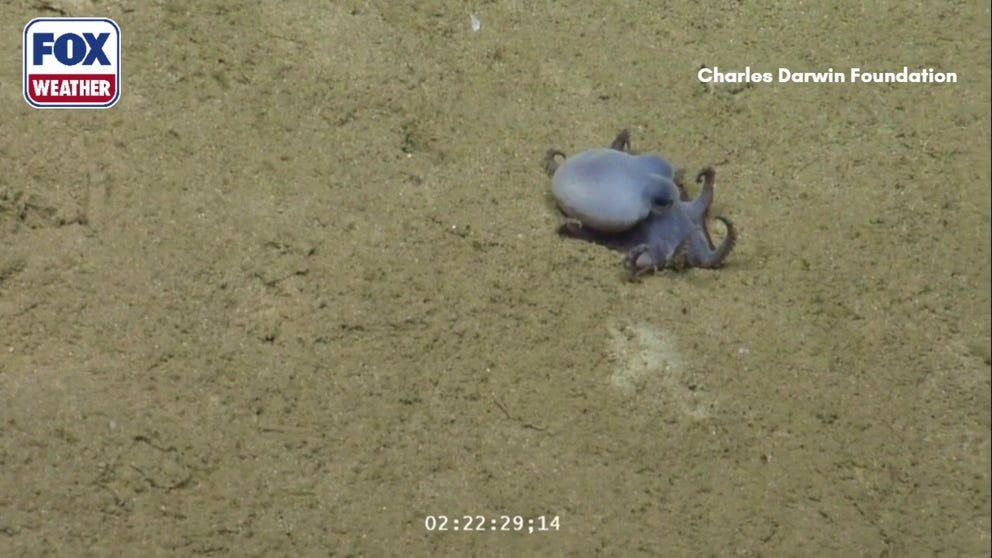
FILE: A new species of octopus was discovered off the coast of Galápagos Islands
SEE IT: A newly discovered golf ball-sized blue octopus species was discovered off the coast of the Galápagos Islands, bringing excitement to researchers.
ANGOLA — A crowned crab spider that glows a vibrant blue under ultraviolet light is among dozens of unknown species discovered in Angola’s remote Lisima plateau during a survey expedition to "Africa’s last great biodiversity blank spots," according to The Wilderness Project.
The survey also documented several rare species that experts had never previously recorded within the region.
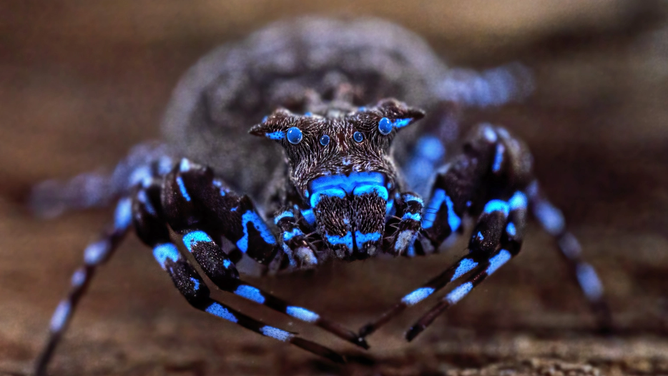
Crowned crab spider glowing blue under UV light.
(Nicky Bay/The Wilderness Project)
Conducted in February, the expedition, led by The Wilderness Project, culminated in a biodiversity survey called the Cassai Life Atlas.
The findings offer vital new insights into a critical landscape that feeds four of Africa’s largest river systems: the Congo, the Okavango, the Zambezi and the Cuanza.
RARE SPECIES OF MOON JELLYFISH DISCOVERED IN GULF OF AMERICA OFF LOUISIANA COAST
Water flowing from the Lisima plateau travels thousands of kilometers downstream, supplying vital freshwater to regional communities and ecosystems, including the UNESCO World Heritage-listed Okavango Delta.
The expedition expands upon 10 years of baseline data collected from the Okavango and Lungwebungu river systems by National Geographic researchers.
WILDLIFE OFFICIALS URGE RESIDENTS TO KILL INVASIVE ARGENTINE TEGUS SPREADING DISEASE
Though vital to the local ecosystem, a combination of extreme remoteness, active landmines and a 27-year civil war kept Angola's Lisima plateau almost completely unmapped for decades.
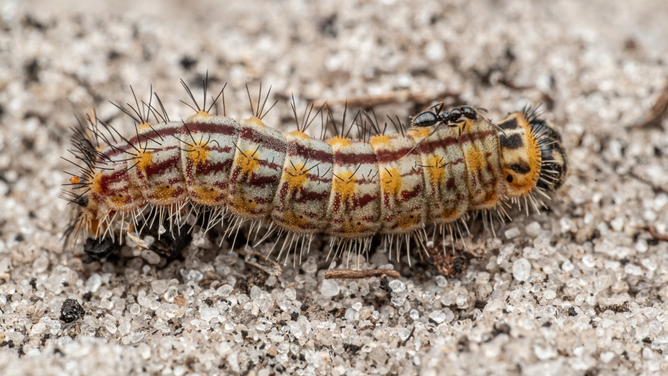
Copper caterpillar
(Nicky Bay/The Wilderness Project)
February’s expedition was composed of 16 scientists set to "fill that gap." According to The Wilderness Project, they found eight undescribed dragonfly species, three new grasshopper species and approximately 60 moths and butterflies.
Some of the remarkable findings can be broken down into these categories as follows:
Dragonflies, moths and grasshoppers
According to The Wilderness Project, 103 dragonfly and damselfly species were recorded, along with over 1,000 butterflies and moths and 47 grasshopper, katydid and cricket taxa.
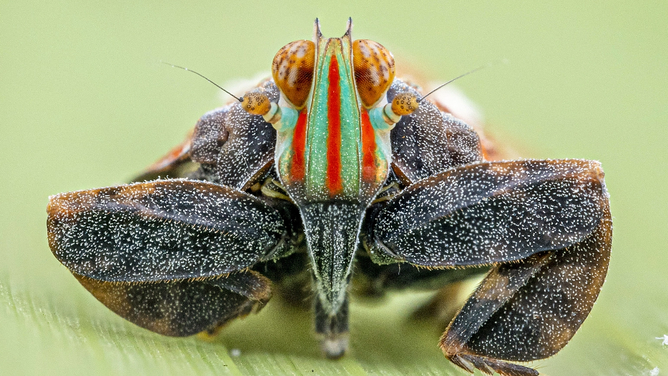
Planthopper
(Nicky Bay/The Wilderness Project)
This has brought the dragonfly and damselfly species count for the region to 163, with 34 documented for the first time.
Additionally, of the 47 grasshopper, katydid and cricket taxa, three are entirely new to science.
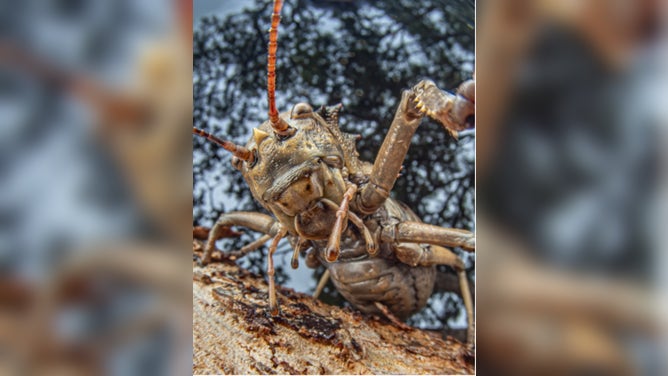
Newly discovered katydid species.
(Nicky Bay/The Wilderness Project)
Leading dragonfly specialist and associate of Naturalis Biodiversity Center in the Netherlands Dr. Klaas-Douwe B. Dijkstra said, "Lisima’s sandy plateau releases some of the clearest and most reliable fresh water in Africa, which is reflected in the region’s dragonflies and damselflies, with several highly specialized species found nowhere else."
SLITHERING TOWARD EXTINCTION: DEADLY DISEASES COULD WIPE OUT RATTLESNAKE POPULATION
Biologists have been analyzing the massive collection of over 1,000 butterflies and moths to map their complex relationships with local plant families and other insect populations.
"Preliminary estimates suggest up to 6% of all recorded moth species could be new to science," The Wilderness Project said.
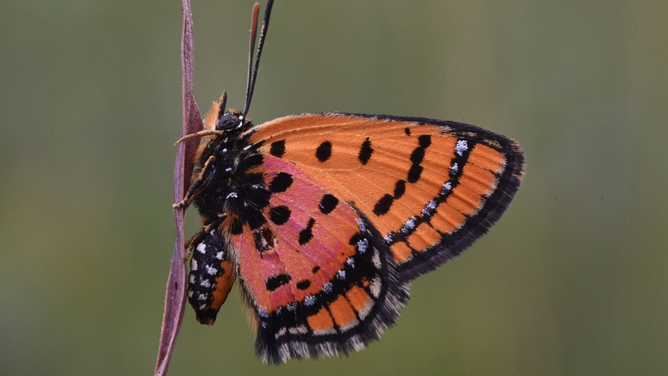
An adult copper butterfly.
(Rob Taylor/The Wilderness Project)
Results of the found beetles, spiders and scorpions are still being examined in the laboratory.
However, some include the crowned crab spider that glows a vibrant blue under ultraviolet light and the ladybird orb-web spider, which mimics a ladybug.
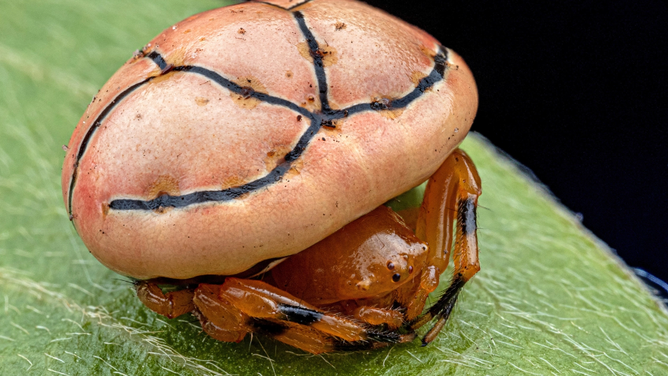
Ladybird orb-web spider, which The Wilderness Project said is potentially a new species.
(Nicky Bay/The Wilderness Project)
Reptiles, frogs and bats
The survey recorded 47 taxa — 24 amphibians and 23 reptiles.
According to The Wilderness Project, this represents a large portion of the region's known wildlife, all captured in a single wet-season survey.
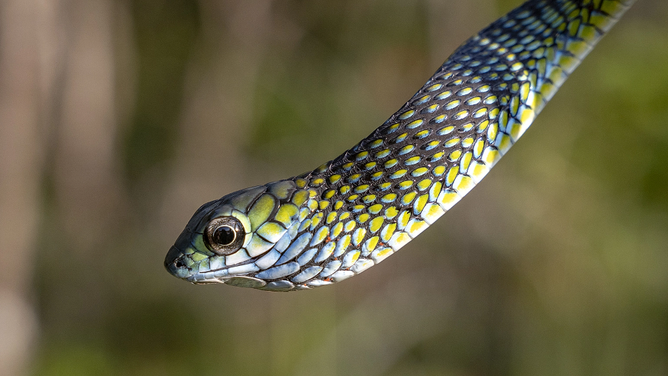
Large-eyed green tree snake. The Wilderness Project said there are only four records of the species from Angola.
(Piotr Naskrecki/The Wilderness Project)
The expedition also documented a highly diverse community of wetland frogs, which highlights how critical the plateau’s flooded forests and grassy wetlands are to supporting regional wildlife.
In the local caves, the team documented Sundevall’s roundleaf bat and Rüppell’s horseshoe bat, along with associated bat flies and ectoparasites.
GRAY WOLF SPOTTED IN SEQUOIA NATIONAL PARK FOR FIRST TIME IN MORE THAN 100 YEARS
This discovery provides important insight into complex ecological interactions.
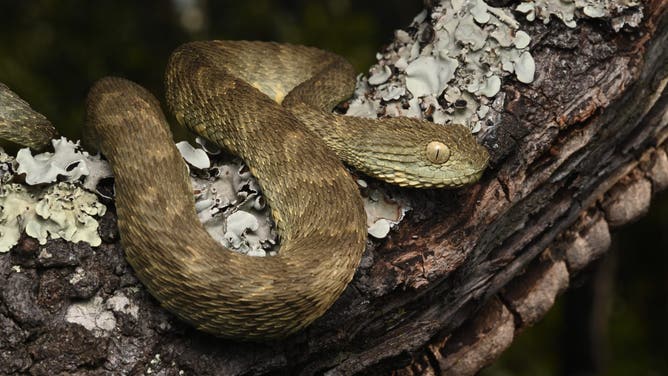
Bush viper. The Wilderness Project noted that there are only a few of this species recorded in Angola.
(Rob Taylor/The Wilderness Project)
Plants
Researchers documented over 320 plant collections across the plateau's diverse ecosystems, which further emphasized the massive amount of botanical life within a small area, according to The Wilderness Project.
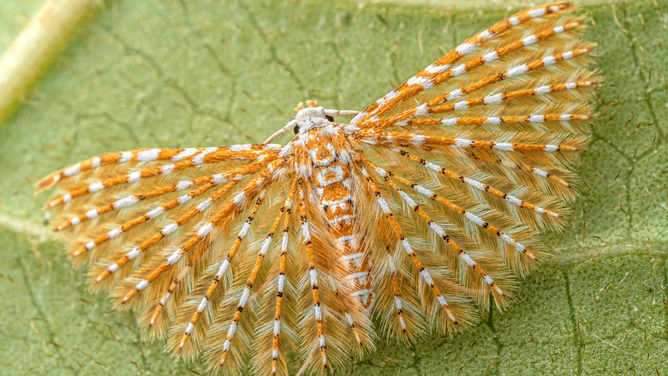
Many-plumed moth
(Nicky Bay/The Wilderness Project)
Ultimately, this biological mapping is critical because many of these undocumented species risk disappearing before scientists can fully study or even discover them.
Researchers highlighted the discovery in an Instagram post, stating, "We are only beginning to scratch the surface of the abundance of life inhabiting this region."