

See it: '1 in 50 million' split-colored lobster donated to Massachusetts aquarium in rare discovery
The lobster is set to be named in the coming weeks, and she will remain in quarantine for anywhere between 30 and 90 days so scientists and veterinarians can monitor her condition.
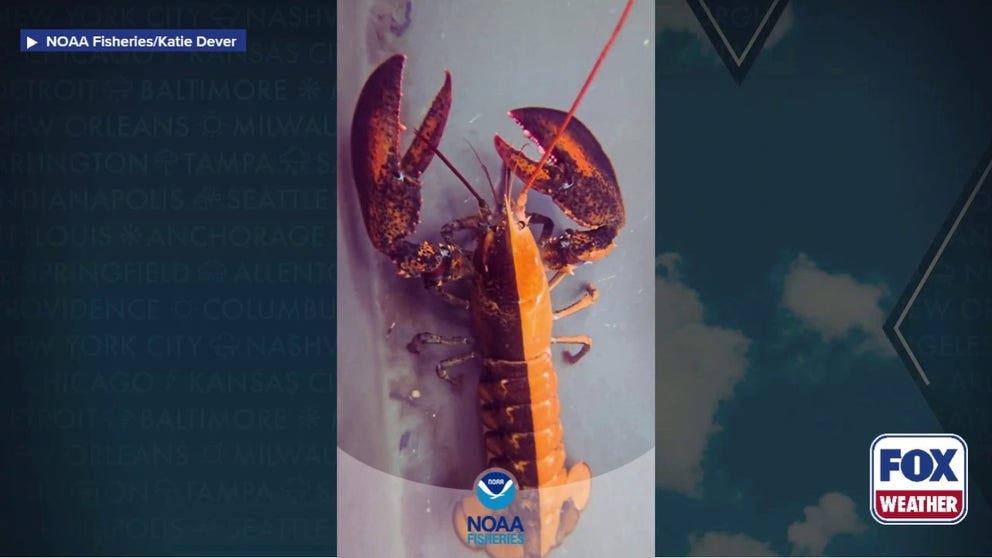
Watch: Ultra-rare bicolored lobster snacks on fish
The split-colored lobster is roughly 1 in 50 million lobsters, marking a very exciting and unusual find. She was caught by Wellfleet Shellfish Company on April 16, and donated to Woods Hole Science Aquarium. The lobster is in quarantine and adjusting to her life outside the ocean.
CAPE COD, Mass.– An ultra-rare American lobster that's body is split equally between orange and blueish-green is making headlines after being discovered off Cape Cod in mid-April.
The lobster, which is just like any lobster you'd have for dinner, was caught by Wellfleet Shellfish Company on the Timothy Michael fishing vessel on April 16.
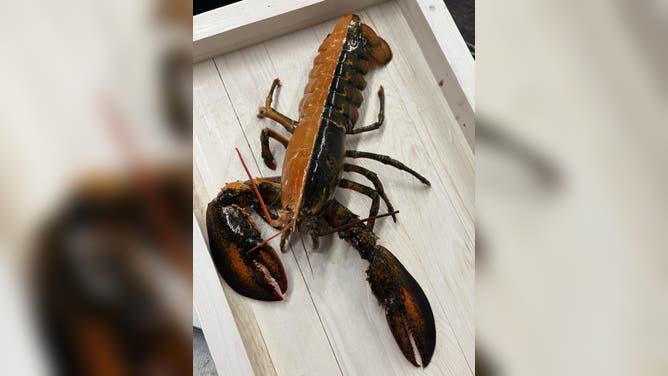
A great photo showing the lobster's bi-coloration.
(Wellfleet Shellfish Company / FOX Weather)
Understanding how unique this lobster was, Wellfleet Shellfish Company inquired with local aquariums in the area to donate the lobster for onlookers to witness its rarity, too.
They donated the lobster to Woods Hole Science Aquarium in Woods Hole, Massachusetts, which is owned and operated by NOAA Fisheries.
VIDEO: RESCUERS SAVE STRANDED WHALE FROM SANDBAR IN AUSTRALIA RIVER
"The donation reflects Wellfleet Shellfish Company’s longstanding commitment to sustainability, stewardship and supporting the region’s marine science community," Wellfleet Shellfish Company said.
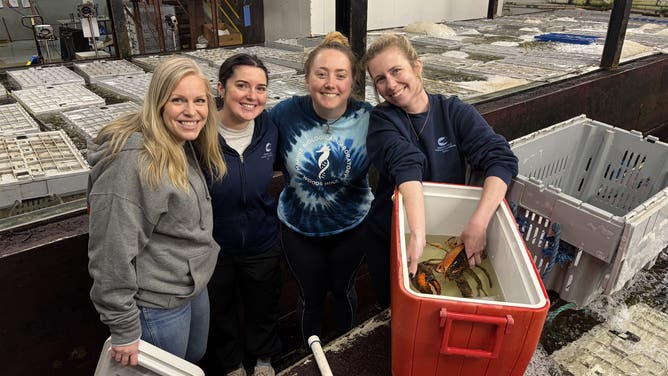
Shannon Keresey of Wellfleet Shellfish Company (left) with Woods Hole Science Aquarium representatives and the lobster.
(Wellfleet Shellfish Company / FOX Weather)
"We were really, really excited," Katie Dever, the lead biologist at Woods Hole Science Aquarium said. "She's beautiful, and we're thrilled that we can be able to showcase her."
"While most lobsters do come out looking that green-brown color typical of New England waters because it helps them camouflage, sometimes they come out as these kind of genetic abnormalities," Dever said. "And they look quite beautiful, like the lobster we got."
SARGASSUM SEAWEED BLOOMS PLAGUING ATLANTIC BEACHES TRACED BACK TO WEST AFRICA
Woods Hole Science Aquarium is currently undergoing renovations, so the lobster is being held at the Marine Biological Laboratory, which partners with Woods Hole Science Aquarium and NOAA Fisheries, and where she is undergoing a quarantine period to ensure she doesn't carry any diseases, parasites or illnesses that could be passed to other animals at the aquarium.
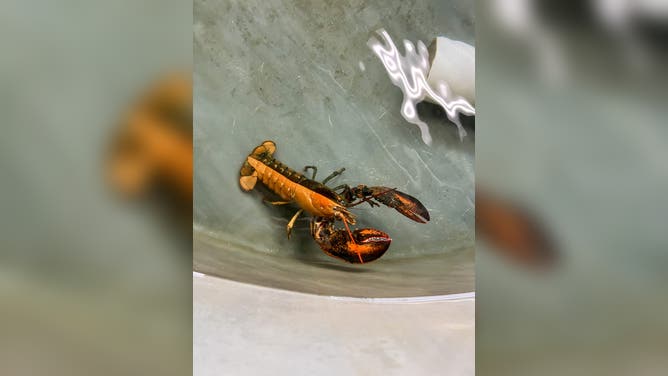
The lobster in her tank
( NOAA Fisheries/Katie Dever / FOX Weather)
Dever said the lobster is a bicolor or a split lobster, meaning she shows two different coloration on her shell.
She explained that this mutation happens when two eggs come into contact with one another and absorb each other while developing.
EXCLUSIVE ANALYSIS: EL NIÑO LIKELY TO BOOST HURRICANE ACTIVITY IN EASTERN PACIFIC THIS SUMMER
"The split coloration is about one in 50 million," Dever said.
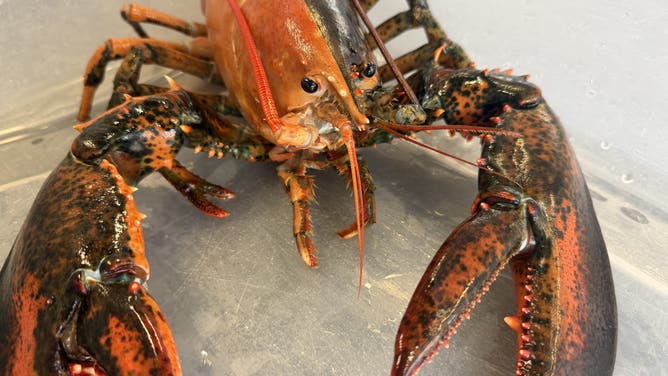
A close-up of the rare bicolored lobster being housed at the Marine Biological Laboratory on behalf of Woods Hole Science Aquarium.
( NOAA Fisheries/Katie Dever / FOX Weather)
She said other types of rare lobsters include blue lobsters, calico lobsters and extremely rare albino lobsters, which occur one in about 100 million lobsters.
The lobster is doing really well at the Marine Biological Laboratory. She's settling in, eating and they're getting to know her personality.
"Her favorite food right now is live blue mussels," Dever said.
RARE SPECIES OF MOON JELLYFISH DISCOVERED IN GULF OF AMERICA OFF LOUISIANA COAST
The lobster is not the first bicolored lobster that Woods Hole Science Aquarium has ever had, but it's the first one since Dever has worked there.
She said lobsters are very territorial animals, so this is the aquarium's only lobster.
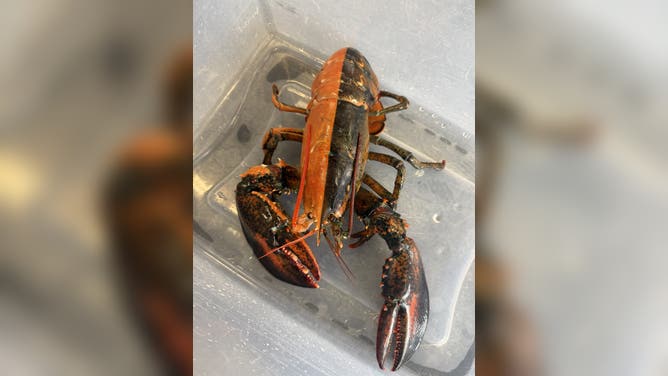
The lobster discovered by Wellfleet Shellfish Company and donated to Woods Hole Science Aquarium.
( NOAA Fisheries/Katie Dever / FOX Weather)
"We try to keep our lobster numbers down, so we can make sure that they're living in a tank where they're comfortable, they have enough room and they're not fighting with their tank mates," Dever said.
Lobsters are easily stressed, which is why the aquarium is going through such lengths to make sure she's healthy and comfortable.
Currently, the lobster is 3.15 pounds, and they estimate she's between 10 and 20 years old, but determining the age of lobsters is difficult because they show very little indication of their age since they molt their shells, Dever said.
THESE NEW BUOYS ARE MONITORING VITAL CORAL REEF DETERIORATION IN FLORIDA KEYS
Dever said it's remarkable that the lobster is as large and old as she is because of her coloring.
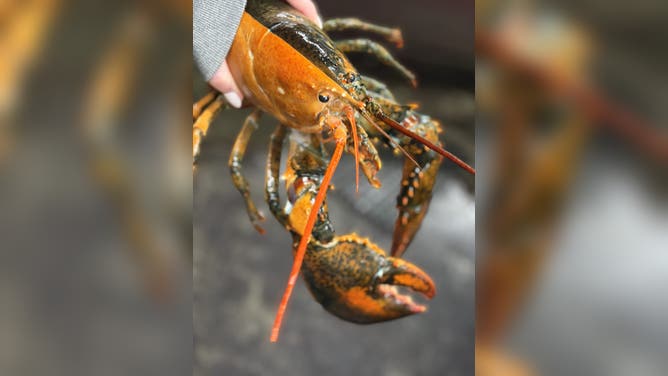
Someone holds the extremely rare bicolored lobster caught by Wellfleet Shellfish Company.
(Wellfleet Shellfish Company / FOX Weather)
"A lot of times these lobsters don't live very long because they stand out so much that it's very easy for predators to identify them," Dever said.
Woods Hole Science Aquarium is the oldest aquarium in America, dating back to the 1870s, Dever said.
THESE 5 STATES HAVE SOME OF THE MOST SNAKE-FILLED WATERS IN THE NATION
The aquarium hopes to reopen to the public after its renovations in early 2027.
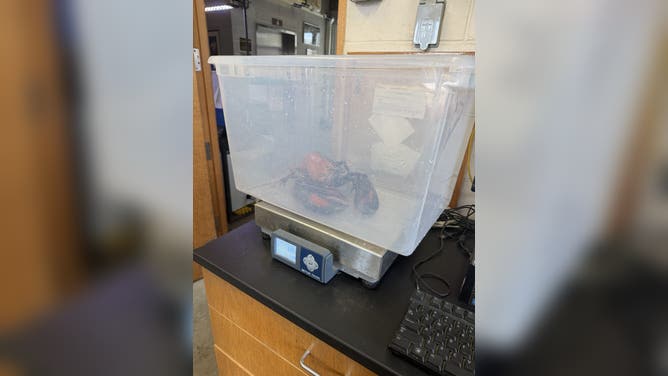
Lobster getting weighed with the Woods Hole Science Aquarium team.
(FOX Weather)
At their full capacity, they have around 100 different species.
"It's a wide variety of animals, but they're all local to our region," Dever said. " So when you come here, you're not seeing animals from the Bahamas or from Japan. You're seeing the life that is here in Woods Hole."
In addition to showing some of the cool animals of New England, the aquarium aims to provide education on NOAA Fisheries and local seafood.
Many of their animals were re-homed or released back into the ocean while undergoing their renovations.
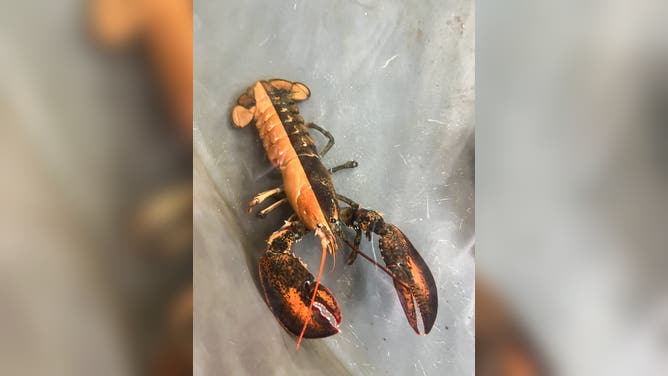
1 in 50 million bicolored lobster discovered in Cape Cod.
( NOAA Fisheries/Katie Dever / FOX Weather)
Dever said once the seawater is back on at the aquarium, their staff will go back out to the ocean to collect different species.
The lobster is set to be named in the coming weeks, and she will remain in quarantine for anywhere between 30 and 90 days so scientists and veterinarians can monitor her condition.