

NOAA: Warmest March ever recorded across Lower 48 driven by historic Western heat dome
That record heat came as a ridge of high pressure arrived over the Desert Southwest and Central Plains in mid-March and lasted through virtually the entire month.
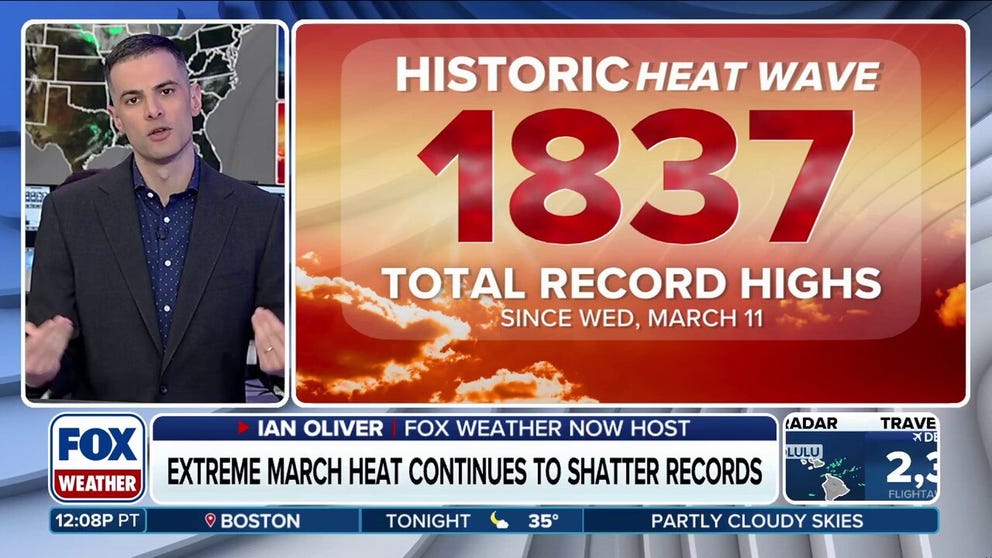
Historic heat wave continues to shatter records as it moves east
Temperatures across the Midwest and Southwest are unseasonably warm, as a heat dome continues to break records for the third straight week. This week, temps are easing up a little in the Southwest, but climbing in the Midwest and Southeast.
This past March was the warmest ever recorded across the Lower 48, driven by a weeks-long historic heat dome across many western states, according to recent analysis from NOAA.
RAIN AND SNOW ON THE WAY FOR THE WEST AFTER INTENSE MARCH HEAT WAVE
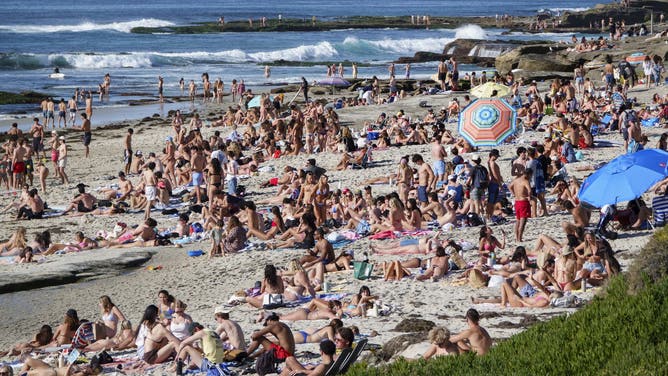
SAN DIEGO, CALIFORNIA - JANUARY 31: Beachgoers pack La Jolla's Windansea Beach during a winter heat wave on January 31, 2026 in San Diego, CA.
(Kevin Carter / Getty Images)
"The CONUS average temperature in March was 50.85 degrees, 9.35 degrees above the 20th-century average, marking the first time any month’s average has exceeded 9 degrees above that baseline," NOAA said in its monthly climate report.
Even by modern standards, March 2026 was 6.87 degrees warmer than the post-2000 average of 43.98 degrees, which was obtained from other NOAA historical data.
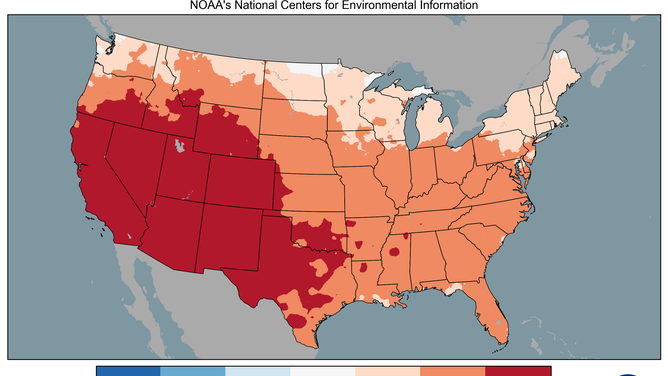
Mean temperature percentiles for March 2026.
(NOAA / FOX Weather)
Despite somewhat normal temperatures across the Northern Tier of the country, 10 western states recorded their warmest March on record: Arizona, California, Colorado, Idaho, Nevada, New Mexico, Oklahoma, Texas, Utah and Wyoming.
OVER 1,500 RECORDS SHATTERED ACROSS THE SOUTHWEST AS ANOTHER WEEK OF EXTREME HEAT CONTINUES
That record heat came as a ridge of high pressure arrived over the Desert Southwest and Central Plains in mid-March and lasted through virtually the entire month. Temperatures routinely approached triple-digits during the peak of the heat wave in parts of Arizona and Southern California.
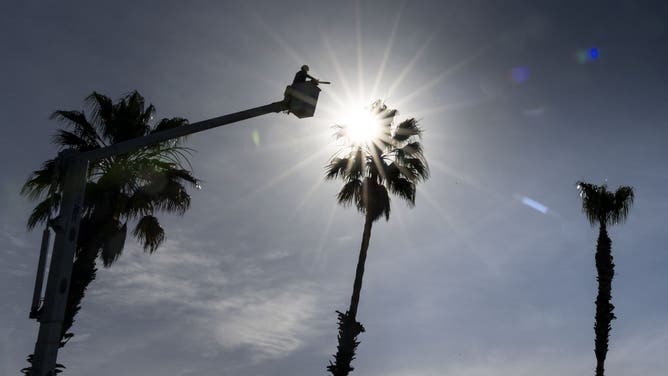
MISSION VIEJO, CA - March 16: Workers trim palm trees in the morning heat in Mission Viejo, CA on Monday, March 16, 2026.
(Paul Bersebach/MediaNews Group/Orange County Register / Getty Images)
The historic heat dome has contributed to significant snowpack deficits across the Rockies and several other ranges throughout the Intermountian West, which many communities rely on as a key water source during the summer months.
Closer analysis from NOAA shows that even parts of the Ohio Valley and the Southeast were significantly above average this past March. In fact, the Red River Valley of the North — between North Dakota and Minnesota — experienced a colder March than usual.
While not a part of the contiguous U.S., NOAA noted that Alaska actually experienced its third-coldest March on record, with an average temperature hovering just above 0 degrees.
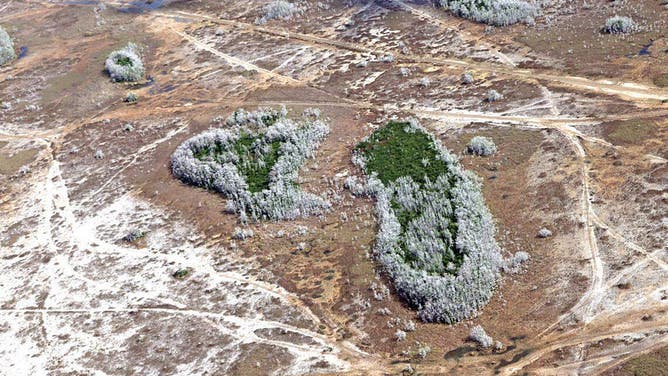
Pictured are the ongoing drought conditions affecting the Everglades and nearby reserves, March 4, 2026.
((Carl Juste/Miami Herald/Tribune News Service via Getty Images) / Getty Images)
Meanwhile, the record temperatures across the Lower 48 also contributed to significant drought across the country, with nearly 60 percent of the U.S. in drought as of the March 31 U.S. Drought Monitor.
Florida in particular is experiencing its worst drought in 25 years.
FLORIDA DRENCHED BY MUCH-NEEDED RAIN AMID EXTREME DROUGHT
While spring severe weather season is expected to provide relief for parts of the Southern Plains and the Deep South, drought conditions are expected to persist across much of the West, according to NOAA.
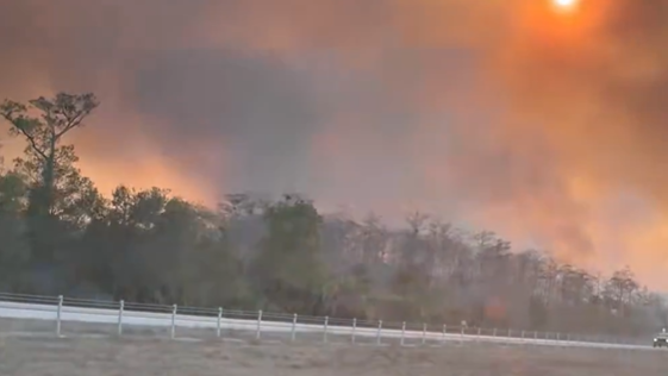
Wildfire smoke chokes the skies over Ochopee, Florida, amid the state's worst drought in 25 years.
(Chris Cote via Storyful / FOX Weather)
The National Interagency Fire Center said the dry conditions are contributing to a significant April wildfire threat across the Front Range of the Rockies and the Southeast.
Looking ahead, NOAA's Climate Prediction Center expects much of the U.S. to remain above average throughout the rest of April, with record heat potentially developing next week across parts of the Mid-Atlantic and Appalachians.