

El Niño expected to drive Atlantic storm activity as countdown to hurricane season begins
Exactly when El Niño develops will play a key role in how much protection the Atlantic sees this season.
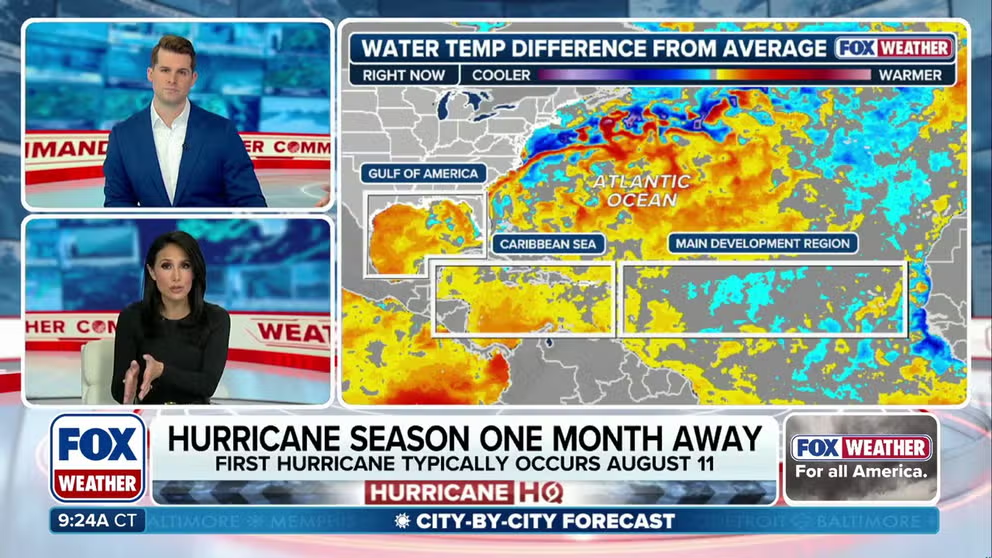
El Niño expected to dominate with Atlantic hurricane season one month away
The countdown is on — coastal communities from the Gulf across the entire Eastern Seaboard are making final preparations for the start of Atlantic hurricane season — now just one month away. A developing El Niño is expected to fully take hold this summer and dominate both the Atlantic and the Pacific basins — suppressing potential tropical development in the Atlantic, while supercharging storms in the Eastern Pacific, which begins its hurricane season on May 15. The Atlantic hurricane season lasts from June 1 to Nov. 30.
The countdown is on — coastal communities from the Gulf across the entire Eastern Seaboard are making final preparations for the start of Atlantic hurricane season — now just one month away.
A developing El Niño is expected to fully take hold this summer and dominate both the Atlantic and the Pacific basins — suppressing potential tropical development in the Atlantic, while supercharging storms in the Eastern Pacific, which begins its hurricane season on May 15.
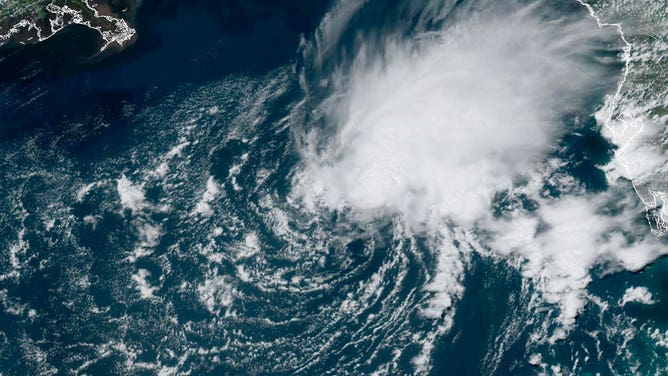
Tropical Storm Arlene swirls in the Gulf on June 2, 2023.
(NOAA)
El Niño is one of three phases of a climate cycle called the El Niño-Southern Oscillation (ENSO). It describes natural temperature changes in the central Pacific Ocean that alter atmospheric circulation and can greatly influence global weather.
WHAT ARE EL NINO AND LA NINA CLIMATE PATTERNS?
El Niño describes warmer than average water across the equatorial Pacific, while La Niña describes colder than average water conditions, and ENSO neutral refers to a state where temperatures are close to average.
During El Niño, above-average water temperatures in the central and eastern Pacific Ocean produce strong winds that hinder tropical development in the Atlantic.
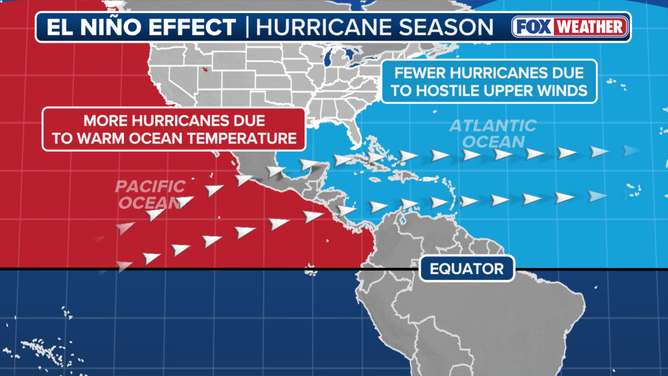
El Niño impact on hurricane season.
(FOX Weather / FOX Weather)
"The warmer waters and enhanced rising air across the Pacific create "hostile" upper-level winds that blow across the Caribbean and the Main Development Region (MDR)," the FOX Forecast Center said.
"These strong westerly winds can tilt or disrupt a developing storm's structure, preventing intensification and promoting a more stable atmosphere."
THE COST OF DISASTER: HOW TO PROTECT YOUR HOME AHEAD OF HURRICANE SEASON
Those upper level winds generally rip apart developing tropical systems, preventing them from organizing into powerful hurricanes.
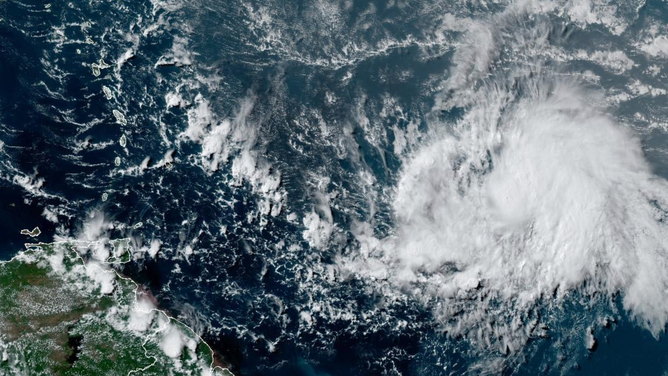
Tropical Storm Bret in the Gulf on June 20, 2023.
(NOAA)
Furthermore, experts believe this El Niño could be much stronger than the average event, with computer forecast models from both NOAA and Columbia's International Research Institute for Climate and Society (IRI) suggesting that a "Super El Niño" could form this summer, which would only act to further strengthen those hostile winds.
The Atlantic basin averages 14 named storms and 7 hurricanes. During El Niño years, those averages typically drop to roughly 10 storms and five hurricanes.
(FOX Weather)
However, exactly when El Niño develops will play a key role in how much protection the Atlantic sees this season.
EXCLUSIVE ANALYSIS: TIMING OF EL NIÑO CAN REDUCE CHANCES OF 'HOMEGROWN' GULF HURRICANES IN 2026
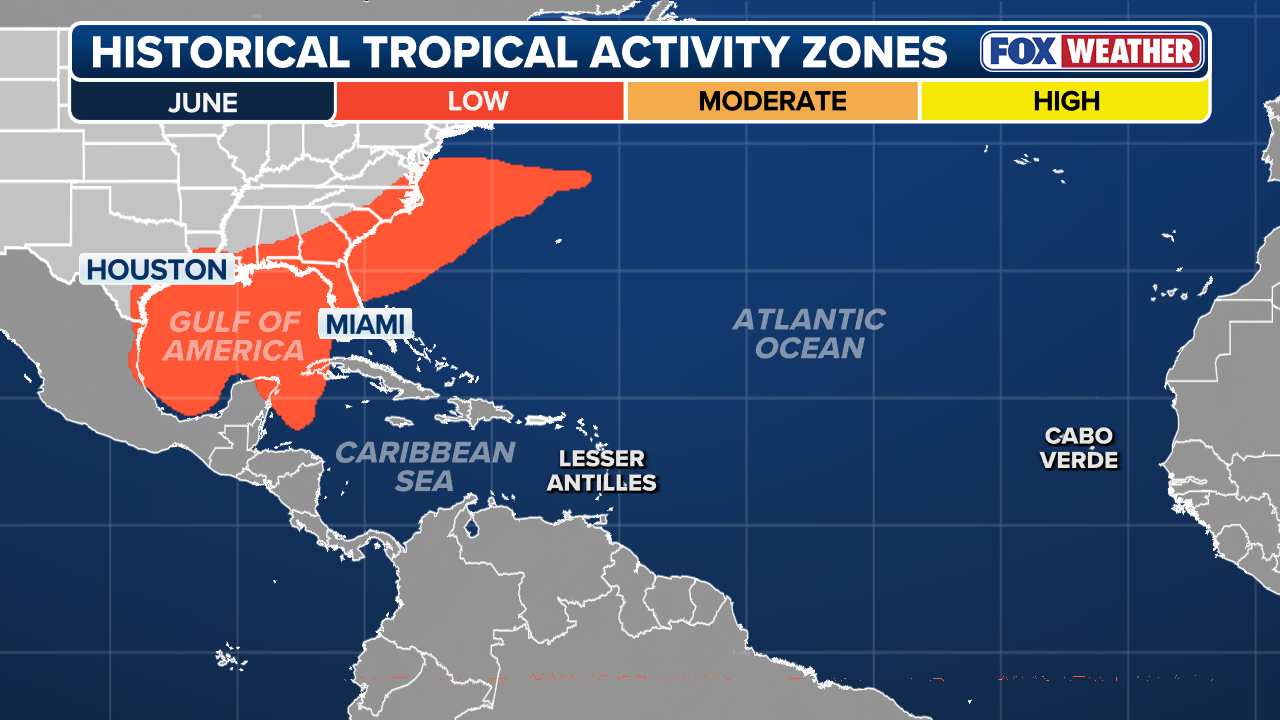
If El Niño does not emerge until late August or beyond, there will be a window of greater opportunity for hurricanes to form in the Gulf — a region where the majority of tropical development occurs during the first half of the season.
(FOX Weather)
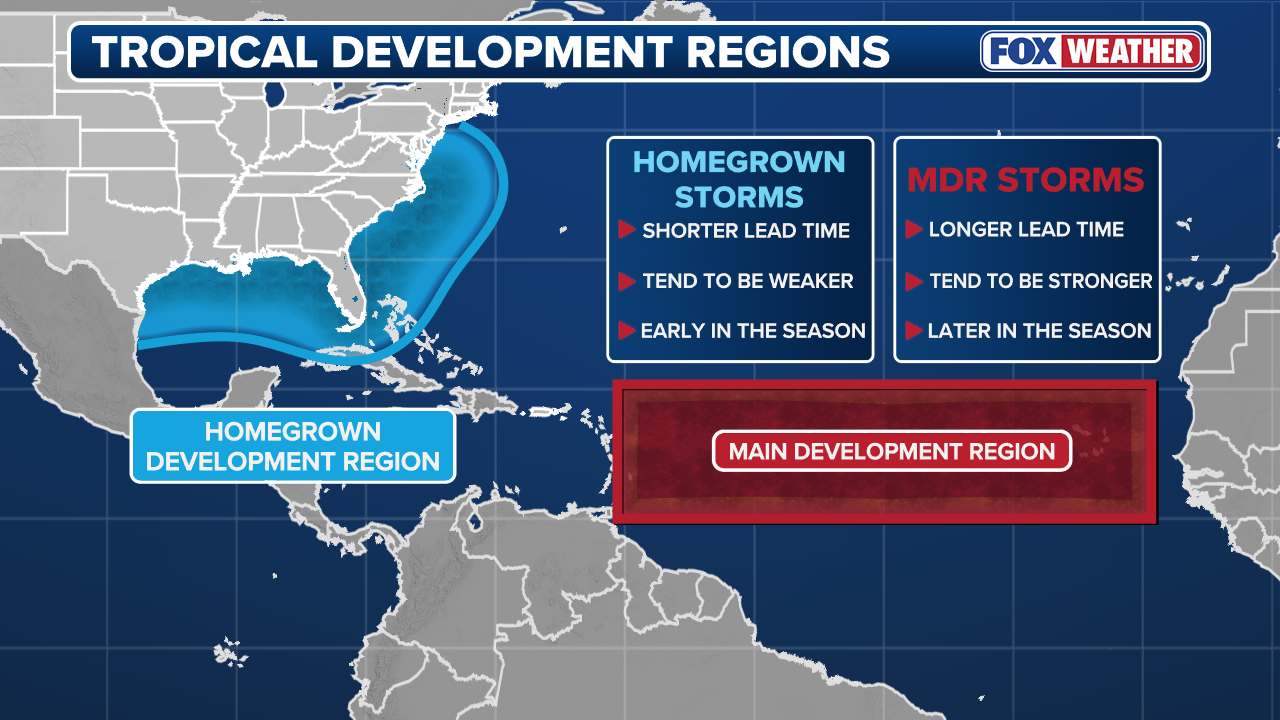
"Early in the season, particularly in June, ‘homegrown’ systems are most common," the FOX Forecast Center said.
"These typically form in areas such as the Gulf and portions of the Southeast U.S. coastline."
While these areas are more conducive for development, these systems also tend to be weaker since they have less water over which to strengthen.
(FOX Weather)
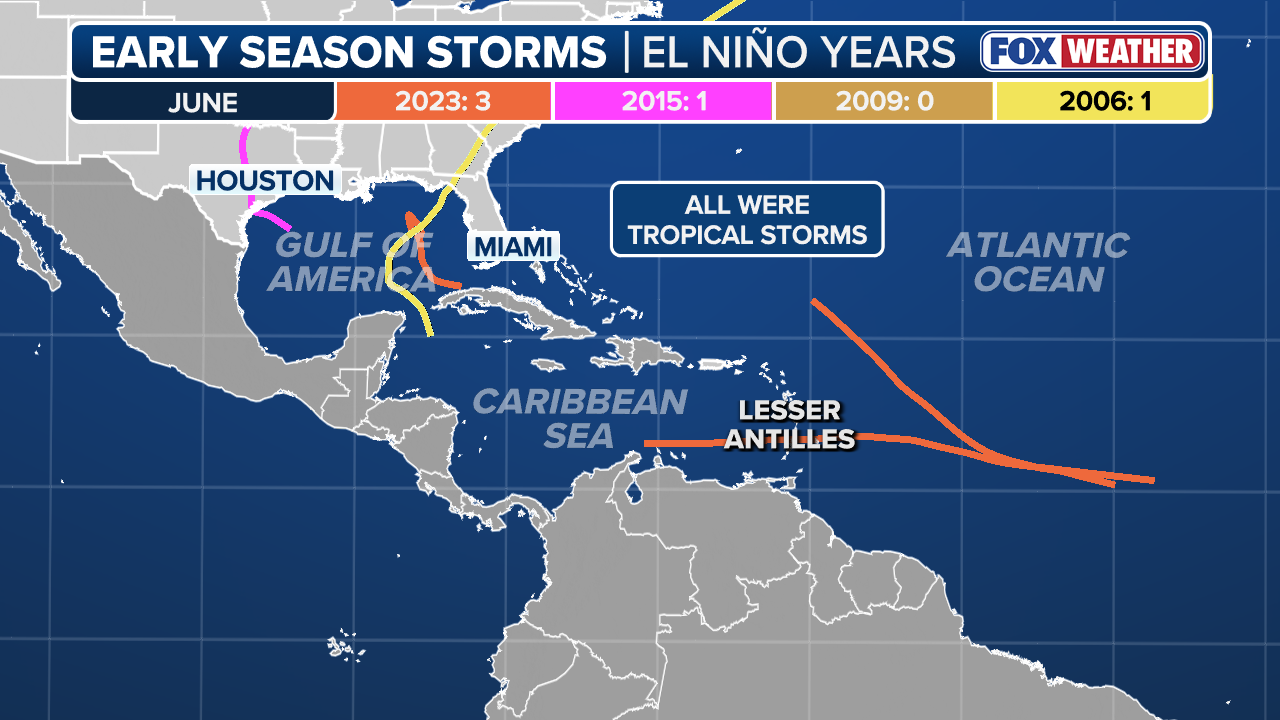
The Forecast Center noted that June activity has generally been limited during El Niño years — meaning that if El Niño can take hold over the next two months, it could further suppress the 2026 Atlantic hurricane season.
HURRICANE HQ: CHANCE OF GULF HURRICANES DROPS TO 14 PERCENT DURING EL NIÑO SUMMERS
Looking at recent El Niño events, 2023 saw three named storms develop in June, while only one storm formed in 2015 and there were no named storms in June 2009.
Climatologically, the first hurricane in the Atlantic does not form until Aug. 11 and the season peaks on Sep. 10.
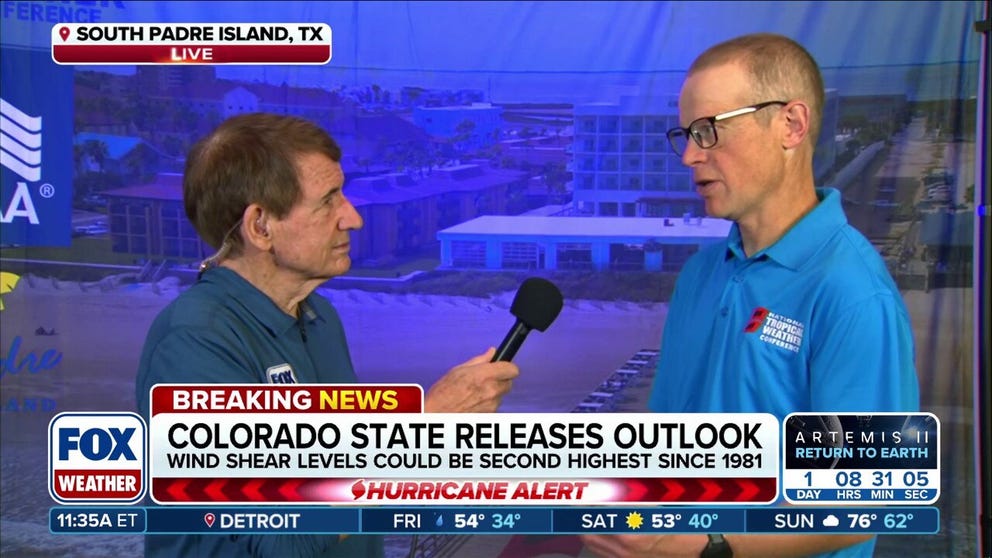
FOX Weather Hurricane Specialist Bryan Norcross discusses season forecast with Dr. Phil Klotzbach
FOX Weather Hurricane Specialist Bryan Norcross discusses the factors behind Colorado State University's April hurricane season forecast with CSU Senior Research Scientist Dr. Phil Klotzbach from the National Tropical Weather Conference in Texas.
But both the FOX Forecast Center and FOX Weather Hurricane Specialist Bryan Norcross cautioned that it only takes one storm to cause major impacts.
BRYAN NORCROSS: THINKING ABOUT EL NIÑO, HURRICANE SEASON 2026, AND AI
The Atlantic hurricane season lasts from June 1 to Nov. 30.