

Arctic revenge: Bitter freezing temperatures to invade US as far south as Florida, plunging iguanas from trees
Bitter cold air will push deep into the Southeast, including Florida, where temperatures could be 15-20 degrees below average.
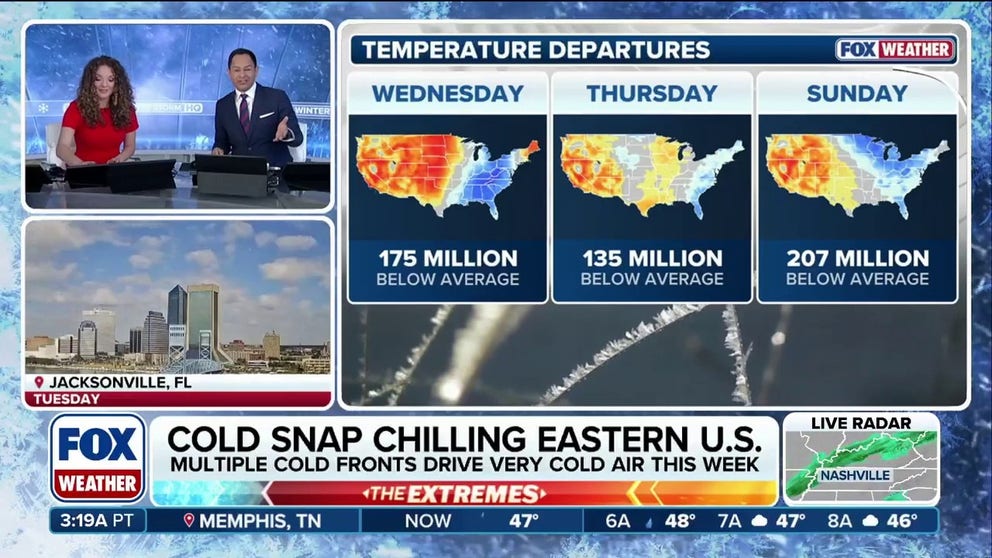
Deep winter chill will set across Eastern U.S., extending as far south as Florida
After a quick January thaw, winter is roaring back, bringing temperatures well below average from the Upper Midwest into South Florida. By Friday, Florida may reach its coldest day of the week, with freezing temperatures reaching as far south as Jacksonville and Daytona Beach.
After a brief thaw, winter will return with a vengeance for the rest of January across most of the eastern half of the U.S. with Arctic temperatures and rounds of snow for the Great Lakes and Interior Northeast. The winter chill will dip into parts of the Southeast where higher elevations in North Carolina and Tennessee could see snow as storms move across the region.
Temperatures will plunge well below average from the Upper Midwest all the way into South Florida except for Miami. The entire state of Florida will see temperatures 10–20 degrees below average by Thursday.
Meanwhile, the West Coast will see mild conditions return after weeks of repeated atmospheric rivers caused historic flooding across parts of California and the Pacific Northwest.
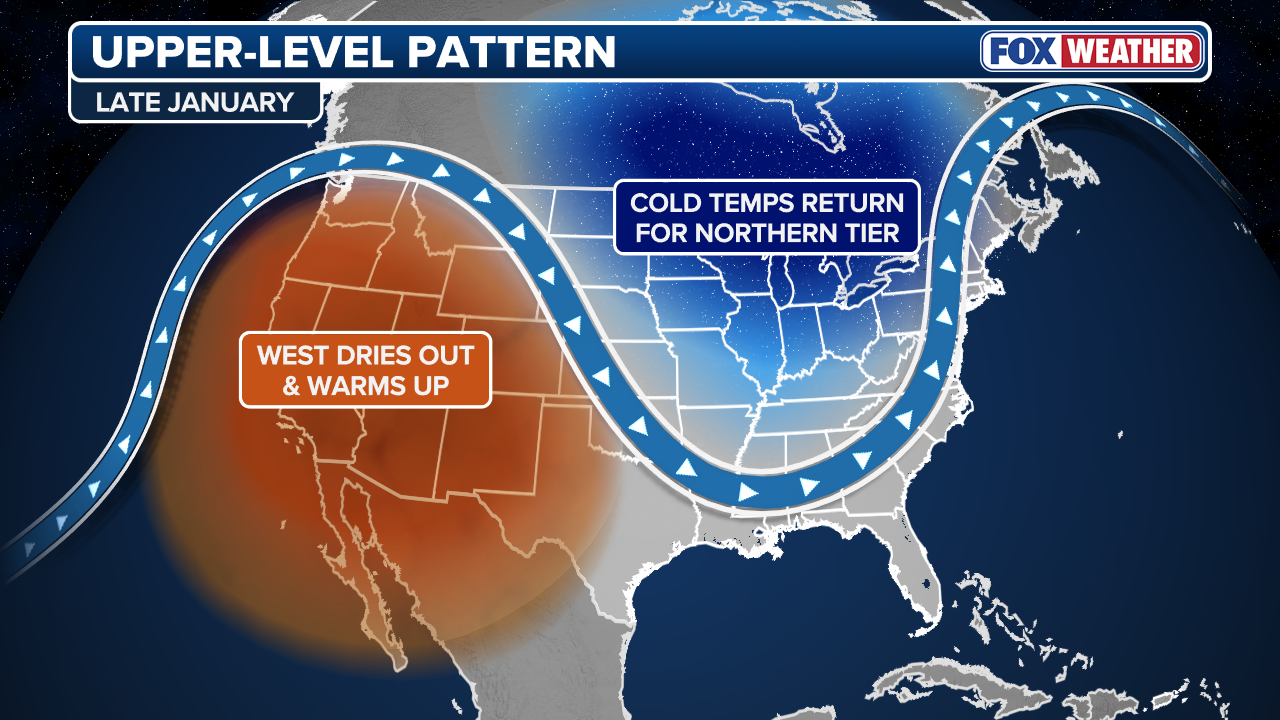
Beginning Thursday and into Friday, a dip in the jet stream will drape over parts of the Upper Midwest and pivot over the rest of the eastern U.S.
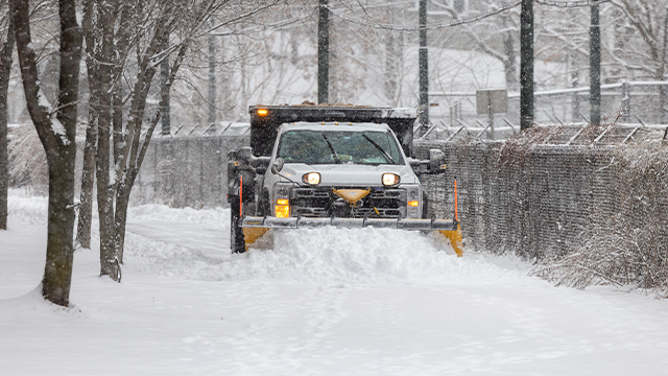
FILE - A snow plow clears a pathway from snow on February 9, 2025 in Boston, Massachusetts. (Photo by Scott Eisen/Getty Images)
(Getty Images)
According to the FOX Forecast Center, this dip will allow both Arctic air and repeated winter storms to spill into the Lower 48 from Canada.
"While none of these systems are expected to become blockbuster storms, they will restore the snowy and cold conditions," the Forecast Center wrote Tuesday.
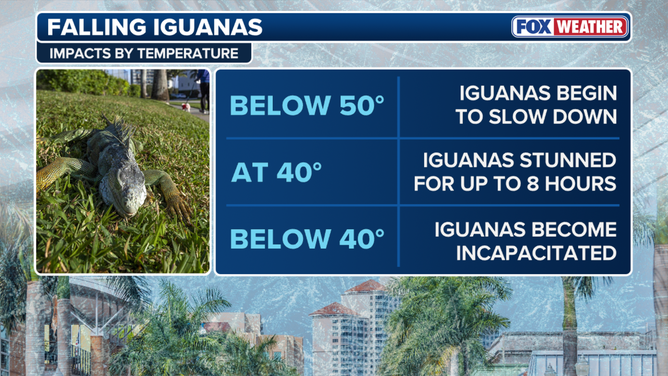
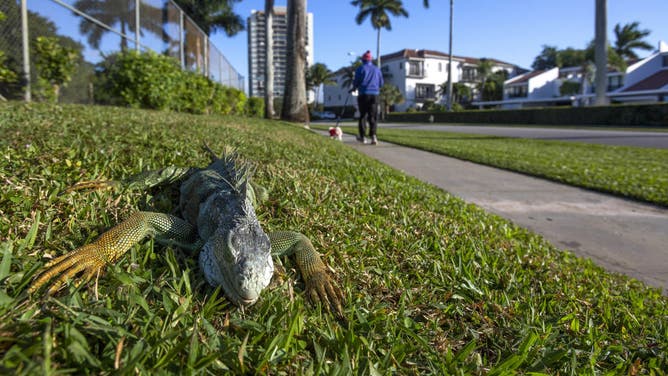
Temperature impacts on Iguanas
(FOX Weather / FOX Weather)
By Thursday, bitter cold air will push deep into the Southeast, including Florida, where temperatures could be 10-20 degrees below average, sending iguanas plunging from trees as they get cold stunned.
And by Friday morning, Florida may see their coldest day of the week, with freezing temperatures reaching as far south as Jacksonville and Daytona Beach.
For perspective, the FOX Forecast Center said, "Tallahassee is forecast to be 26 degrees; meanwhile, Denver—located 1,630 miles away and at an elevation 5,155 feet higher—is forecast to be 27 degrees that same morning."
The high pressure that settles in over Florida will allow for calm winds over most of the state and will allow for a freeze to set up, thus putting crops at risk.
Stiff winds wrapping around the high-pressure system will cause wind chills to plunge into the upper teens in some locations, especially in the Florida Panhandle and even South Florida.
Temperatures are set to rebound by Saturday, but yet another shot of arctic air will move in by Sunday, allowing temperatures to bottom out once again, reaching all the way into South Florida.
High temperatures Sunday and Monday will be up to 15° below average.
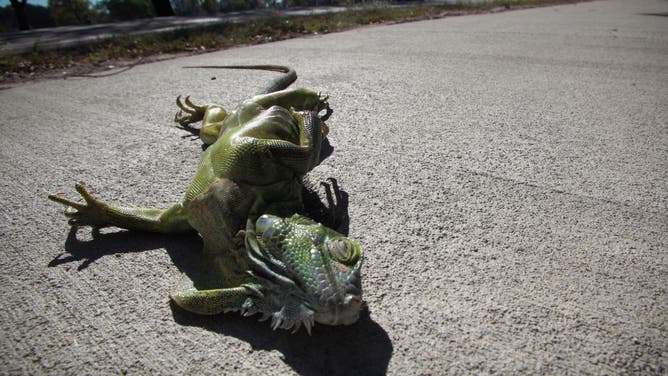
![FILE - A maintenance worker holds an iguana immobilized from cold temperatures outside an apartment complex in West Palm Beach, Florida, U.S., on Wednesday, Jan. 22, 2020. Cold-stunned iguanas fell from trees in South Florida Wednesday morning as temperatures in Miami hit 40 degrees and wind chills reached in the 20s and 30s in South Florida, The National Weather Service reported. Photographer: Saul Martinez/Bloomberg via Getty Images]() Image 1 of 3
Image 1 of 3FILE - A maintenance worker holds an iguana immobilized from cold temperatures outside an apartment complex in West Palm Beach, Florida, U.S., on Wednesday, Jan. 22, 2020. Cold-stunned iguanas fell from trees in South Florida Wednesday morning as temperatures in Miami hit 40 degrees and wind chills reached in the 20s and 30s in South Florida, The National Weather Service reported. Photographer: Saul Martinez/Bloomberg via Getty Images ( )
![Iguanas typically begin to lose mobility when temperatures reach 50 degrees. Below that, the cold can completely immobilize them.]() Image 2 of 3
Image 2 of 3Iguanas typically begin to lose mobility when temperatures reach 50 degrees. Below that, the cold can completely immobilize them. ((Cristobal Herrera/South Florida Sun Sentinel/Tribune News Service via Getty Images))
![An iguana immobilized from cold temperatures lays on grass in West Palm Beach, Florida, U.S., on Wednesday, Jan. 22, 2020. Cold-stunned iguanas fell from trees in South Florida Wednesday morning as temperatures in Miami hit 40 degrees and wind chills reached in the 20s and 30s in South Florida, The National Weather Service reported. Photographer: Saul Martinez/Bloomberg via Getty Images]() Image 3 of 3
Image 3 of 3File photo: An iguana immobilized from cold temperatures lays on grass in West Palm Beach, Florida, U.S., on Wednesday, Jan. 22, 2020. Cold-stunned iguanas fell from trees in South Florida Wednesday morning as temperatures in Miami hit 40 degrees and wind chills reached in the 20s and 30s in South Florida, The National Weather Service reported. (Photographer: Saul Martinez/Bloomberg via Getty Images) ( )

January snow expectations
This active pattern is a callback to much of December's weather, where repeated snow even caught the attention of people in traditional snowbelts across the Midwest and the interior Northeast.
DRONE PHOTOGRAPHER FILMS SPECTACULAR FOOTAGE OF WINTER IN MICHIGAN
Syracuse, New York, which deals with lake-effect snow from Lake Ontario every year, has already received more than 83 inches of snow this snowfall year-to-date, the most in more than a decade.
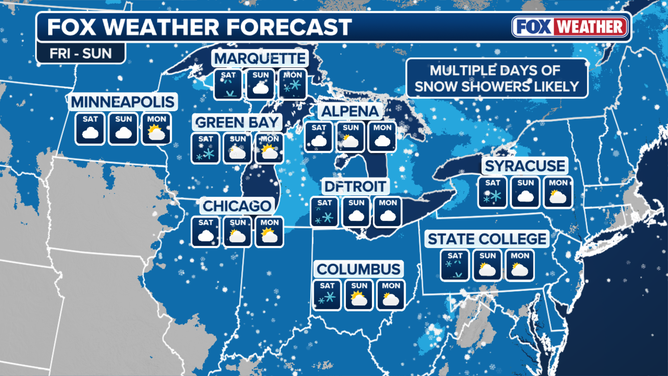
Weather forecast Friday through Sunday for the Upper Midwest and Great Lakes region, including parts of the Northeast
(FOX Weather / FOX Weather)
And many of these same snowbelts along the Great Lakes should expect to see multiple rounds of snow over the next two weeks, as storms dive out of Canada. Snow should be able to reach the southern Appalachians and temperatures may even become cold enough for brief winter weather in states like Alabama, Georgia, and the lower elevations of the Carolinas.
(FOX Weather)
Respite for the West
This pattern change will be a return to much-needed dry conditions across the West Coast, where weeks of atmospheric rivers have led to deadly historic flooding across parts of Washington and California.
While recent storms have brought necessary snow to the Cascade and Sierra mountain ranges, the wet conditions have also contributed to deadly avalanches.

FILE - PACIFIC, WASHINGTON - DECEMBER 16: In an aerial view, a neighborhood is engulfed in floodwater on December 16, 2025 in Pacific, Washington. Evacuations have been ordered in 3 suburbs south of Seattle after recent levee failure. Atmospheric rivers are expected to continue in the coming days as northern Washington continues reeling back from historic flooding late last week. Mass flooding along the Pacific Northwest caused historic flooding, tens of thousands of evacuations, and dozens of Coast Guard rescues.
((Photo by Brandon Bell/Getty Images) / Getty Images)
Weather whiplash for Southeast
A shocking return to the cold will be the most noticeable feature of this weather pattern shift for most.
SEE IT: 12-FOOT GREAT WHITE SHARK NAMED 'ERNST' PINGS OFF COAST OF ALABAMA THIS WEEK
Since the New Year, most of the Lower 48 have enjoyed temperatures 5-10 degrees above average.
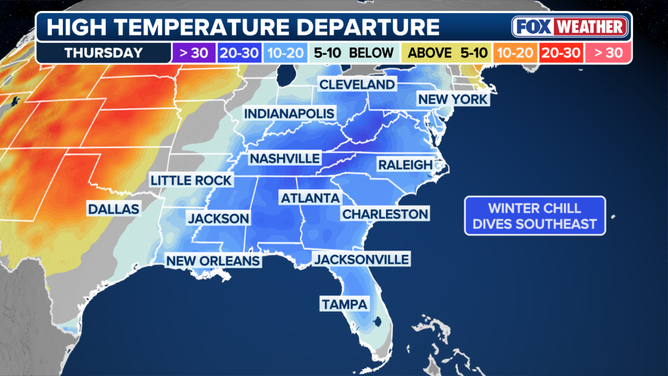
High Temperature departure on Thursday
(FOX Weather / FOX Weather)
However, low temperatures across parts of the Southeast will plummet into the 20s by Thursday morning, marking the beginning of several weeks of winter chill for the eastern half of the country.