

Meet the 1-in-100 million ‘ghost’ lobster helping scientists unlock a colorful mystery
In addition to Casper, Peaches, Currant and Fig, the university has other orange, yellow, blue, purple, calico, and split-colored lobster varieties.
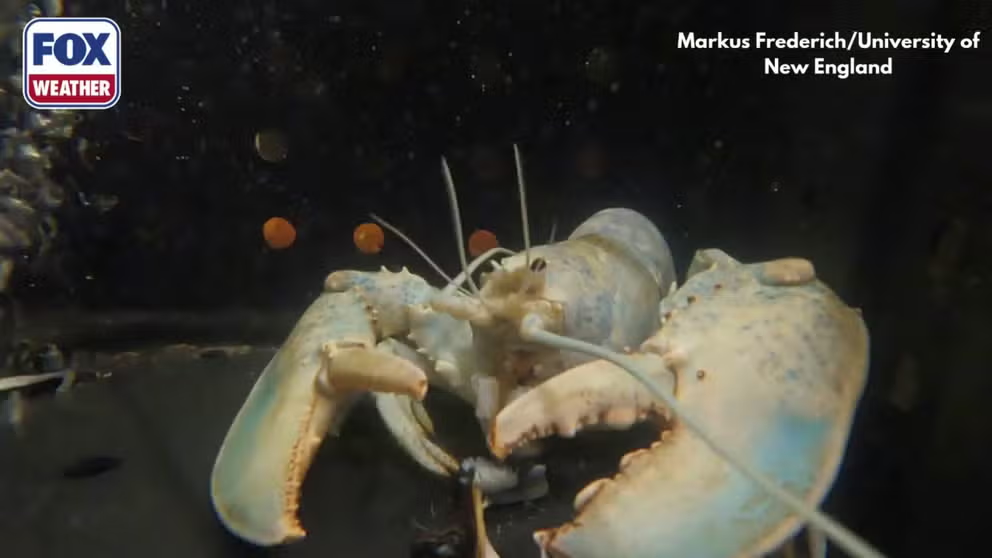
See it: Exceptionally rare 'ghost' lobster named Casper swims in his tank
Casper joins the University of New England for a study on exploring unusual lobster coloration. The university has a few other uniquely colored lobsters in the study as well. As a white lobster, Casper is extremely rare, only 1 in 100 million lobsters have his coloring.
BIDDEFORD, Maine – A rare white lobster that only shows up 1-in-100 million lobsters is joining a study at the University of New England (UNE) which explores unusual lobster colors.
Because he is a "ghost" lobster, the lobster is appropriately named Casper. He was donated to UNE by the Maine State Aquarium in Boothbay, Maine.
SEE IT: '1 IN 50 MILLION' SPLIT-COLORED LOBSTER DONATED TO MASSACHUSETTS AQUARIUM IN RARE DISCOVERY
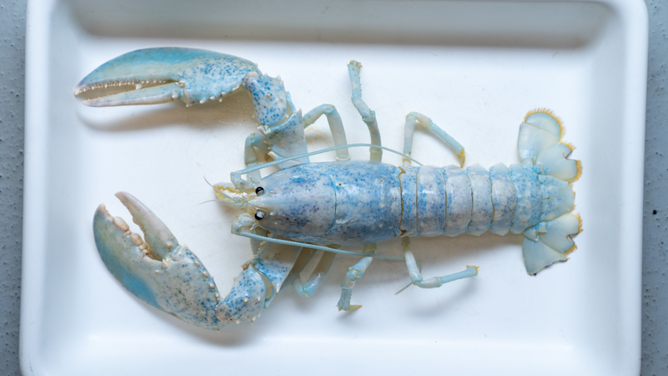
Casper the white lobster.
(University of New England / FOX Weather)
According to the University of New England, ghost lobsters are considered the rarest among the unusual color variations found in the species.
Casper now lives at UNE’s Arthur P. Girard Marine Science Center in Biddeford and is part of a research project to better understand why some American lobsters develop rare shell colors.
‘1 IN 100 MILLION’: RARE ‘COTTON CANDY’ LOBSTER DISCOVERED OFF NEW HAMPSHIRE, MAINE COAST
"The project uses non-invasive techniques to collect and analyze genetic material without harming the lobsters," the university said in a news release. "UNE researchers are examining differences in gene expression that may help explain the molecular mechanisms behind rare coloration."
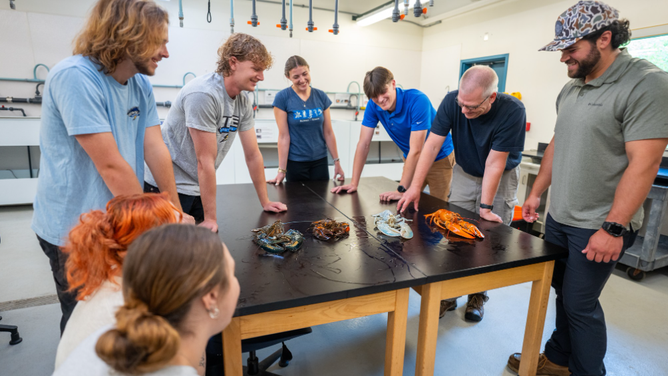
Markus Frederich, Ph.D., and students with rare lobsters including Casper the ghost lobster (estimated occurrence of 1 in over 100 million) at the Girard Marine Science Center
(University of New England / FOX Weather)
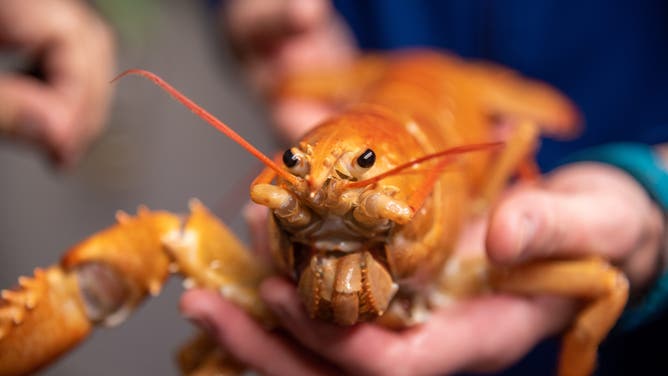
The research initiative launched in 2024 and UNE now has a collection of rare-colored lobsters, including Peaches, an orange lobster, and Currant and Fig, blue and purple cousins.
In addition to Casper, Peaches, Currant and Fig, the university has other orange, yellow, blue, purple, calico and split-colored lobster varieties.
FISHING CREW’S 1-IN-30 MILLION LOBSTER GETS PERMANENT HOME AT THE UNIVERSITY OF NEW ENGLAND
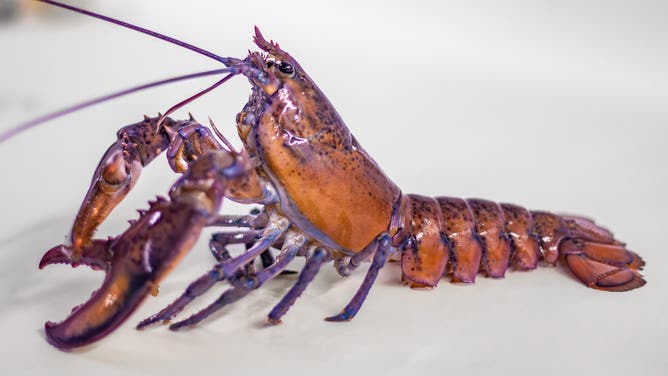
Peaches is a 1-in-30 million lobster herself, and had offspring of different colors, UNE said.
![Peaches the rare 1-in-30 million orange lobster.]() Image 1 of 4
Image 1 of 4Peaches the rare 1-in-30 million orange lobster. (University of New England)
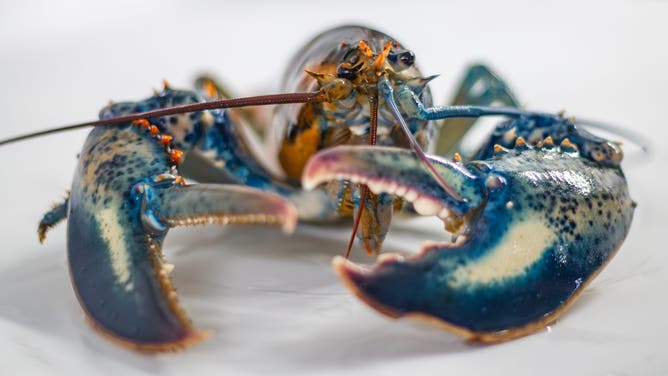
![On the Biddeford Campus in the Marine Science Lab "Fig" a new purple lobster found its new home in 2024]() Image 2 of 4
Image 2 of 4On the Biddeford Campus in the Marine Science Lab "Fig" a new purple lobster found its new home in 2024 (University of New England)
![On the Biddeford Campus in the Marine Science Lab, "Currant" a new blue and orange lobster found its new home in 2024]() Image 3 of 4
Image 3 of 4On the Biddeford Campus in the Marine Science Lab, "Currant" a new blue and orange lobster found its new home in 2024 (University of New England)
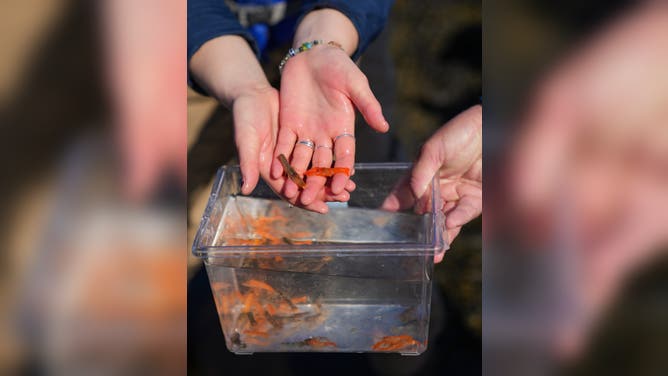
![Releasing Peaches' multicolored baby lobsters at Ram Island with professor Markus Frederich. May 12, 2025.]() Image 4 of 4
Image 4 of 4Releasing Peaches' multicolored baby lobsters at Ram Island with professor Markus Frederich. May 12, 2025. (University of New England)
Since the project began, researchers have collected genetic material from the young lobsters and are analyzing more than 15,000 genes as they work to identify differences associated with shell color.
"Animals like Casper capture people’s attention because they are so rare and beautiful. But, for us, they also provide an amazing opportunity to ask fundamental biological questions," Markus Frederich, Ph.D., professor of marine sciences, director of the Invertebrate Physiology Lab at UNE and the leader of the research project, said.
"What makes this research especially rewarding is that our undergraduate students are involved in every step of the process, from working with these incredible animals to analyzing their genes and helping uncover the mechanisms behind their unusual colors," he continued.
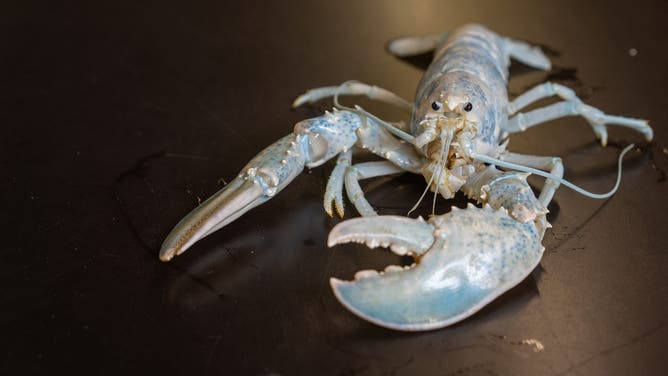
Casper at the University of New England.
(University of New England / FOX Weather)
Casper is their only white lobster, making him the rarest in their collection.