

Fall arrives with the autumnal equinox. How much daylight you will begin to lose?
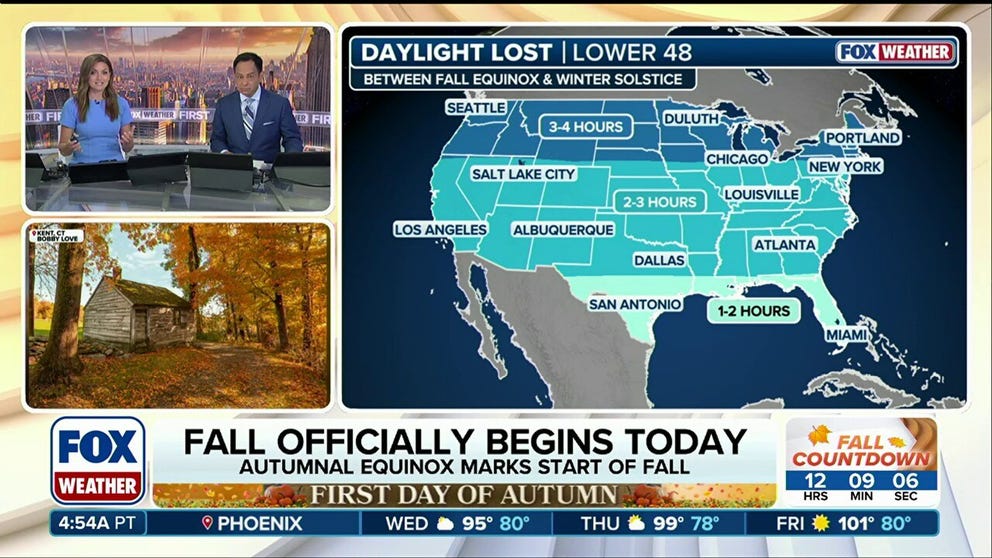
Through the fall, the mid-latitudes, places like New York City, Chicago and Denver, will lose about two-and-a-half minutes of daylight per day.
Astronomical Fall begins with the autumnal equinox
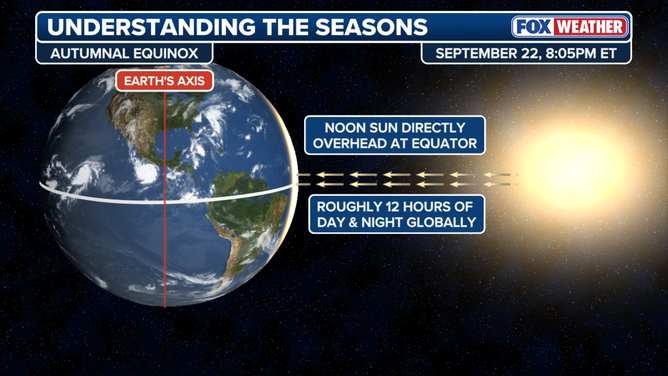
The autumnal equinox will happen at 8:05 p.m. ET, marking the start of astronomical fall in the Northern Hemisphere, including the U.S.
The autumnal equinox will happen at 8:05 p.m. ET, marking the start of astronomical fall in the Northern Hemisphere, including the U.S.
Across most of the Lower 48, fall signals the beginning of progressively cooler temperatures as the country begins to angle away from the sun and daylight begins to get shorter.
STRENGTHENING EL NIÑO COULD SHAKE UP FALL WEATHER ACROSS THE US - HERE’S WHAT TO EXPECT
The equinox occurs when the sun's center crosses the Earth's equator, marking nearly 12 hours of daylight and 12 hours of night across the globe.
Autumnal equinox
(FOX Weather)
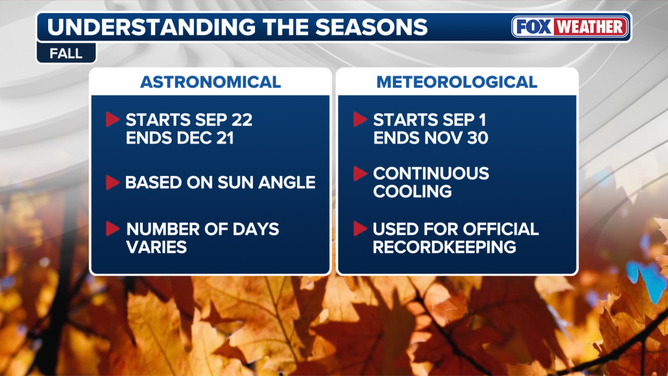
While astronomical fall is just beginning, meteorological fall began on Sep. 1, and runs until Nov. 30. This fixed range is used for standardized record-keeping among meteorologists.
Autumn across the continental U.S. typically brings atmospheric rivers and rain to the Northwest as well as a second severe weather season to the Heartland as those cold fronts from the west clash with humid air from the Gulf.
Along the East Coast, Atlantic hurricanes and tropical systems climatologically remain a threat through October, while coastal storms and nor'easters also begin to form more frequently along the East Coast.
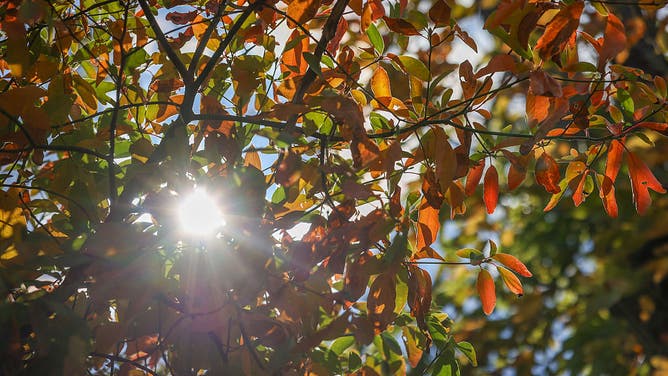
FILE - The sun pierces through branches of orange and green leaves at Frances Slocum State Park on Wednesday, Oct. 8, 2025.
((Photo by Jason Ardan/The Citizens' Voice via Getty Images) / Getty Images)
Fall across the continental U.S. is also characterized by bright foliage as dropping temperatures and shortening daylight trigger trees to stop producing chlorophyll, exposing vibrant red, orange and yellow-colored leaves.
Differences between Meteorological Fall and Astronomical Fall
(FOX Weather / FOX Weather)
Through the fall, the mid-latitudes, places like New York City, Atlanta, Chicago and Denver, will lose about two-and-a-half minutes of daylight per day.
States and cities in the Northern Tier, such as Seattle and Minneapolis, lose roughly three-and-a-half-minutes of daylight each day.
HOUSE PASSES BILL TO MAKE DAYLIGHT SAVING TIME PERMANENT
By late October, most of the country will have lost an hour to an hour-and-a-half of daylight.
All told, the Northern Tier loses three to four hours of sunlight, while the mid-latitudes lose two to three hours, respectively.
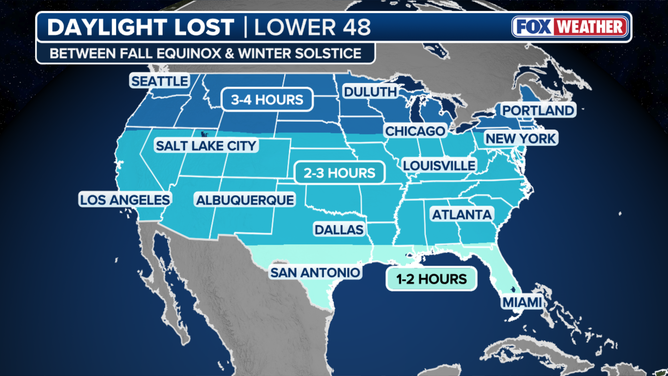
Daylight lost during fall
(FOX Weather / FOX Weather)
Florida and much of the Interstate 10 corridor experience the least amount of daylight lost, just between an hour and two hours.
Astronomical fall will end on Dec. 21 at 3:50 p.m., the exact moment of the Winter Solstice, marking the shortest day of the year in the Northern Hemisphere.